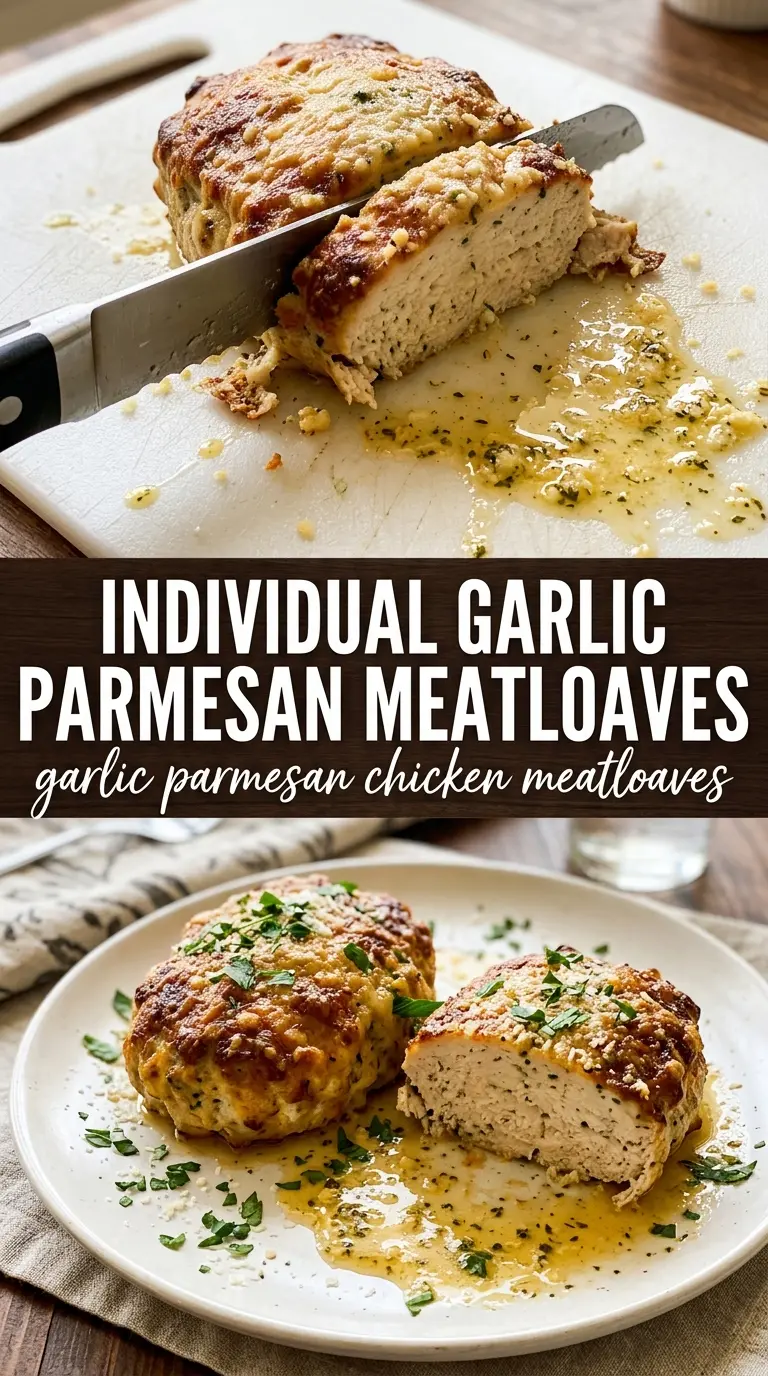
Garlic Parmesan Chicken Meatloaves come out with the kind of browned, savory crust that makes a simple weeknight dinner feel like you paid attention. The outside gets golden and a little crisp from the parmesan and butter, while the inside stays tender and juicy instead of turning dense or chalky. Because they’re shaped into individual portions, they cook faster than a full meatloaf and give you more of that browned edge in every serving.
The key is keeping the mixture lightly handled and giving the topping a chance to do its job. Panko keeps the chicken from tightening up, egg holds everything together, and parmesan adds both salt and structure. The garlic butter goes on before baking and again at the end, which means you get flavor through the meatloaf and that glossy finish on top.
Below, I’ve included the small details that matter most: how to keep the mixture from going gummy, what to watch for in the oven, and the swaps that still keep these meatloaves moist and flavorful.
The parmesan crust turned golden in the oven and the centers stayed juicy. I brushed on the last bit of garlic butter right after baking, and that was the part everyone kept talking about.
Garlic Parmesan Chicken Meatloaves with that buttery, golden crust belong on your weeknight dinner list.
The Part That Keeps Chicken Meatloaf from Going Rubbery
Ground chicken can go from tender to tight faster than beef, which is why this recipe works best when the mixture is mixed only until everything looks evenly combined. Overworking it compresses the protein and gives you a springy texture instead of a soft slice. The panko and egg are doing more than binding; they’re helping hold moisture in place while the meatloaves bake quickly.
The other thing that matters here is shape. Four smaller loaves cook evenly and give you more surface area for browning, which is where the parmesan really pays off. A big loaf would need a longer bake and has a higher chance of drying out before the center is done.
- Ground chicken — Use a package with a little fat if you can find it. Extra-lean chicken still works, but it benefits from the butter topping and careful timing so it doesn’t dry out.
- Panko breadcrumbs — Panko keeps the texture light. Regular fine breadcrumbs work in a pinch, but the loaves will be a little denser.
- Parmesan — Freshly grated parmesan melts into the meat and browns on top. The shelf-stable shaker style won’t give the same crust or flavor.
- Garlic butter topping — This is not garnish; it’s part of the recipe. Brushing it on before baking helps the cheese brown, and the final brush after baking gives the loaves that glossy, rich finish.
What the Garlic, Parmesan, and Panko Each Bring to the Pan
- Garlic cloves — Fresh garlic gives the meatloaves and topping their sharp, savory backbone. Garlic powder adds support in the mixture, but the fresh garlic is what makes the flavor taste layered instead of flat.
- Butter — Melted butter carries the garlic across the top and helps the parmesan brown instead of drying out. You can swap in olive oil if needed, but you’ll lose some of that rich finish.
- Parsley — Fresh parsley brightens the buttery topping and keeps the dish from tasting heavy. Dried parsley won’t bring the same fresh contrast.
- Egg — One egg is enough to bind the mixture without making it bouncy. More egg can make the loaves feel firm instead of tender.
Forming and Baking Them So the Centers Stay Juicy
Mix Just Until the Ingredients Disappear
Combine the chicken mixture with clean hands or a fork and stop as soon as the garlic, cheese, and breadcrumbs are evenly distributed. If the mixture starts to feel sticky and paste-like, it has already been handled too much. That’s when chicken meatloaf turns dense.
Shape Four Small Ovals, Not One Heavy Loaf
Divide the mixture into four equal portions and shape each one into a compact oval on the parchment-lined pan. Keep them similar in size so they finish at the same time. Flatten the tops slightly so the garlic butter and parmesan can cling instead of sliding off.
Watch for Browning, Not Just Time
Bake at 400°F until the tops are golden and the centers reach 165°F. If the tops are browning too quickly before the middle is cooked, move the pan to a lower rack rather than lowering the heat right away. The loaves should feel springy but not soft and raw in the center.
Finish With Butter While They’re Hot
Brush on the remaining garlic butter as soon as they come out of the oven. The heat melts it into the parmesan crust and gives the meatloaves a richer look and taste. Let them rest a few minutes before serving so the juices settle and don’t spill out on the plate.
Three Ways to Bend This Recipe Without Losing the Point
Make Them Gluten-Free
Swap the panko for gluten-free breadcrumbs or crushed gluten-free crackers. The texture stays light if you keep the amount the same, but crackers can add a little more salt, so taste the mixture before shaping.
Make It Dairy-Free
Use a dairy-free parmesan-style substitute and brush the tops with olive oil instead of butter. The crust won’t be quite as rich, but the garlic and herbs still carry the dish well.
Use Ground Turkey Instead
Ground turkey works in the same shape and timing, though very lean turkey needs the butter topping to keep it from drying out. The flavor lands a little cleaner and less rich, so the parmesan becomes even more important.
Turn Them Into Meatloaf Muffins
Press the mixture into a greased muffin tin for faster cooking and crispier edges. The bake time drops, so start checking early; the smaller shape gives you more crust and slightly less juicy centers.
Storage and Reheating
- Refrigerator: Store in an airtight container for up to 4 days. The parmesan crust softens a bit, but the flavor holds up well.
- Freezer: These freeze well. Cool completely, wrap individually, and freeze for up to 2 months for the best texture.
- Reheating: Warm in a 325°F oven, covered loosely with foil, until heated through. The common mistake is blasting them in the microwave, which toughens the chicken and makes the topping greasy.
Questions I Get Asked About This Recipe

Garlic Parmesan Chicken Meatloaves
Ingredients
Equipment
Method
- Preheat the oven to 400°F and line a sheet pan with parchment.
- In a large bowl, combine ground chicken, grated parmesan, panko, minced garlic, egg, chopped parsley, Italian seasoning, garlic powder, salt, and black pepper; mix just until combined.
- Divide the mixture into 4 equal portions and shape each into an oval loaf on the prepared pan.
- Mix the melted butter with the minced garlic, then brush over each meatloaf.
- Press extra parmesan onto the top of each meatloaf so it forms a crust.
- Bake for 22–25 minutes at 400°F, until cooked through and golden on top.
- Brush with the remaining garlic butter, garnish with fresh parsley, and serve.