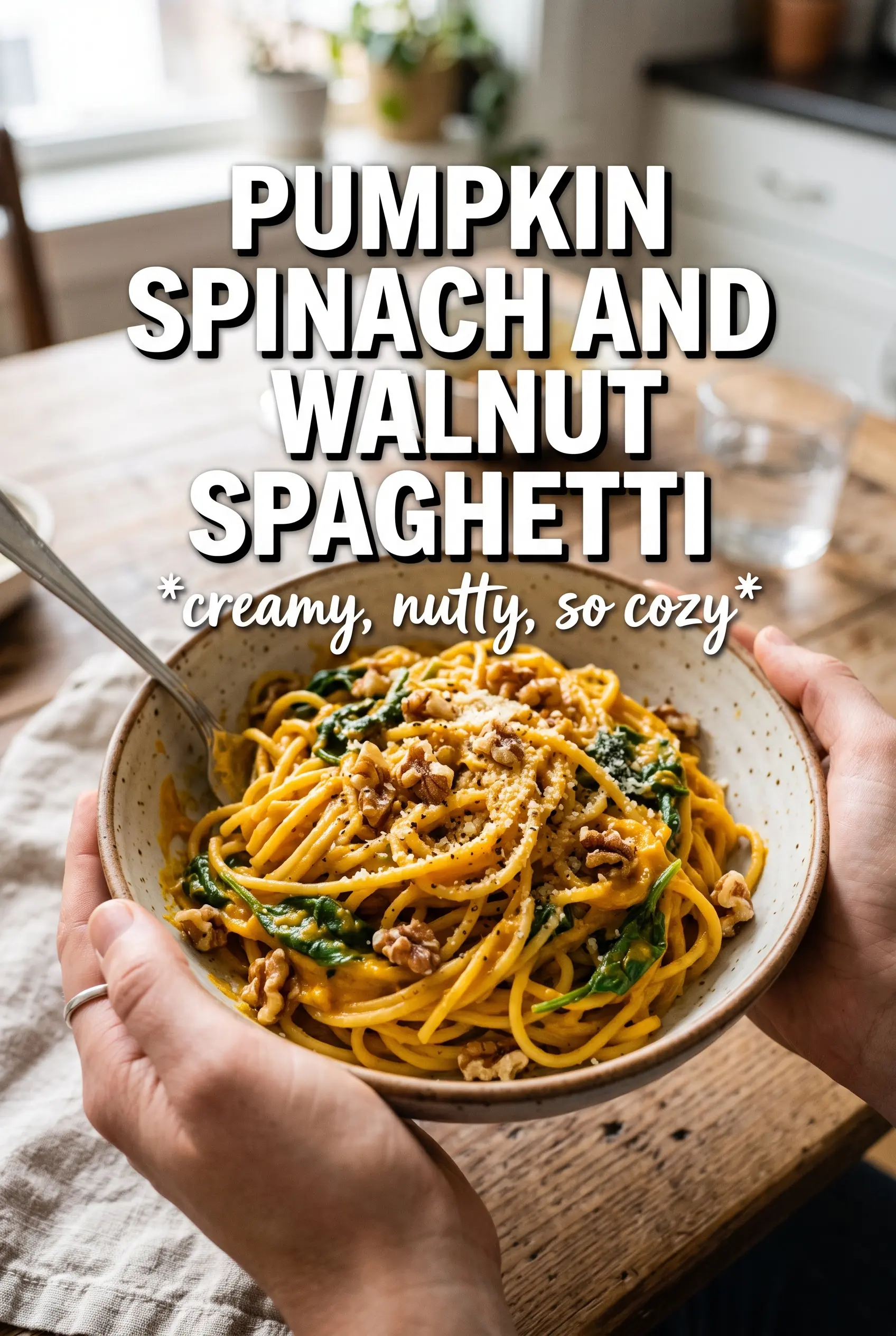
Ingredients
Equipment
Method
Cook spaghetti and reserve pasta water
- Bring a large pot of salted water to a boil and cook spaghetti until al dente, then reserve 1 cup pasta water before draining. Visual cue: the noodles should be tender but still slightly firm in the center.
Fry sage and sauté garlic
- Heat olive oil in a Dutch oven over medium-high heat and fry sage leaves until crisp, then remove to a paper towel. Visual cue: the sage should bubble and turn crisp and lightly golden.
- Add minced garlic to the hot oil and cook for 1 minute, stirring, until fragrant. Visual cue: garlic should sizzle but not brown.
Simmer the pumpkin cream sauce
- Stir in pumpkin puree, heavy cream, nutmeg, and red pepper flakes, then simmer for 5 minutes. Visual cue: the sauce thickens slightly and looks smooth and orange.
Melt Parmesan, wilt spinach, and combine
- Stir in Parmesan until melted and the sauce turns glossy. Visual cue: no visible cheese clumps remain.
- Add baby spinach and toss until wilted, about 1 minute. Visual cue: the spinach turns dark green and collapses into the sauce.
- Add drained spaghetti to the sauce and toss, adding reserved pasta water as needed to loosen into a silky coating. Visual cue: sauce should cling to the noodles and look lightly emulsified.
Finish and serve
- Season with salt and pepper to taste. Visual cue: taste for balance—creaminess should be accented by spice.
- Top with toasted chopped walnuts and crispy fried sage leaves, then serve immediately. Visual cue: walnuts add crunch and sage stays crisp on top.
Notes
To keep the sauce silky, emulsify with pasta water gradually—add a splash at a time while tossing until it coats the spaghetti. Refrigerate leftovers in a covered container for up to 3 days; reheat gently with a splash of water or cream to loosen. Freezing is not recommended because the cream can separate. Dietary swap: use lactose-free cream and lactose-free Parmesan if you want the same flavor with less lactose.