Whiskey pineapple chicken comes off the grill with sticky edges, a deep caramelized glaze, and that sweet-smoky finish that keeps people hovering near the platter. The pineapple juice softens the chicken while the whiskey adds warmth and a little bite, so the glaze tastes layered instead of just sweet. When the marinade reduces on the grill, it turns glossy and clings to the meat in the best way.
The trick here is balance. Brown sugar helps the glaze char without burning too fast, soy sauce keeps the sweetness in check, and garlic with ginger gives the marinade enough backbone to taste like dinner, not dessert. I like chicken thighs for this because they stay juicy over medium heat and take on the glaze without drying out. The grilled pineapple matters too; it echoes the marinade and gives you those caramelized edges that make each bite pop.
Below, I’ve included the timing that keeps the chicken juicy, the one basting step that builds flavor instead of washing it away, and a few smart swaps if you want to use what you already have on hand.
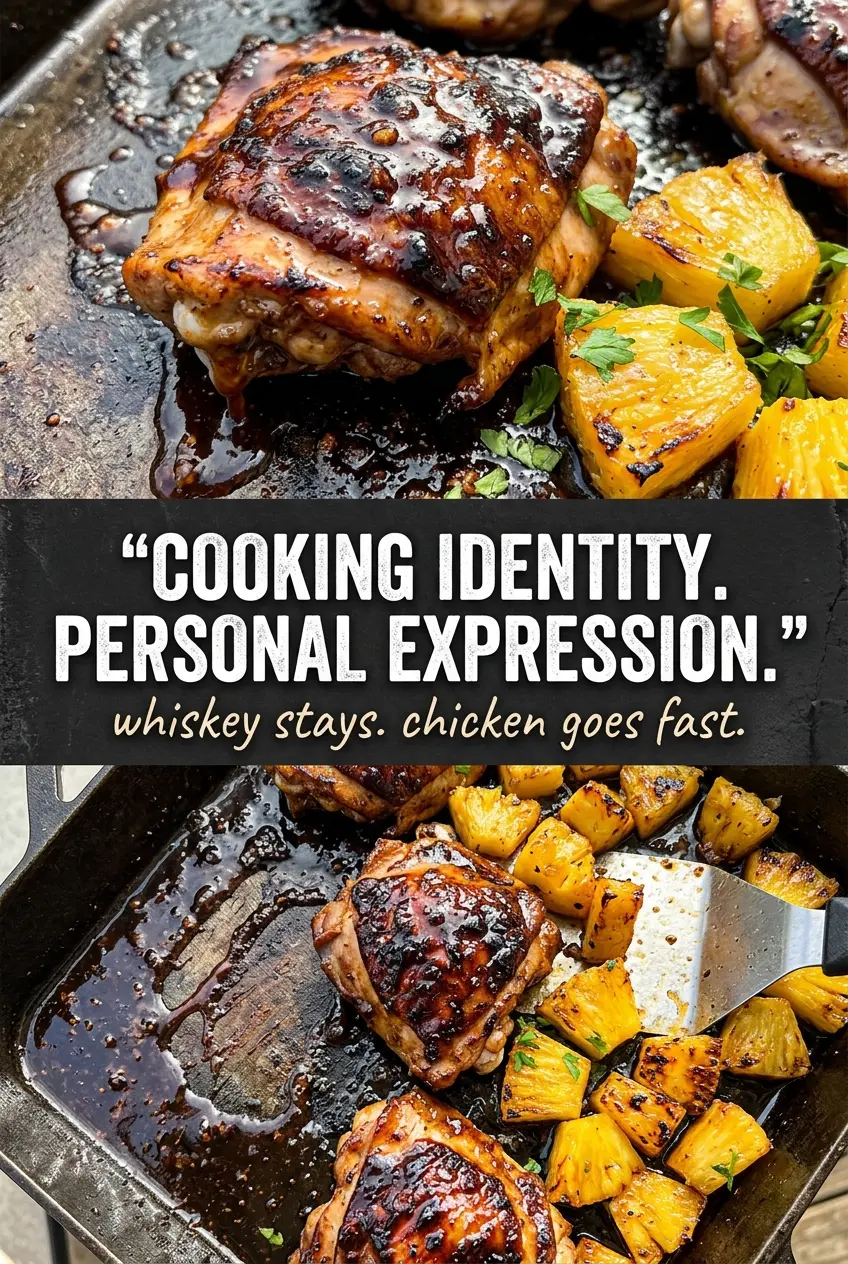
The glaze thickened up on the grill instead of sliding off, and the pineapple slices tasted like candy next to the smoky chicken. I marinated it for about 3 hours and the thighs stayed super juicy.
Save this whiskey pineapple chicken for nights when you want smoky grilled thighs, sticky glaze, and caramelized pineapple on the side.
The Marinade Needs Time, But Not Too Much
The biggest mistake with a sweet marinade like this is leaving the chicken in it too long and expecting the same clean grill flavor. Pineapple juice is acidic, and while that helps tenderize the thighs, it can push the surface toward a soft, almost cured texture if you let it sit all day. One to four hours is the sweet spot. Long enough for the whiskey, garlic, ginger, and sugar to work into the meat, short enough to keep the chicken tasting fresh after it hits the grill.
The reserved glaze is just as important as the marinade itself. You want a portion that never touched raw chicken so you can brush it on freely during grilling without worrying about cross-contamination. That extra baste gives you the glossy finish and keeps the flavor loud right up to the last bite.
What Each Part of the Marinade Is Actually Doing
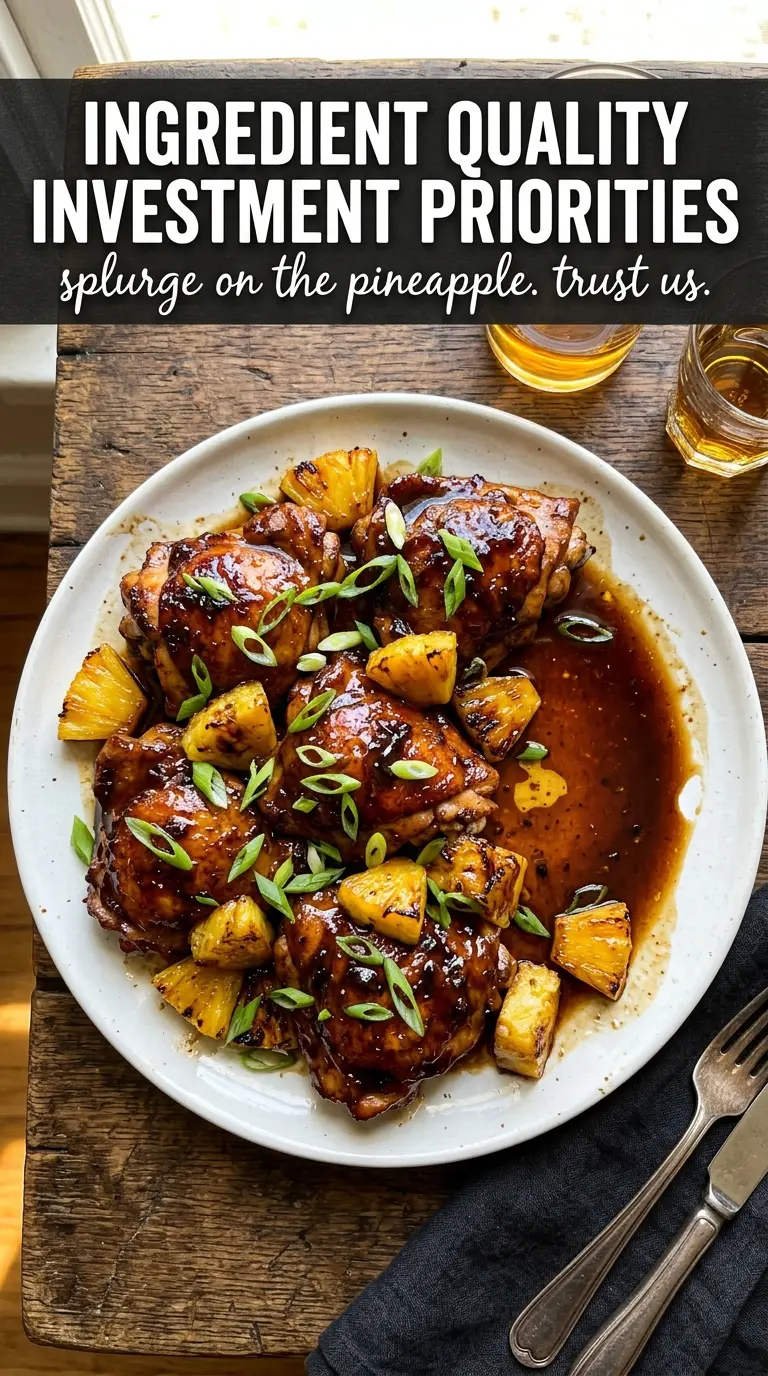
- Chicken thighs — Thighs stay juicier than breasts over medium grill heat, which matters here because the glaze needs time to caramelize. Breasts can work, but they need a shorter cook and a closer eye so they don’t dry out before the sugar in the marinade browns.
- Pineapple juice — This brings sweetness and acidity, and it also helps the exterior pick up color faster on the grill. Fresh or bottled both work, but use straight juice, not a pineapple drink with added sugar.
- Whiskey — The whiskey adds depth and a warm edge that keeps the marinade from tasting flat. You don’t need an expensive bottle here, but use something you’d actually drink; harsh whiskey stays harsh after cooking.
- Brown sugar — This is what gives the glaze its sticky finish and helps it cling to the chicken. If you reduce the sugar, the coating will be thinner and less lacquered, but the flavor still works.
- Soy sauce — Soy sauce gives the marinade salt and umami, which keeps the sweet ingredients from taking over. If you need a gluten-free version, use tamari in the same amount.
- Garlic and ginger — These two keep the marinade sharp and aromatic. Fresh ginger matters more than powdered here; it cuts through the sweetness and makes the whole dish taste brighter.
How to Get the Glaze to Char Instead of Burn
Mixing the Marinade
Whisk the pineapple juice, whiskey, brown sugar, soy sauce, garlic, and ginger until the sugar dissolves as much as it can. You don’t need a syrup, but you do want the mixture to look cohesive before the chicken goes in. Reserve the basting portion before the raw chicken touches anything. If you skip that, you’ll be stuck choosing between safe basting and wasted glaze.
Marinating the Chicken
Put the thighs in the marinade and turn them once or twice while they sit so every piece gets coated. One hour is enough for a light flavor, and four hours gives you the strongest payoff without turning the meat soft. Keep it refrigerated the whole time. If the chicken starts to look pale and overly firm at the edges, it’s been in too long.
Grilling Over Medium Heat
Set the chicken over medium heat and let it cook for 6 to 7 minutes per side, basting often with the reserved glaze. The surface should go from glossy to sticky, then develop dark caramelized spots at the edges. If the grill runs hot, the sugar will blacken before the center cooks through, so move the chicken to a cooler spot if the glaze starts to scorch too quickly.
Finishing with the Pineapple
Grill the pineapple slices for about 2 minutes per side until they have char marks and the edges soften. You want them heated through and browned, not falling apart. Serve them under or beside the chicken so the juices run together on the plate. That’s where the sweet-smoky finish really comes through.
How to Adapt This for What’s in Your Kitchen
Gluten-Free Version
Swap the soy sauce for tamari or coconut aminos. Tamari keeps the same savory depth, while coconut aminos taste a little sweeter, so the glaze will lean fruitier and may brown a touch faster.
No Whiskey on Hand
Use an equal amount of apple juice plus 1 tablespoon of apple cider vinegar for a softer, non-alcoholic version. You lose the warmth that whiskey adds, but the marinade still gets the sweet-tart balance it needs to caramelize well.
Chicken Breast Instead of Thighs
Breasts work if you pound them to an even thickness and pull them as soon as they hit 165°F. They don’t have the same cushion against overcooking, so keep the heat moderate and baste lightly rather than constantly.
Stovetop Grill Pan Version
A grill pan works when the weather won’t cooperate, but you’ll need good ventilation because the sugar in the marinade can smoke. Wipe excess marinade off the chicken before it goes in the pan so the surface sears instead of steaming.
Storage and Reheating
- Refrigerator: Store leftovers in an airtight container for up to 4 days. The glaze will tighten a bit as it chills, but the flavor stays strong.
- Freezer: The cooked chicken freezes well for up to 2 months. Freeze it with a little extra sauce if you have it, because the glaze helps protect the meat from drying out.
- Reheating: Warm it covered in a 325°F oven or in a skillet over low heat with a splash of water. High heat will push the sugar coating from sticky to burnt before the chicken is hot in the center.
Answers to the Questions Worth Asking
Whiskey Pineapple Chicken
Ingredients
Equipment
Method
- Mix pineapple juice, whiskey, brown sugar, soy sauce, garlic, and ginger until the sugar dissolves and the mixture looks glossy. Keep stirring for about 30 seconds so the marinade blends evenly.
- Reserve 1/3 cup of the marinade for basting so you have sauce for grilling. Cover and refrigerate it until you’re ready to baste.
- Add chicken thighs to the remaining marinade and coat them thoroughly. Marinate for 1-4 hours, then let any excess drip off before grilling.
- Preheat the grill to medium heat. Arrange the chicken on the grates and close the lid if available.
- Grill chicken for 6-7 minutes per side over medium heat, basting frequently with the reserved marinade. Cook until the exterior is caramelized and the chicken is cooked through.
- Grill pineapple slices for 2 minutes per side until warmed and lightly charred. Move them off the grill as soon as the edges caramelize.
- Serve the grilled chicken with grilled pineapple slices. Spoon any remaining basting sauce over the chicken for a sweet-smoky finish.