Pillowy cheese tortellini coated in a silky carbonara sauce earns a permanent place in the weeknight rotation because it gives you all the comfort of classic carbonara without the babysitting. The filling turns each bite rich and substantial, and the pasta shape catches the egg-and-parmesan sauce in every fold instead of letting it slide to the bottom of the bowl.
The trick is treating the tortellini like a sauce carrier, not just a pasta. It needs to go into the pan hot, with enough residual heat to loosen the eggs, but not so much heat that the sauce scrambles. A little pasta water pulls everything together, and the rendered pancetta fat gives the sauce the savory backbone that makes it taste finished instead of merely coated.
Below, you’ll find the timing that keeps the sauce glossy, the ingredient swap that still gives you a good carbonara-style result, and the one reheating note worth knowing if you end up with leftovers.
The sauce turned silky instead of scrambled, and the tortellini held onto it so well that every bite tasted coated. I followed the pasta water step and it came together in under 20 minutes.
Save this tortellini carbonara for the night when you want a glossy egg-and-parmesan sauce, crispy bacon, and dinner on the table fast.
The Heat Control That Keeps Carbonara Creamy Instead of Scrambled
Carbonara fails when the eggs hit a pan that is still too hot. With tortellini, that risk is even higher because the pasta holds heat in all those folds and pockets. The fix is simple: cook the bacon in the skillet, remove the pan from the burner, then add the tortellini and egg mixture off heat so the residual warmth thickens the sauce without turning it grainy.
That pasta water matters here more than in a lot of other pasta dishes. You need the starch to help the sauce emulsify and coat the tortellini, especially because the cheese filling already makes the dish richer than a standard spaghetti carbonara. Add it a splash at a time. Too much at once waters down the sauce before it has a chance to cling.
What the Eggs, Cheese, and Bacon Each Bring to the Bowl
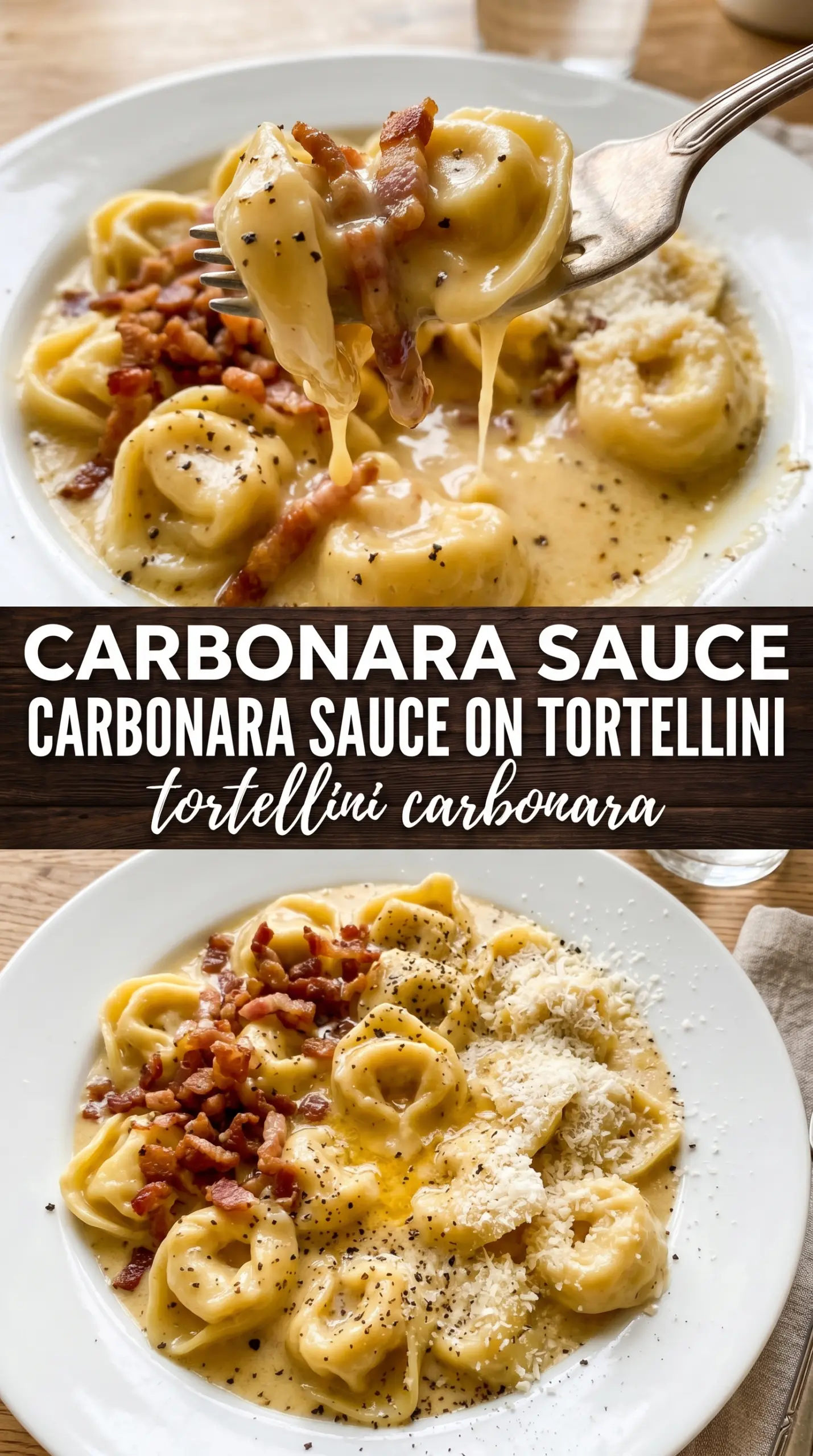
- Refrigerated cheese tortellini — This is what makes the dish feel substantial and fast. Fresh or refrigerated tortellini cooks quickly and stays tender, while dried tortellini takes longer and can lose that pillowy texture by the time the sauce is ready.
- Pancetta or thick-cut bacon — You want something fatty enough to render into the pan and season the whole dish. Pancetta gives a cleaner, more traditional carbonara-style taste, while bacon brings a smokier edge. Either works, but lean bacon won’t leave enough fat behind to carry the sauce.
- Eggs and egg yolk — The whole eggs build the sauce, and the extra yolk adds body and gloss. That yolk is what helps the sauce cling instead of turning thin. Skip it and the final dish will still work, but it won’t feel as lush.
- Finely grated parmesan — Finely grated cheese melts faster and blends into the eggs without clumping. Pre-shredded parmesan usually has anti-caking agents that make the sauce less smooth, so grate it yourself if you can.
- Cracked black pepper — Don’t treat this as garnish only. It belongs in the egg mixture, where it blooms against the warm fat and sharp cheese and gives the dish its carbonara backbone.
Building the Sauce So It Clings to Every Tortellini
Rendering the Bacon Fat
Cook the pancetta or bacon over medium heat until the pieces are crisp and the fat in the pan has turned golden. If the heat is too high, the edges brown before the fat has a chance to render, and you end up with salty little cubes plus a thin pan. Lift the meat out with a slotted spoon, but leave the fat behind. That fat is part of the sauce.
Warming the Garlic Without Burning It
Stir the garlic into the warm fat off heat for about 30 seconds. The pan should still smell savory and active, but the garlic should not sizzle hard or take on color. If it browns, it turns bitter fast and will throw off the balance of the sauce. You want a gentle perfume, not toasted garlic.
Combining the Tortellini and Egg Mixture
Whisk the eggs, yolk, parmesan, and black pepper in a bowl before the pasta hits the pan. Add the hot tortellini to the skillet off heat, pour in the egg mixture, and toss immediately. The sauce will look thin at first, then suddenly turn glossy as the cheese melts and the eggs thicken. If it looks curdled, the pan was too hot; pull it off the heat and splash in a little pasta water while tossing hard.
Adjusting the Finish
Use pasta water to loosen the sauce only until it coats the tortellini in a shiny layer. You’re looking for movement, not soup. The sauce should trail slowly off a spoon and leave a creamy film on the pasta. Finish with the crispy bacon, extra parmesan, and parsley right before serving so the top stays bright and the bacon stays crisp.
How to Adapt This When You Need a Different Version of Dinner
Use gluten-free tortellini
Swap in a gluten-free refrigerated tortellini if you can find one that holds its shape well. Gluten-free pasta softens faster and can break if you stir too aggressively, so toss more gently and start checking for doneness a minute early. The sauce still works the same way.
Make it dairy-free with a carbonara-style finish
Use a dairy-free tortellini and replace the parmesan with a finely grated dairy-free hard cheese-style alternative. The sauce won’t have quite the same salty depth or melt, so lean harder on black pepper and a little extra pancetta fat for body. It won’t taste identical, but it still lands in the right savory, glossy place.
Skip the bacon and make it vegetarian
Leave out the bacon and use a tablespoon of butter or olive oil in the skillet before the garlic, then add a pinch more salt and an extra handful of parmesan. You lose the smoky savoriness, so the dish tastes cleaner and a little lighter. It’s still rich, but it reads more like a cheese tortellini carbonara than a true carbonara.
Storage and Reheating
- Refrigerator: Store leftovers in an airtight container for up to 3 days. The sauce will tighten as it chills, and the tortellini may absorb some of the moisture.
- Freezer: I don’t recommend freezing this dish. Egg sauces and filled pasta both change texture after thawing, and the sauce is much more likely to separate.
- Reheating: Warm gently in a skillet over low heat with a splash of water or milk, tossing until the sauce loosens again. Don’t blast it in the microwave on high, or the eggs can turn grainy before the center heats through.
Questions I Get Asked About This Recipe
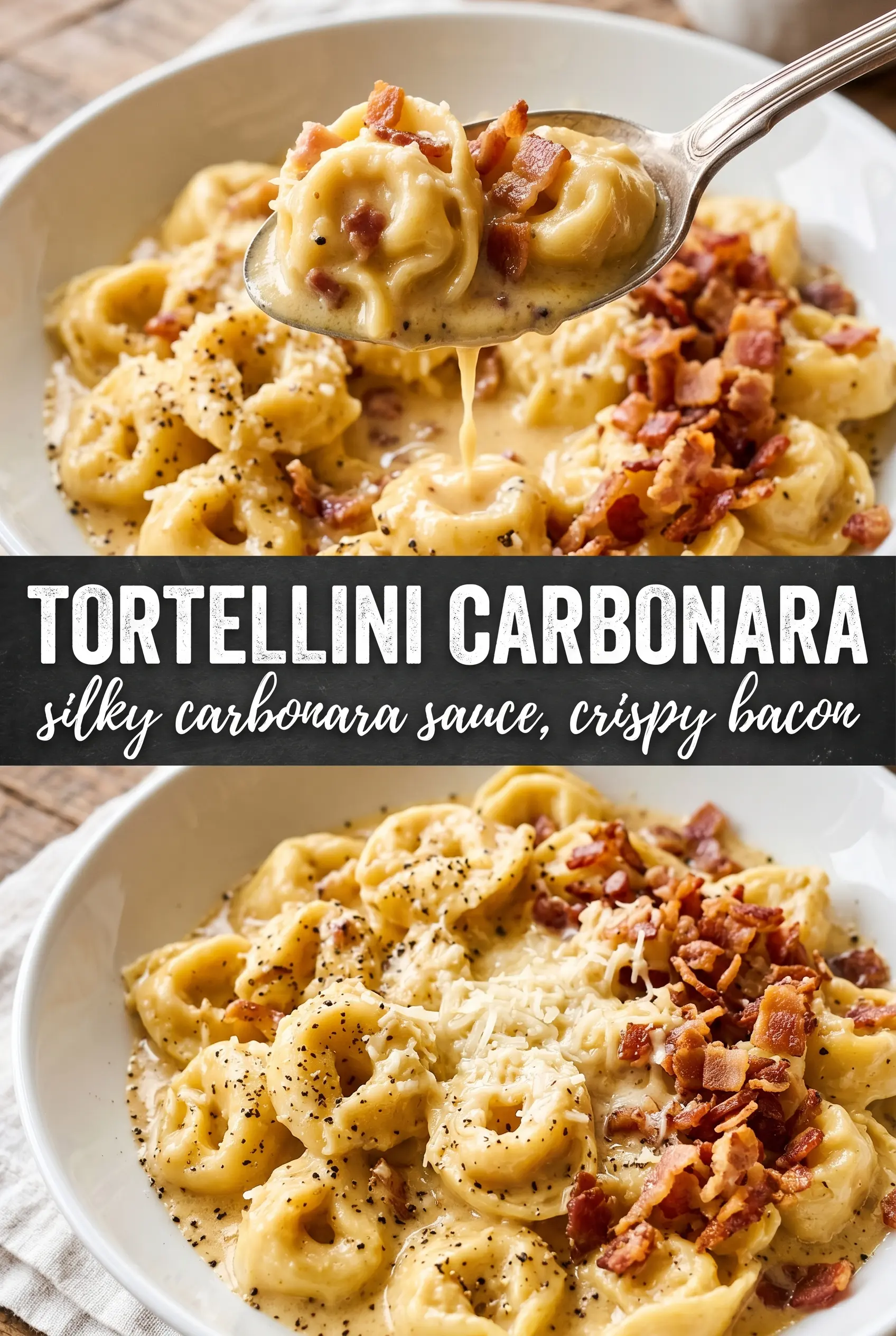
Tortellini Carbonara
Ingredients
Equipment
Method
- Bring a pot of salted water to a boil, then cook the refrigerated cheese tortellini until just al dente. Reserve 1 cup pasta water and drain, keeping the tortellini hot.
- Heat a large skillet over medium heat and cook the diced pancetta or thick-cut bacon until crispy, stirring as needed. Remove the crispy bits with a slotted spoon, leaving the fat in the pan.
- Add the minced garlic to the pancetta fat in the warm pan and cook for 30 seconds, off heat. Stir just until fragrant—do not brown.
- In a bowl, whisk the large eggs, egg yolk, and finely grated parmesan with plenty of cracked black pepper. Mix until smooth and well combined.
- Add the hot tortellini to the skillet off the heat, then pour the egg-parmesan mixture over. Toss quickly and add reserved pasta water a splash at a time, tossing constantly, until the sauce is silky and clings to every tortellini.
- Top with the crispy pancetta or bacon, extra parmesan, and fresh parsley, then serve immediately. Sprinkle an additional pinch of cracked black pepper if desired.