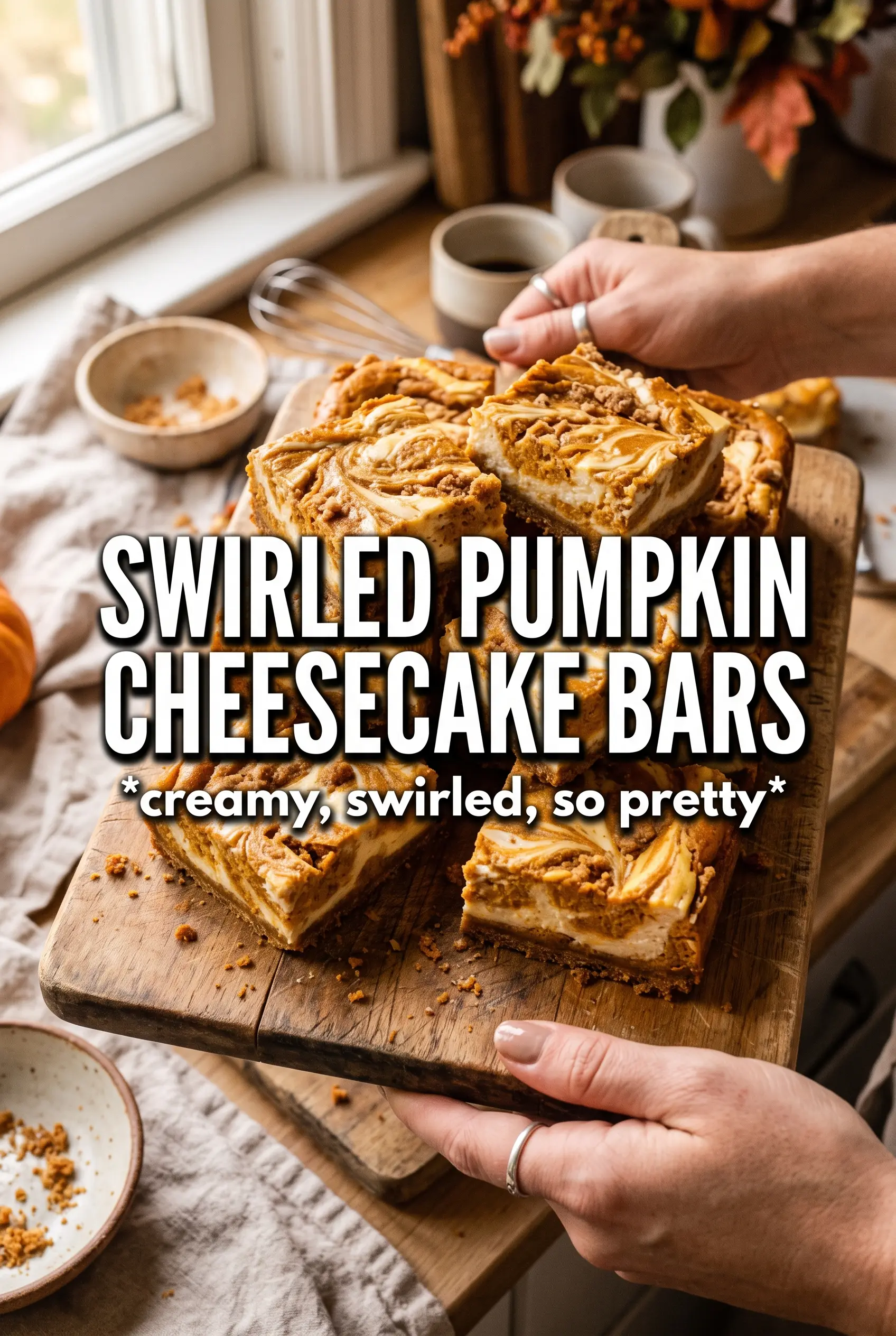
Swirled pumpkin cheesecake bars deliver the kind of creamy, tangy, spiced bite that disappears fast from the pan. The crust stays sturdy enough to slice cleanly, while the two cheesecake layers bake into a marbled top with a silky center and just enough pumpkin warmth to keep each bite interesting. The bars hold their shape well once chilled, which makes them easy to serve at a gathering or tuck into the fridge for dessert later in the week.
The trick here is keeping both filling layers smooth and not overbaking them. Cream cheese that’s truly softened blends without lumps, and the eggs go in just until incorporated so the batter stays light instead of dense. The pumpkin layer gets its color and flavor from real puree, brown sugar, cinnamon, and pumpkin pie spice, which gives it a deeper, rounder finish than pumpkin alone.
Below, I’ve included the swirl method that keeps the top dramatic instead of muddy, plus a few notes on crust swaps, chilling, and what to do if your bars need cleaner edges when you slice them.
The swirl stayed gorgeous after baking and the bars sliced cleanly once they were fully chilled. I used gingersnap crumbs and the crust had just enough spice to match the pumpkin without getting lost.
Save these swirled pumpkin cheesecake bars for the dessert table when you want a clean slice, a dramatic marbled top, and a gingersnap crust that adds just the right amount of spice.
The Part That Keeps the Swirl Sharp Instead of Blending Into One Layer
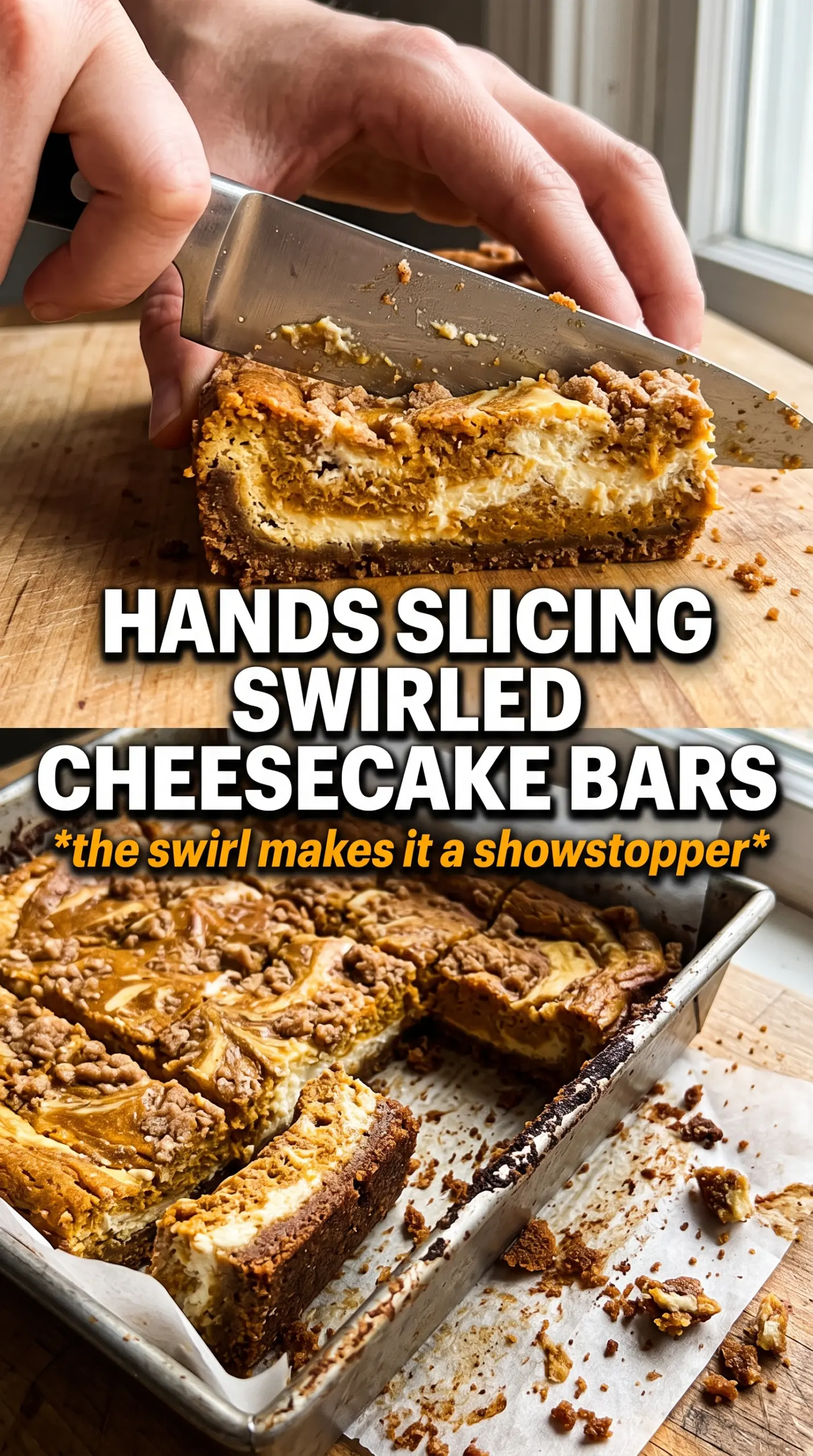
The biggest mistake with cheesecake bars like these is overmixing once the pumpkin layer goes on top. If both batters are too thin or too aggressively stirred together, the swirl turns muddy and the surface bakes into a flat beige layer instead of distinct ribbons. Keep the vanilla base thick enough to support the dollops, then drag the knife only a few times through the top. The goal is visible contrast, not a perfect pattern.
Baking until just set matters more than chasing a firm center in the oven. Cheesecake firms up as it chills, and if you wait until the middle looks fully baked, the bars will turn dry and crack at the edges. Pull them when the center still has the slightest wobble. That’s the sweet spot for a creamy bar that slices neatly after its rest in the fridge.
- Softened cream cheese — This is what keeps both layers smooth. Cold cream cheese leaves small lumps that won’t fully disappear once the eggs are added.
- Sour cream — It adds tang and loosens the vanilla layer just enough for a creamy bite. Greek yogurt works in a pinch, but it tastes a little sharper and can bake slightly firmer.
- Pumpkin puree — Use plain pumpkin puree, not pumpkin pie filling. Pie filling is already sweetened and spiced, which throws off both the flavor and the texture.
- Gingersnap crumbs — They give the crust a deeper spice and a snappier edge than graham crackers. Graham crumbs still work well if you want a milder base.
What Each Layer Is Actually Doing in These Bars
- Graham or gingersnap crumbs — The crust is there for contrast, not just structure. Gingersnaps bring spice that echoes the pumpkin, while graham crackers keep the flavor softer and more classic. If you use gingersnaps, reduce the sugar slightly if your crumbs are already sweet.
- Cream cheese — Both fillings depend on it for body and that familiar tang. Full-fat cream cheese gives the most stable result; low-fat versions tend to bake softer and can weep more after chilling.
- Sour cream — This keeps the vanilla layer from tasting heavy. It also helps the filling stay creamy after refrigeration instead of turning dense and chalky.
- Brown sugar and spices — Brown sugar deepens the pumpkin layer and makes the spice taste rounder. Cinnamon and pumpkin pie spice work together here, so don’t skip the cinnamon just because the blend already contains spice.
Building the Bars So the Center Sets Without Drying Out the Edges
Pressing and Prebaking the Crust
Mix the crumbs, sugar, and melted butter until every crumb looks evenly damp, then press the mixture firmly into the lined pan. An even, compact crust keeps the bars from crumbling when you lift them out later. Bake it for the full 8 minutes so the butter sets before the filling goes in; an underbaked crust tends to turn soft underneath the cheesecake.
Mixing the Two Cheesecake Batters
Beat each filling just until smooth and no streaks of cream cheese remain. Once the eggs go in, stop as soon as the batter looks uniform. Overbeating adds extra air, which can puff the bars in the oven and leave them more likely to crack or sink. The pumpkin layer should be thick enough to dollop, not pour like milk.
Creating the Marbled Top
Pour the vanilla cheesecake over the crust first, then drop large spoonfuls of the pumpkin mixture over the surface. Use a knife to sweep through the top in broad, shallow curves. If you dig too deep, you’ll scrape into the crust and blur the layers beneath; if you barely touch the surface, the swirl stays on top where it looks best.
Baking Until Just Set
Bake until the edges look set and the center gives a small jiggle when you tap the pan. That wobble disappears as the bars cool. Let them cool on the counter before chilling, or condensation can form on the surface and dull the finish. After 3 hours in the fridge, the bars should feel firm and cut cleanly with a sharp knife.
Gingersnap Crust for a Spicier Finish
Use gingersnap crumbs instead of graham crackers if you want the crust to taste like part of the dessert instead of just a base. The bars come out warmer and more aromatic, and the spice makes the pumpkin layer taste richer.
Dairy-Free Version with a Softer Set
Use dairy-free cream cheese and a plant-based butter substitute for the crust. The bars will still chill into slices, but the texture is a little softer and less tangy, so give them a full chill before cutting. Choose a brand that bakes well, not one meant only for spreading.
Gluten-Free Crust Swap
Use certified gluten-free graham-style crumbs or gluten-free gingersnaps in the same amount. The filling stays the same, so the texture change is all in the crust: a gluten-free crumb can be a little more delicate, so press it firmly and let the bars chill fully before slicing.
Making Them Ahead for a Crowd
These bars are even easier to cut when they’ve had an overnight chill. You can bake them a day ahead, keep them covered in the fridge, and slice them just before serving. The swirl stays sharper and the edges stay cleaner after a long rest.
Storage and Reheating
- Refrigerator: Store covered for up to 5 days. The crust softens a little over time, but the flavor stays excellent.
- Freezer: These freeze well. Wrap individual bars tightly and freeze for up to 2 months, then thaw in the fridge overnight for the cleanest texture.
- Reheating: Don’t reheat these bars. Cheesecake is best served cold or just slightly cool, and warming them breaks the texture and can make the filling loose.