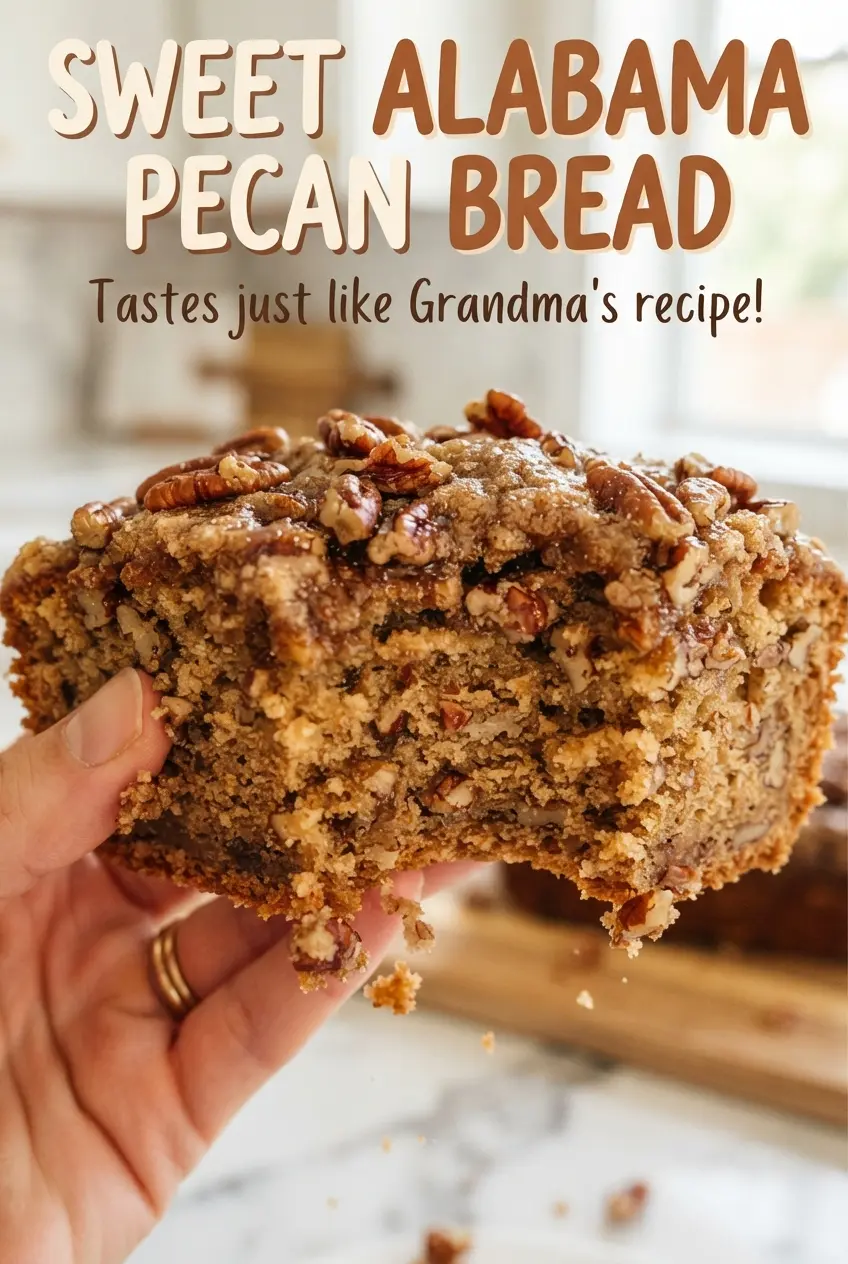
Sweet Alabama pecan bread bakes up with a buttery crumb, a crackly brown sugar top, and toasted pecans in every slice. It lands somewhere between quick bread and dessert, which is exactly why it keeps disappearing off the counter before it has a chance to cool all the way. The loaf stays tender without feeling heavy, and the pecan topping gives each slice a little crisp edge that makes the soft middle taste even better.
What makes this version work is the balance. Brown sugar brings moisture and a deep caramel note, while buttermilk keeps the crumb soft and helps the baking soda do its job. Toasting the pecans first matters too — it wakes up their flavor and keeps the bread from tasting flat. The topping isn’t just decoration either; that extra sprinkle of brown sugar melts into a thin, crackly layer that makes the first bite even better than the last.
If you’ve ever had pecan bread turn out dense or dry, the process below will help. The batter only needs to come together briefly, and there’s a small timing detail at the end that keeps the loaf neat when you slice it.
The loaf stayed incredibly moist, and that brown sugar pecan top baked into a crackly layer instead of sinking. I sliced it while it was still a little warm and the crumb held together perfectly.
Save this Sweet Alabama Pecan Bread for the crackly brown sugar top and buttery pecan crumb you’ll want to bake again.
Why the Batter Stays Tender Instead of Tough
This bread depends on a light hand. Once the flour goes in, overmixing is the fastest way to turn the crumb tight and dry, especially with a loaf that already has plenty of structure from the eggs and pecans. The buttermilk keeps things soft, but it can’t undo a batter that’s been beaten into submission.
The other point that matters is temperature. Softened butter should hold a finger indent without looking greasy or melted. If it’s too warm, it won’t trap enough air with the brown sugar, and the loaf loses that lifted, almost cake-like texture that makes it such a good slice.
- Buttermilk — This adds tang and tenderness, and it reacts with the baking soda for a better rise. Whole milk works in a pinch, but the loaf won’t be quite as soft or balanced.
- Brown sugar — Packed brown sugar brings moisture and that deep caramel note white sugar can’t mimic. Use the darker kind if you want a stronger molasses flavor.
- Pecans — Toasting them first is worth the extra few minutes. Untoasted nuts can taste bland in a sweet loaf, while toasted pecans stay fragrant and crisp against the soft crumb.
How to Build the Loaf Without Losing the Pecan Crunch
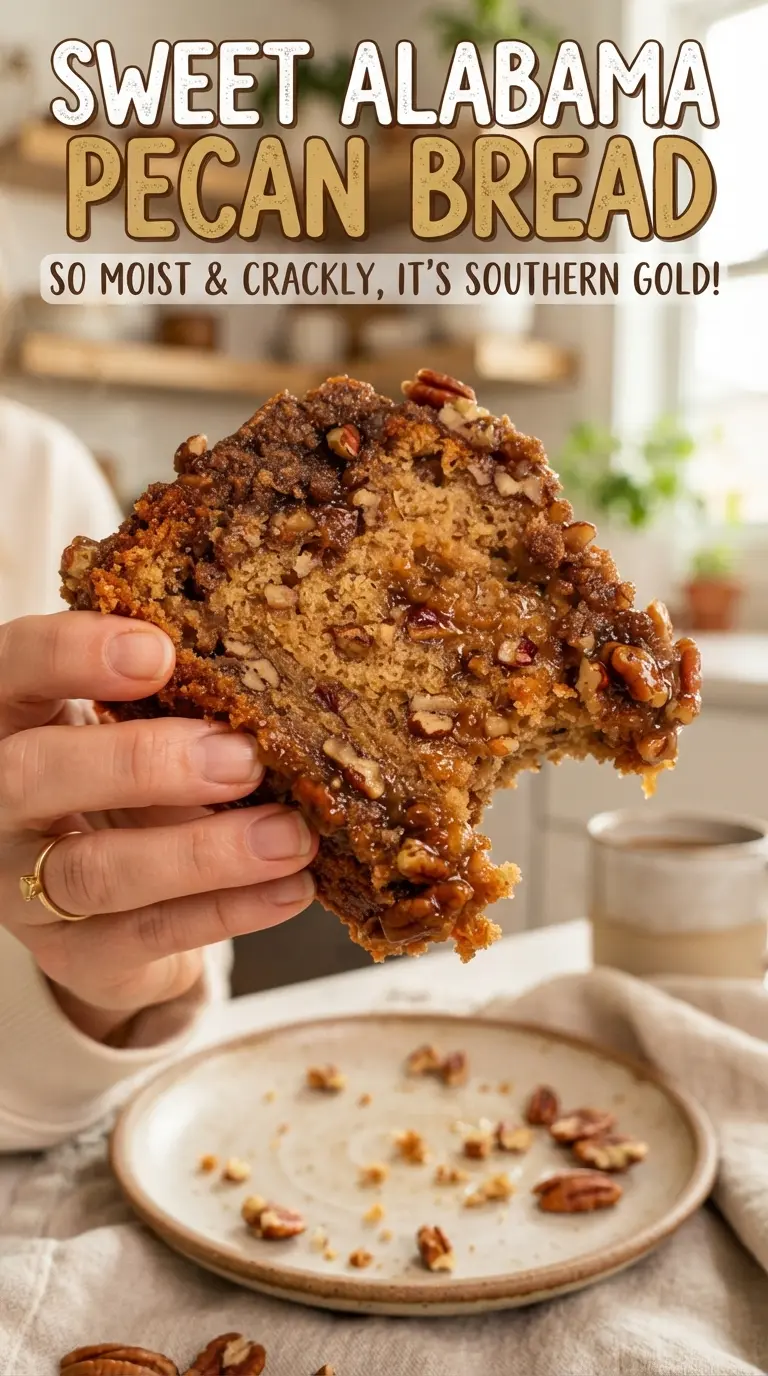
The ingredient list is short, which means each one earns its place. There isn’t anything here to hide behind, so the bread depends on a few small details that change the final texture more than you’d think.
- Flour — All-purpose flour gives the loaf enough structure to hold the pecans without turning bready. Don’t swap in cake flour here; it’s too delicate and the bread can collapse around the nuts.
- Butter — This gives the loaf its rich base and helps the top bake into a tender crust. If you use margarine or a spread with extra water, the texture turns less clean and the flavor gets flatter.
- Cinnamon — It’s subtle, not dominant, but it rounds out the brown sugar and pecans. A little goes a long way; too much and it starts reading like spice cake instead of pecan bread.
- Extra brown sugar for topping — This melts into the top crust and gives you that thin crackly finish. Skip it and the loaf will still bake fine, but you lose one of the best parts.
The 15 Minutes That Decide the Crumb
Mixing the Base
Beat the butter and brown sugar until the mixture looks lighter and a little fluffy, not just combined. That little bit of aeration helps the loaf rise without turning dense. Add the eggs one at a time so the batter stays smooth; if the mixture looks curdled, keep going and it usually comes back together once the dry ingredients go in.
Bringing the Batter Together
Add the dry ingredients alternately with the buttermilk, and stop as soon as the last streak of flour disappears. The batter should look thick and spoonable, not whipped. If you keep mixing to make it perfectly smooth, the loaf sets up tough and loses that tender sliceable crumb.
Finishing the Top and Baking
Fold in most of the pecans, then scatter the rest with the brown sugar over the top before baking. That top layer should look uneven and a little messy; it melts into the best crust that way. Bake until a toothpick comes out clean or with a few moist crumbs, then let the loaf sit in the pan for 15 minutes before turning it out. Pulling it too soon can make the center break apart while it’s still setting.
How to Adapt This Sweet Alabama Pecan Bread Without Losing the Good Part
Gluten-Free Version
Use a good 1:1 gluten-free baking blend that includes xanthan gum. The loaf will be a little more delicate, but the crumb should still stay soft if you mix it only until combined and let it cool before slicing.
Dairy-Free Version
Swap the butter for a solid plant-based baking stick and use a non-dairy milk mixed with 1 tablespoon of lemon juice or vinegar in place of the buttermilk. The loaf will still bake up tender, though the flavor will be slightly less rich and more neutral.
Extra-Toasty Pecan Loaf
Toast the pecans a little deeper and reserve an extra handful for the top. This pushes the nut flavor forward and gives the crust more crunch, but watch them closely so they don’t go bitter before they hit the batter.
Storage and Reheating
- Refrigerator: Store wrapped or in an airtight container for up to 5 days. The crumb stays moist, though the top will soften a little.
- Freezer: This loaf freezes well. Wrap slices or the whole cooled loaf tightly, then freeze for up to 2 months.
- Reheating: Warm slices in a 300F oven for 8 to 10 minutes or microwave briefly. Don’t overheat it, or the butter in the crumb can make the texture feel greasy instead of soft.
Answers to the Questions Worth Asking
Sweet Alabama Pecan Bread
Ingredients
Equipment
Method
- Preheat the oven to 350F and grease and line a 9x5-inch loaf pan so it releases easily. Set the pan aside on a stable surface.
- Whisk the all-purpose flour, baking powder, baking soda, salt, and ground cinnamon in a bowl until evenly combined. Break up any cinnamon clumps for a uniform loaf.
- Beat the softened butter and packed brown sugar until fluffy, then beat in the large eggs one at a time and add the vanilla extract. Continue until the batter looks smooth and lighter in color.
- Add the dry ingredients alternately with the buttermilk, mixing just until combined. Stop as soon as no dry streaks remain to keep the crumb tender.
- Fold in 1 cup of the toasted and chopped pecans, then pour the batter into the prepared loaf pan. Spread it level so it bakes evenly.
- Top the batter with the remaining toasted and chopped pecans and sprinkle the brown sugar for topping over the surface. This creates the crackly top as it bakes.
- Bake at 350F for 55-60 minutes, until a toothpick comes out clean. Visual cue: the top should look deeply golden and slightly set in the center.
- Cool the loaf in the pan for 15 minutes before slicing. Slide the bread out carefully so the pecan topping stays intact.