Juicy summer fruit gets even better when it’s cut cleanly, tossed gently, and finished with a light honey-lime dressing that clings without drowning anything. The result is cold, bright, and glossy, with soft berries, crisp melon, and just enough sweetness to pull the whole bowl together. It’s the kind of side dish people keep returning to because it tastes fresh all the way through the serving window.
What makes this version work is restraint. The dressing uses just enough honey to highlight the fruit instead of turning it syrupy, and the lime zest matters as much as the juice because it gives the bowl a cleaner, sharper citrus note. I also like to chill it briefly before serving so the fruit has time to mingle without going limp.
Below, I’ll walk through the fruit choices that hold up best, the one timing step that keeps the salad from watering out, and a few smart swaps if you’re working with what’s already in your kitchen.
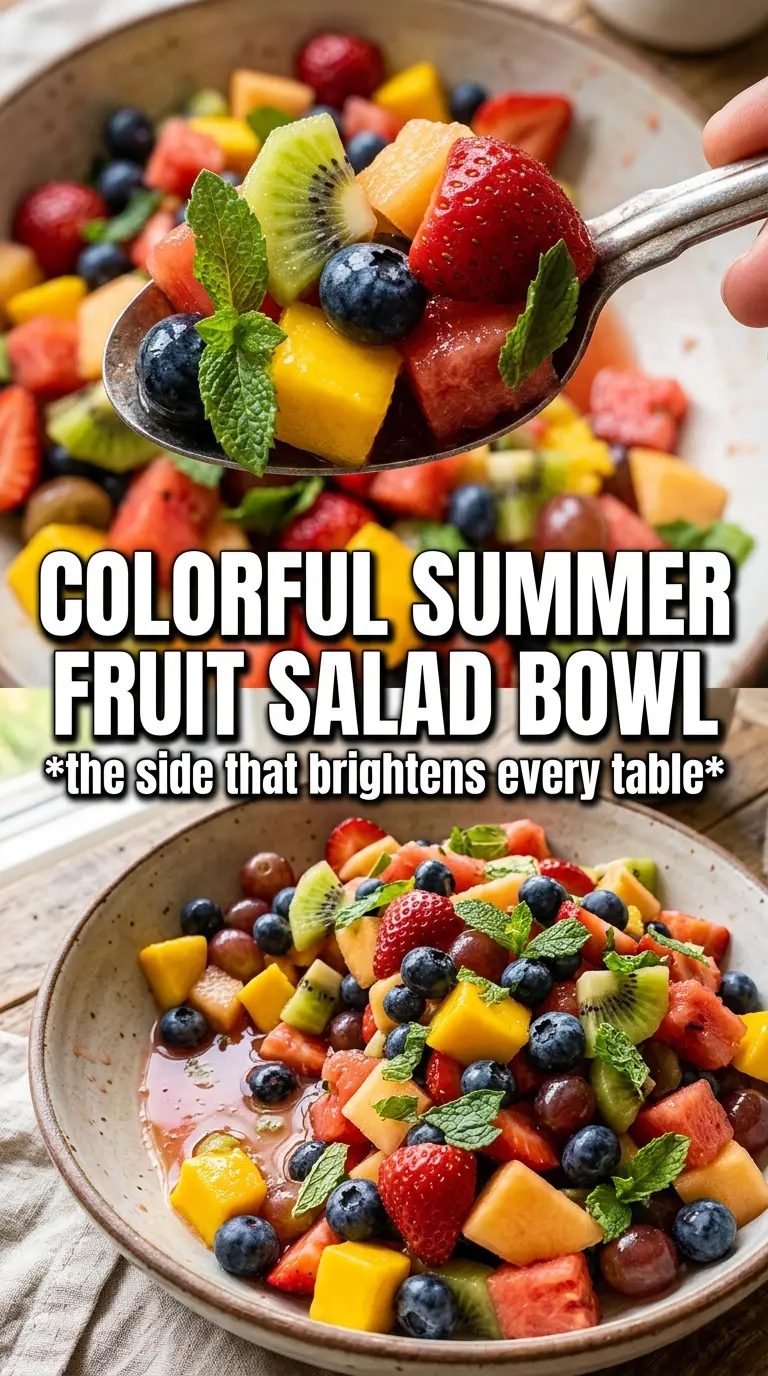
The honey-lime dressing coated everything without making it soggy, and the mint at the end kept it tasting bright even after it sat on the table for a bit.
Save this honey-lime summer fruit salad for potlucks, cookouts, and any table that needs a cold, colorful side.
The Trick to Keeping Mixed Fruit from Turning Watery
Fruit salad fails when the softer fruit gets buried under the weight of the whole bowl and starts shedding juice before you’re ready. That’s why the order matters here. Toss the sturdier fruit first, then fold in the berries at the end so they stay intact and don’t stain everything muddy.
Chilling helps, but chilling too long can work against you. Twenty minutes is enough to let the honey-lime dressing settle into the fruit without pulling out a flood of liquid. If your bowl looks soupy, the fruit was probably cut too small or salted by accident from nearby prep surfaces. Keep the pieces generous and dry them well after washing.
What Each Ingredient Is Actually Doing in This Recipe
- Primary ingredient (the star) — Quality matters most. Choose the best you can find.
- Cooking medium (oil, butter, or broth) — This carries flavors and prevents dryness.
- Seasonings (salt, pepper, spices, herbs) — Layer flavors so nothing overpowers. Build depth gradually.
- Aromatics (garlic, onion, herbs) — Cook with fat to bloom flavors. Become the foundation.
- Supporting ingredients — Complement the main ingredient without overpowering it.
- Sauce or liquid (if applicable) — Brings flavors together. Balance richness with acid.
- Acid (lemon, vinegar, wine, or other) — Brightens and prevents flat-tasting results.
- Final finish (garnish, glaze, or sauce) — Prevents one-dimensional taste and adds visual appeal.
What the Dressing Is Doing Beyond Adding Sweetness
- Watermelon, strawberries, pineapple, grapes, and peaches — These give you the best mix of juiciness, sweetness, and texture, but they all need to be cut to a similar bite so the bowl eats evenly. The firmer fruit holds the shape; the softer fruit brings the juice.
- Blueberries and raspberries — Blueberries keep their pop, while raspberries soften the dressing and make the bowl feel lush. Raspberries are delicate, so fold them in last and use the freshest ones you can find.
- Kiwis — Kiwi adds a tart edge that keeps the salad from tasting flat. They should be peeled and sliced just before mixing so they don’t weep or turn mushy.
- Honey, lime juice, and lime zest — Honey gives the dressing body, lime juice brings the brightness, and zest supplies the citrus aroma that juice alone can’t deliver. If you only use juice, the dressing tastes thinner and less finished.
- Fresh mint — Mint is a garnish, but it earns its place because it lifts the whole bowl right before serving. Tear the leaves only if they’re large; otherwise, leave them whole so they stay clean and bright.
How to Toss It So the Fruit Stays Beautiful
Building the Fruit Base
Start with the watermelon, pineapple, grapes, strawberries, kiwi, and blueberries in a large bowl with enough room to toss without crushing anything. Dry the fruit after washing it, especially the berries, because extra surface water thins the dressing and collects at the bottom. If the bowl is too small, you’ll break the softer fruit just trying to mix it.
Whisking the Honey-Lime Dressing
Whisk the honey, lime juice, and lime zest until the honey disappears and the mixture looks glossy. If your honey is thick, let it sit at room temperature for a few minutes before mixing so it blends smoothly instead of clumping. You’re looking for a loose, pourable dressing that coats the back of a spoon lightly.
Gentle Tossing and Short Chilling
Pour the dressing over the fruit and fold it with a big spoon or spatula, lifting from the bottom instead of stirring hard. Hard stirring bruises the berries and turns the bowl cloudy. Chill it for 20 minutes, then taste again; if the fruit is especially sweet, a little extra lime wakes it back up, and if it’s tart, another drizzle of honey smooths it out.
Finishing With Mint
Add the mint right before serving so it stays fragrant and doesn’t darken in the cold dressing. If you mix it in too early, the leaves wilt and the fresh aroma disappears. A few leaves scattered over the top are enough to make the whole bowl smell like you just finished it at the table.
Make it dairy-free and naturally vegan
This recipe already lands in dairy-free, vegan territory as written, which is part of why it’s such an easy crowd dish. The honey is the only ingredient some people swap, and maple syrup works well if you want a fully vegan sweetener with a slightly deeper note.
Use whatever ripe fruit you have on hand
Nectarines, mango, cherries, blackberries, or cantaloupe all fit here as long as you keep the texture mix balanced. If you swap in very soft fruit, add it at the end and shorten the chill time so the salad doesn’t collapse into juice.
Make it less sweet
Cut the honey back and lean a little harder on the lime zest if you want a brighter, less dessert-like bowl. The fruit still tastes complete, but the finish moves from syrupy to crisp and refreshing.
Storage and serving window
- Refrigerator: Best within 24 hours. After that, the berries soften and the bowl releases more juice.
- Freezer: Don’t freeze it. The texture turns mushy once thawed.
- Serving: Keep it chilled until the last minute, then give it one gentle toss before serving so the dressing redistributes.
Questions I Get Asked About This Recipe
Summer Fruit Salad
Ingredients
Method
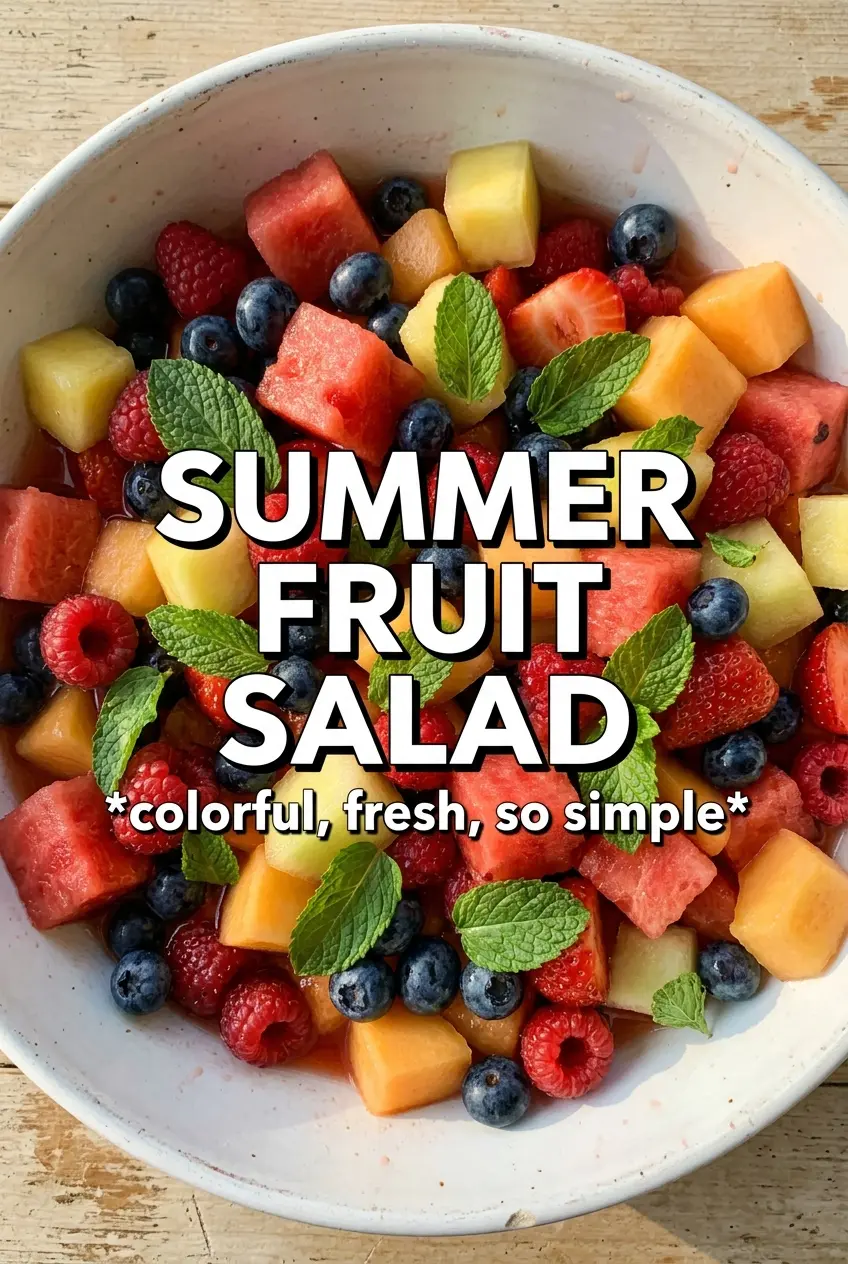
- Cube the watermelon, halve the strawberries, and cut the pineapple into chunks, then set aside everything in a large serving bowl.
- Add the blueberries, raspberries, sliced kiwis, green grapes, and peach slices to the same large serving bowl.
- Whisk the honey, lime juice, and lime zest together until combined and glossy.
- Pour the honey-lime dressing over the fruit and gently toss until every piece is coated.
- Taste and adjust the sweetness with more honey or the brightness with more lime juice as desired.
- Refrigerate for 20 minutes to let the flavors meld.
- Scatter fresh mint leaves over the top and serve chilled.