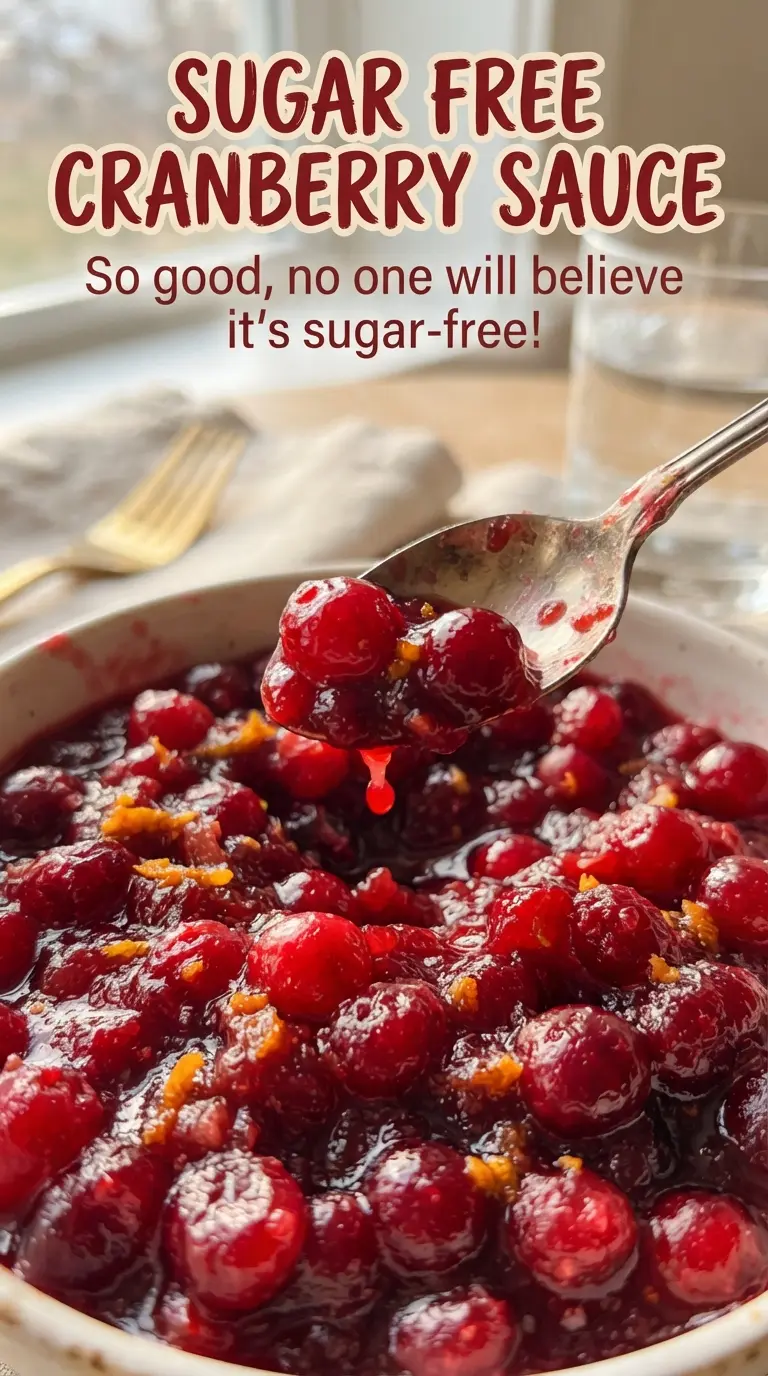
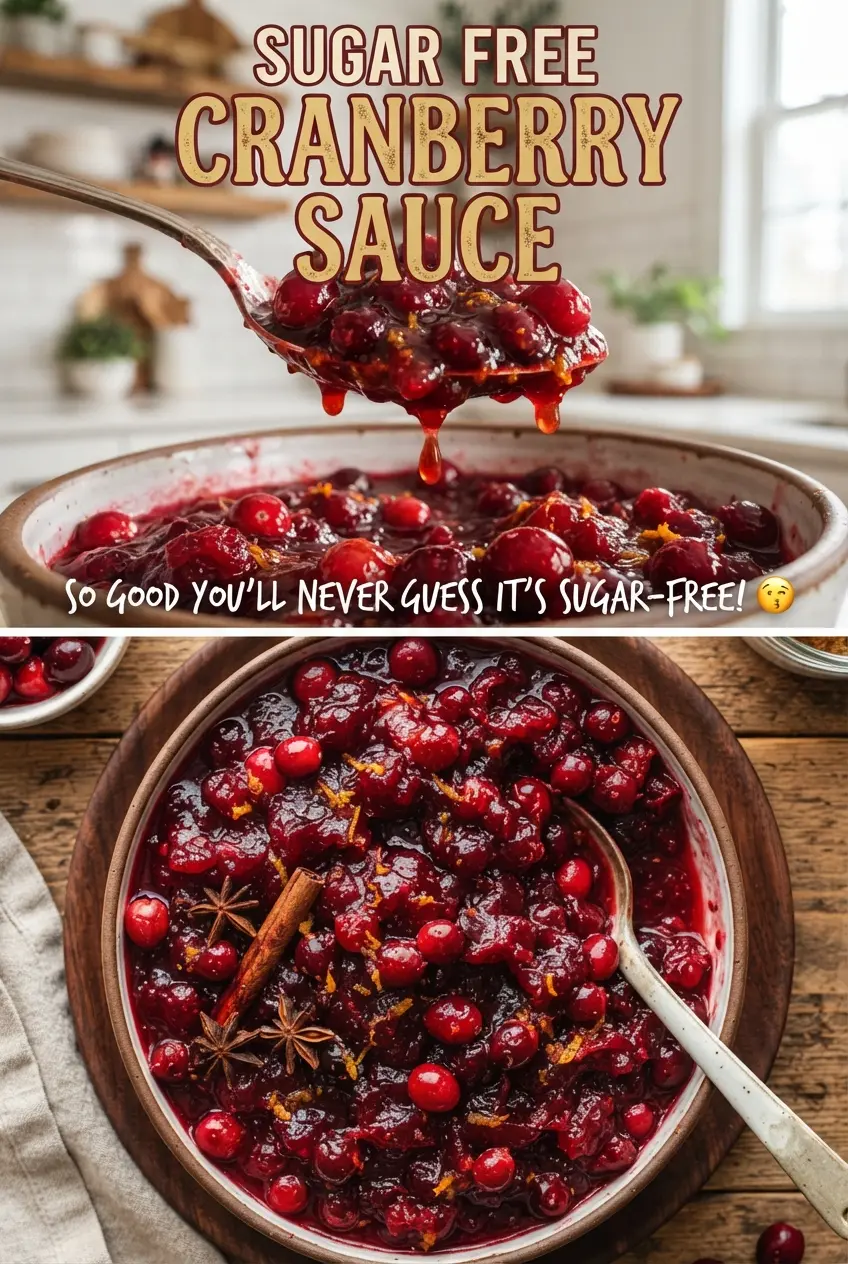
Glossy, bright cranberry sauce doesn’t need a lot of sugar to taste complete. When it’s cooked down just enough, the berries burst into a spoonable sauce with a little texture left behind, and the orange zest lifts the whole bowl without making it taste flat or overly sweet. This version lands on the table with a clean tart edge and a deep ruby color that looks right next to roasted turkey, ham, or even a simple weeknight chicken plate.
The trick is starting with the sweetener fully dissolved in water before the cranberries go in. That gives you an even base and keeps the finished sauce from tasting gritty. Monk fruit and allulose both work here, but allulose gives the closest soft, jammy body once the sauce cools. Cinnamon adds warmth without turning this into a spice-heavy side dish, and the zest goes in at the end so it stays bright instead of disappearing into the pot.
Below, I’ll show you the one timing detail that keeps cranberry sauce from turning too loose, plus a few ways to tweak the sweetness and texture without losing that classic cranberry bite.
The berries burst right on time and the sauce set up beautifully after chilling. I loved that it stayed tart instead of tasting like candy, and the orange zest made it taste fresh.
Save this sugar free cranberry sauce for the holiday table — tart cranberries, orange zest, and a glossy finish that sets up after chilling.
The Part That Keeps Cranberry Sauce From Turning Watery
Cranberry sauce usually fails in one of two ways: it’s either boiled so hard the berries collapse into a thin jam, or it’s pulled too early and never gets the body it needs once chilled. The texture you want comes from a gentle simmer, not a rolling boil. Cranberries need enough heat to split open and release their natural pectin, but not so much that the mixture reduces into something sticky before the berries finish doing their work.
The other mistake is judging it too early. Warm cranberry sauce always looks looser than it will in the fridge, and that’s where a lot of people panic and keep cooking it until it turns pasty. Pull it when most of the berries have burst and the liquid looks slightly syrupy around the edges. It will tighten as it cools.
- Fresh cranberries — These bring the bright tart flavor and the natural thickening power. Frozen cranberries also work straight from the freezer; don’t thaw them first or they’ll give off extra water and soften unevenly.
- Monk fruit or allulose sweetener — This gives the sauce sweetness without the sugar load. Allulose produces the best glossy, jam-like finish; monk fruit blends can taste a little lighter, so taste at the end and adjust if needed.
- Orange zest — This is the lift that keeps the sauce from tasting one-note. Zest it finely and stir it in off the heat so the oils stay bright instead of cooking away.
- Cinnamon — Just enough to add warmth. More than half a teaspoon starts to pull the sauce away from classic cranberry territory and into a spiced compote.
What Each Ingredient Is Actually Doing in This Recipe
- Primary ingredient (the star) — Quality matters most. Choose the best you can find.
- Cooking medium (oil, butter, or broth) — This carries flavors and prevents dryness.
- Seasonings (salt, pepper, spices, herbs) — Layer flavors so nothing overpowers. Build depth gradually.
- Aromatics (garlic, onion, herbs) — Cook with fat to bloom flavors. Become the foundation.
- Supporting ingredients — Complement the main ingredient without overpowering it.
- Sauce or liquid (if applicable) — Brings flavors together. Balance richness with acid.
- Acid (lemon, vinegar, wine, or other) — Brightens and prevents flat-tasting results.
- Final finish (garnish, glaze, or sauce) — Prevents one-dimensional taste and adds visual appeal.
Building the Sauce So It Thickens Without Overcooking
Dissolving the Sweetener First
Start by bringing the water and sweetener to a boil in a saucepan, stirring until the crystals are fully dissolved. This gives you an even base so the cranberries cook in a consistent syrup instead of a grainy liquid. If you add the berries before the sweetener disappears, the bottom of the pan can cook unevenly and the sauce won’t feel as smooth.
Letting the Berries Burst at a Gentle Simmer
Once the cranberries, cinnamon, and salt go in, lower the heat to a steady simmer. You’ll hear the berries pop and see the liquid change from clear and thin to glossy and red. Stir now and then, but don’t keep mashing them; the natural breakdown creates better texture than forcing every berry open at once. When the sauce starts to look thick around the spoon, it’s close.
Finishing With Zest and Adjusting the Sweetness
Take the pan off the heat before stirring in the orange zest. That keeps the citrus aroma on top instead of cooking it out. Taste after the sauce cools slightly, because cold mutes sweetness less than warm sauce does; if it still tastes sharp, stir in a little more sweetener while it’s warm enough to dissolve it cleanly.
How to Adapt This for Different Tables and Diets
Use allulose for the closest texture
Allulose gives the sauce the glossiest, most traditional finish because it behaves more like sugar as it cools. If you swap in monk fruit, the flavor still works, but the sauce can set a little looser and taste slightly less rounded, so chill it fully before deciding whether it needs another spoonful of sweetener.
Make it brighter with extra citrus
For a sharper, fresher sauce, add a little extra orange zest at the end or replace part of the water with orange juice. That pushes the sauce toward a citrus-cranberry profile and softens the tart edge, which works well if you’re serving it with rich meats.
Skip the cinnamon for a cleaner cranberry flavor
If you want the cranberries to taste sharper and less spiced, leave out the cinnamon and keep the orange zest. The sauce will taste more classic and a little more tart, which is a good move if you’re serving it with seasoned gravy or other heavily flavored dishes.
Storage and Reheating
- Refrigerator: Store in an airtight container for up to 1 week. It thickens as it chills, so the cold version will look firmer than the warm sauce.
- Freezer: Freezes well for up to 2 months. Cool completely first, then freeze in a sealed container with a little headspace because the sauce will expand slightly.
- Reheating: Warm gently on the stove over low heat or in short bursts in the microwave. Don’t boil it hard again or it can break down into a loose, overcooked sauce.
Answers to the Questions Worth Asking
Sugar Free Cranberry Sauce
Ingredients
Equipment
Method
- In a saucepan, bring the water and granular monk fruit or allulose sweetener to a boil, stirring until completely dissolved (about 2–3 minutes). You should see steady bubbling across the surface.
- Add the fresh cranberries, ground cinnamon, and salt to the saucepan and stir to combine. The mixture will look bright and slightly foamy as it comes back up.
- Simmer for 10–12 minutes, stirring occasionally, until the berries burst and the sauce thickens. Look for thickened red sauce that coats the back of a spoon.
- Remove from the heat and stir in the orange zest, then taste and add more sweetener if needed. The zest should look speckled throughout the glossy sauce.
- Cool to room temperature, then chill before serving for the best set and flavor. The surface should become thicker and more spoonable after cooling.