Southern squash casserole lands on the table with a soft, savory center and a buttery cracker top that shatters when your spoon goes in. The squash turns tender without going watery, the cheddar melts into the custard, and the Ritz crust gives every bite a salty crunch that keeps this side dish from feeling heavy or bland. It’s the kind of pan you put out for Sunday supper and watch disappear before the main course is finished.
What makes this version work is the way the squash is cooked first, then drained thoroughly before it ever meets the eggs and dairy. That step keeps the casserole set instead of soupy. The mix of sour cream and mayonnaise gives the filling enough body and tang to hold up under the rich topping, while the buttery cracker layer browns fast and stays crisp if you don’t overload it with extra butter.
Below you’ll find the part that matters most: how to keep the squash from watering out the dish, which ingredient gives the filling its structure, and a few smart swaps for when you want to adjust the casserole without losing the Southern feel.
The squash stayed tender but not mushy, and the cracker topping baked up crisp instead of soggy. I drained it longer than I usually do, and that made all the difference.
Want that buttery Ritz topping and tender squash center again? Save this Southern squash casserole for your next Sunday supper or holiday table.
The Part Most Casseroles Get Wrong: The Squash Has to Lose Its Water First
Squash casserole usually fails in one of two ways: it turns watery, or the filling bakes up loose and greasy because the vegetables carried too much moisture into the dish. Yellow squash holds a lot of water, and if you skip the drain step, the eggs can’t set the way they should. You end up with a spoonable pan instead of neat, creamy squares.
Cooking the squash and onion before baking softens the vegetables and starts the flavor building early, but the real key is draining them well in a colander after cooking. Let steam escape for a few minutes, then press gently with a spoon if needed. You want the mixture damp, not wet. That small step is what keeps the casserole rich instead of soupy.
- Yellow squash — This is the backbone of the dish. Slice it evenly so it cooks at the same rate, and don’t cut it paper thin or it will collapse before the casserole ever reaches the oven.
- Onion — The onion adds sweetness and depth once it softens in the butter. A fine dice works best because large chunks can stay sharp and distract from the creamy filling.
- Eggs, sour cream, and mayonnaise — These are the binder and the richness. Sour cream adds tang, mayo adds body, and eggs set the casserole. If you swap in only sour cream, the filling is looser; if you use only mayo, it can taste heavy.
- Sharp cheddar — Sharp cheddar gives the casserole enough bite to stand up to the squash. Mild cheddar works, but the flavor gets flatter.
What Each Ingredient Is Actually Doing in This Southern Squash Casserole
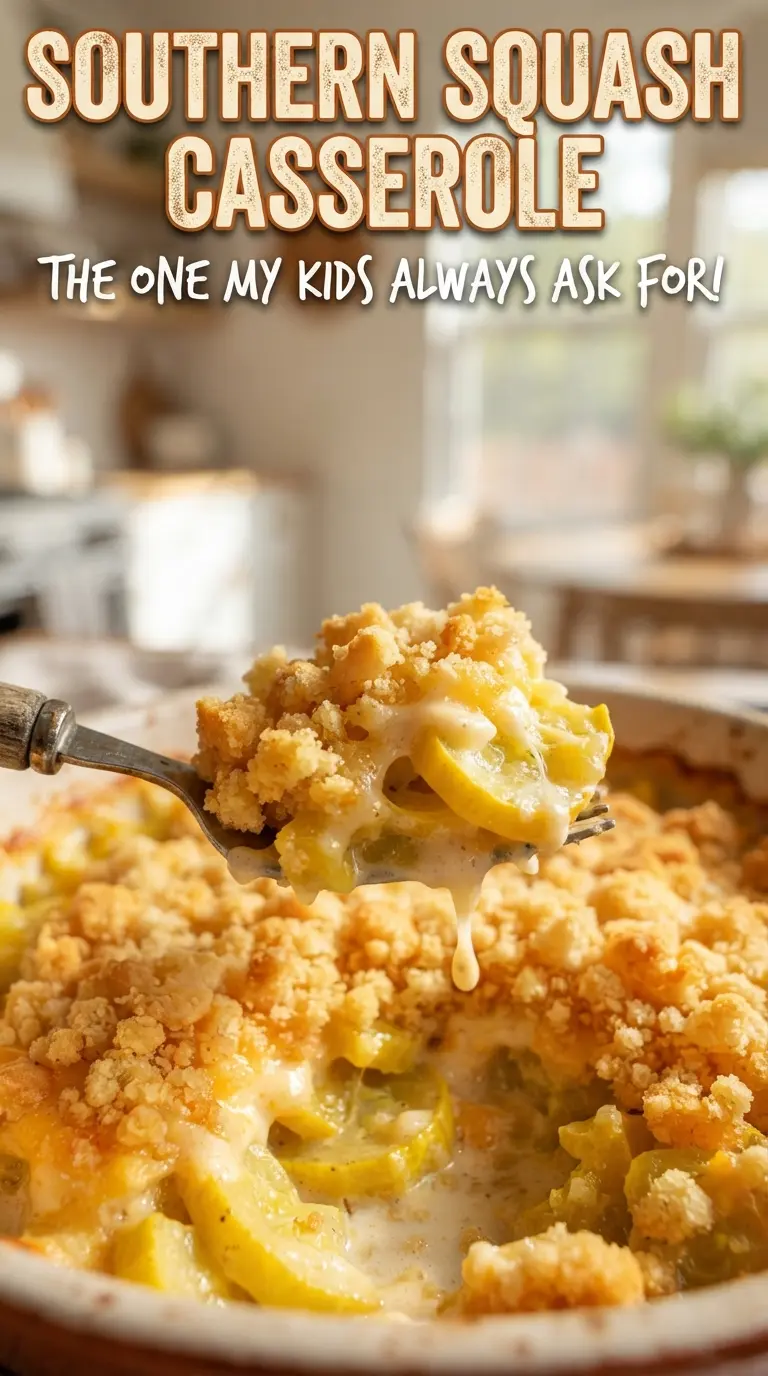
The alt version was rendered here in place of the required image block note based on the recipe name and characteristics.
- Ritz crackers — They’re not just a topping; they bring salt, fat, and a light, shattery crunch that plain breadcrumbs don’t match. Crush them fairly fine so the top browns evenly, but leave a few small pieces for texture.
- Butter — Butter in the skillet helps the squash and onion soften without sticking, and the melted butter for the topping helps the crackers toast. Too much on top can make the crust greasy, so keep it measured.
- Salt and pepper — Salt wakes up the squash, which can taste flat on its own, and black pepper gives the filling just enough edge. Don’t overdo the salt if your crackers or cheddar are already on the salty side.
Building the Casserole So It Bakes Up Creamy, Not Soupy
Softening the Squash Without Browning It Too Hard
Cook the squash and onion in butter until the squash is tender and most of the moisture has cooked off, about 10 to 12 minutes. You’re looking for soft slices that still hold some shape, not a jammy skillet full of broken-down vegetables. If the pan still looks wet when you turn off the heat, give it another minute or two before draining. That extra evaporation helps the finished casserole set.
Mixing the Filling Without Scrambling the Eggs
Stir the cheddar, sour cream, mayonnaise, eggs, salt, and pepper together before folding in the squash. That gives you an even custard base so the eggs don’t clump in one spot. Let the squash cool for a couple of minutes before mixing it in; if it’s piping hot, it can start to cook the eggs before the dish goes into the oven. The filling should look thick and spoonable before it hits the baking dish.
Getting the Cracker Top Golden
Toss the crushed Ritz crackers with melted butter until every crumb looks lightly coated, then scatter them evenly over the top. Don’t press them down hard or they’ll bake into a dense layer instead of a crisp crust. Bake until the center is set and the top is deep golden, not pale. If the top browns before the middle firms up, lay a loose piece of foil over it for the last few minutes.
Make It Lighter Without Losing the Creamy Center
Replace the mayonnaise with extra sour cream if you want a brighter, slightly tangier casserole. It’ll still set, but the filling will be a little less rich and the flavor will lean more dairy-forward than silky.
Gluten-Free Crunch on Top
Use gluten-free buttery crackers in the same amount and crush them the same way. The texture will be close, though the topping may brown a little faster, so watch the last 10 minutes closely.
Extra Cheesy Version for a Main-Dish Feel
Add another 1/2 cup cheddar if you want a firmer, cheesier casserole with a more pronounced savory bite. More cheese makes the filling denser and a little saltier, so hold back a pinch of salt if your cheddar is sharp.
Make-Ahead Assembly for a Holiday Table
Assemble the filling in the dish up to a day ahead, but keep the cracker topping separate until just before baking. If the crackers sit on top too long, they absorb moisture and lose that crisp, buttery finish.
Storage and Reheating
- Refrigerator: Store covered for up to 4 days. The topping will soften, but the casserole still reheats well.
- Freezer: It freezes, but the texture of the squash softens after thawing. Freeze baked portions tightly wrapped for up to 2 months for best results.
- Reheating: Warm in a 325F oven, covered loosely with foil, until hot in the center. The biggest mistake is microwaving it hard and fast, which turns the squash watery and the topping limp.
Questions I Get Asked About This Southern Squash Casserole

Southern Squash Casserole
Ingredients
Equipment
Method
- Preheat the oven to 350F, then grease a 9x13-inch baking dish for easy release. Visual cue: the dish should look evenly coated.
- Cook yellow squash and onion in butter for 10-12 minutes until tender. Visual cue: the squash should be soft and the onion should turn translucent.
- Drain the cooked squash and onion well in a colander to remove excess moisture. Visual cue: less steam should rise and the mixture should look drier.
- Mix cheddar, sour cream, mayonnaise, eggs, salt, and black pepper until smooth, then fold in the drained squash mixture. Visual cue: the squash should be evenly coated.
- Spread the mixture into the prepared baking dish in an even layer. Visual cue: corners should be filled so it bakes uniformly.
- Toss crushed Ritz crackers with melted butter, then sprinkle over the top. Visual cue: the surface should look evenly speckled and lightly glossy.
- Bake at 350F for 30-35 minutes until golden and set. Visual cue: the edges should be bubbling and the center should hold its shape when gently nudged.