Southern fried cabbage turns soft, savory, and a little sweet at the edges, with bacon running through every bite and just enough vinegar at the end to keep it from tasting heavy. The cabbage doesn’t go mushy here. It gets tender in the skillet, picks up the bacon drippings, and finishes with those browned, caramelized bits that make a simple side dish feel worth repeating.
The trick is to give the onion a head start in the bacon fat, then let the cabbage sit long enough between stirs to take on some color. A small spoonful of sugar helps the cabbage brown instead of just steam, and the apple cider vinegar goes in at the end so the whole pan tastes brighter, not flat. That little hit of acid is what keeps this dish from feeling one-note.
Below, I’ll walk through the part that matters most: how to get the cabbage tender without turning it watery, plus a few easy swaps if you need to stretch what’s in the fridge.
The cabbage got those caramelized edges I never seem to get, and the vinegar at the end kept the bacon from making it too heavy. My husband kept sneaking bites straight from the skillet.
Save this Southern Fried Cabbage for the nights when you want tender cabbage, crispy bacon, and a quick skillet side that finishes with just enough tang.
The Part That Keeps Fried Cabbage from Turning Watery
The biggest mistake with fried cabbage is crowding the pan and stirring too often. Cabbage gives off a lot of moisture as it cooks, and if the skillet stays packed or the heat is too low, it softens in its own steam instead of picking up those browned edges. A wide skillet and a little patience are what separate limp cabbage from the version people go back for.
The bacon drippings matter here, but so does the timing. Onion goes in first so it can soften and sweeten before the cabbage hits the pan, and the garlic only needs half a minute or it can turn bitter. The sugar isn’t there to make the dish taste sweet; it nudges the cabbage toward caramelization, especially once the butter melts through and coats the pieces.
- Bacon — Use regular sliced bacon, not thick-cut, so it renders enough fat to season the whole skillet. If you need a shortcut, pre-cooked bacon works in a pinch, but you’ll want to add a tablespoon of butter or oil so the pan doesn’t taste flat.
- Green cabbage — Fresh, firm cabbage with tightly packed leaves holds its shape best. Pre-shredded cabbage works for speed, but it softens faster, so cut back on the cook time by a few minutes.
- Apple cider vinegar — This is the finishing touch that wakes up the whole dish. Lemon can work if that’s what you have, but it tastes sharper and less rounded than cider vinegar.
What Each Pan Ingredient Is Doing in the Skillet
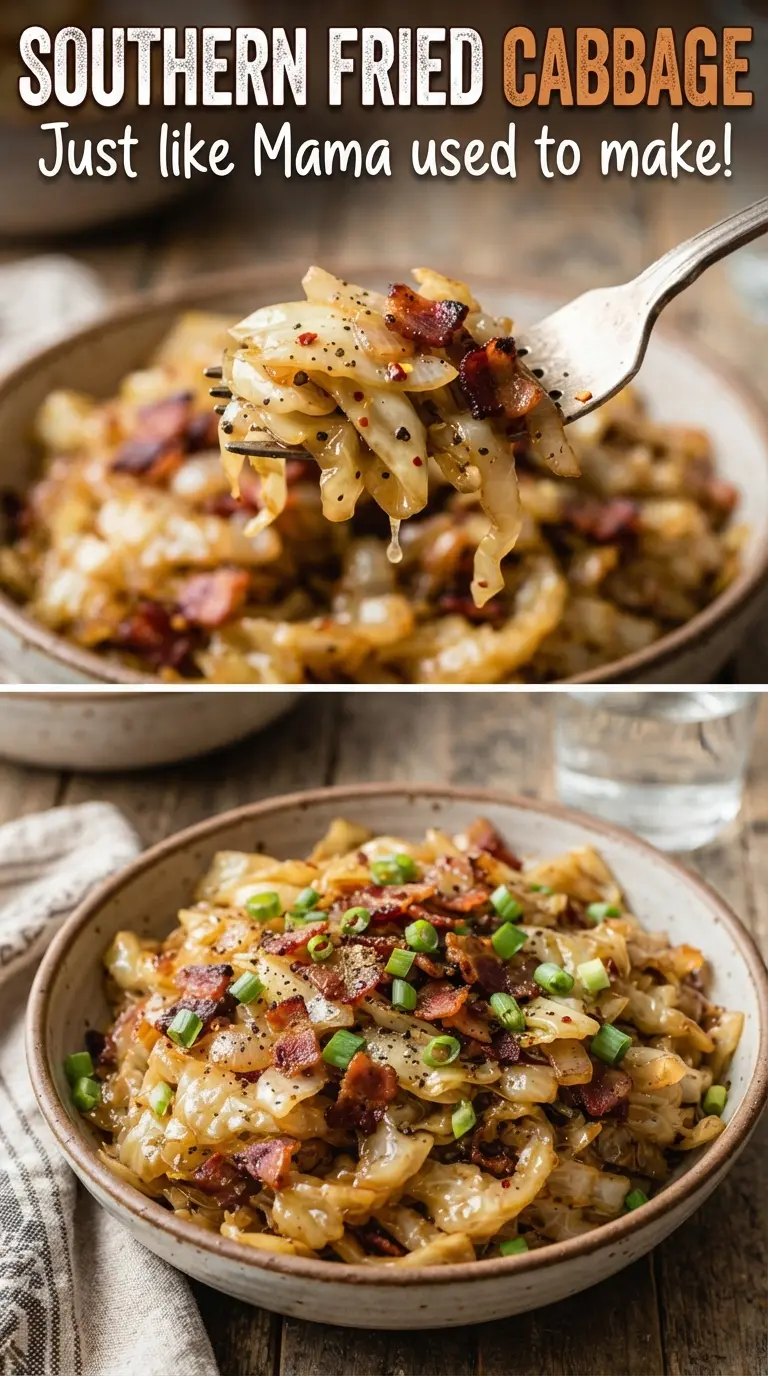
Bacon gives you the cooking fat and the salty backbone. Cook it until crisp enough to hold its shape after it goes back into the skillet, because limp bacon disappears into the cabbage and loses the contrast that makes each bite interesting.
Onion builds sweetness early. It needs those few minutes in the drippings before the cabbage goes in, or it stays sharp and raw-tasting under everything else.
Butter softens the whole dish and helps the cabbage brown more evenly. The combination of bacon fat and butter tastes fuller than either one alone.
Sugar and vinegar are the balance points. Sugar helps the cabbage caramelize instead of just collapsing, and vinegar cuts through the richness at the end so the skillet tastes finished.
How to Get Tender Cabbage with Golden Edges, Not Soggy Leaves
Rendering the Bacon
Start the bacon in a cold skillet and let the heat come up with it. That gives you more rendered fat and crispier pieces than throwing bacon into a hot pan all at once. Pull it once it’s crisp, not after it has started to darken hard, because it will cook a little more when you stir it back in at the end.
Softening the Onion and Garlic
Add the onion to the drippings and cook until it looks glossy and flexible with just a little color at the edges. The goal is sweetness, not browning the onion hard. Stir in the garlic for only 30 seconds; if it sits longer, it can scorch once the cabbage starts reducing in the pan.
Cooking the Cabbage Down
Add the cabbage along with the butter, salt, pepper, red pepper flakes, and sugar, then stir to coat every piece. Let it sit for stretches between stirs so the surface can contact the pan and caramelize. If it looks dry before it softens, a tablespoon of water is enough to loosen the pan without turning the cabbage into a steamed pile.
Finishing for Brightness
When the cabbage is tender with browned edges, stir in the vinegar and the bacon off the heat or at the very end of the cook time. The vinegar should smell sharp for a second, then disappear into the richness. That final hit keeps the whole dish balanced and makes the bacon taste more savory instead of heavy.
How to Adjust This Skillet Cabbage for What’s in Your Kitchen
Make It Dairy-Free Without Losing the Richness
Skip the butter and add a tablespoon of bacon drippings or olive oil instead. You’ll lose a little of the round, buttery finish, but the cabbage will still brown nicely and stay savory from the bacon fat.
Turn It into a Vegetarian Side
Use olive oil or butter and add a pinch of smoked paprika plus extra black pepper to replace some of the bacon’s depth. It won’t taste like the original, but it keeps the cabbage savory and gives you a similar warm, cooked-all-the-way-through feel.
Lower-Carb, No-Sugar Version
Leave out the sugar and cook the cabbage a few minutes longer so it can caramelize naturally. The dish will taste a little less rounded, but the bacon, onion, and vinegar still carry plenty of flavor.
Storage and Reheating
- Refrigerator: Store in an airtight container for up to 4 days. The cabbage softens a little more as it sits, but the flavor holds up well.
- Freezer: It freezes, but the texture turns softer after thawing. If you do freeze it, cool it completely first and use within 2 months for the best result.
- Reheating: Warm it in a skillet over medium-low heat until hot, adding a small splash of water if it looks dry. The common mistake is blasting it in the microwave until the cabbage turns limp and the bacon loses its bite.
Answers to the Questions Worth Asking
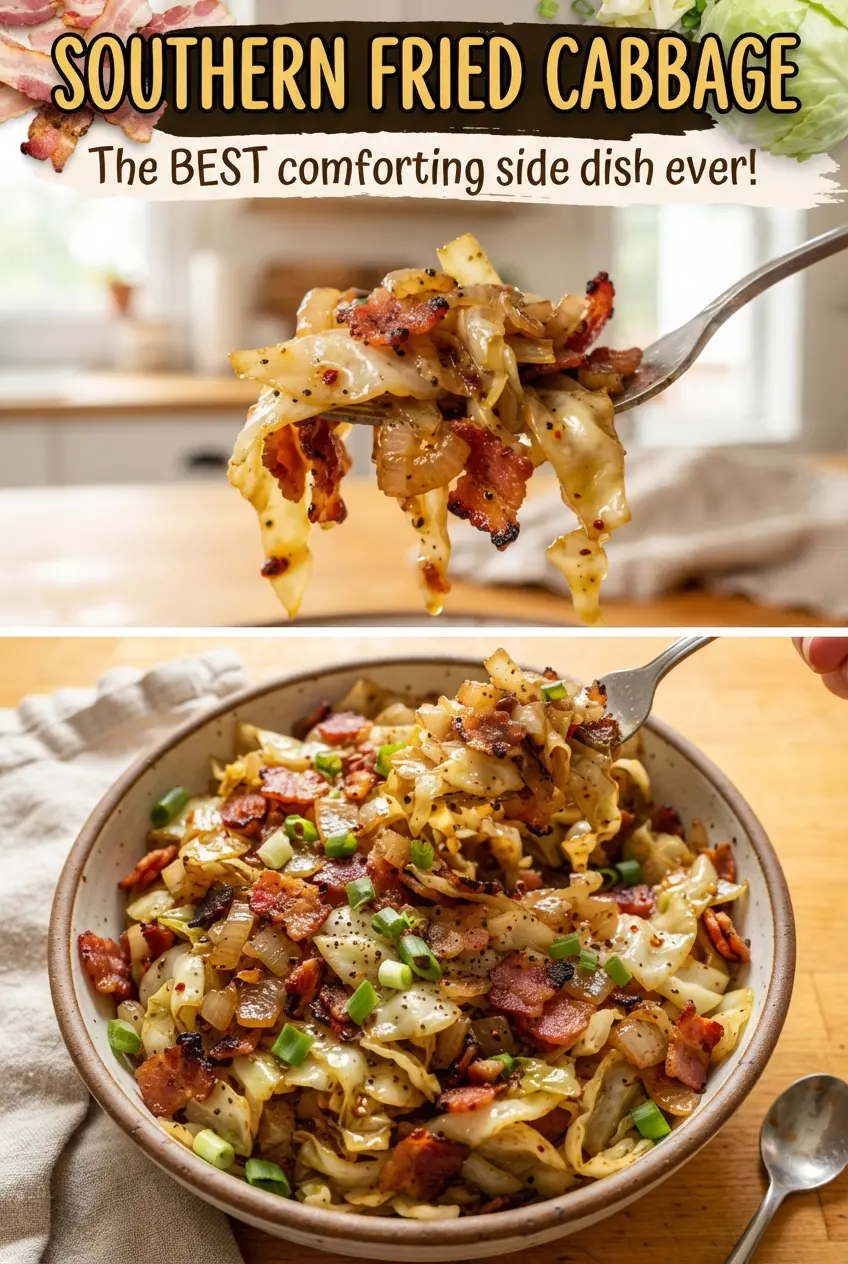
Southern Fried Cabbage
Ingredients
Equipment
Method
- Place chopped bacon in a large cast iron skillet and cook over medium heat for 8 minutes until crisp, stirring occasionally, then remove and leave the drippings.
- Add sliced onion to the bacon drippings and cook over medium heat for 5 minutes until softened, stirring as needed.
- Stir in minced garlic and cook for 30 seconds, until fragrant, with a quick stir so it doesn’t brown.
- Add chopped green cabbage along with butter, salt, black pepper, red pepper flakes, and sugar, and toss to coat everything evenly.
- Cook for 12-15 minutes over medium heat, stirring occasionally, until the cabbage is tender with caramelized golden edges.
- Stir in apple cider vinegar and the crispy bacon, then cook for 30-60 seconds just to heat through.
- Serve warm, with extra cracked black pepper if desired, and look for glossy cabbage with crisp bacon pieces throughout.