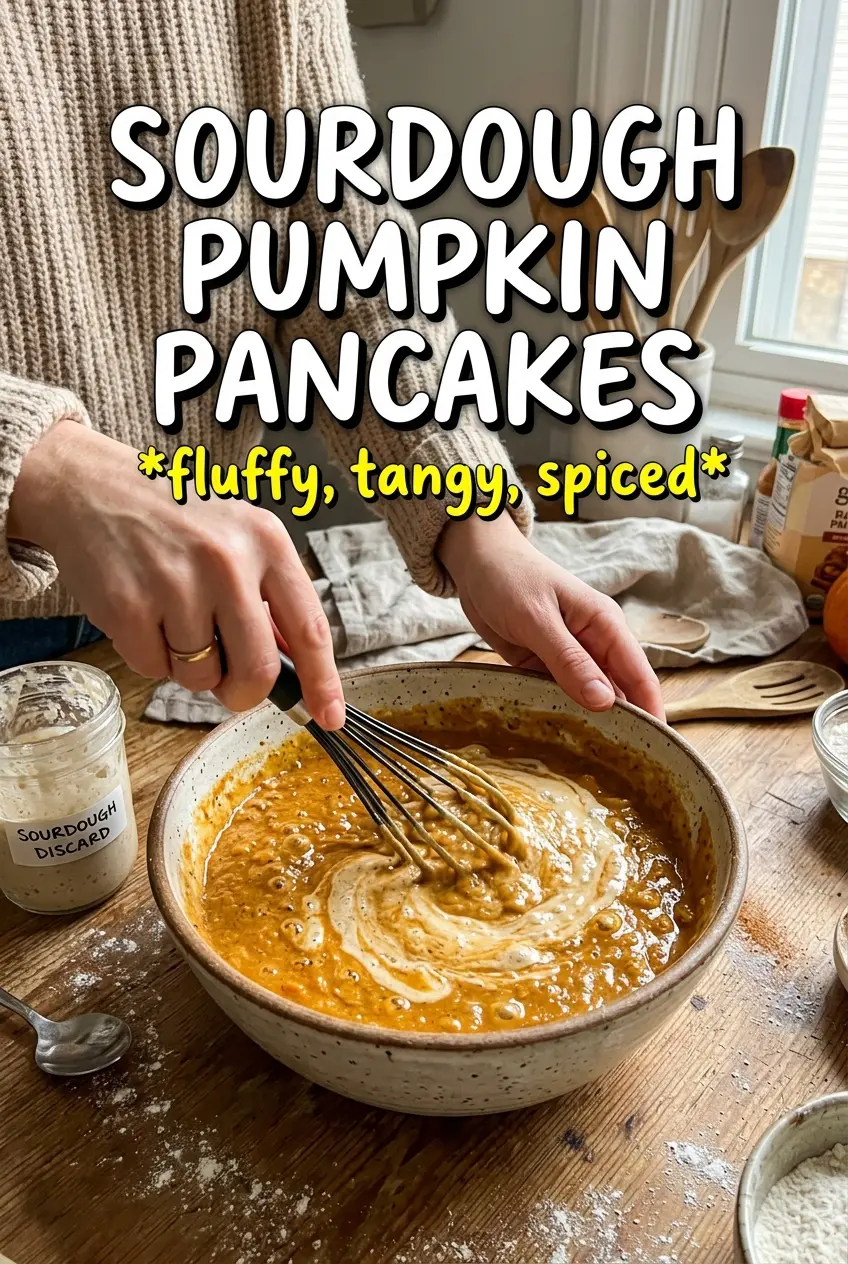
Sourdough pumpkin pancakes land with a tender middle, crisp-edged exterior, and just enough tang to keep the pumpkin and maple from tasting flat. The batter cooks up thick and spoonable, then turns light at the griddle thanks to a last-minute hit of baking soda that reacts with the sourdough and gives the pancakes a proper lift.
What makes this version worth keeping around is the balance. Pumpkin puree adds moisture and a soft, custardy crumb, while the sourdough starter brings depth without making the pancakes taste overtly sour. A little maple syrup in the batter rounds everything out so the finished stack tastes complete even before the butter and syrup go on.
Below, I’ll walk through the one timing detail that matters most, plus a few smart swaps if your starter is on the thick side or your batter seems heavier than expected.
The batter puffed up right away after the baking soda went in, and the pancakes came off the griddle with those crisp little edges my kids kept stealing.
Like these sourdough pumpkin pancakes? Save this stack for a breakfast with tangy edges, warm spice, and real maple syrup.
The Baking Soda Has to Go in at the Last Second
The biggest mistake with sourdough pancakes is mixing the baking soda in too early and then wondering why the stack turns dense. Once baking soda hits the acidic starter, it starts working right away. If the batter sits around for too long after that, you lose the lift before it ever reaches the pan.
This recipe gets around that by keeping the batter together first, then stirring in the baking soda and salt just before cooking. That last-minute addition gives you little bubbles through the batter and a lighter crumb on the griddle. If your pancakes have been coming out flat, this is usually the reason.
- Sourdough starter — Active starter gives a slightly brighter, airier pancake, while discard works just fine here and often tastes a little milder. If your starter is very thick, thin it with a splash of milk so the batter stays pourable.
- Pumpkin puree — Use plain pumpkin puree, not pumpkin pie filling. The puree adds moisture and body, and it’s what gives these pancakes their soft, almost custardy center.
- Baking soda — This is the lift. There isn’t a perfect substitute if you want the same puff and tenderness, so don’t skip it. Add it at the very end and cook immediately.
- Maple syrup — A little in the batter keeps the pumpkin and spice from tasting heavy. The real maple flavor matters more than the amount here, so use the good stuff if you can.
What Each Step Is Doing on the Griddle
Mix the batter without overworking it
Whisk the starter, flour, pumpkin, milk, eggs, butter, maple syrup, spice, cinnamon, and vanilla until just combined. A few small streaks of flour are fine; overmixing makes the pancakes tougher and takes away the tender crumb. The batter should look thick but still fall from the spoon in a slow ribbon. If it looks stiff enough to stand up in peaks, add a splash more milk.
Add the leavener right before the pan
Stir in the baking soda and salt right before you start cooking. You should see the batter get a little foamy and airy almost immediately. That’s the reaction you want. If you wait too long, the bubbles collapse and the pancakes cook up heavier, even if everything else is measured correctly.
Cook for set edges and gentle bubbles
Heat the skillet or griddle over medium, not high. Too much heat browns the outside before the center cooks through, especially with pumpkin in the batter. Pour about 1/4 cup per pancake and watch for bubbles to break on the surface and the edges to look matte and set, usually after 2 to 3 minutes. Flip once and cook the second side until it’s golden and the center springs back lightly when touched.
How to Adapt These Pancakes When Your Pantry Looks Different
Use sour cream-thinned starter if yours is very thick
If your starter is stiff, whisk in a little milk before measuring so the batter doesn’t turn paste-like. You want a thick pour, not dough. This keeps the pancakes fluffy instead of gummy in the middle.
Make them dairy-free
Swap the milk for an unsweetened non-dairy milk and use a plant-based butter or neutral oil in the batter. The texture stays close, though you’ll lose a little of the buttery finish. Serve with dairy-free spread and maple syrup if that’s the goal.
Make the spice gentler or stronger
Pumpkin pie spice and cinnamon can be adjusted without breaking the batter. Back both down if you want the sourdough tang to lead, or lean harder into the spice if you’re serving these with plain butter instead of syrup. The flavor shift is noticeable, but the texture stays the same.
Storage and Reheating
- Refrigerator: Store cooked pancakes in an airtight container for up to 4 days. They soften a bit as they sit, but the flavor holds up well.
- Freezer: These freeze well. Layer them with parchment, seal in a freezer bag, and freeze for up to 2 months.
- Reheating: Warm them in a toaster or a dry skillet over low heat until heated through. The biggest mistake is microwaving them too long, which turns the edges rubbery and the centers damp.