Smothered green beans turn a humble can of beans into a side dish with real presence. The beans come out tender and glossy, coated in a sticky brown sugar butter sauce that clings to every bite, while the bacon keeps the whole dish salty, smoky, and a little crisp around the edges. It’s the kind of pan that disappears fast because it tastes like it took more effort than it did.
What makes this version work is the balance: enough brown sugar to build that lacquered sauce, enough soy sauce to keep it from turning cloying, and enough bacon drippings to give the beans depth instead of just sweetness. The foil-covered bake does the heavy lifting here, letting the beans soak up the sauce without drying out or burning on top. A quick stir halfway through keeps the glaze even and helps the onions melt into the sauce.
Below, I’ve included a few practical notes on how to keep the sauce glossy, when canned beans are actually the right choice, and what to change if you need to lighten the dish up a bit.
The sauce turned out glossy instead of watery, and the bacon plus onion gave the beans so much more flavor than the canned version I usually make. I stirred it once like the recipe said and it baked up perfectly.
Save these smothered green beans for a side dish with glossy bacon-butter sauce and tender baked beans.
The Reason the Sauce Stays Glossy Instead of Turning Watery
Canned green beans already carry a lot of moisture, so the mistake most people make is treating them like fresh beans and expecting them to roast or brown. That doesn’t happen here. The foil-covered bake lets the sauce thicken around the beans instead of evaporating away too fast, and the bacon drippings give the glaze body. Stirring once halfway through keeps the sugar mixture from settling into one sticky layer on the bottom of the pan.
If your sauce looks thin at first, that’s normal. It should start out loose and finish shiny after the last stretch in the oven. The key is a shallow baking dish, not a deep casserole, so the beans sit in the sauce instead of steaming in a puddle.
What Each Ingredient Is Actually Doing in This Dish
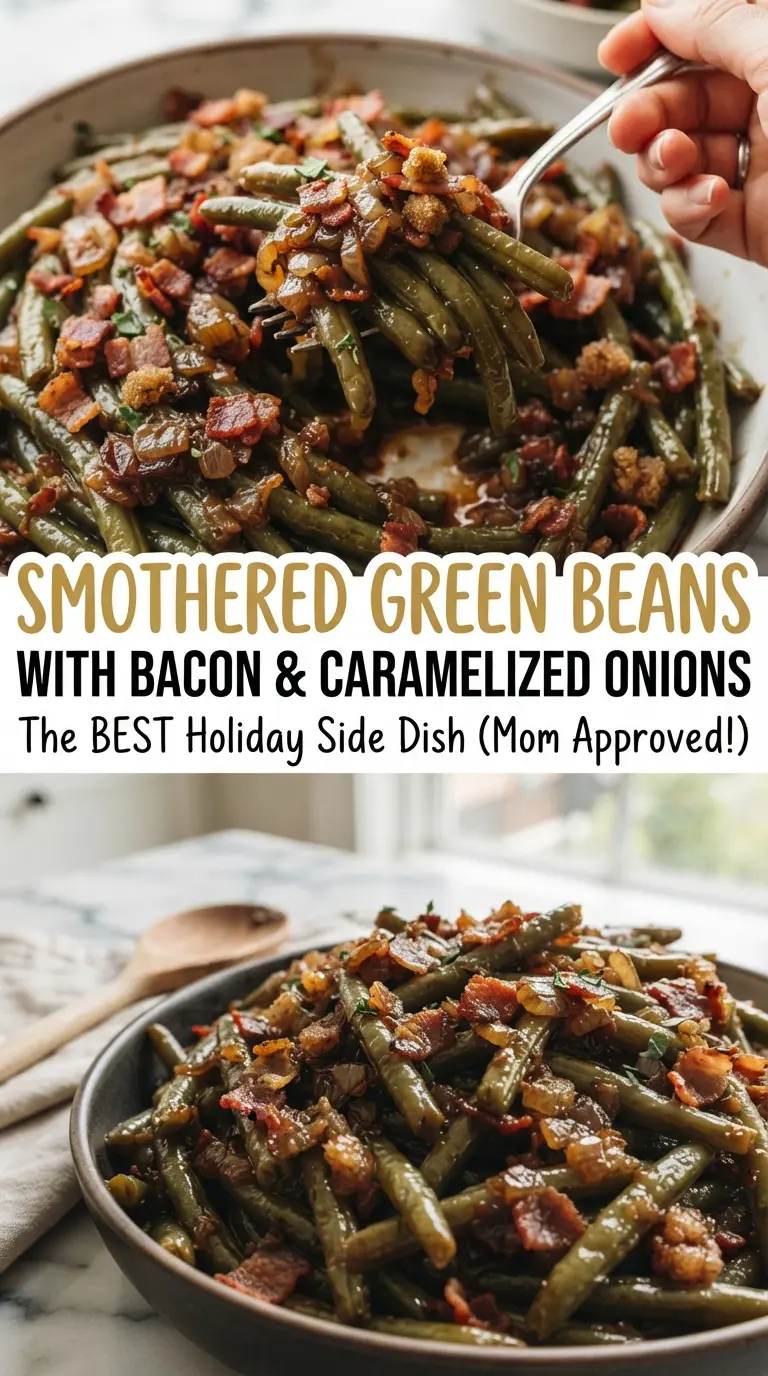
- Cut green beans — Canned beans are the right choice here because they’re already tender and ready to absorb the sauce. Fresh green beans stay too firm for this style unless you blanch them first, and even then the texture changes the whole dish. Drain them well so they don’t water down the glaze.
- Bacon — This brings the smoky backbone and most of the savory depth. Thick-cut bacon works, but standard slices crisp more evenly and give you enough rendered fat to carry the onion. Don’t drain the pan; those drippings are part of the sauce.
- Brown sugar — Packed brown sugar is what makes the sauce sticky and caramel-like. Light or dark both work, but dark brown sugar gives a deeper molasses note. White sugar won’t give the same roundness or glaze.
- Butter — Butter helps the sauce emulsify and gives it that smooth, glossy finish. Melt it before whisking so it blends cleanly with the sugar and soy sauce. Margarine won’t give the same richness.
- Soy sauce — This is the quiet ingredient that keeps the dish from tasting flat. It adds salt, color, and a little umami without making the beans taste overtly Asian. If you need a substitute, use tamari for gluten-free or coconut aminos for a sweeter, milder result.
- Onion and garlic powder — The onion softens in the bacon fat and melts into the sauce, while garlic powder spreads that savory note evenly through the dish. Fresh garlic can burn or turn sharp during the bake, so powder is the safer choice here.
How to Bake the Beans So the Sauce Clings to Every Bite
Rendering the Bacon and Softening the Onion
Cook the bacon and onion together until the bacon is mostly crisp and the onion has gone translucent. The bacon shouldn’t be brittle yet, because it will pick up a little more texture in the oven. If the onion starts to brown hard before the bacon is ready, your heat is too high. Keep it at medium so the drippings stay clean and the onion turns sweet instead of bitter.
Building the Sauce in One Bowl
Whisk the brown sugar, melted butter, soy sauce, garlic powder, and black pepper until the mixture looks smooth and grainy but not separated. You’re not trying to dissolve every crystal; the sugar will finish melting in the oven. Pour it over the beans while the butter is still warm so it spreads easily. Cold butter can clump and sit on top instead of coating the beans.
Baking Until the Glaze Turns Sticky
Cover the dish tightly with foil and bake until the sauce is glossy and the beans are heated through. The foil traps enough steam to help the sugar dissolve and the flavors mingle, but the last part of the bake is where the glaze thickens. Stir once during baking so the sauce coats evenly and nothing sticks at the edges. If the liquid still looks thin when you uncover it, give it a few extra minutes; it should look shiny and cling to the spoon, not pool like broth.
Three Ways to Make These Smothered Green Beans Work for Your Table
Gluten-Free Version
Swap the soy sauce for tamari or certified gluten-free soy sauce. The flavor stays savory and balanced, and the sauce still bakes up glossy. Coconut aminos also work, but they make the finished dish a little sweeter, so you may want to hold back a teaspoon of brown sugar.
Lighter Side Dish
Use turkey bacon and cut the brown sugar down by a couple of tablespoons. You’ll lose some of the deep smoky drippings, so add a small spoonful of butter back in to keep the sauce from tasting flat. The beans will still be tender and coated, just a little less rich.
Vegetarian Version
Skip the bacon and sauté the onion in butter with a pinch of smoked paprika and an extra splash of soy sauce. You won’t get the same rendered fat or crisp texture, but you’ll still have a sweet-savory glaze with enough depth to carry the beans. A handful of toasted chopped pecans works well if you want a little bite on top.
Storage and Reheating
- Refrigerator: Store leftovers in an airtight container for up to 4 days. The sauce will thicken as it chills.
- Freezer: It freezes, but the beans soften a bit more after thawing. Freeze in a tightly sealed container for up to 2 months if you don’t mind a softer texture.
- Reheating: Warm covered in the oven at 325F or in the microwave in short bursts. Stir once halfway through so the sauce loosens evenly; overheating can make the butter separate.
Answers to the Questions Worth Asking
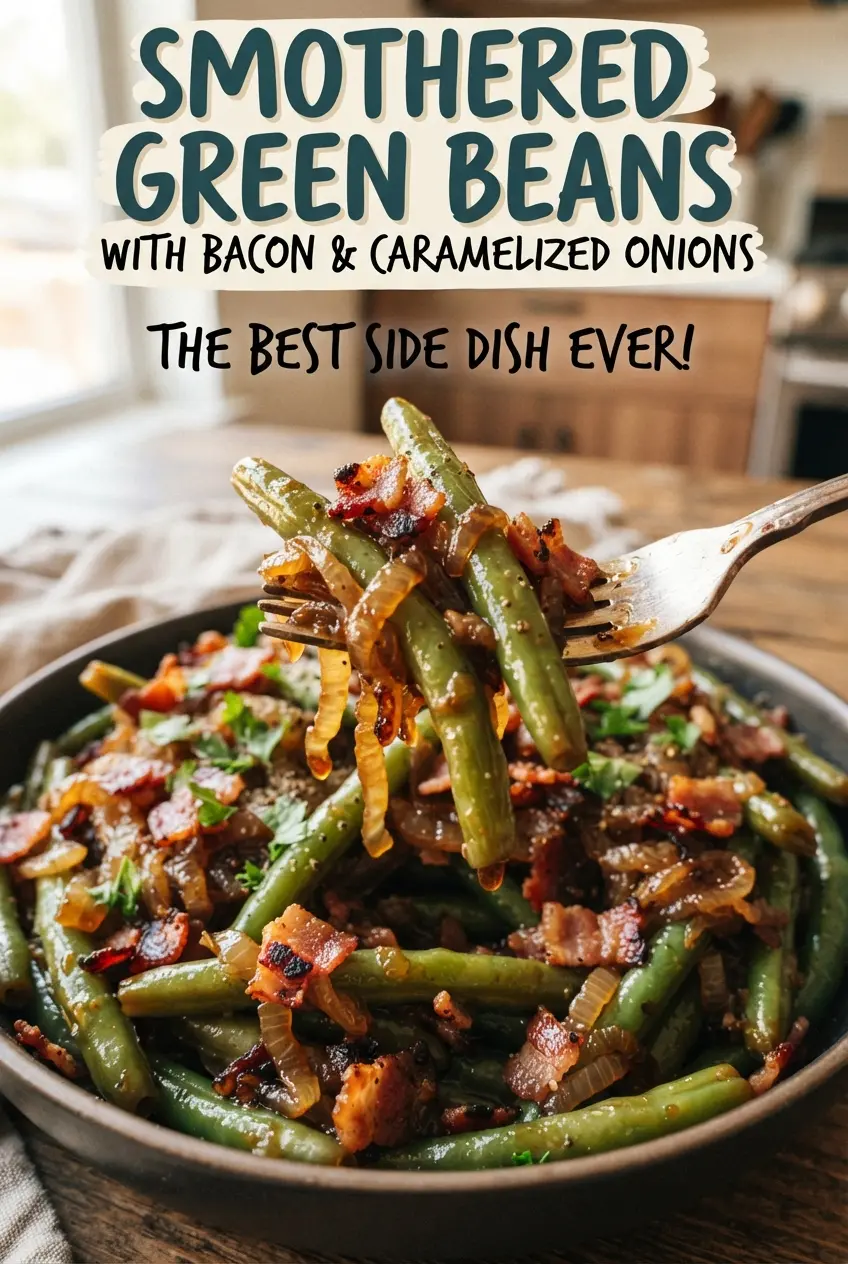
Smothered Green Beans
Ingredients
Equipment
Method
- Preheat the oven to 350F to get it hot before baking the beans.
- Drain the cut green beans thoroughly so the sauce stays glossy instead of watery.
- Cook the chopped bacon and diced onion in a skillet for 8 minutes until the bacon is mostly crisp.
- Keep the bacon drippings in the skillet and do not drain them to add flavor and moisture to the dish.
- Place the drained green beans in a 9x13-inch baking dish and top with the bacon, onion, and drippings.
- Whisk the brown sugar, melted butter, soy sauce, garlic powder, and black pepper until smooth.
- Pour the brown sugar butter mixture over the beans so the surface looks evenly coated.
- Cover with foil and bake 35-40 minutes at 350F, stirring once during baking.
- Bake until the sauce is glossy, then uncover briefly if needed to let the top look slightly set.
- Stir the beans and bacon mixture together so the sticky sauce clings to every bite.
- Serve warm while the sauce is pooling and shiny.