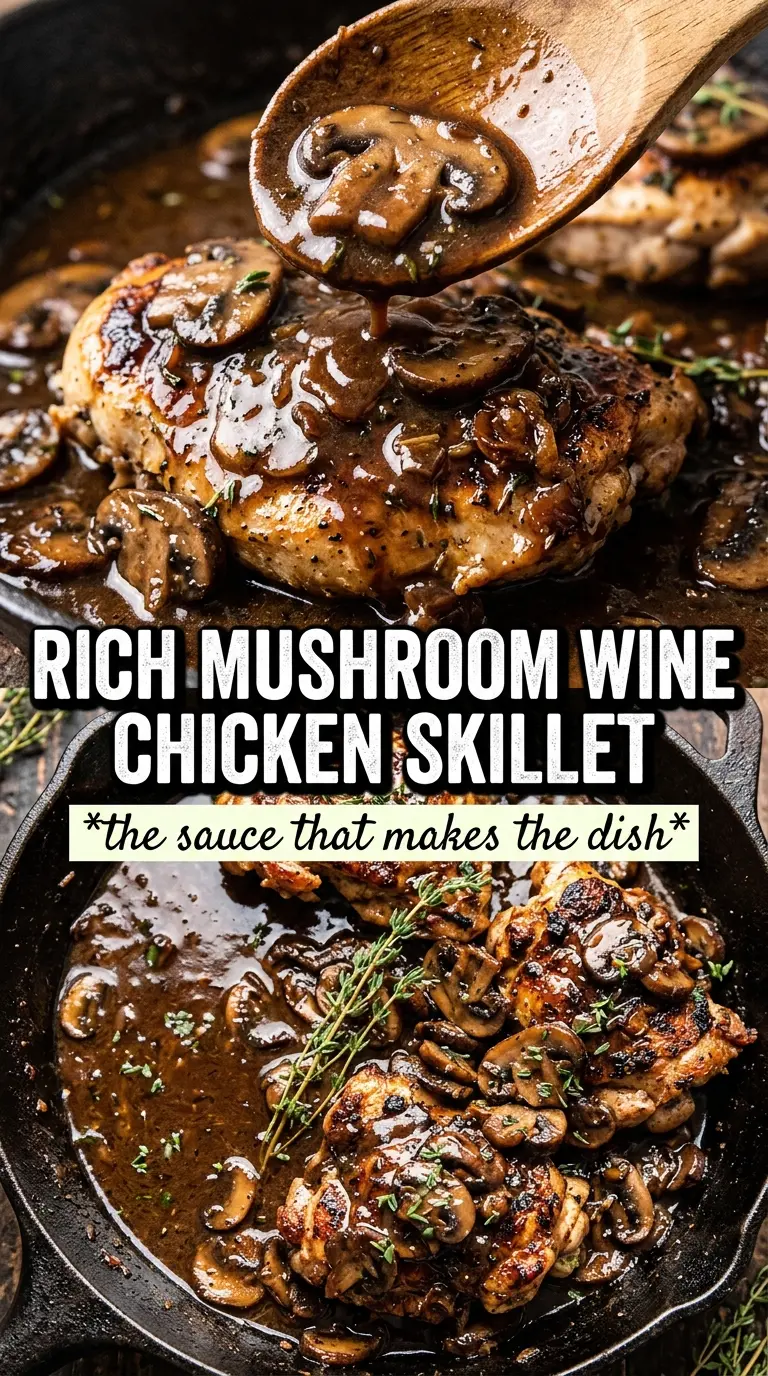
Golden-seared chicken breasts tucked into a dark mushroom wine sauce are the kind of dinner that looks like you spent all afternoon on it, even though it comes together in one skillet. The sauce turns glossy and silky, with cremini mushrooms giving it depth and the wine reducing into something rich instead of sharp. It’s the sort of pan dinner that feels elegant without asking much from you.
What makes this version work is the layering. The chicken gets a proper sear first, so the skillet starts with a deep fond that becomes the backbone of the sauce. The mushrooms cook long enough to release their moisture and pick up color before the garlic goes in, which keeps them savory instead of soggy. Then the wine gets a few minutes to cook down before the broth and cream join the pan, so the finished sauce tastes balanced and not boozy.
Below, I’ve included the details that matter most: how to keep the sauce from tasting flat, what to do if your pan looks crowded, and a few easy ways to adapt it depending on what’s in your kitchen.
The mushrooms browned instead of steaming, and the wine sauce turned out silky and rich without feeling heavy. I served it over mashed potatoes, and even the leftovers held up beautifully the next day.
Save this skillet chicken and mushroom wine sauce for a one-pan dinner with a glossy pan sauce and tender seared chicken.
The Trick to a Wine Sauce That Stays Silky, Not Sharp
The part that ruins a lot of skillet chicken dinners is rushing the sauce. If the wine goes in and the pan stays too hot, it tastes harsh; if the cream goes in before the wine has reduced, the sauce can turn thin and muddy. The order matters here. Sear the chicken first, then let the mushrooms brown in the same pan, then give the wine enough time to reduce before adding the broth and cream.
That reduction step is where the flavor tightens up. You’re not just cooking off alcohol; you’re concentrating the wine so it tastes round and savory instead of thin and acidic. The Dijon helps pull the sauce together without making it taste mustardy, and the thyme gives it that French-American feel that makes the whole pan taste finished.
What Each Ingredient Is Actually Doing in This Dish
- Chicken breasts — Boneless, skinless breasts work because they sear fast and keep the dish weeknight-friendly. If yours are thick, pound them to an even thickness so they cook through before the outside overbrowns.
- Cremini mushrooms — These bring the deep, earthy flavor the sauce needs. White button mushrooms work in a pinch, but they’re milder and won’t give you quite the same color or savoriness.
- Dry red wine — This is where the sauce gets its backbone. Use a wine you’d actually drink, because anything harsh or overly sweet will show up after it reduces. White wine works too; the sauce will be lighter and a little brighter.
- Heavy cream — This softens the wine and turns the pan juices into a silky sauce. Half-and-half can work, but it won’t coat the chicken as richly and is more likely to look thin.
- Dijon mustard — It doesn’t make the sauce taste like mustard. It sharpens the edges just enough to keep the cream from tasting flat and helps the sauce emulsify.
- Fresh thyme — Fresh thyme gives a cleaner, more lifted flavor than dried thyme in the sauce. If you only have dried, use a smaller amount; it can get dusty if you’re heavy-handed.
Building the Sauce in the Right Order
Season and Sear the Chicken
Season the chicken generously on both sides with salt, pepper, garlic powder, and thyme, then sear it in olive oil over medium-high heat until the surface is deep golden and the chicken releases easily from the pan. If it sticks, give it another minute; forcing it too soon tears the crust. You’re looking for color on the outside and an internal temperature of 165°F. Pull the chicken out and set it aside while you build the sauce.
Brown the Mushrooms Properly
Add the butter to the same skillet and let it melt before the mushrooms go in. Spread them out and let them sit long enough to take on color; if you stir constantly, they’ll steam and go soft instead of picking up that savory, browned edge. Once the mushrooms are deeply golden, add the garlic for just a minute. Garlic burns fast in a hot pan, and burnt garlic will take over the whole sauce.
Deglaze, Reduce, and Finish
Pour in the wine and scrape up every browned bit from the bottom of the pan. That’s where the flavor is. Let the wine simmer for about three minutes so it loses the raw edge, then add the broth, cream, Dijon, and thyme. Keep the simmer gentle. If the heat is too high, the cream can tighten too quickly and the sauce won’t have that glossy, spoonable texture.
Bring the Chicken Back to the Pan
Return the chicken to the skillet and spoon the sauce over the top so it can warm through and pick up the flavor of the pan. This last step only needs a few minutes. If the chicken is already cooked through, you’re just warming it and letting it finish in the sauce; if it goes too long, the texture gets dry and stringy. Garnish with fresh thyme sprigs and serve while the sauce is still silky.
Three Useful Ways to Adapt the Pan Sauce
For a dairy-free version
Swap the butter for more olive oil and replace the cream with full-fat coconut milk or an unsweetened dairy-free cooking cream. Coconut milk gives the richest body, but it adds a faint coconut note; a neutral dairy-free cream keeps the sauce closer to the original flavor.
For a lighter white-wine version
Use dry white wine instead of red wine for a brighter, cleaner sauce with a little less depth. It still tastes elegant, but the color stays lighter and the mushroom flavor reads more clearly. This is the version I’d make when serving it with rice or pasta.
For a gluten-free table
This recipe is naturally gluten-free as written if your broth and Dijon are certified gluten-free. That’s worth checking, because some packaged broths and mustards sneak in thickeners or additives that don’t belong in a gluten-free kitchen.
If you want a little more sauce
Add an extra 1/4 cup of broth and let the sauce simmer a minute or two longer. Don’t add more cream first; extra broth keeps the sauce balanced while still giving you enough volume to spoon over mashed potatoes, rice, or noodles.
Storage and Reheating
- Refrigerator: Store leftovers in an airtight container for up to 3 days. The sauce may thicken as it chills, which is normal.
- Freezer: The chicken freezes fine, but the cream sauce can separate a bit after thawing. If you freeze it, expect a less silky texture and rewarm gently.
- Reheating: Warm it slowly over low heat with a splash of broth or water to loosen the sauce. High heat is the mistake here; it can tighten the chicken and break the cream.
Answers to the Questions Worth Asking
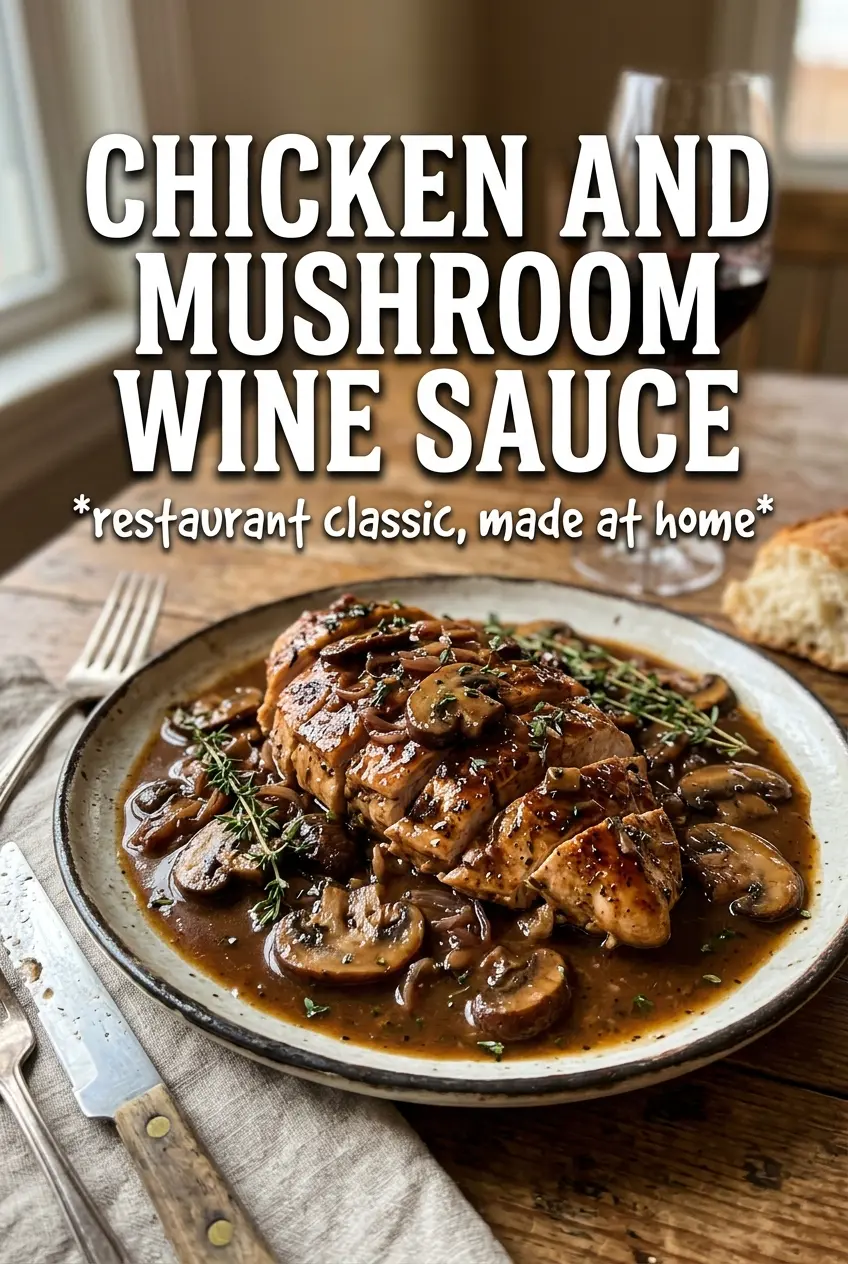
Skillet Chicken and Mushroom Wine Sauce
Ingredients
Equipment
Method
- Season the chicken generously with salt, pepper, garlic powder, and dried thyme. Heat olive oil in a large skillet over medium-high heat, then sear chicken for 5-6 minutes per side until golden and cooked through to 165°F, and remove to a plate.
- Melt butter in the same pan, then cook sliced cremini mushrooms over medium-high heat for 5-6 minutes until deeply golden. Add minced garlic and cook for 1 minute.
- Pour in the dry red wine and deglaze, scraping up all browned bits from the pan. Simmer for 3 minutes.
- Add chicken broth, heavy cream, Dijon mustard, and fresh thyme leaves. Simmer for 5-6 minutes, stirring occasionally, until the sauce thickens.
- Return the chicken to the pan and spoon the sauce over each breast to coat. Garnish with fresh thyme sprigs and serve immediately.