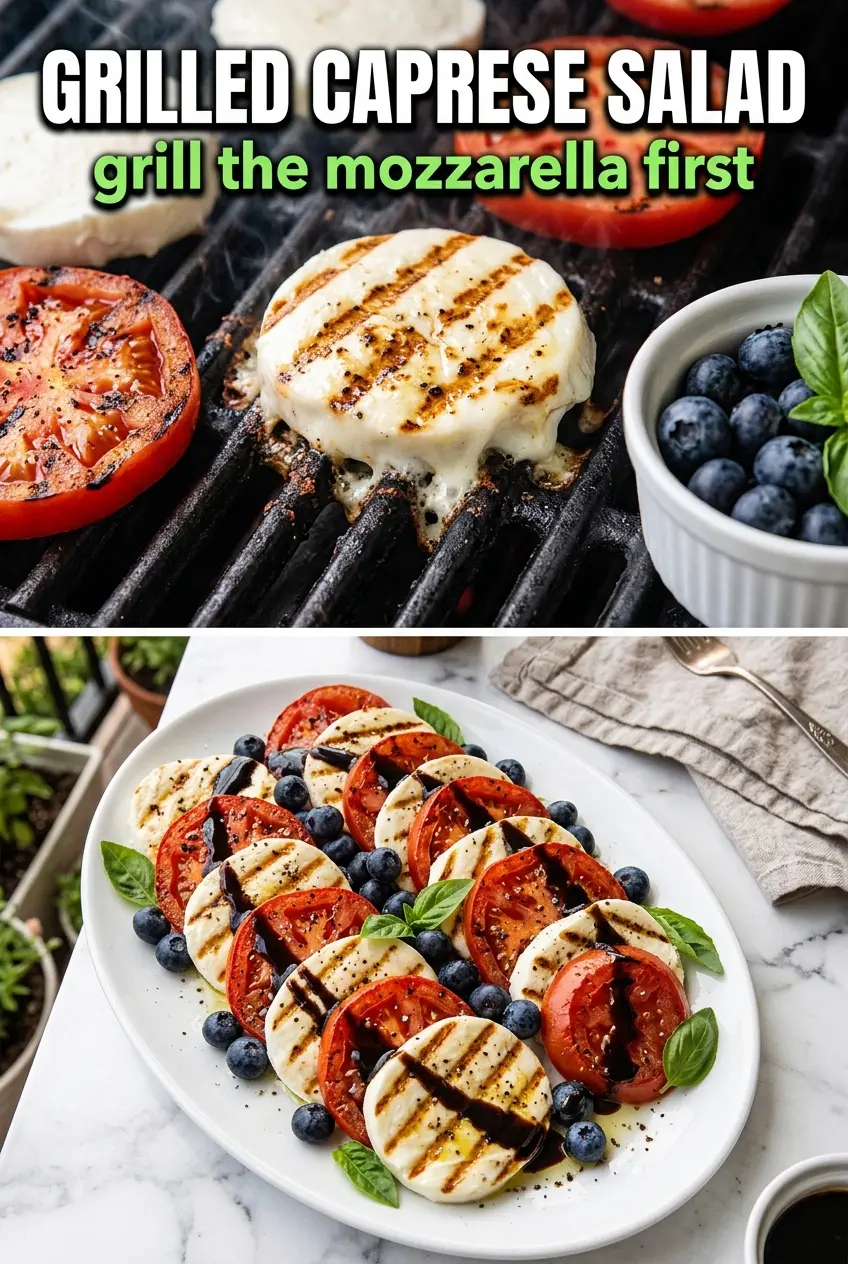
Alternating rounds of ripe tomato, creamy mozzarella, and bursty blueberries turn a classic Caprese into something that feels crisp, fresh, and a little festive without losing the Italian-American simplicity that makes Caprese worth making in the first place. The blueberries aren’t a gimmick here. They bring a sweet-tart pop that plays against the milky cheese and the acidity of the tomatoes, and the whole platter eats like a cold salad that still feels substantial.
The key is choosing tomatoes that are actually ripe enough to taste like something and slicing both the tomatoes and mozzarella thick enough that they hold their shape in the wreath. Thin slices turn mushy fast once the olive oil and balsamic glaze hit the platter. I also like to add the basil at the end so it stays bright and doesn’t sink into the juices.
Below, I’ve included the small details that make this salad look composed instead of scattered, plus a few useful ways to adapt it if you need to swap ingredients or serve it a little differently.
The wreath looked gorgeous on the table, and the balsamic glaze pulled everything together without making the tomatoes watery. I served it with grilled chicken and there wasn’t a slice left.
Love the red, white, and blue wreath pattern? Save this patriotic Caprese salad for your next summer party or 4th of July table.
The Detail That Keeps This Caprese Salad From Sliding Into a Juicy Mess
Caprese sounds simple, but this is one of those salads that falls apart fast if the tomatoes are overripe to the point of collapse or the cheese is sliced too thin. The juices start pooling, the basil turns dark at the edges, and what looked neat on the platter becomes soft in about ten minutes. A wreath layout helps because the overlapping slices support each other instead of leaving everything loose in a pile.
The other thing that matters is serving it right away. Once the olive oil and balsamic glaze go on, the tomatoes begin to release liquid. That’s not a problem if the platter is on the table immediately, but it’s why this recipe should be assembled at the last minute, not hours ahead.
What Each Ingredient Is Doing in the Wreath

- Heirloom or beefsteak tomatoes — These give you the juicy, meaty base that makes the salad feel like more than a garnish. Heirlooms bring better flavor if you can find them, but a firm, ripe beefsteak works fine as long as it tastes sweet and tomato-forward. Slice them 1/4-inch thick so they hold their shape and don’t slump.
- Fresh mozzarella — This is where the creamy contrast comes from, and there’s no true substitute for the soft, milky texture. Pre-sliced mozzarella usually tastes flatter and can be too dry, so buy a ball or log and cut it yourself. If you need a dairy-free version, use a good plant-based fresh mozzarella-style cheese, but expect a firmer bite and less dairy richness.
- Fresh blueberries — They add the blue color, but the real value is the sweet-tart snap between the creamy and savory elements. Rinse and dry them well so they don’t streak moisture across the platter. Frozen berries won’t work here because they soften and bleed too quickly.
- Fresh basil — Basil brings the peppery, aromatic finish that keeps this from tasting like fruit salad with cheese. Tear or leave the leaves whole if they’re small; chopping them too early bruises them and dulls the color. Add them just before serving so they stay bright.
- Olive oil and balsamic glaze — The olive oil rounds out the acidity, while the glaze adds sweet depth and a finished look. Use a balsamic glaze, not straight vinegar, or you’ll get a sharper, thinner drizzle that runs into the plate.
Building the Wreath So Every Slice Holds Its Place
Start with the Outer Circle
Lay the tomato and mozzarella slices around the platter in alternating order, overlapping them just enough that each piece leans on the next. That overlap matters because it keeps the wreath from looking patchy and gives the blueberries a structure to nest into. If the platter is too small, the slices crowd and slide, so use one with enough rim space to keep the circle open.
Fill the Gaps With Blueberries
Tuck the blueberries into the spaces between slices and around the outer edge until the color looks balanced. Don’t pile them in the center first; they work best when they act like accent points instead of taking over the whole dish. If your berries are very large, leave a few whole and split a few in half so the texture feels varied.
Finish With Oil, Glaze, and Basil
Drizzle the olive oil and balsamic glaze over the whole platter in a loose spiral or back-and-forth motion. The glaze should cling to the cheese and tomatoes instead of flooding the plate. Add the basil after the drizzle, then finish with flaky salt and black pepper so the herbs stay bright and the seasoning lands on the food, not just the board.
How to Adapt This Salad When You Need a Different Spin
Dairy-Free Caprese Style
Swap the mozzarella for a plant-based fresh mozzarella alternative that slices cleanly. You’ll keep the red-white-blue look, but the texture will be firmer and less milky, so choose a brand meant for slicing rather than melting. Chill it well before cutting so the slices stay neat.
Make It More Savory
Add a few paper-thin slices of prosciutto tucked between the tomato and mozzarella rounds if you want this to eat more like an appetizer platter. It adds salt and a little richness, which balances the sweetness of the blueberries. Keep the amount modest so the salad still reads as Caprese, not a charcuterie board.
Use What’s at Peak Ripeness
Cherry tomatoes can stand in for sliced tomatoes if that’s what looks best at the market. Halve them and arrange them in a tighter wreath so they nest into the mozzarella more easily. You’ll get a sweeter, juicier salad with a slightly more casual look.
Storage and Reheating
- Refrigerator: Best eaten immediately, but leftovers can be stored for up to 1 day. The tomatoes will release more juice and the basil will darken.
- Freezer: Don’t freeze this salad. The tomatoes, mozzarella, and basil all lose their texture completely after thawing.
- Reheating: No reheating needed. If the salad has been chilled, let it sit at room temperature for 10 to 15 minutes before serving so the mozzarella softens a little and the olive oil tastes less stiff.
Questions I Get Asked About This Recipe
Red, White & Blue Caprese Salad
Ingredients
Equipment
Method
- Arrange alternating slices of tomato and mozzarella in an overlapping circle or wreath pattern on a large serving platter.
- Tuck fresh blueberries in between and around the slices to fill gaps and add the blue element.
- Scatter fresh basil leaves throughout.
- Drizzle the extra virgin olive oil and balsamic glaze evenly across the whole platter.
- Finish with flaky sea salt and cracked black pepper and serve immediately.