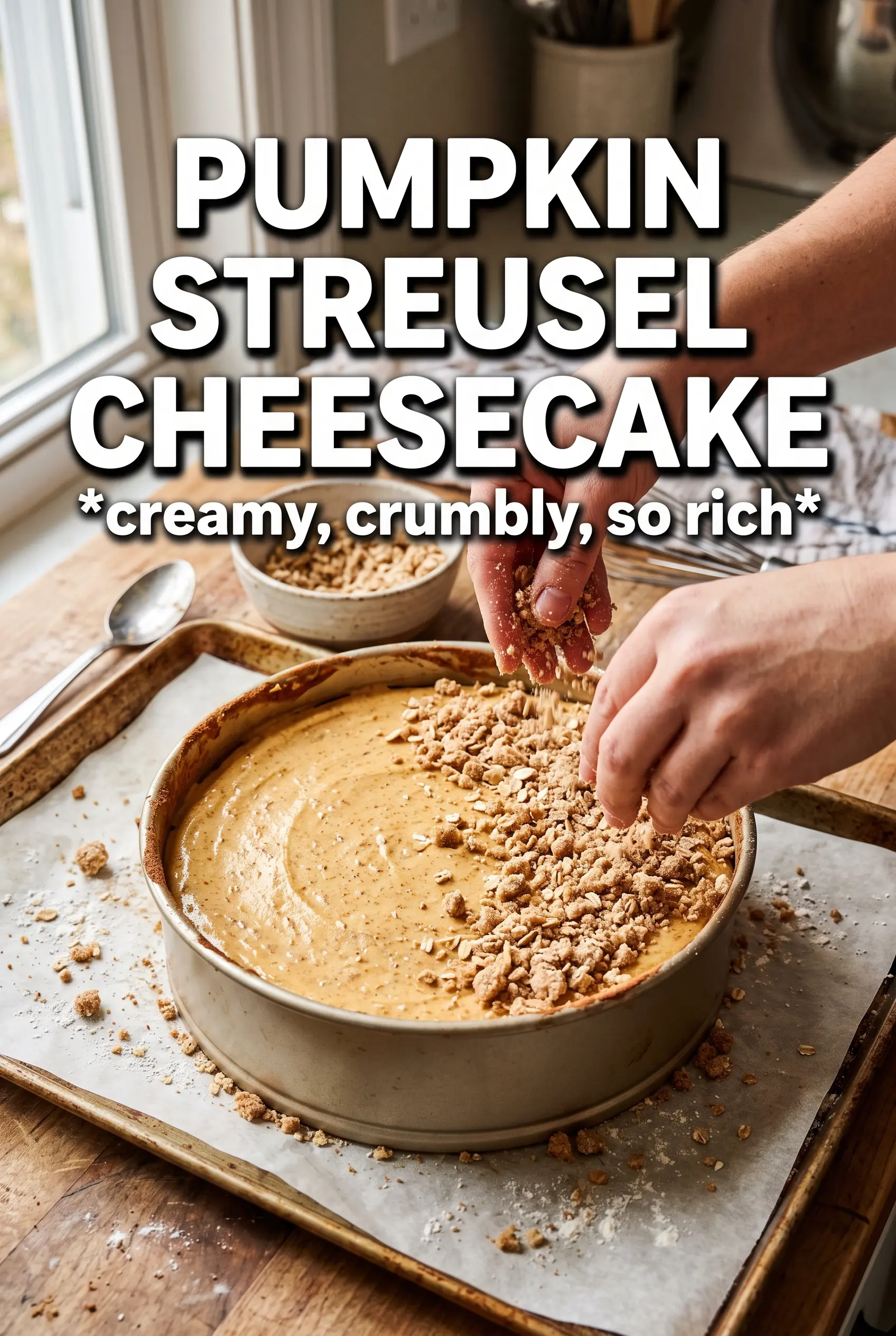
Pumpkin streusel cheesecake brings together three things that almost never get enough room on the same fork: a crisp gingersnap crust, a smooth pumpkin-spiced filling, and a crumbly oat topping that bakes into a golden crown. The first slice cuts cleanly, the top stays bronzed and nubby, and the caramel drizzle pulls everything into one rich, fall-leaning dessert that feels a little more special than a plain cheesecake.
This version works because each layer has a job. The gingersnap crust gives the dessert a deeper, spicier base than graham crackers would, and baking it first keeps it from turning soft under the filling. The pumpkin stays balanced by sour cream, which keeps the cheesecake from tasting heavy or flat, while the streusel uses cold butter so it holds its texture instead of melting into the batter. The water bath is what gives you that smooth, even set without cracks.
Below you’ll find the detail that matters most when making cheesecake with a topping like this: how to keep the streusel crumbly and how to bake the filling until it is just set in the center. Those two things make the difference between a good cheesecake and one people ask for again.
The crust stayed crisp and the streusel baked up with actual crumbs instead of disappearing into the cheesecake. I chilled it overnight and the slices were clean and neat the next day.
Pin this pumpkin streusel cheesecake for the dessert table when you want a creamy center, crunchy oat topping, and a gingersnap crust all in one slice.
The Water Bath Is What Keeps the Center Silky
The biggest risk with pumpkin cheesecake isn’t flavor. It’s heat. Without a water bath, the outer edge sets too fast while the middle lags behind, and that gives you cracks, curdling, or a grainy bite around the edge. The water bath slows the bake down and keeps the oven environment humid, which is why this cheesecake finishes with a smooth, custardy texture instead of a dry one.
Take the time to wrap the springform pan well if your pan tends to leak. If water gets into the crust, the gingersnap base turns muddy instead of crisp. Also, pull the cheesecake when the center still has a slight wobble. It finishes setting as it cools, and overbaking is the fastest way to lose that creamy slice.
What Each Layer Is Doing in This Cheesecake

- Gingersnap crumbs — These give the crust more spice and a deeper cookie flavor than graham crackers. If you only have grahams, use them, but add an extra 1/2 teaspoon cinnamon so the base doesn’t taste flat next to the pumpkin filling.
- Cream cheese — Use full-fat blocks, not tub-style cream cheese. The block version bakes into a dense, clean slice, while softer packaged spreads can make the filling loose and watery.
- Pumpkin puree — Plain pumpkin puree is what you want here, not pumpkin pie filling. Pie filling is already sweetened and spiced, and it throws off both the texture and the seasoning.
- Sour cream — This keeps the cheesecake tangy and gives the filling a smoother finish. Full-fat sour cream gives the best texture, but plain Greek yogurt works in a pinch if you strain it first so it isn’t thin.
- Cold butter for the streusel — Cold butter is what keeps the topping crumbly. If the butter softens too much, the oat mixture melts into a paste and you lose the crunchy cap that makes this dessert stand out.
Building the Layers So Nothing Sinks or Turns Soggy
Baking the Crust First
Press the crumb mixture firmly into the bottom of the springform pan and a little way up the sides. You want an even layer that feels compact when you tap it with the back of a spoon. Baking it for those 10 minutes sets the butter and sugar, which keeps the crust from collapsing once the filling goes in. If the crust looks sandy or loose after baking, it wasn’t packed tightly enough.
Mixing the Filling Without Whipping in Air
Beat the cream cheese and sugar until the mixture is smooth, then stop as soon as the eggs disappear into the batter. Too much mixing traps air, and that air expands in the oven before collapsing as the cheesecake cools. That’s how you get cracks and a puffed center that sinks later. The batter should look silky and thick, not airy or foamy.
Keeping the Streusel Crumbly
Cut the cold butter into the oats, flour, brown sugar, and cinnamon until you have pieces ranging from pea-size to coarse crumbs. Don’t overwork it into a dough. You want dry-looking clumps that hold together when pinched, because those are the bits that bake into the crunchy topping. Scatter it generously over the filling so it covers the top in an even, rustic layer.
Knowing When the Cheesecake Is Done
Bake until the edges are set and the center still has a slight jiggle when you nudge the pan. That wobble should look like set gelatin, not sloshy batter. If the whole top is firm, it’s already gone too far. Let it cool slowly, then chill it for the full six hours so the structure tightens and the slices come out clean.
Three Ways to Make This Dessert Fit What You Have
Gluten-Free Version
Use certified gluten-free gingersnaps for the crust and replace the flour in the streusel with a 1:1 gluten-free baking blend. The texture stays close to the original, though the topping may bake a little more delicately, so let it cool fully before slicing.
Less-Sweet, More-Spiced Finish
If you like your cheesecake less sweet, cut the sugar in the filling by 2 tablespoons and add an extra 1/2 teaspoon cinnamon. That keeps the dessert balanced without losing the cozy spice that makes the pumpkin taste full and warm.
Dairy-Free Adaptation
Use dairy-free cream cheese and a thick plant-based sour cream, but keep expectations realistic: the filling won’t be quite as rich or as tangy as the original. Choose a butter-style plant butter for the crust and streusel, and chill the cheesecake overnight so the slice has time to firm up.
Storage and Reheating
- Refrigerator: Keep covered for up to 5 days. The streusel softens a little after the first day, but the flavor stays great.
- Freezer: Freeze individual slices tightly wrapped for up to 2 months. Thaw in the refrigerator overnight for the best texture; whole cheesecake freezes best without the caramel drizzle.
- Reheating: Cheesecake is best served cold or cool, not warmed. If you want a softer slice, let it sit at room temperature for 15 to 20 minutes before serving. Heating it will loosen the filling and make the crust greasy.