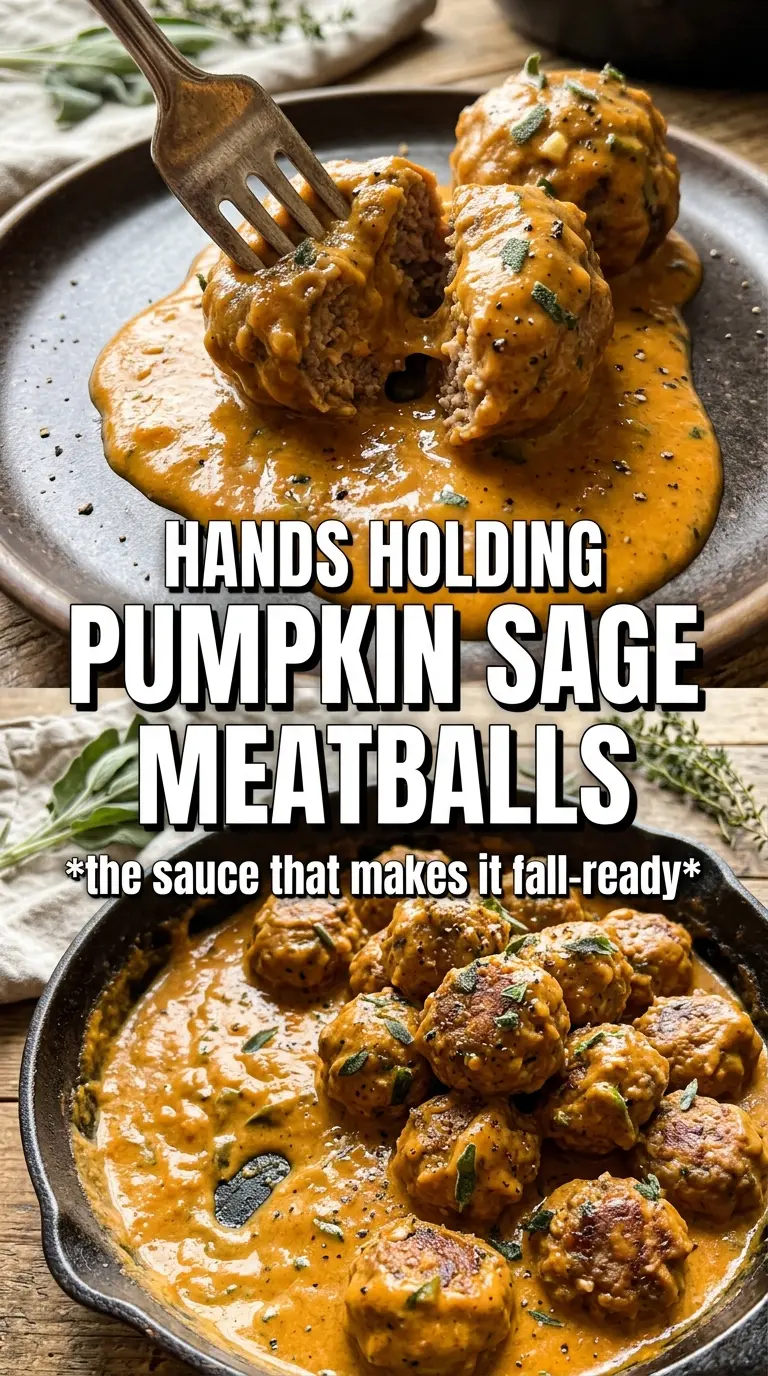
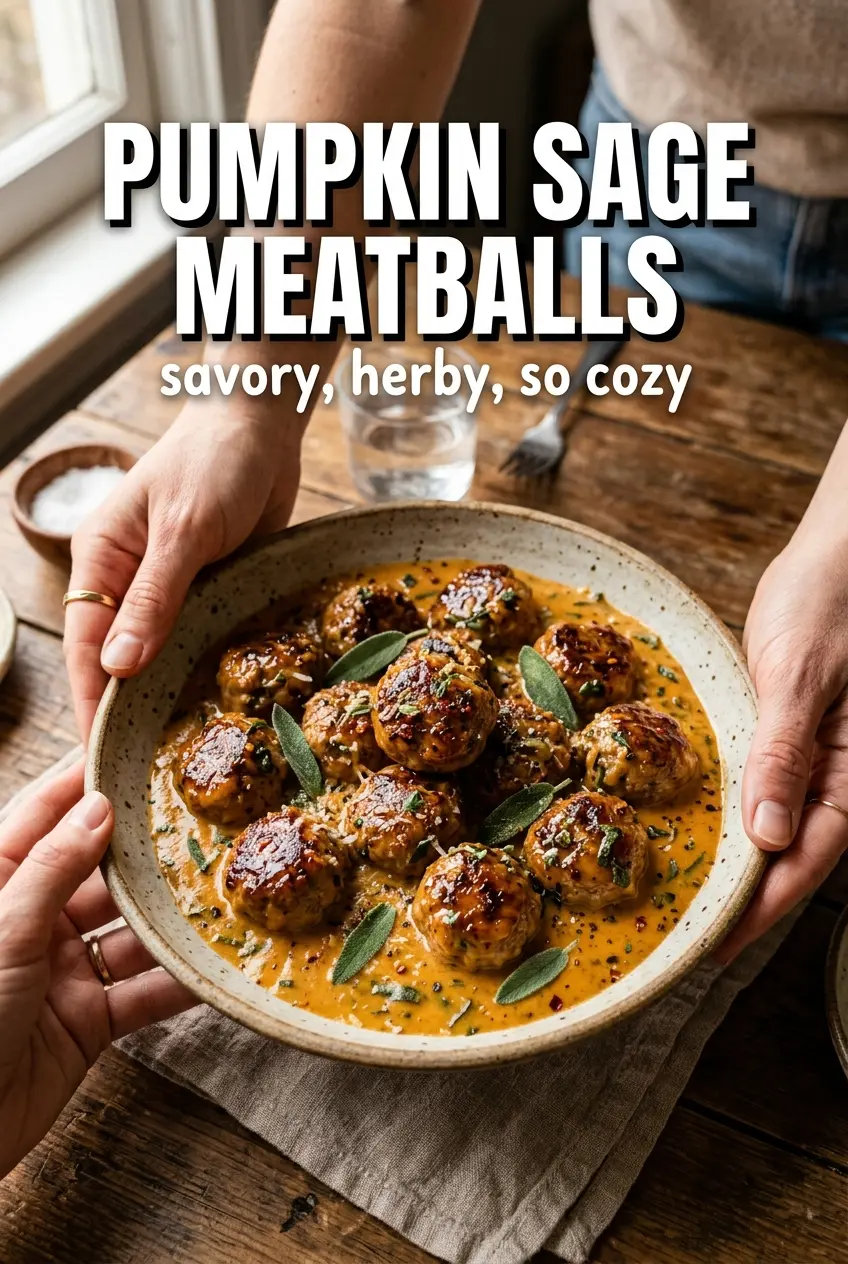
Pumpkin sage meatballs land on the plate with a savory, cozy richness that makes them feel a little more special than your usual weeknight pan dinner. The meatballs stay tender, the sauce turns silky and orange-gold, and the sage cuts through the cream with just enough sharpness to keep every bite from feeling heavy. Served over pasta or spooned onto soft polenta, this is the kind of dish that gets scraped clean without much talking.
What makes this version work is balance. Pumpkin puree goes into both the meatballs and the sauce, but it never takes over; it adds body, moisture, and a gentle sweetness that plays well with pork or beef, parmesan, and garlic. Browning the meatballs first matters too. That step builds flavor in the pan and gives the sauce a deeper base than if everything simmered together from the start.
Below, I’ve included the small details that keep the meatballs tender, the sauce smooth, and the sage crisp instead of greasy. Those little choices are what make this recipe feel reliable instead of fussy.
The meatballs stayed tender all the way through, and the pumpkin cream sauce got thick and glossy without turning gluey. I served it over polenta and my husband went back for seconds before I even sat down.
Love the creamy pumpkin sauce and crispy sage on these Pumpkin Sage Meatballs? Save it to Pinterest for the night you want something cozy, savory, and restaurant-worthy without a lot of cleanup.
The Trick to Keeping Pumpkin Meatballs Tender, Not Dense
Pumpkin puree adds moisture, but it doesn’t behave like a binder in the same way egg does. If you overmix the pork or beef after the pumpkin and breadcrumbs go in, the meatballs tighten up and cook up bouncy instead of soft. Stop mixing the moment everything looks evenly combined, then roll them with a light hand.
The other mistake is making them too large. These work best at about 1.5 inches because they brown quickly without needing a long oven finish, and they stay juicy once they go back into the sauce. If the outside browns too fast before the center firms up, the heat is too high.
- Pumpkin puree — This adds moisture and body without making the meatballs taste sweet. Canned puree works well here; just use plain pumpkin, not pumpkin pie filling.
- Breadcrumbs — They soak up the pumpkin and help keep the texture light. If you need a gluten-free version, use fine gluten-free breadcrumbs or crushed gluten-free crackers.
- Parmesan — Use the real stuff if you can. It sharpens the sauce and seasons the meatballs from the inside, while pre-grated parmesan can taste flatter and sometimes melts less smoothly.
- Fresh sage — Fresh sage gives the dish its signature edge. Dried sage can work in a pinch, but use less because it reads stronger and more woody.
- Heavy cream — This is what turns the pumpkin into a true sauce instead of a puree coating. Half-and-half will work, but the sauce will be thinner and need a little more simmering.
What Each Ingredient Is Actually Doing in This Recipe
- Primary ingredient (the star) — Quality matters most. Choose the best you can find.
- Cooking medium (oil, butter, or broth) — This carries flavors and prevents dryness.
- Seasonings (salt, pepper, spices, herbs) — Layer flavors so nothing overpowers. Build depth gradually.
- Aromatics (garlic, onion, herbs) — Cook with fat to bloom flavors. Become the foundation.
- Supporting ingredients — Complement the main ingredient without overpowering it.
- Sauce or liquid (if applicable) — Brings flavors together. Balance richness with acid.
- Acid (lemon, vinegar, wine, or other) — Brightens and prevents flat-tasting results.
- Final finish (garnish, glaze, or sauce) — Prevents one-dimensional taste and adds visual appeal.
Building the Sauce Before It Curdles
Brown the Meatballs First
Get a thin layer of olive oil hot in a large skillet, then brown the meatballs in batches if needed. You’re not cooking them through here; you’re setting the outside so they hold together and leave browned bits in the pan. If the skillet is crowded, they’ll steam and turn pale, and the sauce loses a lot of its depth. Pull them out when they’ve got color on several sides, even if the centers still feel soft.
Cook the Pumpkin and Cream Gently
Lower the heat before the garlic goes in for the sauce. Garlic only needs about a minute to lose its raw edge, and if it browns hard it turns bitter fast against the pumpkin. Stir in the pumpkin, cream, parmesan, and nutmeg, then let the sauce simmer until it thickens enough to coat a spoon. If it looks grainy, the heat was too high; take the pan off the burner for a minute and stir before continuing.
Finish the Meatballs in the Sauce
Return the browned meatballs to the skillet and let them simmer gently for about 15 minutes. The sauce should bubble lazily, not boil hard, or the cream can split and the meatballs can toughen. By the end, the meatballs should feel firm but still springy when pressed, and the sauce should cling to them instead of running off the pan.
Make It with Turkey Instead of Pork
Ground turkey works if you want a lighter version, but it needs the pumpkin and parmesan to keep from tasting dry. Use turkey with a little fat if you can, and don’t skip the browning step because that adds the flavor turkey sometimes lacks.
Dairy-Free Version
Swap the parmesan in the meatballs for a dairy-free parmesan-style alternative and use full-fat coconut cream or an unsweetened oat cream in the sauce. Coconut cream gives the richest texture, while oat cream keeps the flavor more neutral. The sauce won’t taste exactly the same, but it will still be smooth and savory.
Make It Gluten-Free
Use gluten-free breadcrumbs and serve the meatballs over polenta or gluten-free pasta. The texture stays close to the original as long as the crumbs are fine and evenly mixed in. Coarse crumbs can leave the meatballs a little loose.
Storage and Reheating
- Refrigerator: Store in an airtight container for up to 4 days. The sauce thickens as it chills, which is normal.
- Freezer: Freeze the meatballs and sauce together for up to 2 months. Cool completely first, then pack into a freezer-safe container with a little headspace.
- Reheating: Warm gently on the stovetop over low heat with a splash of cream or water to loosen the sauce. High heat can break the cream and dry out the meatballs, so keep the simmer gentle.
Questions I Get Asked About This Recipe
Pumpkin Sage Meatballs
Ingredients
Equipment
Method
- In a large bowl, mix the ground pork or beef, pumpkin puree, breadcrumbs, parmesan, egg, minced fresh sage, minced garlic, salt, and pepper until just combined (stop as soon as no dry bits remain).
- Roll the mixture into 1.5-inch meatballs and set them aside while you heat the pan.
- Heat olive oil in a large skillet over medium-high heat until shimmering, then brown the meatballs in batches until golden on the outside. Remove the meatballs to a plate.
- In the same skillet, sauté garlic over medium heat until fragrant, about 30 seconds with no browning (visual cue: pale and aromatic).
- Stir in pumpkin, heavy cream, parmesan, and nutmeg, then bring to a simmer and simmer for 5 minutes until slightly thickened.
- Return the browned meatballs to the sauce and simmer for 15 minutes, turning once, until cooked through and the sauce clings to the meatballs (visual cue: meatballs spring back).
- Finish by topping with crispy fried sage and extra parmesan, then serve over pasta or polenta.