Thick slices of pumpkin French toast turn crisp at the edges, custardy in the middle, and warmly spiced all the way through. The bread holds its shape, the pumpkin adds a soft earthiness, and the maple syrup in the custard gives each bite a gentle sweetness before you ever pour any on top. It’s the kind of breakfast that tastes like you planned ahead, even when you only had ten minutes to whisk everything together.
What makes this version work is the balance in the custard. Pumpkin puree brings body, but it can also make French toast heavy if the milk ratio is off, so the mix stays loose enough to soak in without turning gummy. Brioche or challah does the rest of the work because the slices are sturdy, rich, and tender enough to brown without falling apart. A short soak is enough here; too long and the bread turns soggy before it reaches the pan.
Below, I’m walking through the small details that matter most: how to keep the center soft without steaming the bread, which swaps work if you’re out of brioche, and how to reheat leftovers without losing that crisp edge.
The custard soaked in perfectly and the slices browned up with crisp edges instead of going soggy. I used challah and the pumpkin flavor came through without tasting heavy at all.
Pumpkin French toast with crisp edges and a soft maple-kissed center belongs in your breakfast rotation.
The Part That Keeps Pumpkin French Toast From Going Heavy
Pumpkin puree changes the texture fast. Add too much, or soak the bread too long, and the custard turns thick enough to sit on the surface instead of soaking into the crumb. That’s when French toast starts eating like pudding on the outside and dry bread in the middle.
The fix is a thinner custard and a controlled soak. Whole milk gives enough richness without making the mixture dense, and the maple syrup helps the custard brown while keeping the pumpkin flavor rounded instead of sharp. Use thick-cut brioche or challah so the slices can drink in the custard without collapsing in the pan.
- Short soak: About 30 seconds per side is enough for thick bread. Longer than that and the center can turn spongy before the skillet sets the outside.
- Medium heat: A hot pan scorches the egg before the pumpkin custard has time to cook through. Medium heat gives you a deep golden crust and a soft center.
- Butter in batches: Fresh butter between rounds keeps the surface crisp and adds the nutty browning that makes each slice taste finished.
What Each Ingredient Is Actually Doing in the Custard
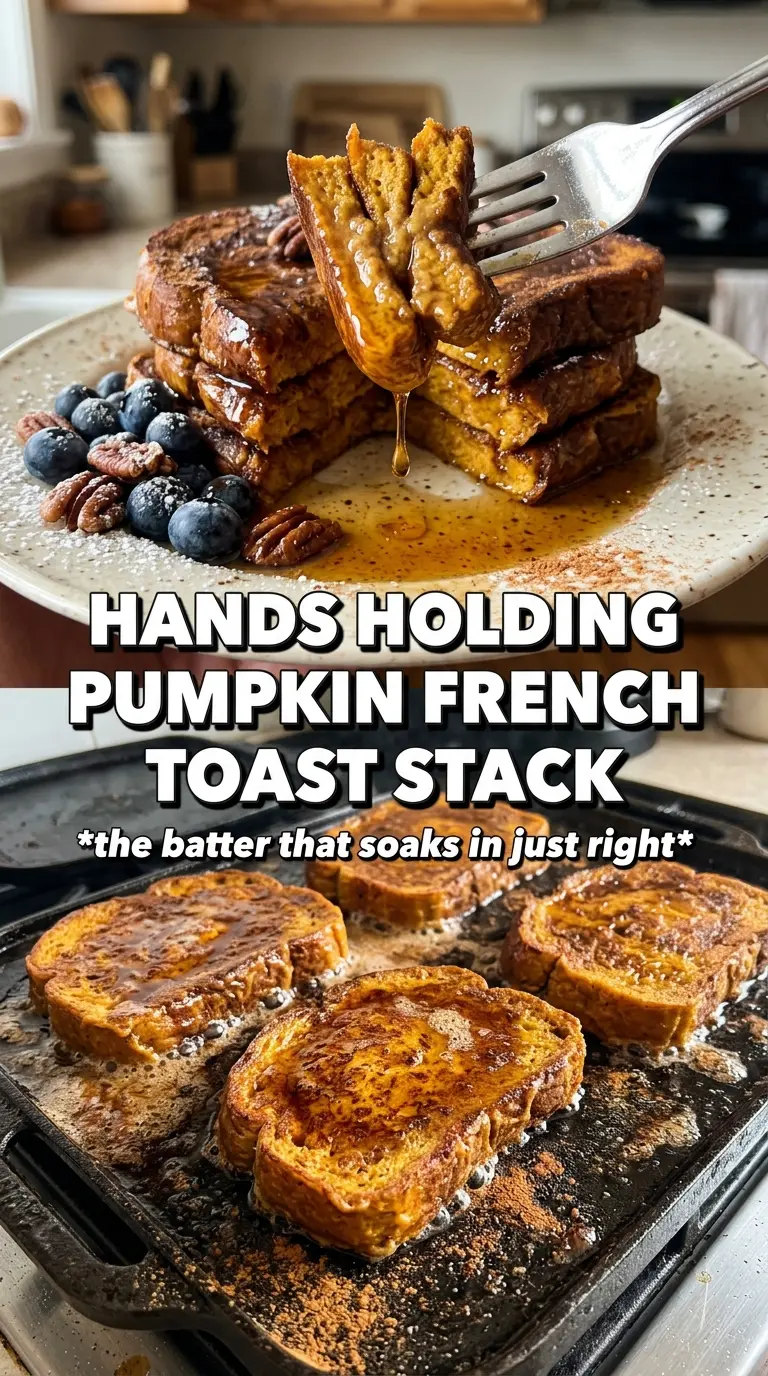
- Brioche or challah: These breads are rich and sturdy, which matters here because the custard is heavier than a plain egg mix. Day-old bread is even better since it soaks without turning fragile.
- Pumpkin puree: This gives the toast its color, body, and earthy pumpkin flavor. Use plain pumpkin puree, not pumpkin pie filling, or the custard will be overly sweet and spiced before you control it yourself.
- Whole milk or half-and-half: Whole milk is enough for a silky custard, while half-and-half makes the finished toast a little richer. If you use half-and-half, keep the soak short so the slices don’t get too soft.
- Maple syrup: A little inside the custard gives a warm sweetness that carries through every bite. Honey can work in a pinch, but it changes the flavor and browns a little faster in the pan.
- Pumpkin pie spice and cinnamon: These spices add depth, but the cinnamon keeps the pumpkin pie spice from tasting flat or one-note. If your spice blend is old, the toast will taste dull even if everything else is right.
- Vanilla extract: Vanilla smooths out the pumpkin and makes the custard smell like a proper breakfast rather than plain spiced eggs. Real vanilla matters more here than in many recipes because the custard is so simple.
Getting the Custard Soaked and the Pan Browned at the Same Time
Whisk the Pumpkin Base Until It’s Smooth
Start by whisking the eggs, pumpkin puree, milk, maple syrup, spices, vanilla, and salt until the mixture looks completely even and no streaks of pumpkin remain. If the puree stays lumpy, it clings to the bread in patches and cooks unevenly. A fork works, but a whisk is better because it breaks up the pumpkin faster and keeps the custard light.
Let the Bread Drink, Not Drown
Dip each slice and let it sit in the custard for about 30 seconds per side. You want the bread to feel heavy and saturated, but still able to hold its shape when you lift it. If the bread starts bending like wet cardboard, the soak went too far and the centers will cook up dense.
Brown the Outside Without Steaming the Middle
Melt butter in a skillet or griddle over medium heat, then cook the slices for 2 to 3 minutes per side until deeply golden. The sound should be a steady, gentle sizzle, not an aggressive crackle. If the toast browns before the center firms up, the heat is too high; if it sits pale in the pan, the pan isn’t hot enough and the bread will dry out instead of crisping.
Finish With the Right Toppings
Serve the French toast right away with warm maple syrup, powdered sugar, or whipped cream. The heat from the toast softens the toppings just enough to blend into the custard without making the crust limp. If you wait too long to plate it, the steam trapped underneath will steal the crisp edge you worked for.
Three Ways to Make Pumpkin French Toast Fit the Morning You’ve Got
Dairy-Free Version
Use unsweetened almond milk or oat milk instead of whole milk, and cook the toast in a neutral oil or vegan butter. Oat milk gives the closest body, while almond milk makes the custard a little lighter and less rich. The flavor stays strong because the pumpkin and spices carry the dish.
Gluten-Free Bread Swap
Use a sturdy gluten-free sandwich bread or brioche-style gluten-free loaf that’s a little dry on the edges. Soft, flimsy gluten-free bread tends to break once it hits the custard, so toast the slices lightly first if they feel too tender. The result is still rich and custardy, just a bit more delicate when flipping.
Make It Sweeter or More Spiced
Add another tablespoon of maple syrup if you want a sweeter breakfast, or increase the cinnamon by 1/4 teaspoon for a stronger spice note. Don’t add more pumpkin puree to push the flavor; that changes the texture and makes the custard harder to cook evenly.
Storage and Reheating
- Refrigerator: Store leftovers in an airtight container for up to 3 days. The crust softens a little, but the flavor stays good.
- Freezer: Freeze cooked slices in a single layer, then stack with parchment between them for up to 2 months. Freeze after cooling completely so steam doesn’t turn the bread soggy.
- Reheating: Reheat in a toaster oven, oven, or dry skillet until the edges crisp back up. The biggest mistake is microwaving, which warms the center but leaves the toast limp.
Answers to the Questions Worth Asking
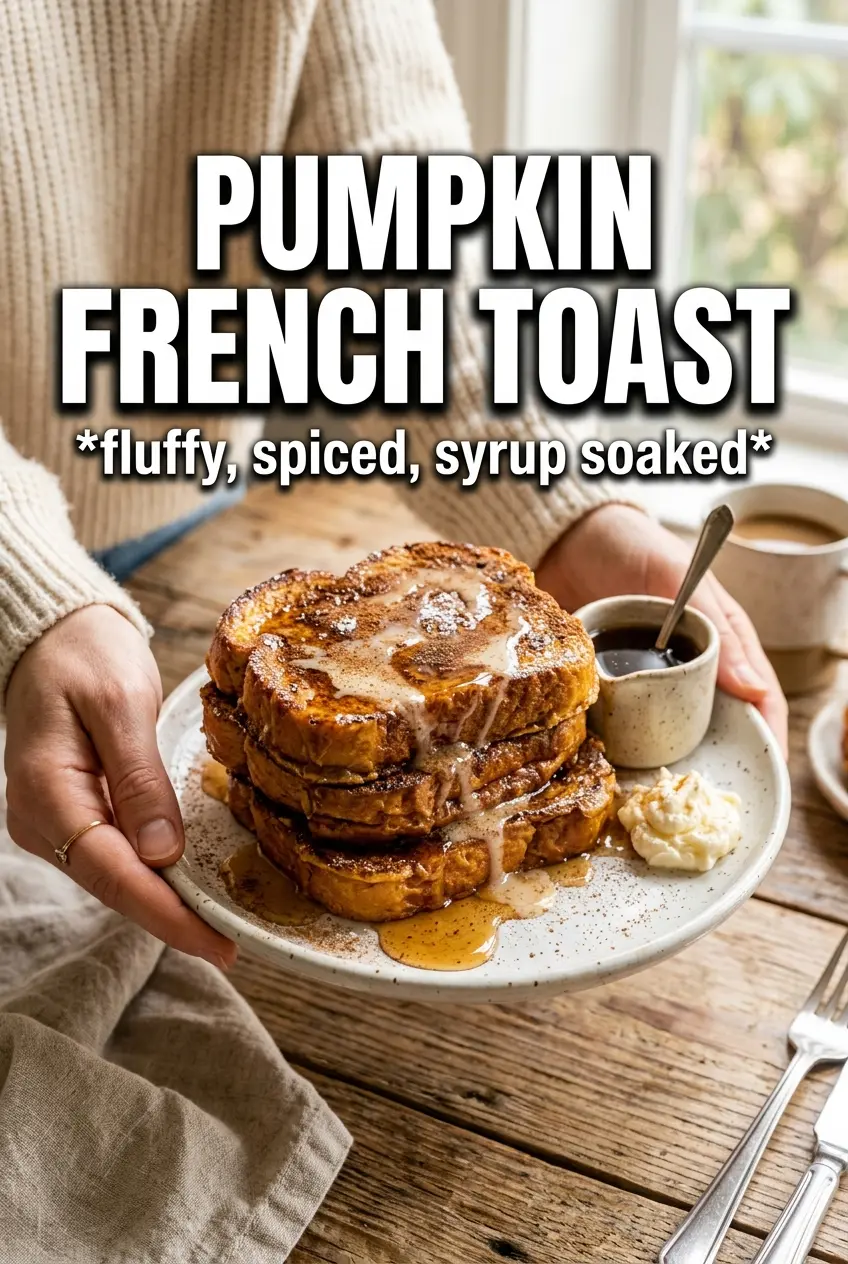
Pumpkin French Toast
Ingredients
Equipment
Method
- Whisk the eggs, pumpkin puree, milk or half-and-half, maple syrup, pumpkin pie spice, cinnamon, vanilla extract, and salt until smooth and evenly colored.
- Heat a griddle or skillet over medium heat and melt 1 tablespoon butter.
- Dip each brioche or challah slice in the pumpkin custard and let it soak for 30 seconds per side.
- Cook each soaked slice for 2-3 minutes per side, until deeply golden.
- Work in batches so the pan stays at medium heat, adding more butter as needed between batches.
- Serve the pumpkin French toast with warm maple syrup, powdered sugar, and whipped cream.