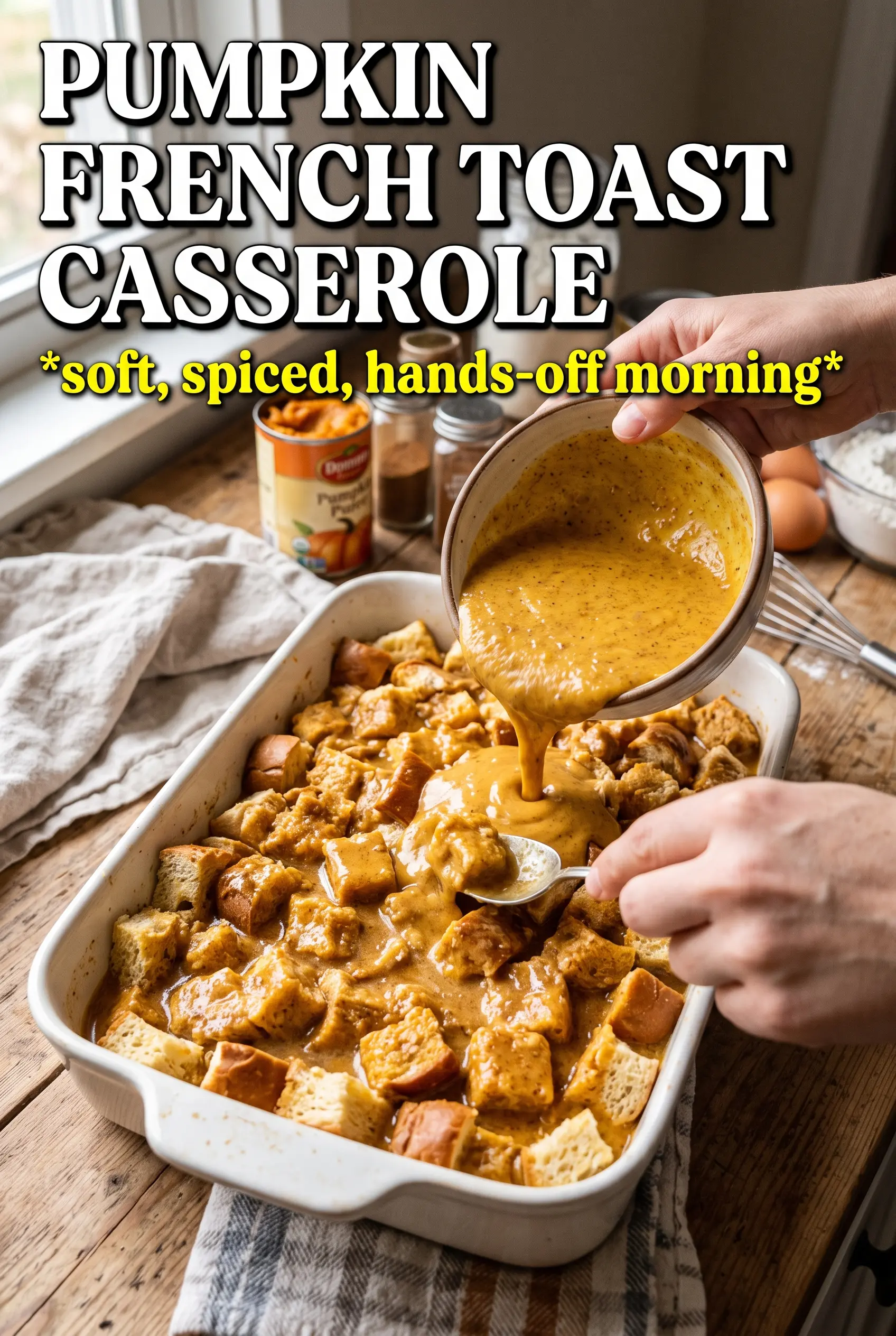
Golden and puffed with crisp edges, a soft custardy center, and a cinnamon streusel top that cracks under your spoon, pumpkin French toast casserole earns its place at the table fast. It tastes like classic baked French toast, but the pumpkin in the custard gives it a deeper, warmer body that keeps every bite from feeling flat or eggy. The maple syrup in the base pulls the flavor together, so you get sweetness without having to drown it at the end.
The trick is using sturdy bread and giving it time to soak overnight. Brioche or challah holds onto the custard without collapsing, and the chill lets the cubes absorb the pumpkin mixture all the way through instead of leaving a soggy bottom and dry top. The streusel goes on right before baking so it stays crumbly and browned, not melted into the custard.
Below you’ll find the little details that matter most: how to keep the casserole light instead of dense, which swaps actually work, and what to watch for in the oven so the center sets without overbaking the edges.
The custard soaked in overnight and baked up with that soft, bread-pudding middle I was hoping for. The streusel stayed crisp on top, and the pumpkin flavor came through without turning heavy.
Pumpkin French toast casserole is the make-ahead breakfast with crisp streusel, maple custard, and zero morning stress.
The Overnight Soak That Keeps the Center Custardy, Not Soggy
The biggest mistake with baked French toast is rushing it. If the bread doesn’t sit long enough in the custard, the outside bakes before the middle has a chance to absorb flavor, and you end up with dry cubes on top and a wet layer underneath. Overnight chilling fixes that by giving the custard time to move all the way through the bread.
Pressing the bread down after pouring the custard matters, but don’t mash it. You want the cubes settled into the liquid, not compressed into a dense slab. Brioche and challah work because they have enough structure and richness to hold the soak without falling apart.
- Overnight rest — This is what turns the dish from scrambled eggs on bread into a real casserole. The texture gets more even and the flavor deepens.
- Sturdy bread — Soft sandwich bread breaks down too fast and can turn gummy. Brioche gives a richer finish; challah stays a little more structured.
- Pumpkin puree — It adds body, not just flavor. That extra thickness is why the custard sets with a plush, sliceable center.
What Each Ingredient Is Actually Doing in This Dish
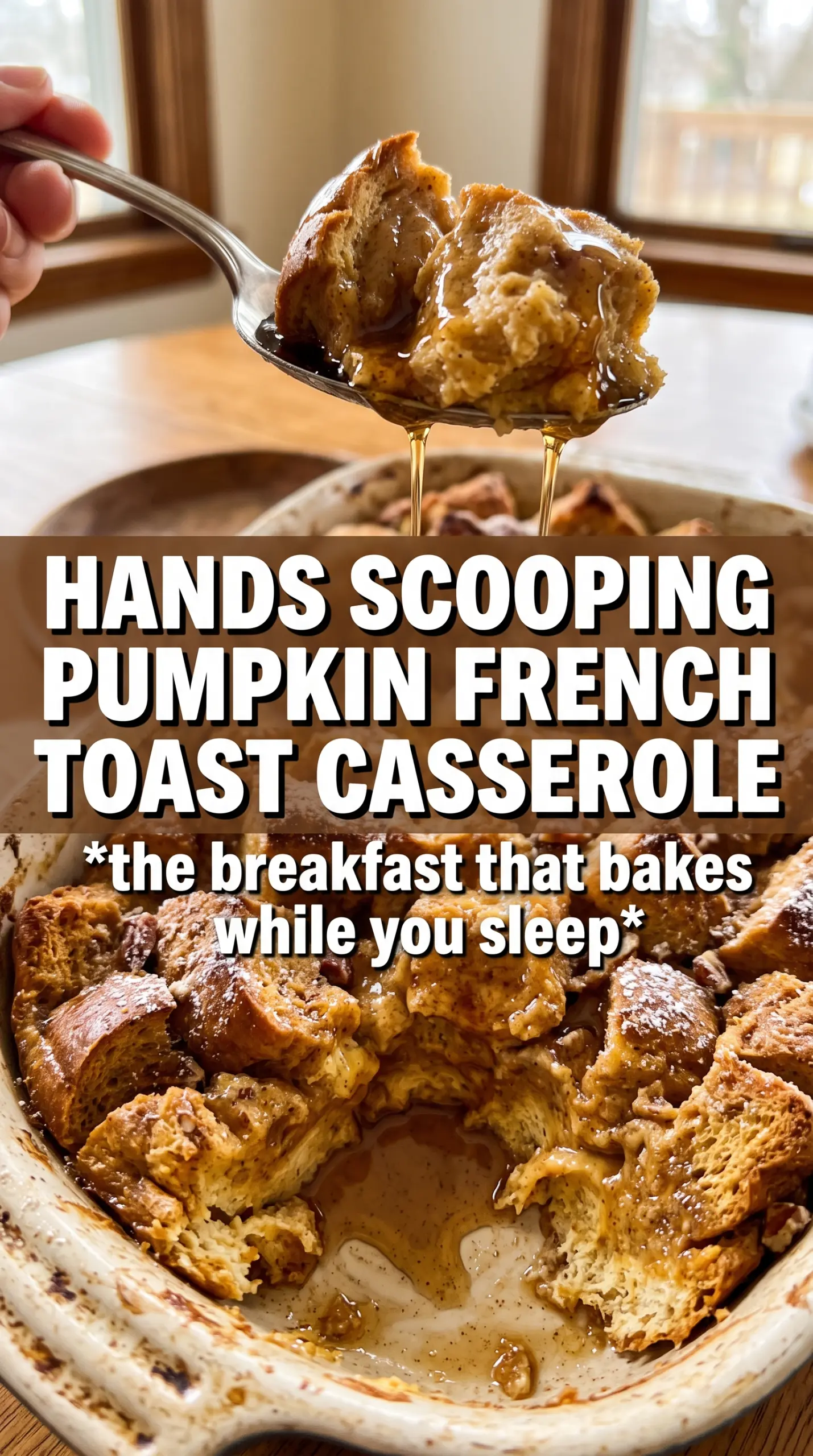
- Brioche or challah — Either one works, but both need to be cut into even cubes so the custard soaks at the same rate. Fresh bread is fine here as long as it has a little time to dry out after cubing.
- Eggs, milk, and cream — This is the custard base. The cream gives the casserole a richer, silkier set, while the milk keeps it from feeling heavy. If you need to lighten it up, use all milk, but the finished texture will be less plush.
- Pumpkin puree — Use plain pumpkin puree, not pumpkin pie filling. Pie filling is already sweetened and spiced, which throws off both the flavor and the set.
- Maple syrup and brown sugar — Maple syrup brings the right sweetness into the custard, and brown sugar adds a little molasses depth. That combination is what keeps the pumpkin from tasting flat.
- Streusel topping — Cold butter is nonnegotiable. If it softens too much before baking, you lose the crumbly top and end up with a paste instead of a crisp, sandy layer.
Building the Custard and Streusel Without Losing Texture
Whisk the custard until the pumpkin disappears
Whisk the eggs, milk, cream, pumpkin, maple syrup, brown sugar, spices, vanilla, and salt until the mixture looks smooth and uniform. If you still see streaks of pumpkin, keep whisking; those pockets can bake into dense patches. Pour it evenly over the bread, then press the cubes down just enough to help them absorb. The bread should look saturated but still have shape.
Chill before baking
Cover the dish and refrigerate overnight. This is where the texture gets built, and it is the part people skip when they are in a hurry. If you bake it right away, the middle usually stays loose while the top dries out. A full chill gives the custard time to settle and the bread time to soften evenly.
Finish with cold streusel and a hot oven
Mix the flour, brown sugar, cinnamon, and cold butter until the mixture looks like coarse crumbs, then scatter it over the soaked bread right before baking. Bake at 350°F until the top is deeply golden and the center is set with just a slight wobble when you nudge the pan. If the top browns too quickly, tent it loosely with foil for the last part of baking so the middle has time to catch up.
Dairy-Free Version
Swap the milk and cream for an unsweetened full-fat oat milk or almond milk blend. Oat milk gives the closest body, while almond milk makes the casserole a little lighter and less rich. The streusel still works as written if you use a plant-based butter that stays cold enough to crumble.
Gluten-Free Option
Use a sturdy gluten-free brioche-style loaf if you can find one, or a dense gluten-free sandwich bread that has enough structure to soak overnight without dissolving. The streusel can be made with a 1:1 gluten-free flour blend, but keep the butter cold or it will go past crumbly and bake up heavy.
Less Sweet Breakfast Brunch Style
Reduce the brown sugar in the custard to 1 tablespoon and skip the powdered sugar at serving. The casserole still tastes complete because the maple syrup and pumpkin carry the flavor, but the result leans more breakfast than dessert.
Storage and Reheating
- Refrigerator: Store leftovers covered for up to 4 days. The streusel softens a bit, but the custard stays nice and tender.
- Freezer: Freeze baked portions tightly wrapped for up to 2 months. Thaw overnight in the fridge before reheating so the center warms evenly.
- Reheating: Warm individual slices in a 325°F oven or toaster oven until heated through. The mistake to avoid is blasting it in the microwave, which makes the bread rubbery and the streusel soggy.