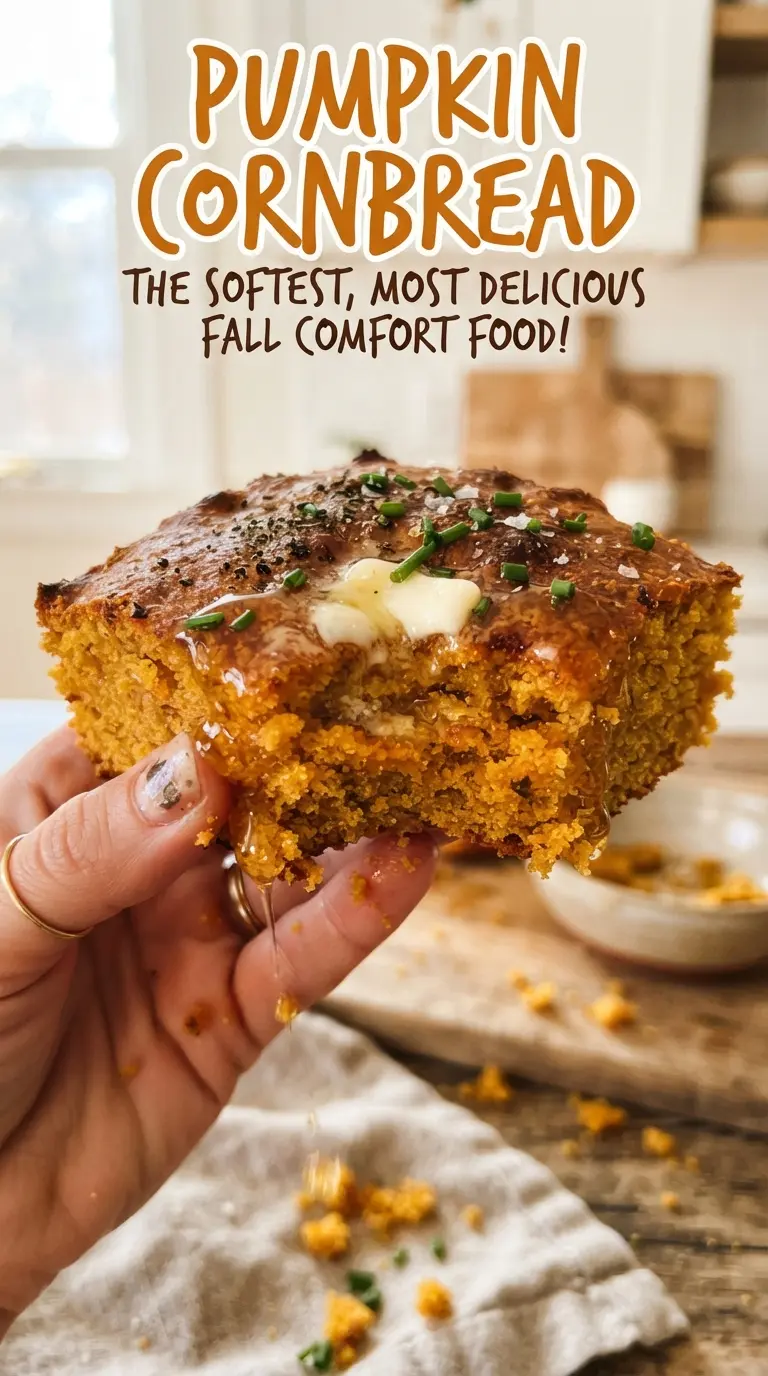
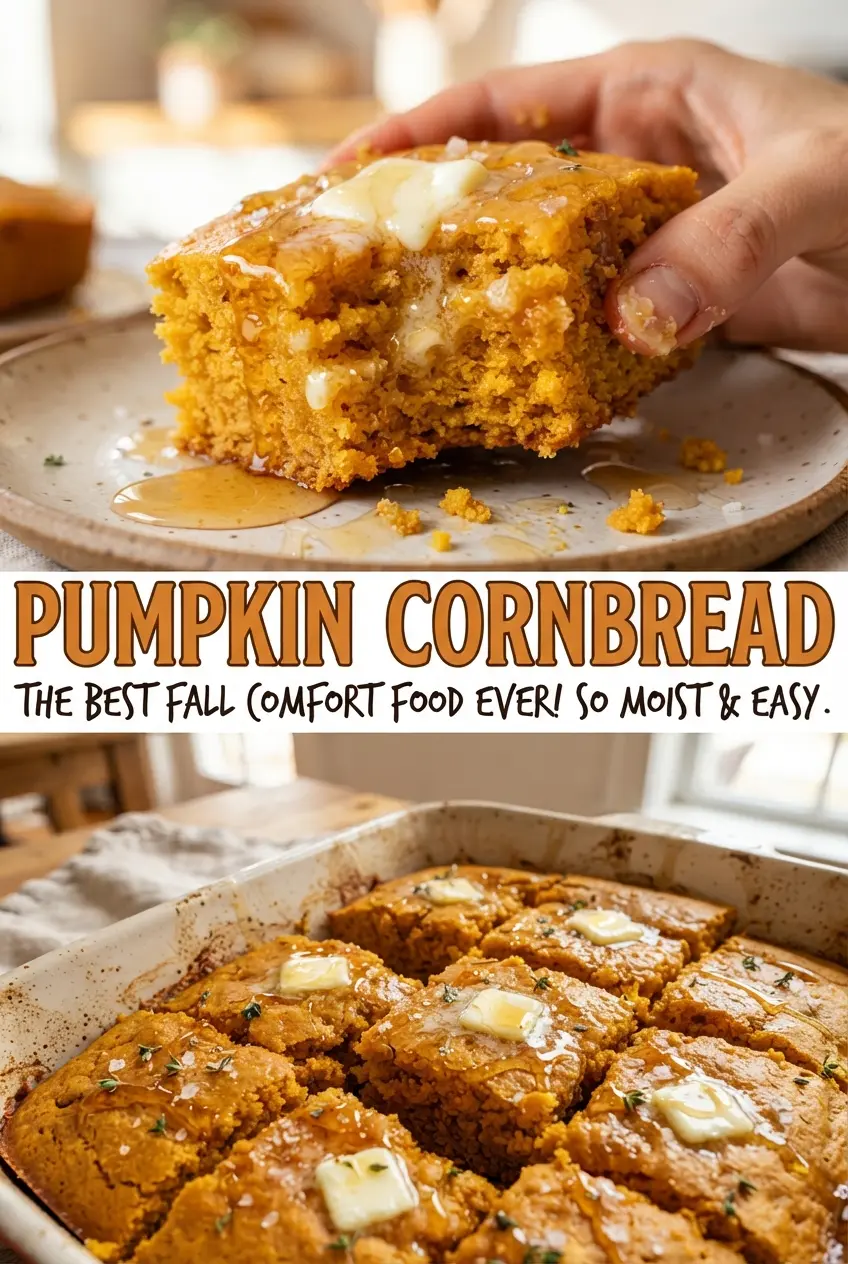
Golden pumpkin cornbread lands in that sweet spot between tender and sturdy, with crisp edges, a moist crumb, and just enough maple warmth to make a plain slab of bread feel special. The pumpkin doesn’t take over the flavor; it softens the texture and gives the cornbread a deeper color and a little extra richness, which is exactly what you want when you’re serving it alongside chili, soup, or roasted vegetables.
The trick is keeping the batter barely mixed. Cornbread turns tough fast when the flour is worked too much, and pumpkin puree can hide that problem until you slice in and find a dense middle. Buttermilk keeps the crumb soft and adds a gentle tang that balances the brown sugar and maple syrup, while the melted butter brings the kind of flavor oil just can’t match. Bake it hot so the edges set quickly and the center stays moist instead of gummy.
Below, I’ve included the one detail that keeps this cornbread from drying out, plus a few smart variations if you want to lean more savory, make it dairy-free, or bake it in a skillet.
The crumb came out soft and moist without being cakey, and the maple butter on top melted into the warm squares perfectly. I baked it in my cast iron skillet and the edges got that great little crunch.
Like this pumpkin cornbread? Save it to Pinterest for the nights when you want a warm, golden side with crisp edges and a soft maple-scented crumb.
The Secret to Pumpkin Cornbread That Stays Tender, Not Heavy
Pumpkin puree adds moisture, but it also adds weight. That’s why this batter needs enough lift from baking powder and enough structure from the flour to keep the crumb from turning pasty. If the cornbread bakes up dense, the usual culprit is overmixing or too much puree relative to the dry ingredients. Stir only until the flour disappears, then stop.
The other thing people miss is heat. A 400°F oven sets the outer edges quickly, which gives you those browned corners and keeps the center from lingering too long in the oven. If you bake pumpkin cornbread too gently, it can look done on top while the middle stays gummy.
- Yellow cornmeal — This gives the bread its grit and cornbread identity. Fine cornmeal makes a softer slice, while medium grind gives more texture. Either works here, but don’t swap in all corn flour or the result gets too cake-like.
- Pumpkin puree — Use plain pumpkin puree, not pumpkin pie filling. Pie filling is already sweetened and spiced, which throws off both the texture and the flavor balance.
- Buttermilk — The acidity helps tenderize the crumb and reacts with the baking powder for a better rise. If you don’t have it, mix 3/4 cup milk with 2 teaspoons lemon juice or vinegar and let it sit for 5 minutes.
- Maple syrup — This adds a round, mellow sweetness that brown sugar alone doesn’t give. Honey works in a pinch, but it tastes sharper and can brown faster.
Building the Batter So the Cornbread Doesn’t Toughen Up
- Brown sugar — This deepens the flavor and helps the top caramelize a little. White sugar will work, but the bread loses some of its warm, almost toasty note.
- Melted butter — Butter gives a richer flavor than neutral oil. Let it cool slightly before mixing it with the eggs so you don’t scramble them.
- Pumpkin pie spice — This is the supporting flavor, not the headline. If yours is old and faded, the cornbread will taste flat, so replace it if it’s been sitting in the pantry forever.
- Eggs — They hold the batter together and help the bread set cleanly. Room-temperature eggs blend faster and reduce the chance of streaks in the batter.
The Mixing and Baking Window That Matters Most
Whisking the Dry Base
Start by whisking the cornmeal, flour, sugar, baking powder, salt, and pumpkin pie spice until the mixture looks even throughout. That quick whisk matters because baking powder tends to clump, and those little clumps can leave bitter pockets or uneven lift. You want a uniform pale tan mixture before anything wet goes in.
Bringing the Wet Ingredients Together
Whisk the pumpkin puree, eggs, buttermilk, melted butter, and maple syrup in a separate bowl until the mixture looks smooth and glossy. If the butter starts to solidify in cold ingredients, keep whisking; small butter bits are fine, but large streaks can leave uneven richness in the finished bread. The batter should pour easily, not sit in a thick mound.
Stopping at Barely Combined
Pour the wet mixture into the dry ingredients and stir just until there are no dry streaks left. A few small lumps are fine and better than overworking the batter. If you beat it smooth, the gluten in the flour tightens up and the cornbread turns chewy instead of tender.
Baking to the Right Center
Spread the batter into the pan and bake until the top is golden and a toothpick comes out clean or with a few moist crumbs. If the center still looks shiny, give it a few more minutes, but don’t chase a completely dry toothpick or you’ll lose the soft crumb. Let it rest briefly before slicing so the steam settles and the squares cut cleanly.
How to Adjust This Pumpkin Cornbread Without Losing the Good Part
Skillet version with crispier edges
Bake it in a preheated 10-inch cast iron skillet instead of an 8×8 pan. The edges brown more deeply and the bottom gets a firmer crust, which is the best move if you want that rustic skillet look and a little extra texture.
Dairy-free pumpkin cornbread
Use a plain unsweetened non-dairy milk with 2 teaspoons lemon juice in place of the buttermilk, and swap the melted butter for melted coconut oil or a neutral oil. The crumb stays tender, though the butter flavor gets a little lighter.
Less sweet, more savory
Cut the brown sugar to 2 tablespoons and skip the maple syrup if you want a cornbread that leans more toward soup-and-chili territory. You’ll lose a little browning and softness, but the pumpkin and cornmeal flavor will come forward more clearly.
Storage and Reheating
- Refrigerator: Store in an airtight container for up to 4 days. The crumb firms up a bit in the fridge, but it stays moist.
- Freezer: Freeze slices tightly wrapped and sealed for up to 2 months. Thaw at room temperature so the texture doesn’t turn damp and spongy.
- Reheating: Warm in a 300°F oven or toaster oven until just heated through. The mistake is blasting it in the microwave for too long, which makes the edges rubbery and the center heavy.
Answers to the Questions Worth Asking
Pumpkin Cornbread
Ingredients
Equipment
Method
- Preheat the oven to 400F, then grease an 8x8-inch pan or a 10-inch cast iron skillet. The pan should be coated so the cornbread releases easily.
- Whisk together yellow cornmeal, all-purpose flour, brown sugar, baking powder, salt, and pumpkin pie spice. Mix until the dry ingredients look evenly combined.
- Whisk pumpkin puree, eggs, buttermilk, melted butter, and maple syrup in a separate bowl. Stop when the mixture is smooth and glossy.
- Stir the wet mixture into the dry just until combined. Stop as soon as there are no dry streaks to keep the texture tender.
- Spread the batter into the greased pan and smooth the top. Make an even layer so it bakes consistently.
- Bake for 22-25 minutes at 400F until golden and a toothpick comes out clean. Serve warm with butter, letting it melt over the top.