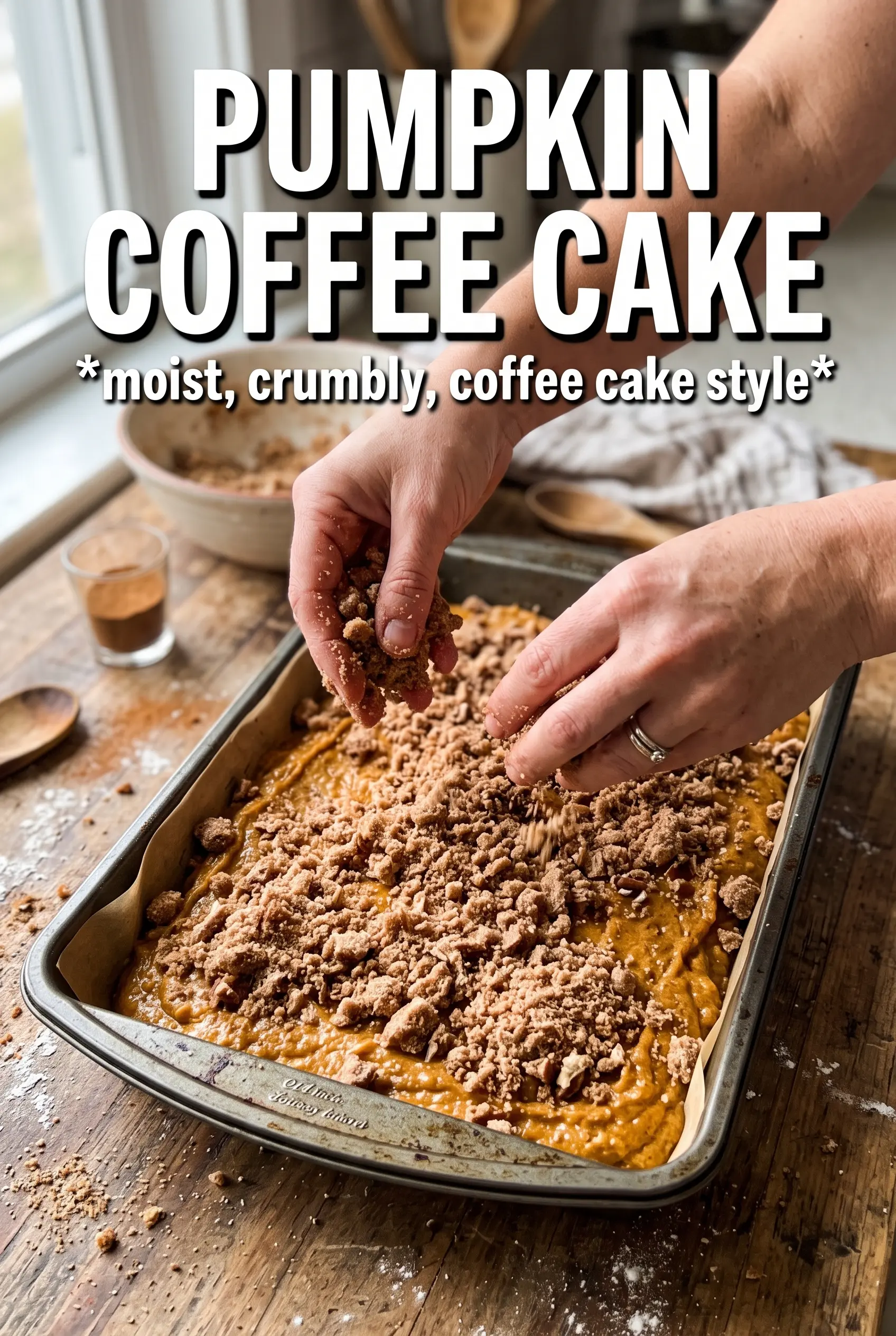
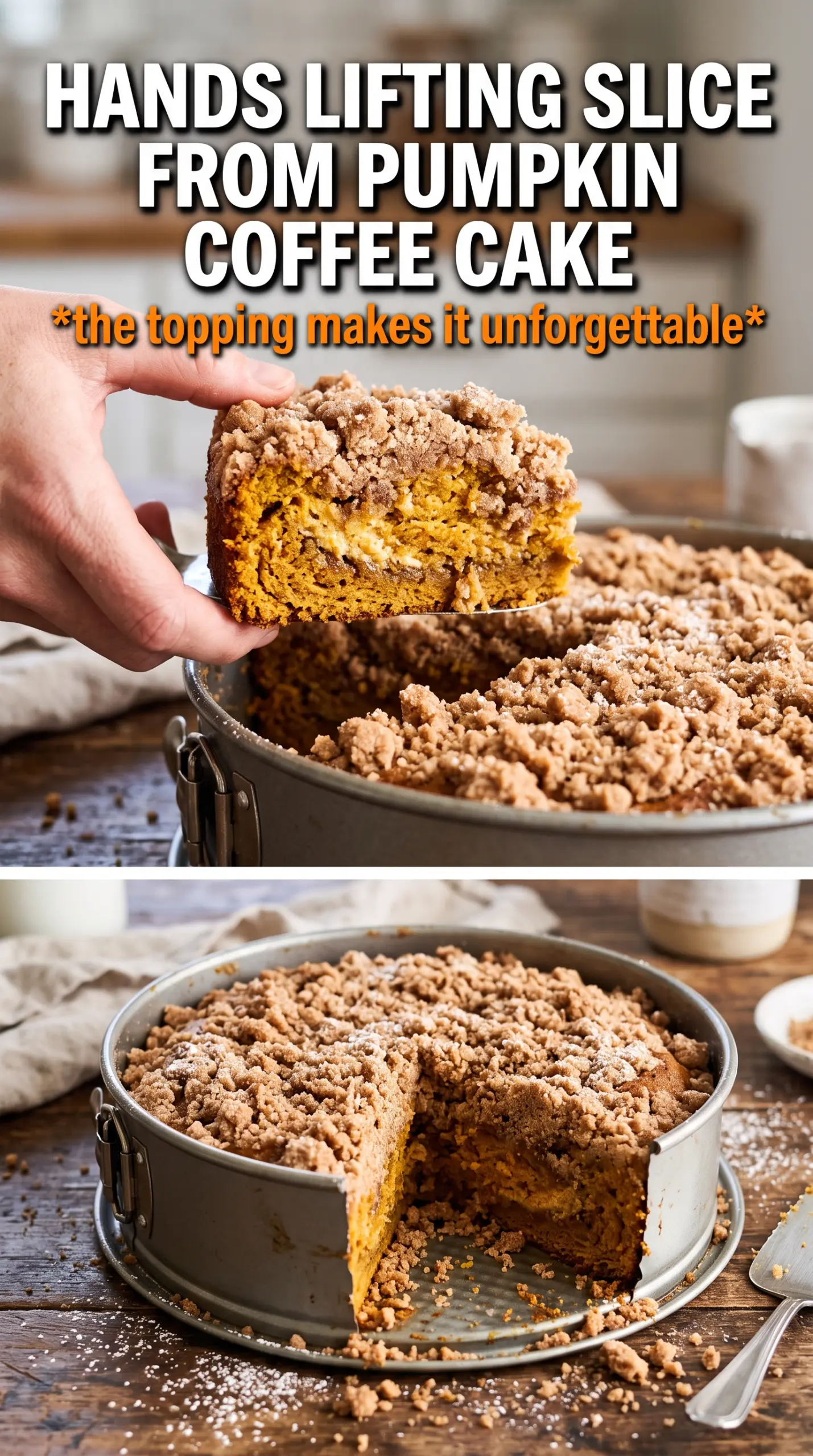
Pumpkin coffee cake bakes up with a tender crumb, a ribbon of cinnamon sugar running through the middle, and a thick streusel topping that turns crisp at the edges while staying crumbly on top. The best slices hold together cleanly but still feel soft and moist, with enough pumpkin flavor to taste unmistakably autumn without becoming dense or heavy.
What makes this version work is the balance between the sour cream, pumpkin, and butter. The sour cream keeps the cake plush, the pumpkin brings moisture and body, and the butter gives the batter enough richness to support that generous streusel without sinking under it. Chilling the streusel before baking matters too; cold butter gives you those nubby, bakery-style crumbs instead of a sandy layer that melts flat.
Below, you’ll find the small details that keep the swirl distinct, the topping crisp, and the crumb soft all the way through. I’ve also included the swaps I’d make if you need a dairy-free version or want to prep part of it ahead.
The streusel stayed chunky instead of melting into the cake, and that cinnamon swirl made every slice taste like the good part of a bakery muffin top.
Save this pumpkin coffee cake for the mornings when you want a soft pumpkin crumb, a cinnamon swirl, and a thick streusel top in one pan.
The Streusel Has to Stay Cold or It Turns Into a Blanket
The biggest mistake with pumpkin coffee cake is letting the topping warm up before it goes into the oven. Cold butter stays in little pieces, and those pieces melt slowly, which gives you crumbs, pockets, and crisp edges instead of a flat sugary layer. If the streusel looks pasty when you squeeze it, it’s too warm. Pop it back in the fridge while you finish the batter.
The second place people run into trouble is overbaking. Pumpkin cake should look set at the edges and just cooked through in the center; if you wait until the top looks fully dry, the crumb will go past tender and lose that soft, almost custardy middle. A tester should come out with a few moist crumbs, not wet batter.
What Each Ingredient Is Actually Doing in This Pumpkin Coffee Cake
- Pumpkin purée — Use plain pumpkin purée, not pumpkin pie filling. It gives the cake moisture, color, and that mellow pumpkin flavor without extra sugar or spices throwing off the balance.
- Sour cream — This is what keeps the crumb soft and rich. Plain Greek yogurt works in a pinch, but sour cream gives a smoother texture and a slightly fuller taste.
- Cold butter for the streusel — Cold cubes are the difference between a proper crumb topping and a melted sugar crust. If you only have salted butter, use it and pull back the added salt in the cake a little.
- Pumpkin pie spice plus cinnamon — The pie spice builds warmth, and the extra cinnamon makes the swirl and topping taste sharp enough to stand out through the pumpkin.
- Brown sugar — It adds moisture and a caramel note in every layer. White sugar won’t give you the same depth or the same soft, almost sticky texture in the swirl.
- All-purpose flour — This recipe depends on a fairly sturdy batter that can hold a generous streusel. Cake flour will make it too delicate and can lead to a softer, less structured slice.
Building the Swirl and Topping Without Crushing the Batter
Start by mixing the streusel and getting it cold. That gives you time to make the batter without the topping melting into the bowl. The cake batter itself should look thick and smooth after you fold in the dry ingredients; stop as soon as the flour disappears, because overmixing will make the crumb tight.
Mixing the Pumpkin Batter
Beat the butter and brown sugar until the mixture looks lighter and a little fluffy, then add the eggs one at a time. After that, stir in the pumpkin, sour cream, and vanilla. The batter may look slightly curdled at that point, and that’s fine; the dry ingredients will smooth it out. Once you add the flour mixture, fold just until no dry streaks remain.
Layering the Cinnamon Swirl
Spread half the batter into the pan in an even layer, then drizzle the cinnamon swirl across the surface. Don’t dump it in one spot or it will sink straight through. Add the remaining batter gently over the top and spread it carefully so you don’t drag the swirl all the way to the bottom. A few streaks showing through is exactly what you want.
Finishing With the Streusel
Break the chilled streusel into uneven clumps and scatter it generously over the batter. The uneven pieces bake into better texture than a finely crumbled layer. Bake until the top is deeply golden, the middle springs back lightly, and a tester comes out with moist crumbs. Let it cool before dusting with powdered sugar so the sugar doesn’t disappear into the heat.
Three Ways to Adapt This Coffee Cake Without Losing the Good Part
Dairy-Free Version With the Same Tender Crumb
Use a plant-based butter that bakes well, plus unsweetened dairy-free yogurt or a thick coconut yogurt in place of the sour cream. The cake will still be soft, but the streusel may not brown as deeply, so watch the pan rather than the clock.
Gluten-Free Swap for a More Delicate Slice
A good 1:1 gluten-free flour blend can work here, especially one that already contains xanthan gum. The texture will be a touch more fragile, so let the cake cool fully before cutting or the slices can break apart.
Make It Ahead for Easy Mornings
You can mix the streusel a day ahead and keep it chilled, or bake the whole cake the night before and rewarm slices the next morning. The streusel softens a little overnight, but the flavor gets even better after it rests.
Storage and Reheating
- Refrigerator: Store covered for up to 4 days. The streusel will soften a bit, but the cake stays moist.
- Freezer: Freeze sliced portions tightly wrapped for up to 2 months. Thaw overnight in the refrigerator for the cleanest texture.
- Reheating: Warm slices in a 300°F oven for 8 to 10 minutes. The microwave works, but it softens the topping and can make the crumb feel damp.