These pumpkin chocolate chip oatmeal cookies bake up thick, soft in the middle, and full of that chewy oat texture that makes a cookie feel a little more substantial than the usual drop cookie. The pumpkin brings a warm, mellow flavor and a tender crumb, while the chocolate chips keep every bite from leaning too soft or too sweet. They’re the kind of cookies that disappear fast because they taste like something between an oatmeal cookie and a pumpkin spice bakery cookie, but with a better texture than either one on its own.
The trick is keeping the pumpkin under control. Pumpkin puree carries a lot of water, and if it goes into the dough straight from the can, the cookies can spread too much and bake up cakey instead of chewy. Blotting it dry first makes a bigger difference than most people expect. I also like using old-fashioned oats here instead of quick oats because they hold their shape, give the cookies a heartier bite, and keep the centers from turning soft in a flimsy way.
Below, I’ve broken down the parts that matter most so you know exactly why these cookies work and how to keep them thick, chewy, and packed with chocolate.
Blotting the pumpkin first was the game changer. The cookies stayed thick, the oats had a nice chew, and they didn’t turn into little cakey mounds.
Save these thick pumpkin chocolate chip oatmeal cookies for the days when you want a chewy cookie with real oat texture and warm spice.
The Pumpkin Moisture Problem Most Cookies Don’t Solve
Pumpkin puree is the reason these cookies can go wrong if you treat it like any other add-in. It looks harmless, but it brings enough moisture to soften the dough and flatten the cookies before the oats and flour have a chance to set the structure. Blotting the pumpkin on paper towels or a clean kitchen towel pulls off just enough liquid to keep the cookies thick without losing the pumpkin flavor.
The other thing that helps is the balance of sugars. Brown sugar adds moisture and that deeper, almost caramel note, while granulated sugar helps the cookies spread just enough and keeps the edges from baking up too dense. If you want a softer, more cake-like cookie, you’d use more pumpkin. If you want the chewy version in this post, keep the pumpkin modest and let the oats do their job.
What Each Ingredient Is Actually Doing In These Cookies
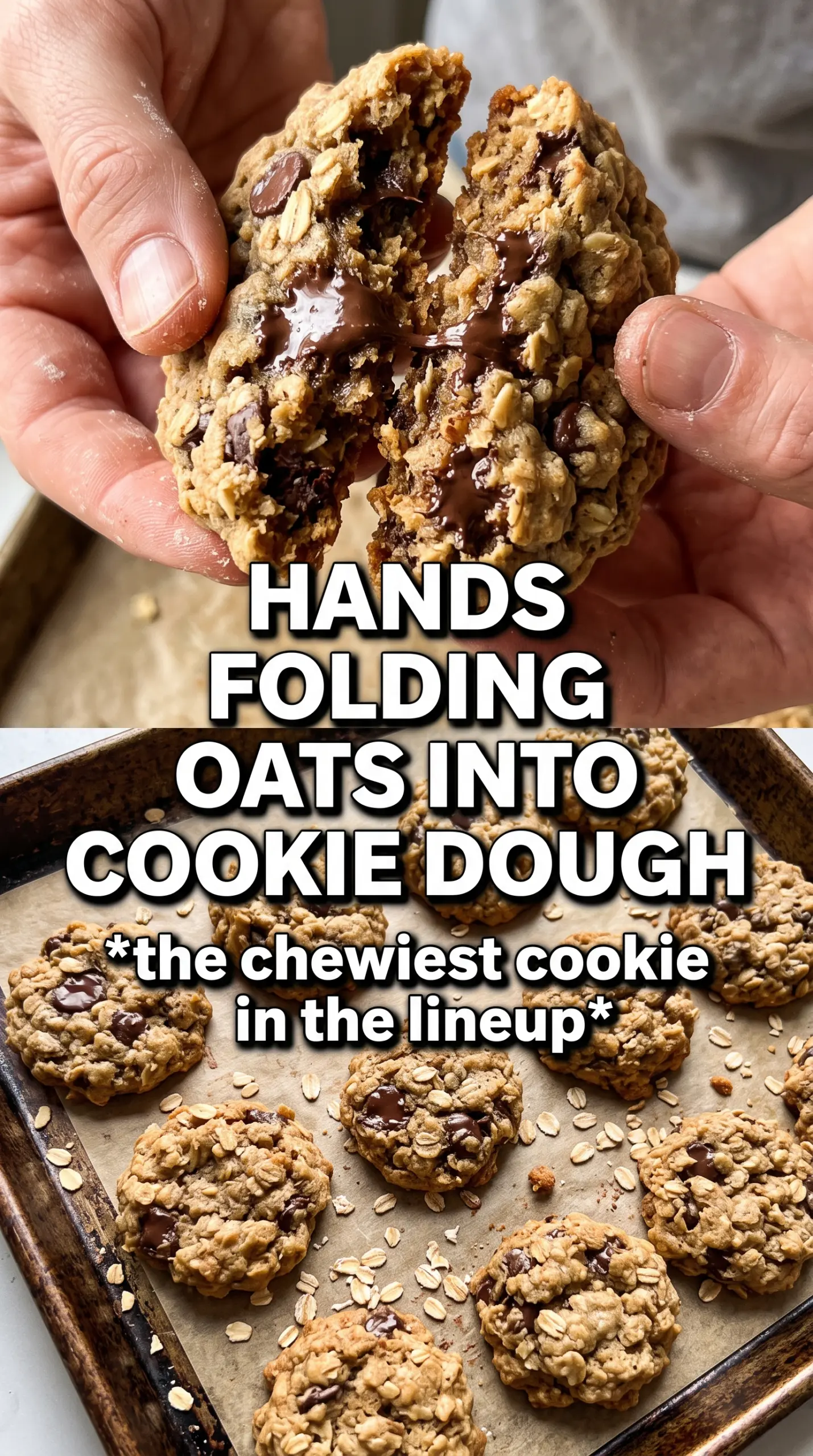
- Blotted pumpkin puree — This gives the cookies pumpkin flavor and color without flooding the dough. Freshly opened canned pumpkin is fine, but blot it until it looks thicker and almost paste-like before adding it.
- Old-fashioned rolled oats — These bring the chew and the hearty texture. Quick oats soften too much here and make the cookies feel less defined.
- Brown sugar — This is what keeps the centers tender and gives a deeper molasses note that works with the spice. Light brown sugar is perfect.
- All-purpose flour — Enough to hold everything together without making the cookies dry. Don’t be tempted to add extra unless the dough is visibly loose after mixing.
- Semi-sweet chocolate chips — They keep the cookies from tasting flat and sweet. Milk chocolate works if that’s what you have, but the cookies will taste sweeter and less balanced.
- Pumpkin pie spice and cinnamon — The spice blend gives the warm pumpkin backbone, and the extra cinnamon keeps the flavor from disappearing under the oats and chocolate.
Keeping the Dough Thick Before It Hits the Oven
Blotting and Mixing the Wet Ingredients
Start by blotting the pumpkin until it looks noticeably drier and denser. Then beat the butter with both sugars until the mixture is fluffy and lighter in color, because that’s what gives the cookies a little lift before the flour goes in. Add the pumpkin, eggs, and vanilla after that, and mix just until combined. If the mixture looks a little curdled, that’s normal with pumpkin in the bowl; it smooths out once the dry ingredients go in.
Folding in the Dry Ingredients Without Overworking the Dough
Stir in the flour mixture until you no longer see dry streaks, then fold in the oats and chocolate chips. The dough should feel thick and scoopable, not loose or glossy. If you beat it hard at this stage, the oats break down and the cookies lose their chewy texture. A sturdy spatula is better than a mixer here.
Baking Until the Edges Set
Scoop the dough into 2-tablespoon portions and give them a little space on the baking sheet. Bake just until the edges look set and lightly golden while the centers still look a touch soft. That soft center finishes cooking on the hot pan after you take them out. If you wait until the tops look fully dry in the oven, they’ll end up firmer than you want once they cool.
The Cooling Time That Finishes the Cookie
Leave the cookies on the baking sheet for 5 minutes before moving them. That short rest keeps them from collapsing when they’re still fragile in the center. After that, transfer them to a wire rack so the bottoms don’t keep steaming on the hot pan. Once cooled, the texture settles into chewy edges with a soft middle and a real oat bite.
Three Ways to Make These Cookies Fit What You Need
Gluten-Free Version With a Heavier Chew
Swap the all-purpose flour for a good 1:1 gluten-free baking blend. The cookies will still spread and bake up nicely, but the texture may be a little more delicate, so let them cool fully on the pan before moving them. Keep the oats certified gluten-free if that matters for your kitchen.
Dairy-Free With the Same Soft Center
Use a plant-based butter stick instead of unsalted butter. Choose one that behaves like real butter, not a soft tub spread, or the cookies can turn greasy and thin. The rest of the recipe can stay the same.
Extra Chocolate, Less Spice
If you want a more chocolate-forward cookie, reduce the pumpkin pie spice slightly and add a few extra chocolate chips. The cookies will taste a little less bakery-style and a little more like a classic oatmeal cookie with pumpkin in the background, which works well if you don’t want the spice to dominate.
Storage and Reheating
- Refrigerator: Store in an airtight container for up to 5 days. They stay soft, though the oats will firm up a little by day two.
- Freezer: These freeze well. Freeze baked cookies in a single layer, then move them to a bag or container for up to 2 months.
- Reheating: Warm a cookie in the microwave for 8 to 10 seconds or in a 300F oven for a few minutes. Don’t overheat them or the chocolate chips will melt out and the centers will dry.
Answers to the Questions Worth Asking
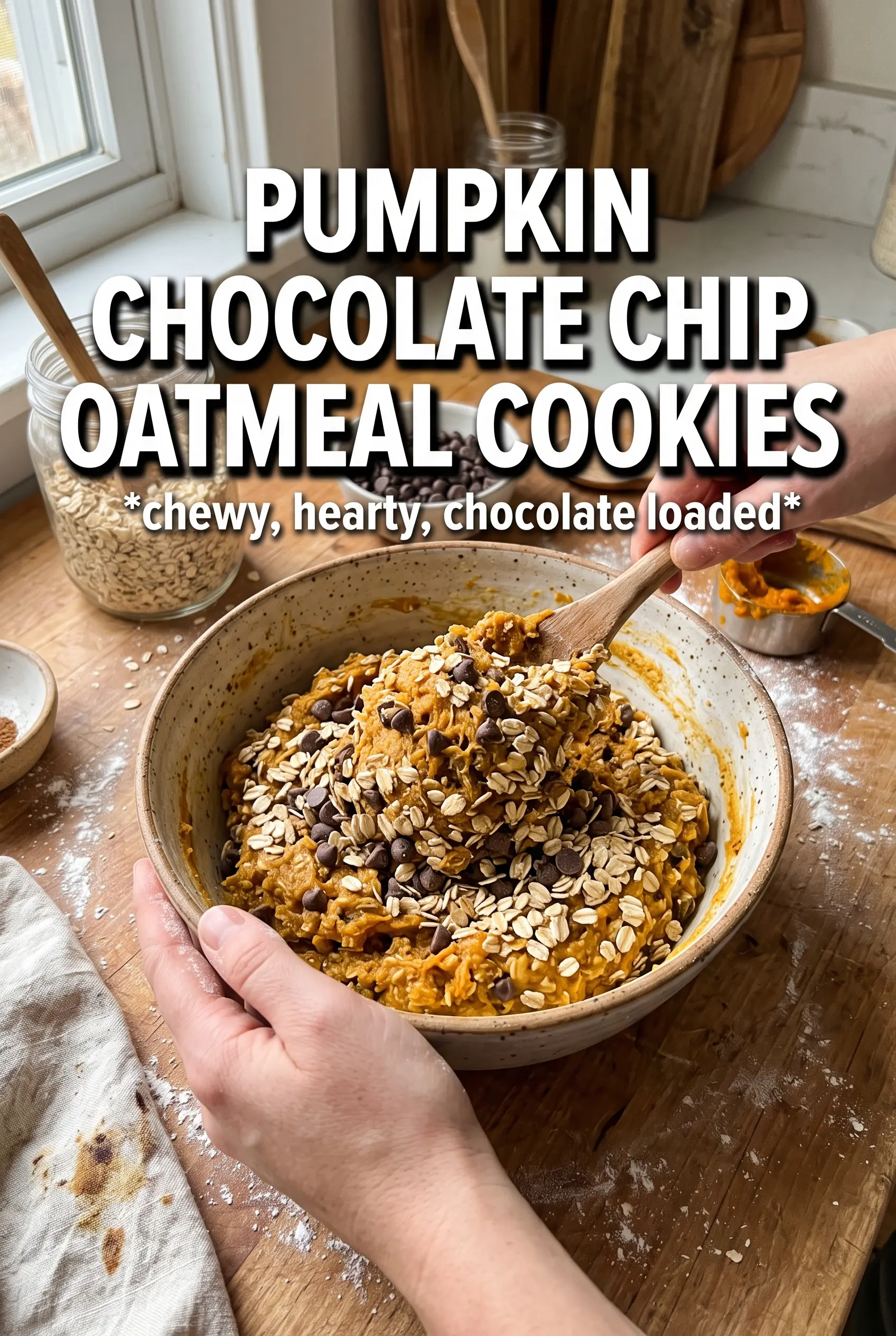
Pumpkin Chocolate Chip Oatmeal Cookies
Ingredients
Equipment
Method
- Preheat oven to 375F and line baking sheets with parchment or silicone mats so the cookies bake evenly with no sticking.
- Blot the pumpkin puree dry, then whisk together all-purpose flour, baking soda, pumpkin pie spice, cinnamon, and salt until evenly combined and speckled.
- Beat softened unsalted butter with both brown sugar and granulated sugar until smooth and lighter in color, with no visible sugar clumps.
- Add blotted pumpkin puree, then beat in eggs and vanilla until the mixture looks cohesive and glossy.
- Fold in the flour mixture just until no dry streaks remain, keeping the batter thick to support chewy cookies.
- Fold in old-fashioned rolled oats and semi-sweet chocolate chips so the dough is studded with oats and chips throughout.
- Scoop 2-tablespoon rounds onto the lined baking sheets, spacing them apart so they spread into uniform circles.
- Bake at 375F for 10-12 minutes, until the cookies are golden at the edges and set in the center.
- Cool on the pan for 5 minutes to let the cookies finish setting before transferring, so they don’t break apart.