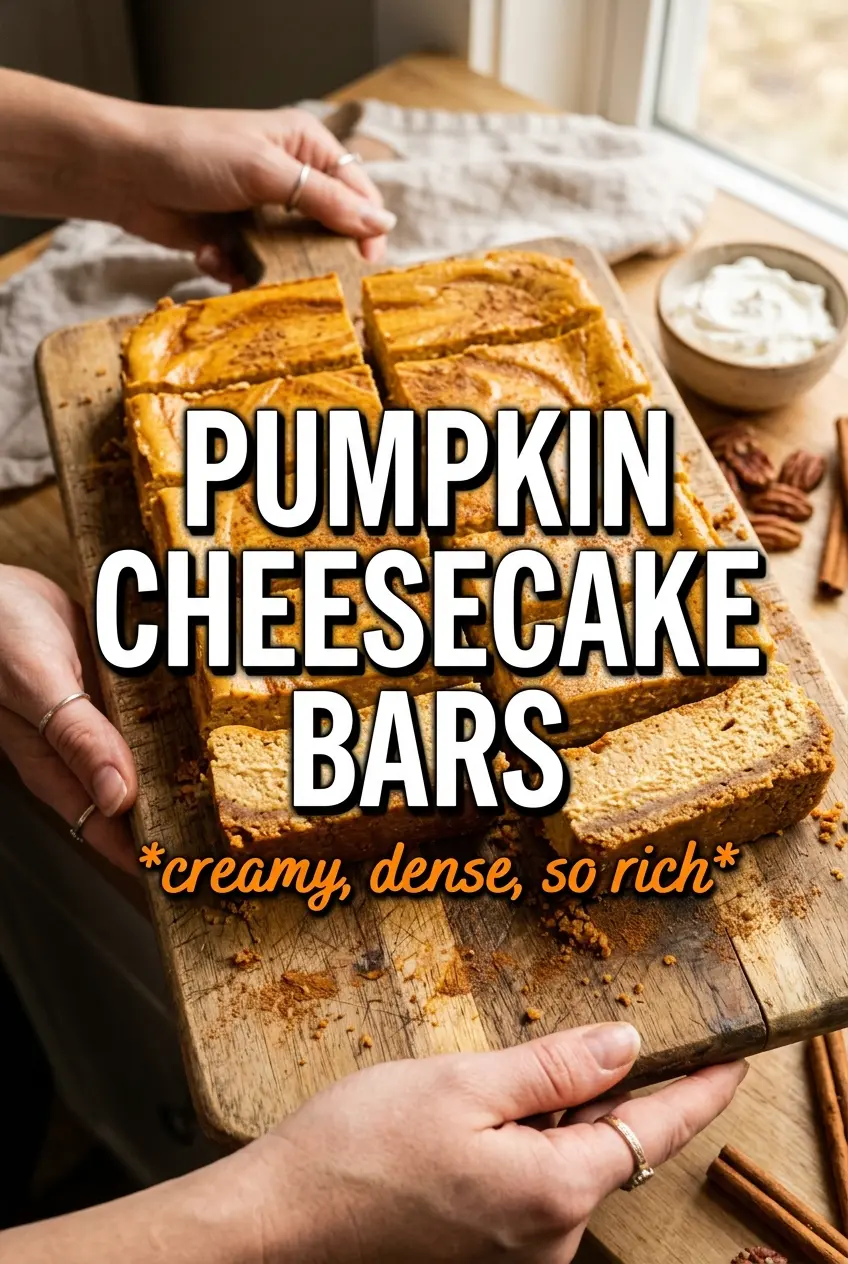
These pumpkin cheesecake bars slice cleanly, hold their shape, and give you the best part of two desserts in one pan: a spiced gingersnap crust, a silky cheesecake layer, and that marbled pumpkin top that tastes like it took more work than it did. The texture is what makes them worth repeating. You get a firm base, a creamy center, and just enough pumpkin spice to keep every bite interesting without turning the filling heavy or grainy.
The trick is pulling part of the plain cheesecake mixture aside before adding the pumpkin. That keeps the swirl layers distinct and keeps the pumpkin filling from getting watered down by extra mixing. I also bake the crust first for a few minutes so it sets before the filling goes in; that small step keeps the bottom crisp instead of soft.
Below you’ll find the exact swirl pattern I use, plus the little timing cue that keeps the bars from cracking or overbaking. If you’ve ever had cheesecake bars that smeared when cut, this version fixes that.
The pumpkin swirls stayed separate and the bars cut into neat squares after chilling overnight. The gingersnap crust was the best part for me because it stayed crisp under the creamy filling.
Save these pumpkin cheesecake bars for a dessert with a crisp gingersnap crust and a clean pumpkin-vanilla swirl.
The Swirl That Keeps the Bars from Turning Muddy
Once the pumpkin goes into the filling, the goal changes from mixing to preserving structure. The plain cheesecake batter needs to stay thick enough to support the pumpkin dollops, and the pumpkin mixture should be stirred just until it turns even in color. If you beat it hard after the pumpkin goes in, the layers blur together and the top bakes up more like a uniform spice cheesecake than a marbled bar.
The other thing that matters here is doneness. Cheesecake bars keep cooking from residual heat after they leave the oven, so the center should still have a slight wobble when you pull the pan. If it looks fully firm in the oven, it’s already overbaked. That is when cracks happen and the texture turns dry around the edges.
What Each Ingredient Is Doing in These Bars
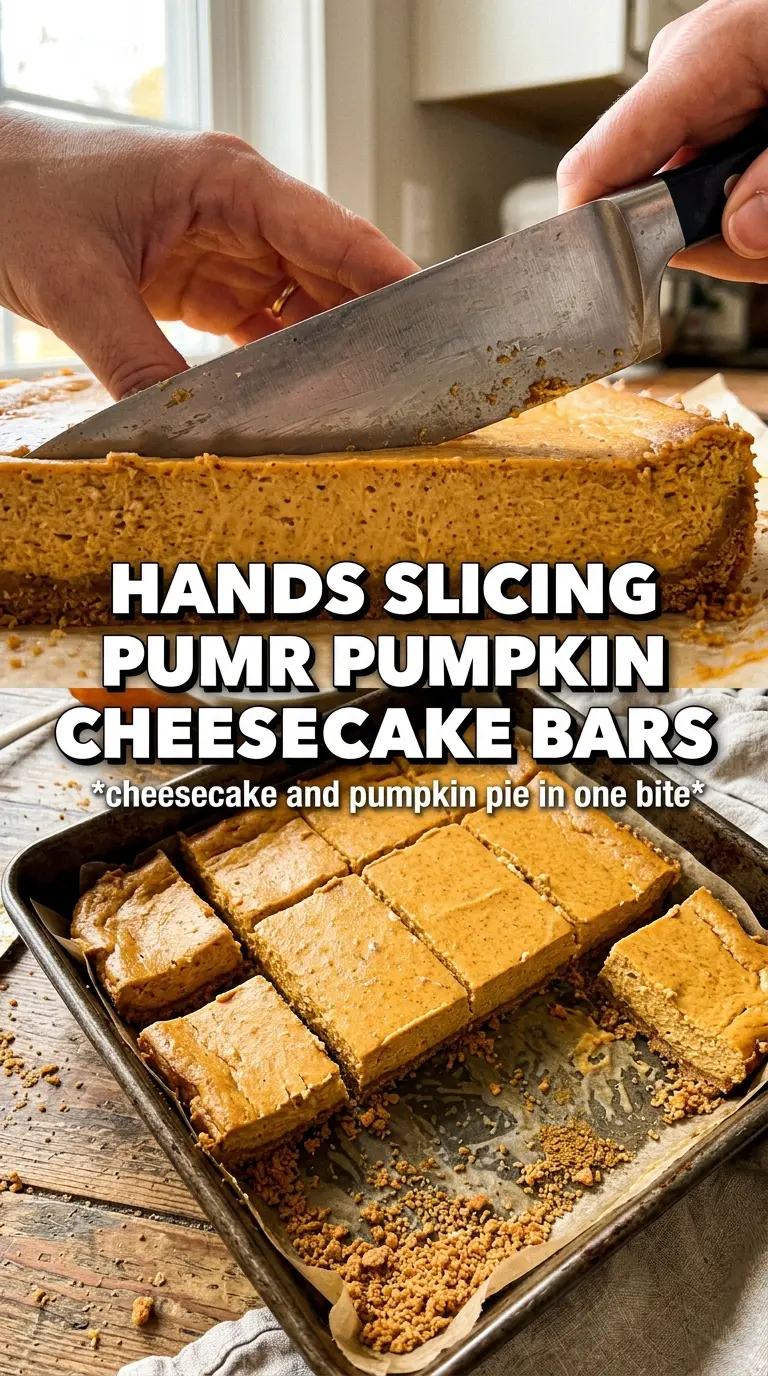
- Gingersnap crumbs — These bring spice and structure at the same time. Graham crackers will work in a pinch, but they make a softer, milder crust. Gingersnaps give the bars a deeper base flavor that stands up to the cheesecake filling.
- Cream cheese — Use full-fat cream cheese, softened all the way through. Cold cream cheese leaves little lumps that never fully smooth out once the eggs go in. Reduced-fat cream cheese tends to bake looser and can turn the filling watery.
- Sour cream — This keeps the cheesecake layer tangy and supple. Plain Greek yogurt can stand in if that’s what you have, but use the thick kind and expect a slightly sharper finish.
- Pumpkin puree — Use plain pumpkin puree, not pumpkin pie filling. Pie filling already has sugar and spice added, which throws off the balance and can make the pumpkin layer too sweet. If the puree looks watery, blot it with a paper towel before mixing.
- Brown sugar and spices — Brown sugar softens the pumpkin layer and adds a little molasses depth. The pumpkin pie spice and cinnamon work best together here, but if you’re out of pumpkin pie spice, use extra cinnamon plus a pinch each of ginger and nutmeg.
Building the Layers Without Overmixing the Filling
Pressing and Prebaking the Crust
Mix the gingersnap crumbs, sugar, and melted butter until every crumb looks evenly damp, then press the mixture firmly into a parchment-lined 9×13 pan. You want a tight, level layer with no loose sandy spots, because those are the places that crumble when you cut the bars. Bake it for 8 minutes, just until it smells toasted and darkens slightly at the edges. If you skip this bake, the crust softens under the filling and loses its snap.
Mixing the Cheesecake Base
Beat the cream cheese and sugar until the mixture looks smooth and glossy before the eggs go in. That step matters more than people think, because once the eggs are added, overmixing traps air and makes the bars puff and fall. Stir in the sour cream and vanilla only until combined, then stop. A satiny batter is the target, not a whipped one.
Swirling in the Pumpkin Layer
Scoop out 1 1/2 cups of the plain cheesecake batter and whisk it with the pumpkin puree, brown sugar, pumpkin pie spice, and cinnamon. The pumpkin mixture should be thick enough to dollop, not pour like soup. Spread the plain batter over the crust, spoon the pumpkin mixture on top in patches, then run a knife through it a few times for visible ribbons. Too many passes turn the whole pan beige.
Baking Until Just Set
Bake until the edges look set and the center still has a slight jiggle when you tap the pan. In my oven, that takes 35 to 38 minutes, but the visual cue matters more than the clock. Pull the pan before the top starts to puff or brown deeply. Then let it cool completely before chilling, or condensation will collect on the surface and soften the swirl.
Make It More Spiced
Add an extra 1/2 teaspoon of cinnamon or a pinch of cloves to the pumpkin mixture if you want the bars to lean warmer and bolder. This changes the balance from creamy-dominant to spice-dominant, which works especially well if you’re serving them with coffee.
Gluten-Free Crust
Use certified gluten-free gingersnap cookies and crush them fine before mixing with the butter. The bars bake up with the same texture, but the flavor depends on the cookie you choose, so pick one with a strong spice note.
Lower-Sugar Version
You can reduce the sugar in the cheesecake layer by 2 tablespoons and still get a good set, but don’t pull it much lower or the filling tastes flat against the spiced crust. The bars won’t lose structure, but the pumpkin layer will read more muted.
Storage and Reheating
- Refrigerator: Store covered for up to 5 days. The crust stays best in the first 2 to 3 days.
- Freezer: These freeze well. Chill until firm, cut into bars, wrap individually, and freeze for up to 2 months.
- Reheating: Serve them cold or let them sit at room temperature for 15 to 20 minutes. Don’t microwave them, or the cheesecake texture loosens and the swirl loses its clean edges.