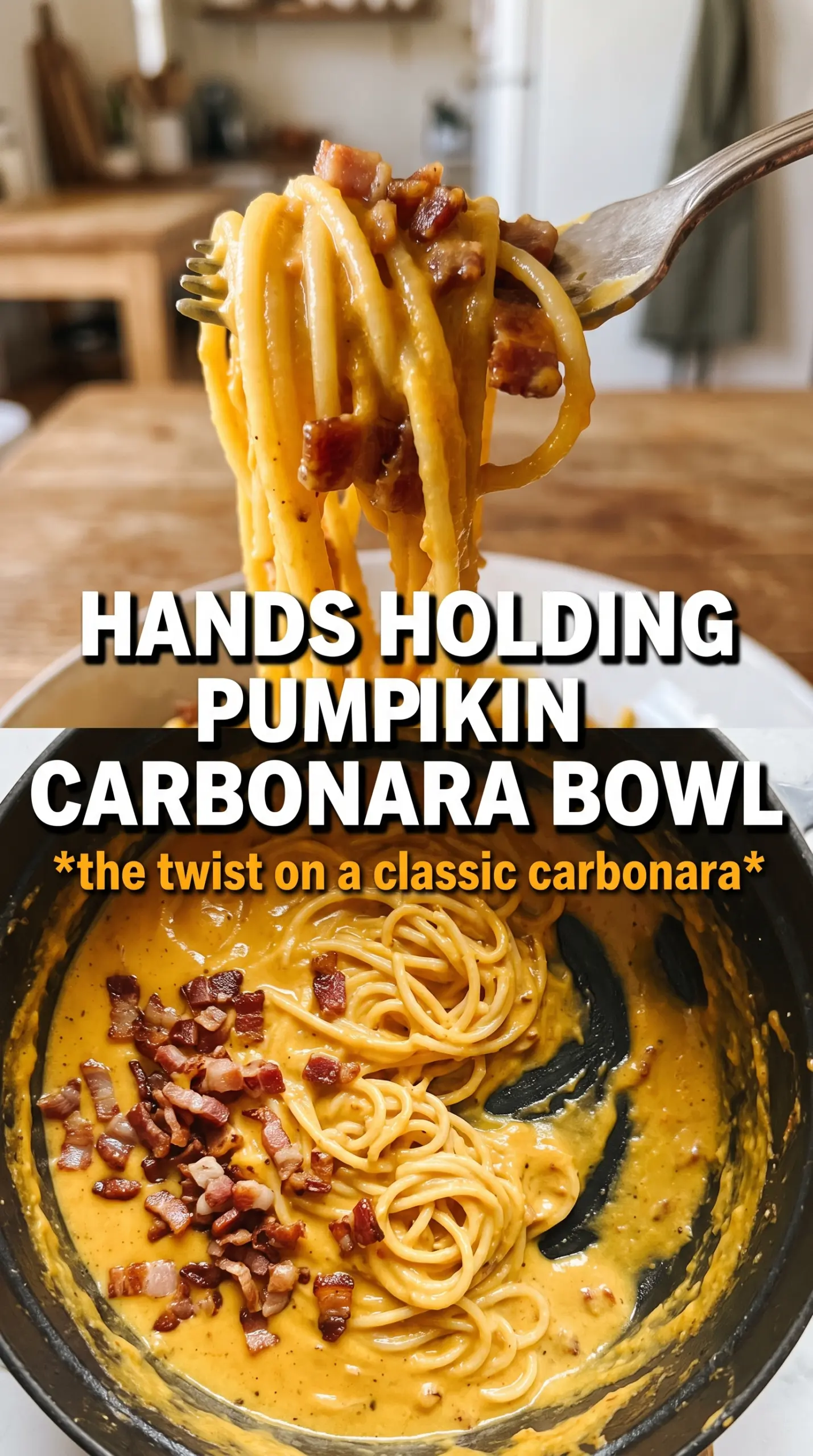
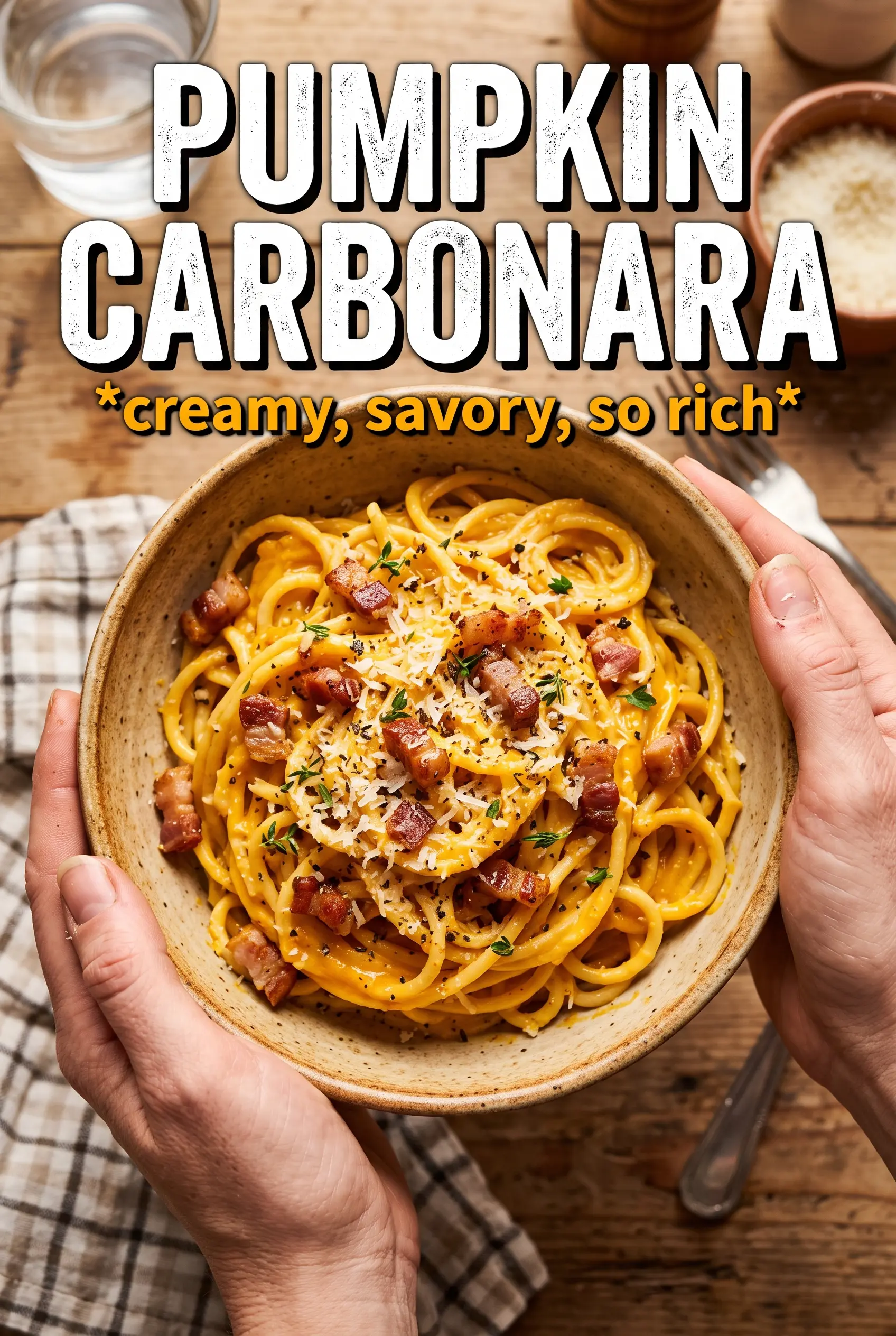
Silky, glossy pumpkin carbonara lands on the plate with the kind of sauce that clings to every strand of pasta instead of pooling at the bottom of the bowl. The pumpkin softens the richness of the egg and parmesan just enough to make the whole dish feel round and balanced, while pancetta and black pepper keep it firmly on the savory side.
What makes this version work is the way the sauce is built off the heat. The egg yolks, pumpkin, and cheese get whisked together first, then loosened with a little pasta water only after the pasta is tossed with the hot pancetta fat. That gives you control. Too much heat and the eggs scramble. Too little liquid and the sauce turns sticky. The sweet spot is a glossy emulsion that coats the pasta like velvet.
Below, I’ll show you the little details that matter most here: how to keep the sauce smooth, when to add the pasta water, and what to do if your parmesan is clumping instead of melting.
The sauce turned out so silky, and the pumpkin stayed subtle instead of tasting sweet. I added the pasta water a little at a time like you said, and it coated the spaghetti perfectly without getting grainy.
Pumpkin carbonara has to be saved for the night you want something creamy, smoky, and fast without losing that classic carbonara feel.
The Sauce Breaks If You Rush the Heat — Here’s How to Keep It Silky
Carbonara has one job: turn a few simple ingredients into a sauce that coats the pasta without turning into scrambled eggs. Pumpkin changes the texture just enough to make the sauce a little more forgiving, but it still depends on timing. The pan should be off the heat before the egg mixture goes in, and the pasta should be hot enough to warm everything through without cooking the yolks too aggressively.
The other mistake is treating the pasta water like an afterthought. It isn’t just for thinning. The starch in that water helps the sauce emulsify, which is what gives you that glossy finish instead of a heavy, clumpy coating. Add it in small splashes and keep tossing until the sauce looks loose, creamy, and slightly shiny.
What Each Ingredient Is Actually Doing in This Dish
- Pumpkin puree — This adds body and a gentle earthiness that stretches the egg yolks into a fuller sauce. Use plain canned pumpkin, not pumpkin pie filling. If the puree looks watery, stir it first so you aren’t adding extra liquid by accident.
- Egg yolks — Yolks are what make carbonara rich and silky. Whole eggs work in a pinch, but the sauce will be looser and less luxurious. Keep the yolks at room temperature if you can; they blend more smoothly with the cheese.
- Parmesan — Finely grated parmesan melts into the sauce better than a chunky shred. Freshly grated is worth it here because pre-grated cheese often contains anti-caking agents that can make the sauce grainy. If needed, pecorino can replace part of it for a sharper finish.
- Pancetta or thick-cut bacon — This brings the salt, smoke, and fat that define the dish. Pancetta gives a cleaner savory flavor, while bacon adds more smoke. Either one works as long as you render it until crisp so the fat can season the sauce.
- Pasta water — Save more than you think you need. It gives you control over texture and helps the sauce cling to the pasta. Hot tap water is not a substitute; you need the starchy water from the pot.
- Nutmeg and black pepper — Nutmeg stays in the background and makes the pumpkin taste warmer without turning the dish sweet. Black pepper should be bold; carbonara needs that bite to balance the richness.
The 20 Minutes That Matter Most
Rendering the Pancetta
Start the pancetta in a cold skillet and let it cook over medium heat until the fat melts out and the edges turn crisp. That slow start matters because you want rendered fat, not scorched cubes. If the pan gets too hot too quickly, the outside browns before the inside has had time to crisp, and you’ll lose some of the flavor you want in the sauce. Add the garlic only at the end and cook it just long enough to smell fragrant.
Whisking the Sauce Base
Combine the yolks, pumpkin, parmesan, nutmeg, and black pepper in a bowl until the mixture looks thick and smooth. It should be pourable but not runny. If the cheese clumps at this stage, keep whisking; the egg yolks will help it loosen once the pasta water comes in. This is the moment to taste for salt, but go lightly because pancetta and parmesan bring plenty on their own.
Finishing Off the Heat
Drain the pasta, add it to the skillet with the pancetta, and take the pan completely off the burner before adding the sauce. Toss fast and keep the pasta moving so the residual heat gently thickens the yolks instead of scrambling them. Add pasta water a splash at a time until the sauce turns glossy and clings to the noodles. If it looks tight, keep tossing and add another spoonful of water rather than turning the heat back on.
Serving Before the Sauce Sets
Carbonara waits for no one. As soon as the sauce looks silky and evenly coated, get it into bowls and finish with extra parmesan and a heavy crack of black pepper. If it sits in the pan too long, the sauce will tighten and lose that smooth, luxurious texture. A little extra pasta water can bring it back, but the best move is to serve it immediately.
How to Adapt This for a Bigger Pan, a Lighter Bowl, or No Pork
Gluten-Free Pasta Swap
Use a sturdy gluten-free spaghetti or rigatoni that can handle tossing without breaking. Gluten-free pasta often releases less starch, so the sauce may need a little more pasta water and a slightly longer toss to reach that glossy texture.
Dairy-Free Direction
This one is hard to make fully dairy-free because parmesan does a lot of the work. If you need a workaround, use a good dairy-free hard cheese substitute and expect a slightly less savory, less silky sauce. The texture will hold, but the flavor won’t be as deep.
Vegetarian Version
Skip the pancetta and build the base with olive oil and a pinch of smoked paprika or a little smoked salt. You’ll lose the salty pork richness, so lean harder on parmesan and black pepper for balance. The dish stays creamy and satisfying, but the flavor shifts toward a more pumpkin-forward pasta.
Storage and Reheating
- Refrigerator: Store leftovers in an airtight container for up to 3 days. The sauce will thicken as it chills.
- Freezer: I don’t recommend freezing this dish. Egg-based sauces tend to separate after thawing, and the texture turns grainy.
- Reheating: Warm it gently in a skillet over low heat with a splash of water or milk, tossing constantly. High heat is what causes the eggs to tighten and go greasy, so keep the burner low and stop as soon as the pasta loosens again.
Answers to the Questions Worth Asking
Pumpkin Carbonara
Ingredients
Equipment
Method
- Bring a large pot of very well-salted water to a boil and cook the spaghetti or rigatoni until al dente, reserving 1 cup pasta cooking water.
- In a large skillet, cook the pancetta (or thick-cut bacon) over medium heat until crispy, then add the minced garlic and cook 1 minute.
- Remove the skillet from the heat immediately after the 1 minute garlic cook.
- In a bowl, whisk the egg yolks, pumpkin puree, grated parmesan, nutmeg, and black pepper until smooth and thick.
- Add the hot pasta to the pancetta pan and remove from heat completely so the sauce won’t scramble the eggs.
- Quickly add the egg mixture to the pasta, tossing continuously, and add reserved pasta cooking water a splash at a time until a silky sauce forms.
- Serve immediately with extra parmesan and a generous crack of black pepper.