Pumpkin Alfredo lands in that sweet spot between cozy and elegant: a silky, velvety sauce that clings to every strand of fettuccine without feeling heavy or flat. The pumpkin doesn’t turn it into a sweet pasta dish; it gives the cream sauce body, a gentle earthy note, and that gorgeous orange color that looks like you spent far more effort than you did.
What makes this version work is restraint. The pumpkin gets simmered with cream long enough to soften and blend, but the parmesan goes in off the heat so it melts into the sauce instead of turning grainy. A little pasta water finishes the job by loosening the sauce just enough to coat the noodles instead of sitting in a thick mound at the bottom of the bowl.
Below, I’ve included the small details that keep Alfredo smooth, plus a few smart swaps if you need to adjust the dairy or want to make the sauce a little lighter.
The sauce turned out silky and coated the pasta perfectly. I added the parmesan off the heat like you said, and it stayed smooth all the way through dinner.
Save this Pumpkin Alfredo for the nights when you want a creamy fettuccine dinner that feels a little special without extra work.
The Part That Stops Pumpkin Alfredo From Turning Gritty
Pumpkin Alfredo falls apart when the cheese gets rushed. Parmesan melts cleanly into a warm, gently moving sauce, but it turns stringy or grainy if the pan is too hot or if you dump it in all at once. The goal is a quiet simmer, then a low flame when the cheese goes in. That’s the difference between a glossy sauce and one that looks broken before it ever reaches the bowl.
Another thing worth knowing: pumpkin puree needs a few minutes with the cream to lose its canned taste and blend into the sauce. If you skip that simmer, the sauce can taste separate and a little raw. You’re looking for the moment when the color deepens, the texture smooths out, and the sauce coats a spoon without feeling gluey.
- Pumpkin puree — Use plain pumpkin puree, not pumpkin pie filling. Pie filling already has sugar and spices mixed in, which throws the balance off fast. Canned puree works great here as long as it’s 100% pumpkin.
- Heavy cream — This is what keeps the sauce stable and rich. Half-and-half will work in a pinch, but it’s more likely to thin out and won’t cling the same way.
- Freshly grated parmesan — This matters more than almost anything else in the dish. Pre-grated parmesan often has anti-caking starches that make the sauce less smooth. Grate it yourself if you want a clean melt.
- Reserved pasta water — Don’t skip it. The starch in the water helps the sauce emulsify and gives you control over the final texture, especially if the sauce tightens up in the pan.
What Each Ingredient Is Actually Doing in This Recipe

- Primary ingredient (the star) — Quality matters most. Choose the best you can find.
- Cooking medium (oil, butter, or broth) — This carries flavors and prevents dryness.
- Seasonings (salt, pepper, spices, herbs) — Layer flavors so nothing overpowers. Build depth gradually.
- Aromatics (garlic, onion, herbs) — Cook with fat to bloom flavors. Become the foundation.
- Supporting ingredients — Complement the main ingredient without overpowering it.
- Sauce or liquid (if applicable) — Brings flavors together. Balance richness with acid.
- Acid (lemon, vinegar, wine, or other) — Brightens and prevents flat-tasting results.
- Final finish (garnish, glaze, or sauce) — Prevents one-dimensional taste and adds visual appeal.
Building the Sauce Before the Pasta Goes In
Softening the Garlic Without Browning It
Melt the butter in a large skillet, then cook the garlic just until it smells sweet and fragrant. If it starts taking on color, the heat is too high and the garlic will taste sharp instead of mellow. This step should happen quickly, with the garlic moving around in the butter but never sizzling hard.
Letting the Pumpkin and Cream Meld
Stir in the pumpkin puree and cream and let the sauce simmer for 4 to 5 minutes. You want a gentle bubble, not a hard boil, because aggressive heat can make the cream taste scorched and can tighten the sauce too early. By the end, the mixture should look smooth, slightly thickened, and a shade deeper orange.
Melting in the Parmesan at Low Heat
Lower the heat before adding the cheese, then stir in the parmesan in handfuls. If the pan is too hot, the cheese can seize and leave you with tiny grains instead of a creamy finish. Keep stirring until each addition disappears before adding the next; the sauce should look glossy and unified.
Finishing With Pasta Water and Seasoning
Add the cooked fettuccine straight into the sauce and toss until every strand is coated. If it looks too tight, splash in a little pasta water and toss again; that starch helps the sauce loosen without turning watery. Taste at the end and add salt as needed, then finish with parsley and extra parmesan for a fresh, salty finish.
How to Adapt Pumpkin Alfredo Without Losing the Creamy Texture
Make It Lighter With Half-and-Half
You can swap in half-and-half for some or all of the cream, but the sauce will be a little less luxurious and needs more attention over heat. Keep the simmer gentle and use the pasta water to bring back body if it feels thin.
Gluten-Free Pumpkin Alfredo
Use your favorite gluten-free fettuccine and cook it just to al dente, since gluten-free pasta softens fast once it hits the sauce. Save extra pasta water if you can, because some gluten-free shapes don’t release as much starch and may need a little more help coating evenly.
Dairy-Free Version With a Different Finish
Use full-fat coconut cream and a dairy-free parmesan alternative, but expect a lighter, slightly sweeter sauce with a softer finish. This version still works well, but it won’t taste exactly like classic Alfredo because the cheese is carrying less of the salty, nutty backbone.
Storage and Reheating
- Refrigerator: Store leftovers in an airtight container for up to 3 days. The sauce will thicken as it chills.
- Freezer: I don’t recommend freezing this one. Cream sauces can separate after thawing, and the pasta turns soft.
- Reheating: Reheat gently on the stovetop over low heat with a splash of water, milk, or cream to loosen the sauce. Microwaving on high is the fastest way to end up with oily sauce and dry pasta.
Answers to the Questions Worth Asking
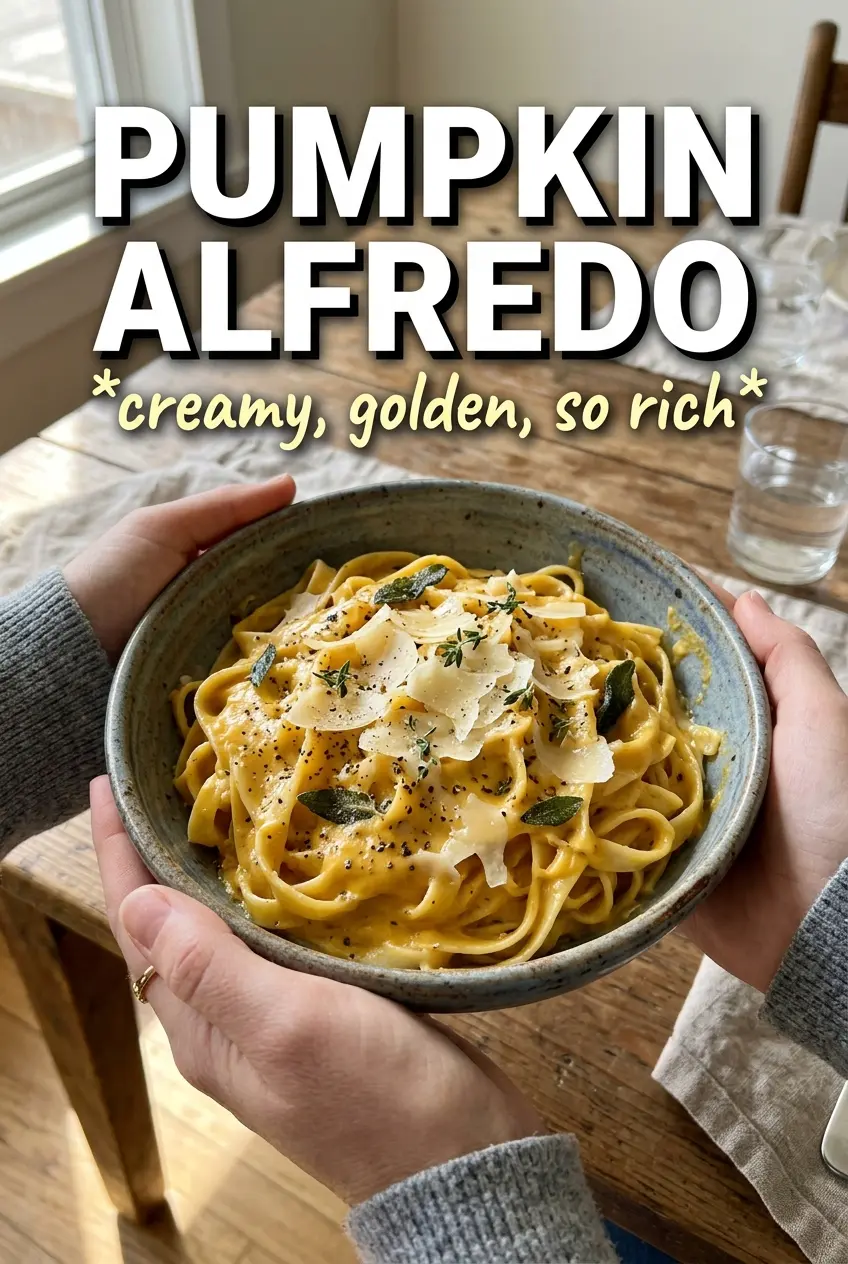
Pumpkin Alfredo
Ingredients
Equipment
Method
- Bring a large pot of well-salted water to a boil, then cook fettuccine until al dente; reserve 1 cup of pasta cooking water before draining.
- Set drained fettuccine aside so it stays warm while you make the sauce.
- Melt the butter in a large skillet over medium heat, then sauté the minced garlic for 1-2 minutes until fragrant.
- Stir in pumpkin puree and heavy cream, then simmer for 4-5 minutes until smooth and slightly thickened.
- Reduce the heat to low, then stir in the parmesan in handfuls until fully melted and the sauce looks glossy.
- Add nutmeg and white pepper, then add the cooked pasta and toss to coat thoroughly.
- Pour in the reserved pasta cooking water a splash at a time to loosen the sauce as needed, tossing until silky.
- Season with salt to taste, then serve immediately with fresh parsley and extra parmesan.