Protein-packed Thai pasta salad hits that sweet spot between bright, creamy, crunchy, and filling. The peanut-ginger dressing clings to every piece of pasta, the cabbage stays crisp, and the chicken turns it from a side dish into a full meal that actually keeps you satisfied. After an hour in the fridge, the flavors settle in and the whole bowl tastes more cohesive, not muddled.
What makes this version work is the balance in the dressing and the way the pasta is handled. Peanut butter gives it body, soy sauce brings salt and depth, rice vinegar keeps it from feeling heavy, and honey rounds out the sharp edges. Rinsing the pasta under cold water stops the cooking fast and keeps the salad from turning soft as it chills. Protein pasta can go from pleasant to gummy if it stays warm, so that cold rinse matters.
Below you’ll find the small details that make the difference: how to loosen the dressing without watering it down, which vegetables hold their crunch best, and a few smart swaps if you want to change the protein or make it vegetarian.
The dressing coated everything without getting gluey, and after an hour in the fridge the pasta still had a great bite. I added extra lime at the table and it tasted like a restaurant lunch bowl.
Save this protein packed Thai pasta salad for a make-ahead lunch that stays crunchy, creamy, and bold with peanut-ginger dressing.
The Part Most Pasta Salads Get Wrong: Letting the Dressing Thin Out
The big mistake with a pasta salad like this is using a dressing that tastes good in the bowl but disappears once it hits cold noodles and shredded vegetables. Peanut butter needs enough liquid to become pourable, but not so much that it turns watery after chilling. That balance matters even more here because protein pasta absorbs a little more dressing as it sits.
Cold pasta also changes the texture of the whole dish. If you skip the rinse, the starch on the noodles can make the peanut sauce cling in a pasty way instead of a smooth, glossy coating. Rinsing under cold water stops the cooking and gives you a clean base for the dressing to settle onto.
- Protein pasta — Edamame or chickpea pasta holds up better than standard pasta if you want a filling salad with extra protein. It does get softer fast if overcooked, so pull it the moment it reaches tender.
- Peanut butter — This is the backbone of the dressing. Natural peanut butter works well, but if it’s very stiff, warm it slightly so it whiskes smoothly.
- Rice vinegar — Don’t swap in regular distilled vinegar here unless you cut it back. Rice vinegar gives the dressing brightness without the harsh edge.
- Chicken breast — Use cooked chicken that’s well shredded or chopped small. Bigger chunks don’t pick up as much dressing and make the salad feel less cohesive.
What Each Ingredient Is Doing in the Bowl
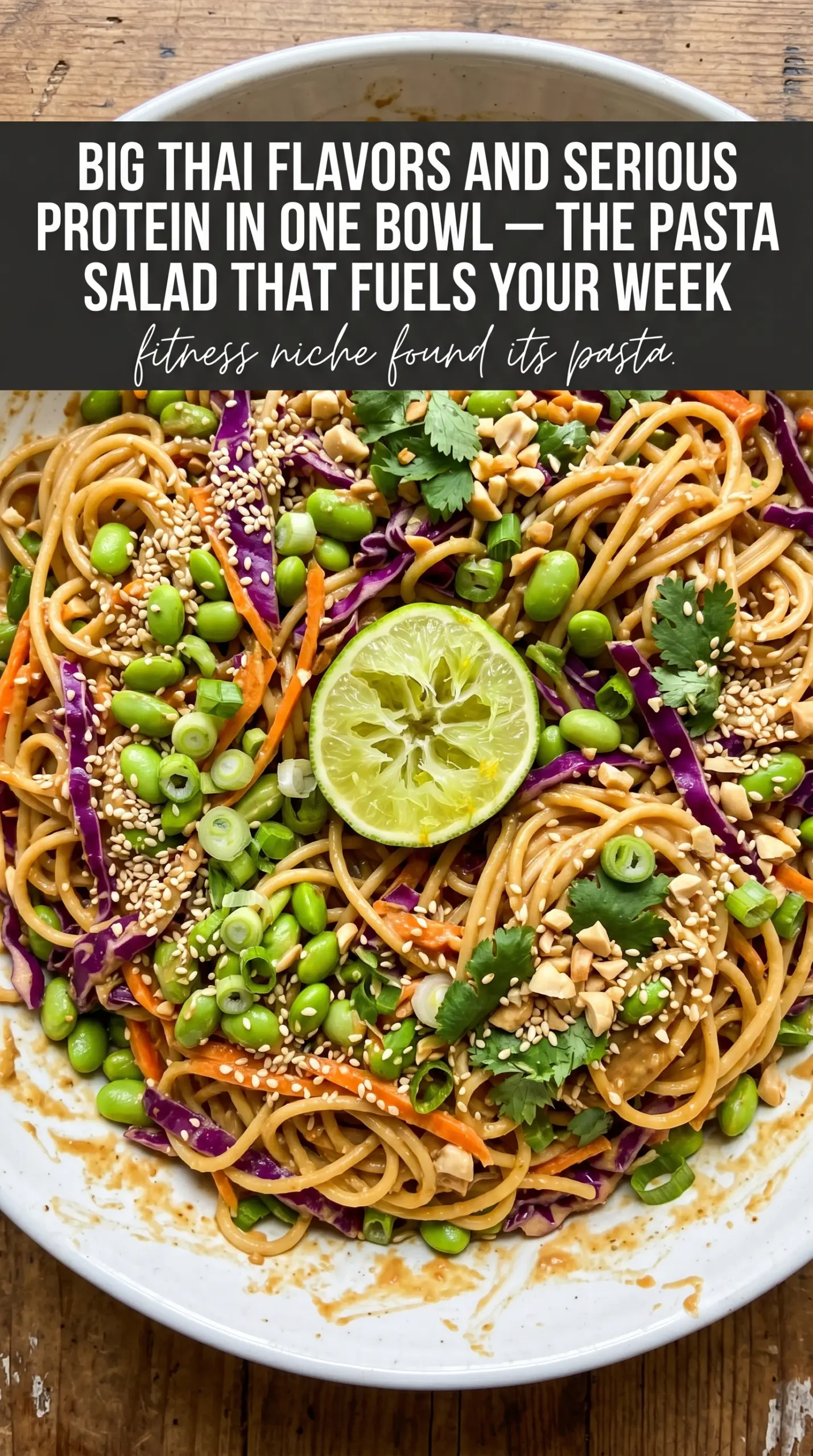
- Red cabbage and carrots — These bring crunch and color, and they stay sturdy after a full chill. Thin shreds work best because they spread through the salad instead of sitting in big clumps.
- Red bell pepper — This adds sweetness and fresh snap. Slice it thin so it blends into the salad instead of fighting the pasta shape.
- Soy sauce — This gives the dressing salt and deep savoriness. If you need gluten-free, use tamari or a certified gluten-free soy sauce with the same measurement.
- Ginger and garlic — Fresh grated ginger and minced garlic keep the dressing sharp and lively. Powdered versions won’t give the same clean bite, especially after chilling.
- Peanuts, cilantro, and lime — These finish the dish with crunch, freshness, and a bright hit at the table. The lime matters more than it looks; it wakes up the peanut sauce after the fridge has mellowed everything out.
Getting the Pasta, Dressing, and Crunch to Meet at the Right Time
Cooking the Pasta Without Losing the Bite
Cook the protein pasta just until tender, then drain it right away and rinse under cold water until it no longer feels warm. That stops the carryover cooking that can turn chickpea or edamame pasta mushy by the time the salad chills. Shake off as much water as you can, because extra water dilutes the dressing and leaves the bowl soupy at the bottom.
Whisking the Peanut Dressing Smooth
Start with the peanut butter, soy sauce, rice vinegar, honey, ginger, and garlic before adding water a little at a time. The dressing should look thick but pourable, like warm salad dressing, not like peanut butter spread. If it seizes or looks grainy, it usually means the peanut butter was too cold; keep whisking and add just enough water to loosen it.
Coating the Salad So It Stays Balanced
Toss the pasta, chicken, cabbage, carrots, and bell pepper together before adding the dressing. That helps the dressing distribute evenly instead of pooling at the bottom and overcoating the first few bites. After everything is mixed, let it chill for at least an hour so the flavors settle and the pasta takes on the sauce instead of sitting under it.
Finishing Right Before Serving
Add the crushed peanuts and cilantro just before serving so they stay bright and crunchy. A final squeeze of lime changes the whole bowl, especially if it’s been chilled overnight. If the salad seems a little tight after refrigeration, loosen it with a splash of water or another small spoonful of dressing before serving.
How to Adapt This for Lunch Prep, More Heat, or a Vegetarian Version
Make-Ahead Lunch Bowls
This salad holds up well for lunch if you keep the peanuts and cilantro separate until serving. The vegetables stay crisp, and the dressing gets better after a few hours in the fridge, but the fresh toppings lose their edge if they sit too long in the sauce.
Vegetarian Protein Swap
Skip the chicken and add shelled edamame or cubed baked tofu. Edamame keeps the high-protein angle strong and matches the noodle base, while tofu gives a softer bite and needs a little extra dressing to carry flavor.
Gluten-Free Version
Use chickpea or edamame pasta and swap the soy sauce for tamari. The texture stays firm and satisfying, and the dressing still tastes balanced without the wheat-based soy sauce.
Spicier Thai-Inspired Finish
Stir a little chili garlic sauce or red pepper flakes into the dressing if you want more heat. Add it gradually, because the peanut butter softens the burn and it’s easy to go too far once the salad chills.
Storage and Reheating
- Refrigerator: Store covered for up to 4 days. The pasta softens a little as it sits, but the flavor stays strong.
- Freezer: Don’t freeze this salad. The vegetables lose their crunch and the peanut dressing separates after thawing.
- Reheating: This is meant to be eaten cold or at cool room temperature. If it has been chilled hard, let it sit on the counter for 15 to 20 minutes and loosen it with a spoonful of water or extra lime before serving.
Answers to the Questions Worth Asking
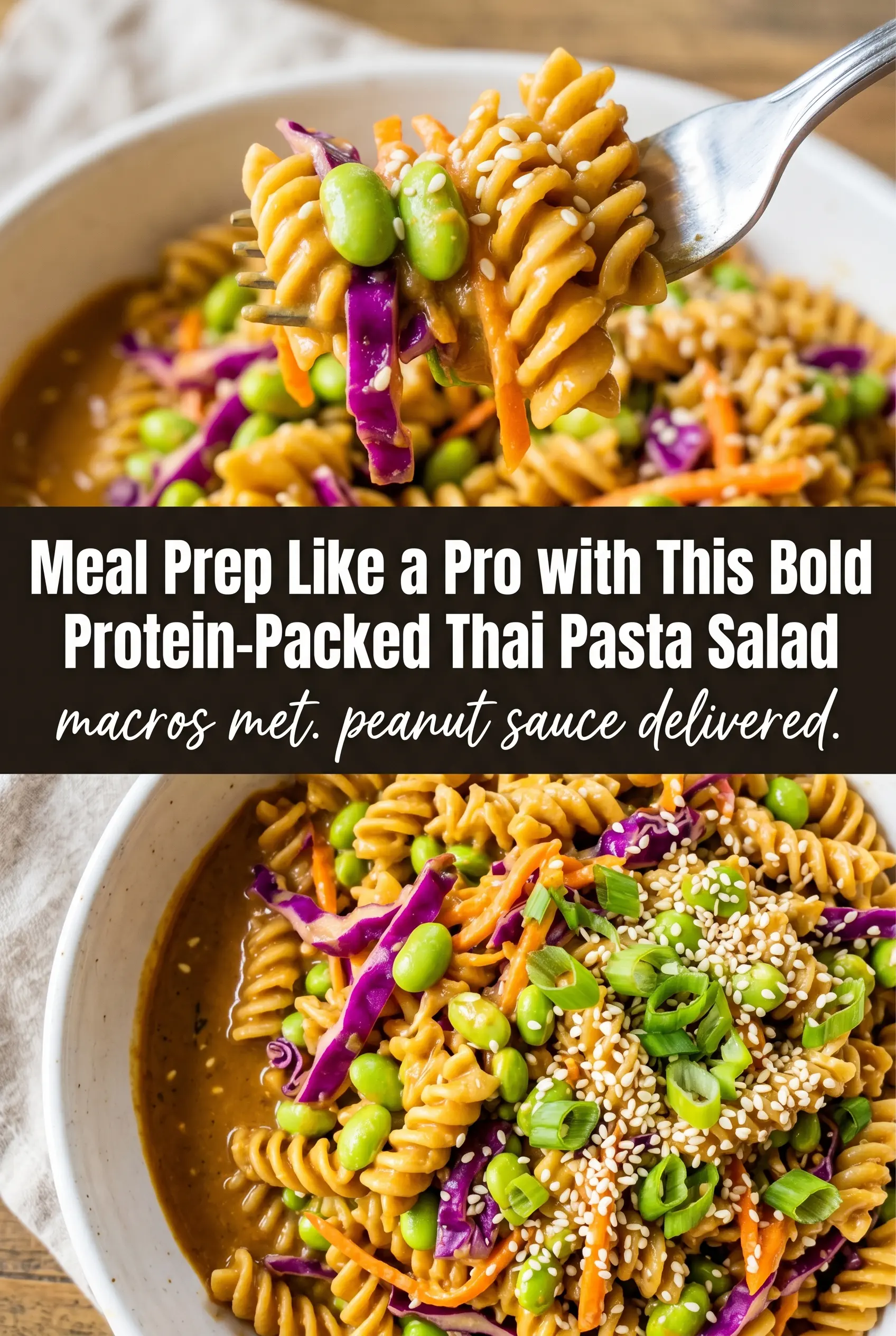
Protein Packed Thai Pasta Salad
Ingredients
Equipment
Method
- Cook protein pasta according to package directions, until tender, then drain and rinse with cold water to stop cooking.
- Whisk peanut butter, soy sauce, rice vinegar, honey, ginger, and garlic in a bowl until smooth, adding water a little at a time to reach your desired consistency.
- Combine pasta, cooked chicken breast, red cabbage, carrots, and red bell pepper in a large bowl.
- Pour peanut dressing over salad and toss until everything is coated evenly.
- Refrigerate for at least 1 hour to let the flavors meld, then top with crushed peanuts and cilantro and serve with lime wedges.