Pizza Pasta Salad brings all the best parts of a pepperoni pizza into one cold, scoopable bowl. The rotini catches the dressing in every curve, the mozzarella stays pleasantly chewy, and the pepperoni seasons the whole salad as it sits. After a couple of hours in the fridge, the flavors meld into something that tastes like party food with real staying power.
The key is balance: enough dressing to coat the pasta without drowning it, enough acid from the tomatoes and Italian dressing to keep it lively, and enough chill time for the pasta to absorb flavor. Rinsing the pasta under cold water stops the cooking and keeps the salad from turning soft, which matters here because this dish is all about texture. I also like halving the pepperoni so every forkful gets a little of everything instead of a few giant slices stealing the show.
Below you’ll find the exact ingredient roles, the one chilling step that makes this salad taste finished, and a few smart ways to change it for different crowds or diets.
The pasta held up after chilling and the dressing soaked into everything without making it soggy. I brought it to a cookout and the bowl was scraped clean before the burgers were ready.
Save this pepperoni-packed Pizza Pasta Salad for potlucks, cookouts, and the nights when you want all the pizza toppings without turning on the oven.
The Trick to Keeping Pizza Pasta Salad from Going Soft
The biggest mistake with pasta salad is treating it like it can sit in dressing forever and stay springy. Pasta drinks up liquid as it chills, and if you start with too much dressing or overcook the noodles, you get a dull, heavy bowl instead of a bright, party-ready salad. Rotini helps here because the ridges grab flavor without needing a thick sauce.
The other thing that matters is temperature. Rinsing the pasta cold stops the cooking fast, which keeps the texture firm enough to hold pepperoni, cheese, and chopped vegetables. This salad gets better after it rests, but only if the pasta starts with some backbone.
- Rotini pasta — The spirals trap the dressing and little bits of pepperoni and vegetables. Short pasta with ridges works best here; smooth pasta won’t hold onto the seasoning nearly as well.
- Pepperoni — This is the salty backbone of the salad. Halving the slices gives more even distribution, and if you want a little less richness, turkey pepperoni works fine.
- Mozzarella cheese — Cubed mozzarella gives you those pizza-like bites. Fresh mozzarella is too soft for this salad; low-moisture mozzarella holds up better and keeps the bowl from getting watery.
- Italian dressing — This carries the seasoning and gives the salad its tang. Store-bought dressing is perfect here, but if yours is especially sharp, start with a little less and add more after chilling.
- Cherry tomatoes, bell pepper, red onion, and olives — These build the pizza topping effect and add crunch, salt, and acidity. Dice them small so every forkful feels balanced instead of crowded.
What Each Ingredient Is Actually Doing in Pizza Pasta Salad
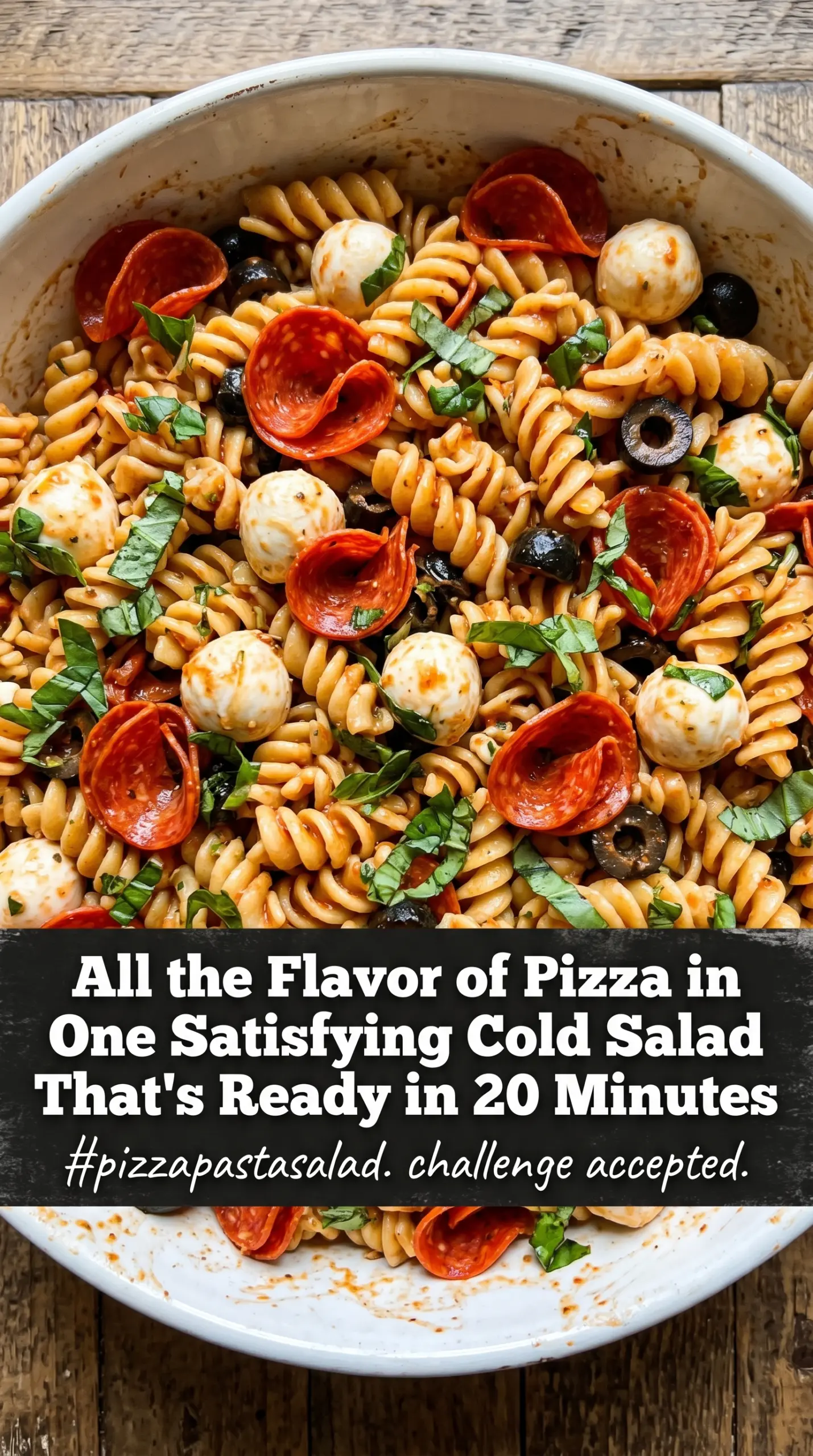
- Crispy pepperoni (cooked, cooled, added late) — The pepperoni should be crispy and crunchy. Add it near the end so it doesn’t soften in the dressing.
- Fresh mozzarella or cheese (not melted, not pre-shredded) — Fresh cheese stays distinct and doesn’t melt into the pasta. Pre-shredded cheese gets clumpy and heavy.
- Oil-based dressing (with pizza spices) — A light dressing with Italian seasoning keeps the salad from feeling heavy. Oil carries the pizza flavors better than mayo.
- Fresh vegetables (bell pepper, tomato, olives) — These should be fresh and crisp. Cut them small so they distribute throughout without weighing the salad down.
- Pasta cooked just past al dente — The pasta should be tender but still have some chew. It continues to soften in the dressing, so starting slightly firm is smart.
- Acid (vinegar or lemon) for brightness — The acid prevents the salad from tasting flat or one-dimensional. It also helps preserve the fresh vegetables.
- Fresh basil or Italian herbs added at the last moment — Fresh herbs add brightness and prevent the salad from tasting heavy. Add them just before serving.
- Minimal chilling time (serve within a few hours) — Pizza pasta salad is best when components stay distinct. Long chilling makes everything blend together and soften.
Building the Salad in the Right Order
Cook the Pasta Until It Still Has Bite
Boil the rotini just until tender, then drain it and rinse it under cold water right away. You want the pasta to cool fast and stop at a firm al dente texture, because it softens a little more once it sits in the dressing. If the noodles are cooked past that point, the salad turns mushy after chilling.
Mix the Toppings Before the Dressing Goes In
Combine the pepperoni, mozzarella, tomatoes, bell pepper, olives, and red onion in a large bowl with the pasta. This gives you an even mix before the liquid hits, so the cheese and vegetables don’t clump in one corner. A big bowl matters here because tossing a tight bowl breaks the pasta and leaves the dressing uneven.
Dress, Season, and Chill
Add the Italian dressing, Parmesan, Italian seasoning, and garlic powder, then toss until everything looks coated. The salad should look glossy, not soupy. Cover it and refrigerate for at least 2 hours; that’s when the pasta absorbs the seasoning and the whole dish starts tasting like one cohesive salad instead of separate ingredients.
How to Adapt It for Different Tables
Make It Meatless Without Losing the Pizza Feel
Skip the pepperoni and add extra olives, roasted red peppers, or chopped artichoke hearts. You still get that savory, briny pizza-inspired bite, and the salad stays satisfying because the cheese and dressing carry enough weight on their own.
Gluten-Free Version That Still Holds Up
Use a sturdy gluten-free short pasta and cook it just to the edge of done. Gluten-free pasta can soften faster in the fridge, so rinse it well, chill it promptly, and serve it the same day for the best texture.
How to Make It Less Salty
Use low-sodium Italian dressing and cut the Parmesan back slightly. Pepperoni, olives, and dressing all bring salt, so trimming one of those sources keeps the salad balanced instead of sharp.
Storage and Reheating
- Refrigerator: Store covered for up to 4 days. The pasta will keep absorbing dressing, so the salad may taste a little drier on day 2 and 3.
- Freezer: Don’t freeze it. The mozzarella, tomatoes, and dressing won’t come back with a good texture after thawing.
- Reheating: Serve this chilled, straight from the fridge. If it looks dry after sitting, toss in a small splash of Italian dressing before serving instead of trying to warm it up.
Questions I Get Asked About This Recipe
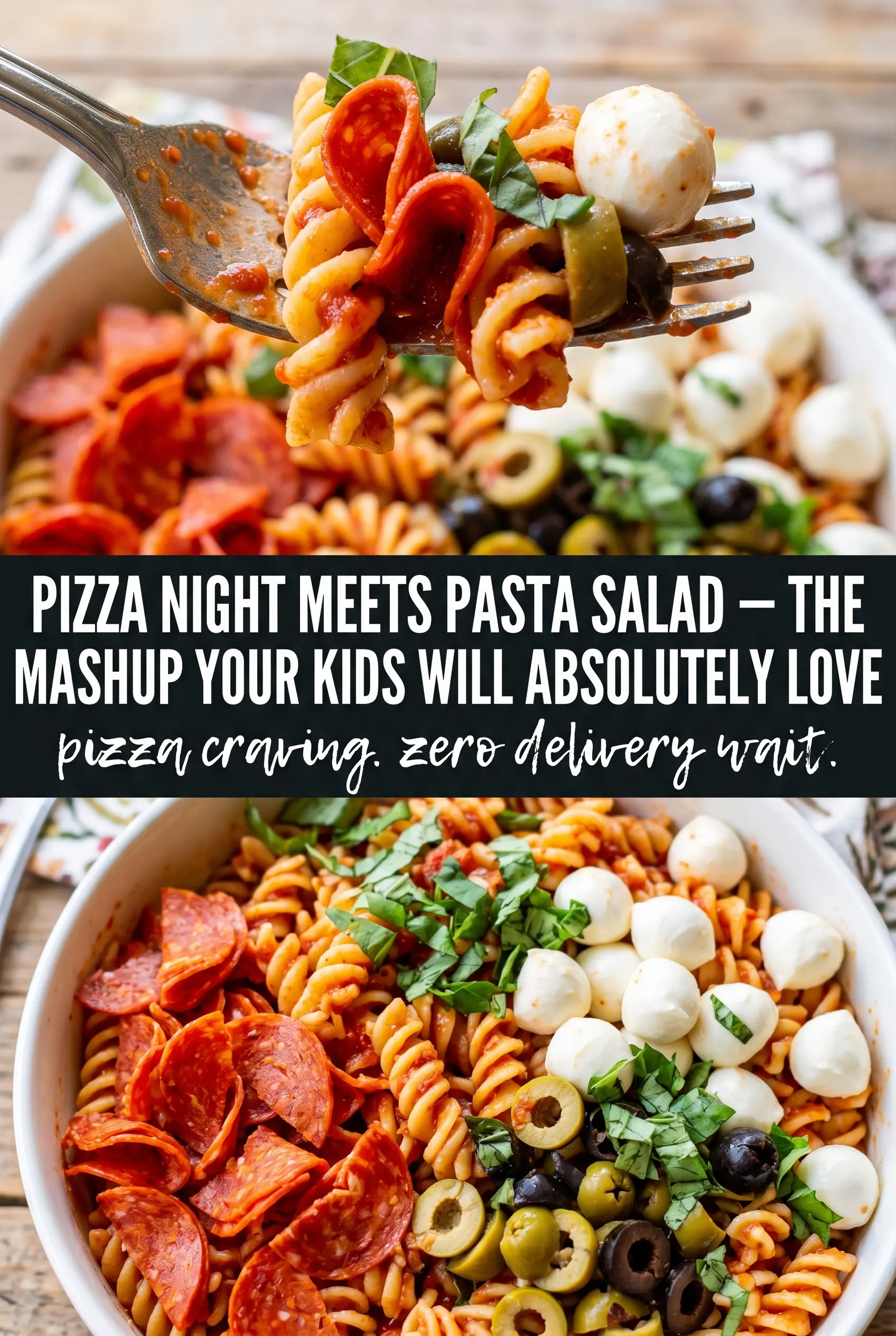
Pizza Pasta Salad
Ingredients
Method
- Cook rotini pasta according to package directions, then drain and rinse with cold water to stop the cooking. Cool until no steam remains, about 2–5 minutes (visual cue: pasta looks glossy and separate).
- Combine rotini pasta, pepperoni slices, mozzarella cheese, cherry tomatoes, green bell pepper, black olives, and red onion in a large bowl. Mix gently so the toppings are evenly distributed (visual cue: every forkful shows pepperoni and cheese bits).
- Add Italian dressing, Parmesan cheese, Italian seasoning, and garlic powder. Stir until the seasonings are fully moistened and no dry cheese pockets remain (visual cue: the pasta looks evenly coated).
- Toss everything together until well coated. Continue tossing 30–60 seconds so the dressing clings to the pasta (visual cue: an Italian-dressing sheen coats the noodles).
- Refrigerate the pizza pasta salad for at least 2 hours before serving to let the flavors meld. Cover the bowl to prevent drying (visual cue: pasta firms up slightly).
- Toss again and serve chilled. Taste and adjust seasoning if needed (visual cue: ingredients look refreshed and evenly coated after the second toss).