Cold pesto clings to every ridge of the pasta here, and that’s what makes this salad worth keeping in rotation. The noodles stay tender but not mushy, the basil stays bright, and the tomatoes cut through all that richness with little bursts of juice. It eats like something you’d happily set out for a potluck, but it’s still straightforward enough to throw together on a weeknight.
The small choices matter. Tossing the pasta with pesto while it’s still warm helps the sauce coat the noodles instead of sitting in clumps at the bottom of the bowl, and a short chill gives the garlic, lemon, and Parmesan time to settle in. The mozzarella pearls add creamy contrast without turning the whole salad heavy, and toasted pine nuts bring the kind of crunch that keeps each bite interesting.
Below, I’ve included the few details that make this salad behave the way it should, plus the swaps that work when you need to adapt it. If you’ve ever ended up with a dry pesto pasta salad or one that tasted flat straight from the fridge, the notes here will help.
I love how the pesto soaked into the pasta after chilling, and the lemon kept it from tasting heavy. The mozzarella pearls stayed creamy and the tomatoes were still juicy the next day.
Love this pesto pasta salad? Save it to Pinterest for the days when you need a bright make-ahead side with basil, mozzarella, and tomatoes.
The Trick to Keeping Pesto Pasta Salad Bright Instead of Heavy
Most pesto pasta salads go dull because the pasta gets coated while it’s cold, which means the sauce never really bonds to the noodles. Warm pasta is the key here. It loosens the pesto just enough to spread it evenly, then the chill firms everything back up without turning the salad greasy or pasty.
The other thing that helps is acid. A couple tablespoons of lemon juice wake up the basil and keep the Parmesan and mozzarella from tasting flat after an hour in the fridge. If the salad tastes muted after chilling, it usually needs a little more salt and a fresh squeeze of lemon, not more pesto.
What Each Ingredient Is Actually Doing in This Salad
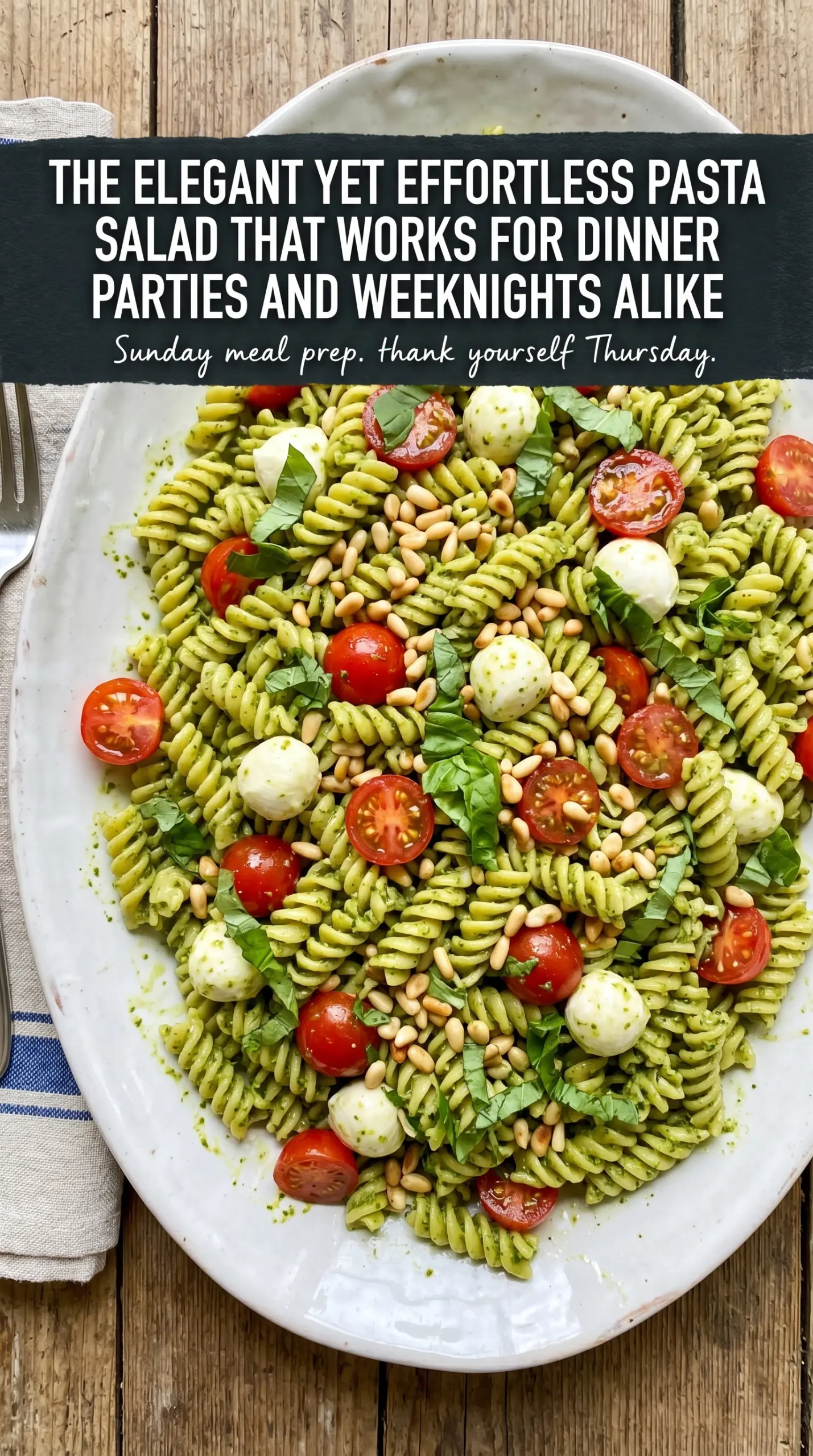
- Fusilli or penne — Both shapes hold pesto well, but fusilli gives you more ridges for the sauce to cling to. Penne works if that’s what you have, though the coating will be a little smoother.
- Basil pesto — This is the backbone of the salad, so use one you actually like eating on its own. Store-bought works fine, but if it tastes flat in the jar, a splash of lemon juice and extra Parmesan help wake it up.
- Cherry tomatoes — They bring freshness and enough juice to keep each bite from feeling dense. Halve them so the flavor spreads through the bowl instead of rolling around whole and cold.
- Fresh mozzarella pearls — These stay soft and milky without needing any extra prep. If you only have a larger mozzarella ball, tear it into small pieces so it distributes evenly.
- Toasted pine nuts — Don’t skip the toasting. Raw pine nuts taste mild and a little dull; toasted ones give the salad a nutty snap that balances the creamy cheese.
- Lemon juice — This keeps the pesto from tasting heavy after chilling. Fresh lemon is better than bottled here because the brightness matters more than extra acidity.
Building the Salad So It Stays Coated After Chilling
Toss the Pasta While It’s Still Warm
Drain the pasta and rinse it with cold water so the cooking stops, but don’t let it sit around until it’s fully cold before you add the pesto. Warm noodles absorb and carry the sauce better, which means you get an even coating instead of green clumps. If the pasta is steaming hot, let it sit for a minute so the pesto doesn’t turn oily.
Fold in the Delicate Ingredients Last
Add the tomatoes, mozzarella, pine nuts, Parmesan, and lemon juice after the pesto is already on the pasta. That keeps the cheese from breaking apart and the tomatoes from getting crushed. Toss gently with a big spoon or your hands; aggressive stirring is how you end up with torn mozzarella and a heavy-looking bowl.
Let the Fridge Do Its Job
Resting for at least an hour gives the garlic, basil, and cheese time to mingle, and the pasta tightens up just enough to taste cohesive. If it seems a little dry after chilling, drizzle in a spoonful of pesto or a tiny splash of olive oil and toss again. A cold pasta salad should look glossy, not slick.
Dairy-Free Version
Use a dairy-free pesto or make your own with nutritional yeast instead of Parmesan, then swap the mozzarella for extra tomatoes or olives. You’ll lose some of the creamy richness, but the basil and lemon will stand out even more.
Gluten-Free Pasta Swap
Use a sturdy gluten-free fusilli or penne and cook it just until tender. Gluten-free pasta can soften fast after chilling, so rinse it, coat it with pesto right away, and serve it within a day for the best texture.
No Pine Nuts, No Problem
Toasted sunflower seeds or chopped walnuts work well here. Sunflower seeds keep the flavor mild, while walnuts add a deeper, more earthy note that pairs nicely with basil.
Storage and Reheating
- Refrigerator: Keeps for 3 days. The pasta will absorb some of the pesto, so expect a slightly tighter texture by day two.
- Freezer: Not a good freezer recipe. The mozzarella and tomatoes don’t thaw well, and the pasta turns soft.
- Reheating: This salad is meant to be served cold or cool from the fridge. If it seems stiff, let it sit at room temperature for 15 minutes and loosen it with a small spoonful of pesto or olive oil instead of heating it.
Answers to the Questions Worth Asking
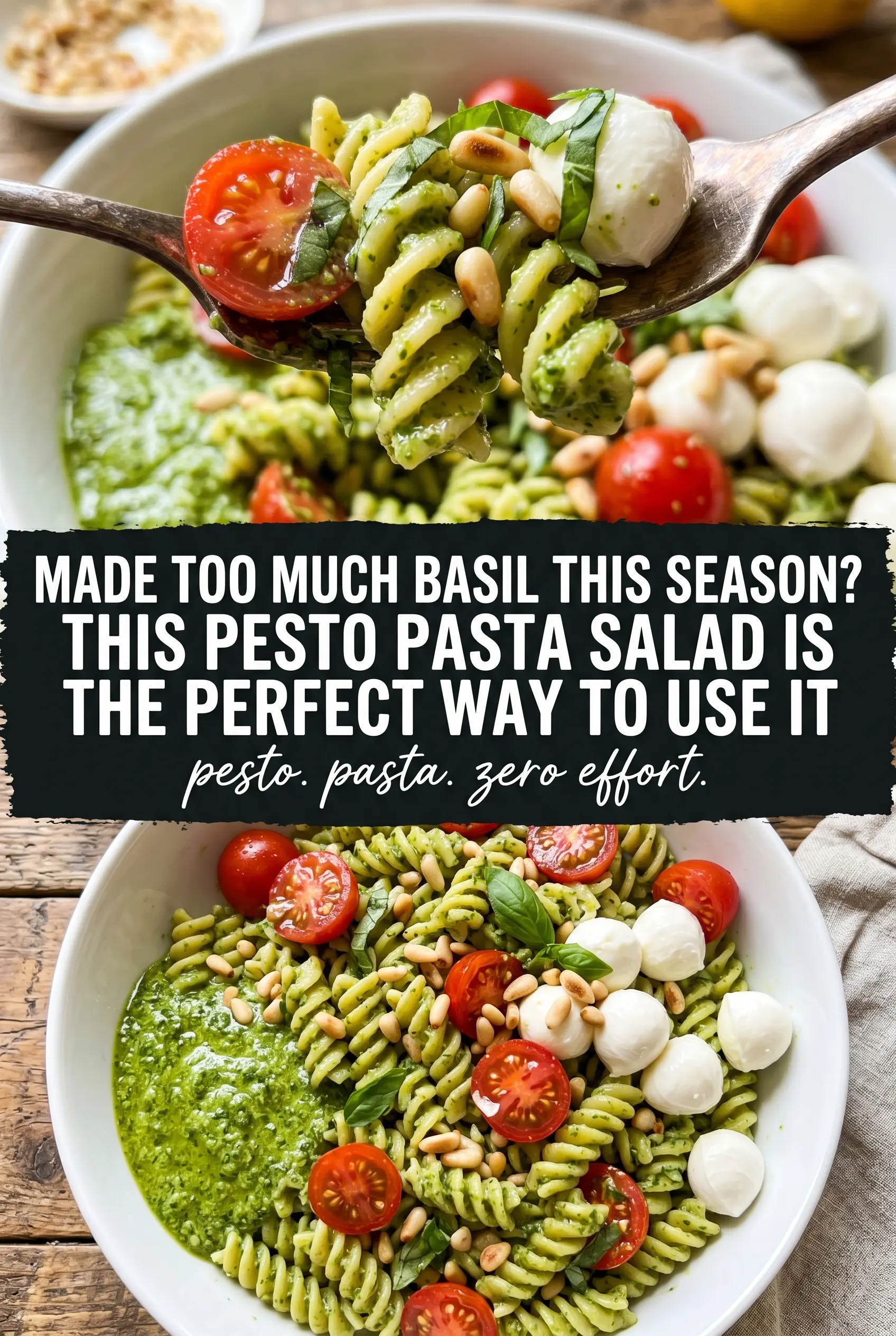
Pesto Pasta Salad
Ingredients
Equipment
Method
- Cook 1 lb fusilli or penne pasta according to package directions until tender. Visual cue: the pasta should be al dente when tasted.
- Drain the pasta and rinse with cold water to stop cooking. Visual cue: steam should stop immediately and the pasta looks cooler and separate.
- In a large bowl, toss the warm pasta with 1 cup basil pesto until evenly coated. Visual cue: every spiral/tube looks glossy green.
- Add 2 cups cherry tomatoes, halved, 8 oz fresh mozzarella pearls, 0.25 cup pine nuts, and 0.25 cup Parmesan cheese. Visual cue: red tomatoes and white pearls become visible throughout the green pesto.
- Pour in 2 tbsp lemon juice and season with salt and pepper to taste. Visual cue: the mixture brightens and looks slightly loosened from the lemon.
- Toss gently until combined, avoiding breaking the mozzarella pearls. Visual cue: ingredients are evenly distributed without smearing pesto.
- Refrigerate the pasta salad for at least 1 hour to allow flavors to develop. Visual cue: it firms up slightly and looks more cohesive after chilling.
- Before serving, garnish with fresh basil leaves for garnish. Visual cue: bright green basil leaves sit on top for a fresh finish.