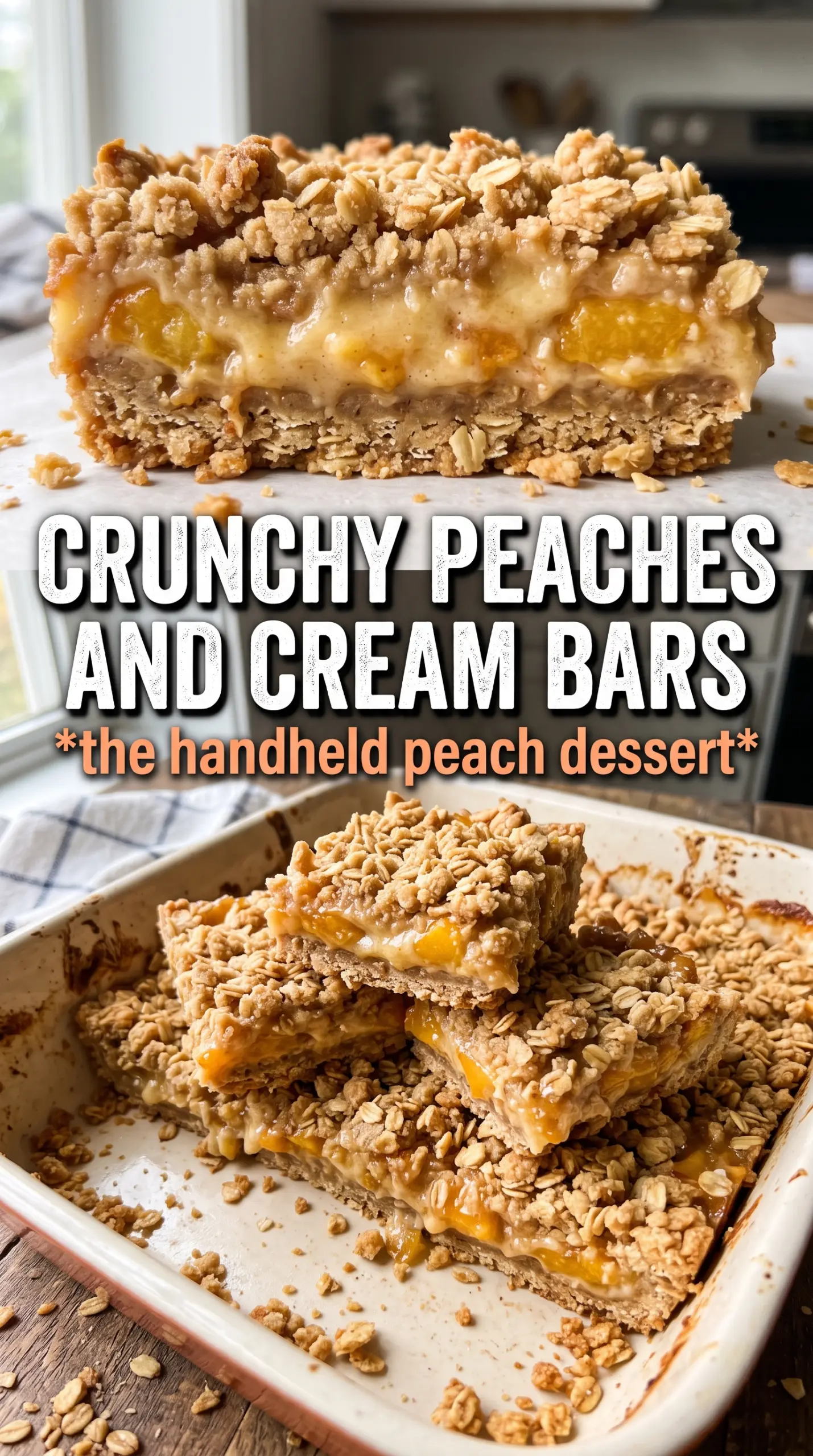
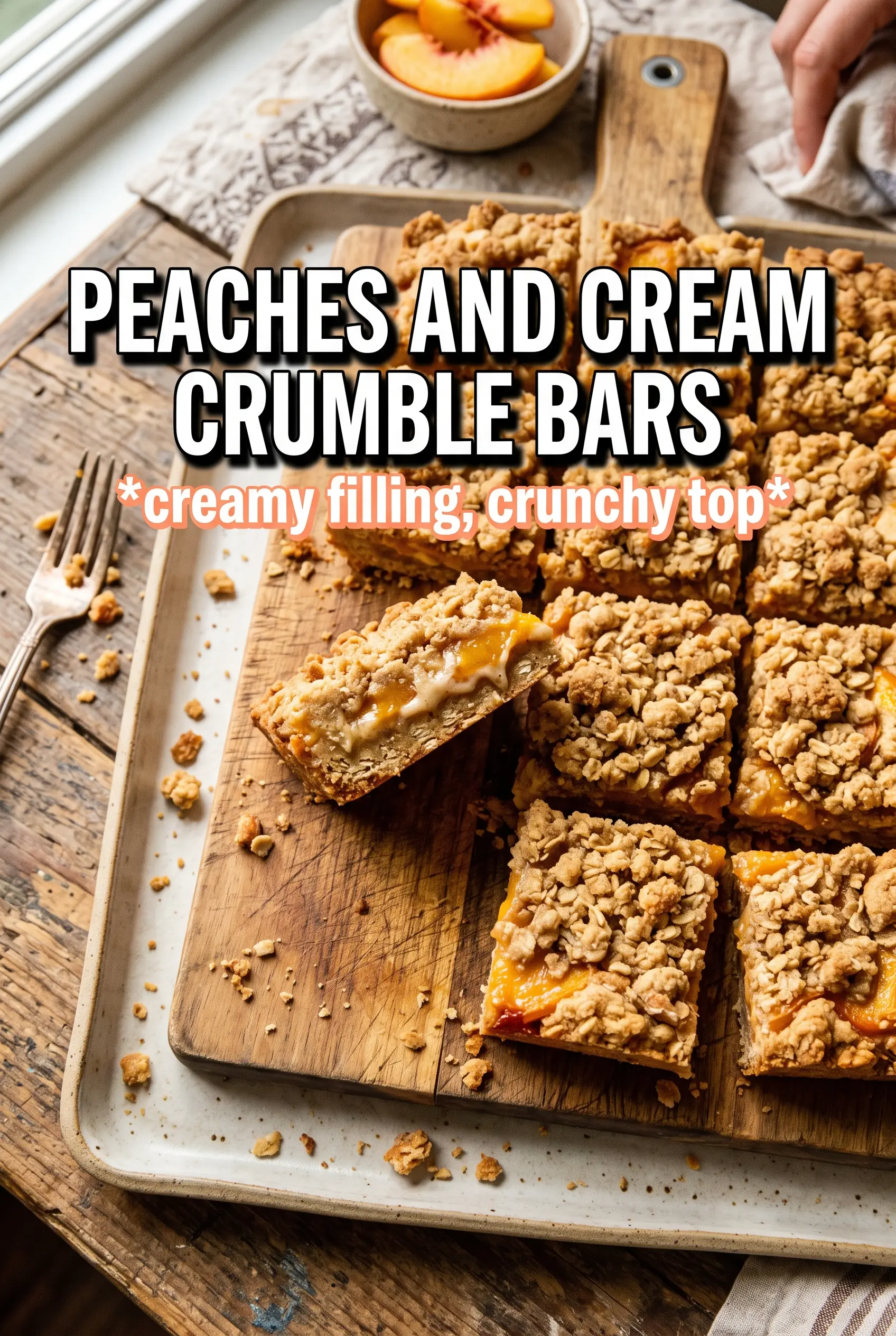
Buttery oat crumble, a tangy cream cheese layer, and jammy peaches baked into neat, sliceable bars — these are the kind of dessert that disappear from the pan before they’ve had a chance to cool. The bottom bakes up sturdy enough to hold the filling, while the topping stays crisp and shattery around the edges, which is exactly what you want in a bar that’s meant to be picked up and eaten with one hand.
The trick is using cold butter for the crumble and giving the base a short head start in the oven. That first bake keeps the crust from turning soft under the peaches, and it helps the bars slice cleanly once they’re cooled. The cream cheese layer adds just enough richness to balance the fruit without making the bars taste heavy.
Below, I’ve included the small details that matter most: how to keep the filling from turning watery, what to look for when the top is done, and a few smart swaps if your peaches are extra juicy or you need to work with what’s in the pantry.
The peach layer set up beautifully and the bars held their shape once cooled. I loved that the crumble stayed crisp on top even after chilling overnight.
Save these peaches and cream crumble bars for the next time you want a buttery oat crust, a creamy middle, and fresh peach filling in every square.
The Step That Keeps Peach Bars from Going Soggy
The biggest risk with fruit bars is a soft, damp bottom that never quite firms up. These bars avoid that by giving the crust a short bake before the cream cheese and peaches go on. That sets the flour, oats, and butter into a sturdy layer that can stand up to juicy fruit instead of absorbing it like a sponge.
The other thing that matters is the peach filling itself. Cornstarch needs a little sugar and lemon juice to wake up and thicken properly, and the fruit should be diced small enough to spread evenly. If the peaches are huge chunks, the bars bake unevenly and the center can slide apart when you cut them.
- Cold butter — This is what gives the crumble its sandy, crisp texture. If the butter is soft, the mixture turns pasty instead of crumbly and bakes up dense.
- Rolled oats — They add structure and that toasted, nubby bite. Quick oats can work in a pinch, but the texture will be finer and less crisp.
- Cornstarch — This thickens the peach juices so they stay put in the bar. Don’t skip it unless your peaches are unusually dry.
- Cream cheese — It adds tang and keeps the bars from tasting flat. Full-fat cream cheese gives the smoothest layer and the cleanest set.
- Fresh peaches — Ripe peaches bring the best flavor, but they should still be firm enough to dice without turning mushy. If they’re very juicy, let them sit with the sugar for a few minutes, then spoon off excess liquid before layering.
What Each Ingredient Is Actually Doing in This Recipe
- Primary ingredient (the star) — Quality matters most. Choose the best you can find.
- Cooking medium (oil, butter, or broth) — This carries flavors and prevents dryness.
- Seasonings (salt, pepper, spices, herbs) — Layer flavors so nothing overpowers. Build depth gradually.
- Aromatics (garlic, onion, herbs) — Cook with fat to bloom flavors. Become the foundation.
- Supporting ingredients — Complement the main ingredient without overpowering it.
- Sauce or liquid (if applicable) — Brings flavors together. Balance richness with acid.
- Acid (lemon, vinegar, wine, or other) — Brightens and prevents flat-tasting results.
- Final finish (garnish, glaze, or sauce) — Prevents one-dimensional taste and adds visual appeal.
Building the Layers So Each One Bakes Right
Make the crumble first
Mix the flour, oats, brown sugar, cinnamon, and salt, then cut in the cold butter until the mixture looks like rough pebbles and damp sand. A few bigger bits of butter are good; they melt into crisp pockets in the oven. If the mixture starts to clump like dough, the butter warmed up too much and the topping will bake up heavy instead of crumbly.
Press and pre-bake the base
Use about two-thirds of the crumble and press it firmly into the parchment-lined pan. You want an even layer with no loose patches, especially in the corners, because weak spots turn soggy fastest. Bake it just long enough to set the surface and take on a little color at the edges.
Whip the cream cheese layer smooth
Beat the softened cream cheese with sugar, egg, and vanilla until the mixture is smooth and glossy. If the cream cheese is still cold, you’ll get little lumps that don’t fully melt out in the oven. Spread it over the warm base in an even layer so the peaches sit on a stable foundation.
Finish with peaches and crumble
Toss the peaches with sugar, cornstarch, and lemon juice until they look lightly coated, then spread them over the cream layer. Sprinkle the remaining crumble on top without packing it down, so the peaks brown and stay crisp. Bake until the top is deeply golden and the filling looks set around the edges; the center can still have a slight wobble, since it firms as it cools.
How to Adapt These Bars for Different Kitchens and Different Peaches
Make them gluten-free
Swap the all-purpose flour for a 1:1 gluten-free baking blend and use certified gluten-free oats. The bars will still slice well, but the crust may be a touch more delicate, so let them cool completely before lifting them out of the pan.
Use canned or thawed frozen peaches
Drain them well first, then pat them dry so the filling doesn’t turn loose. Frozen peaches tend to give off more liquid, so keep the cornstarch in place and expect the bars to need a few extra minutes in the oven.
Make them dairy-free
Use a sturdy plant-based butter for the crumble and a dairy-free cream cheese that’s meant for baking. The bars will still have that creamy middle, but the tang will be milder and the filling may set a little softer.
Add a little almond flavor
Replace half a teaspoon of the vanilla with almond extract if you want the peach filling to taste more like a classic bakery bar. Almond works especially well here because it plays nicely with the oats and brown sugar without taking over.
Storage and Reheating
- Refrigerator: Store in an airtight container for up to 5 days. The crumble softens a little after the first day, but the bars stay neatly sliceable.
- Freezer: These freeze well. Wrap individual bars tightly and freeze for up to 2 months, then thaw in the refrigerator so the cream cheese layer stays smooth.
- Reheating: Eat them chilled or let them come to room temperature. If you warm them, use short bursts in the microwave; too much heat makes the cream layer loosen and the topping lose its crunch.
Answers to the Questions Worth Asking
Peaches and Cream Crumble Bars
Ingredients
Equipment
Method
- Preheat oven to 350°F and line a 9x13 pan with parchment paper, leaving overhang for easy lifting.
- Press the parchment snugly into the corners so the bars bake evenly and release cleanly.
- Combine flour, oats, brown sugar, cinnamon, and salt, then cut in cold butter until the mixture looks like coarse crumbs.
- Press 2/3 of the crumb mixture firmly into the pan base to form an even layer.
- Bake for 15 minutes to set the crust.
- Beat cream cheese, granulated sugar, egg, and vanilla extract until smooth.
- Spread the cream cheese mixture over the warm base in an even layer, reaching the edges.
- Toss peaches with granulated sugar, cornstarch, and lemon juice until evenly coated.
- Spread the peach filling over the cream cheese layer so it reaches close to the pan edges.
- Crumble the remaining oat mixture evenly over the peach layer.
- Bake for 25–30 minutes at 350°F until the topping is golden.
- Cool completely before cutting into 16 bars so the cream cheese sets and the jammy filling stays intact.