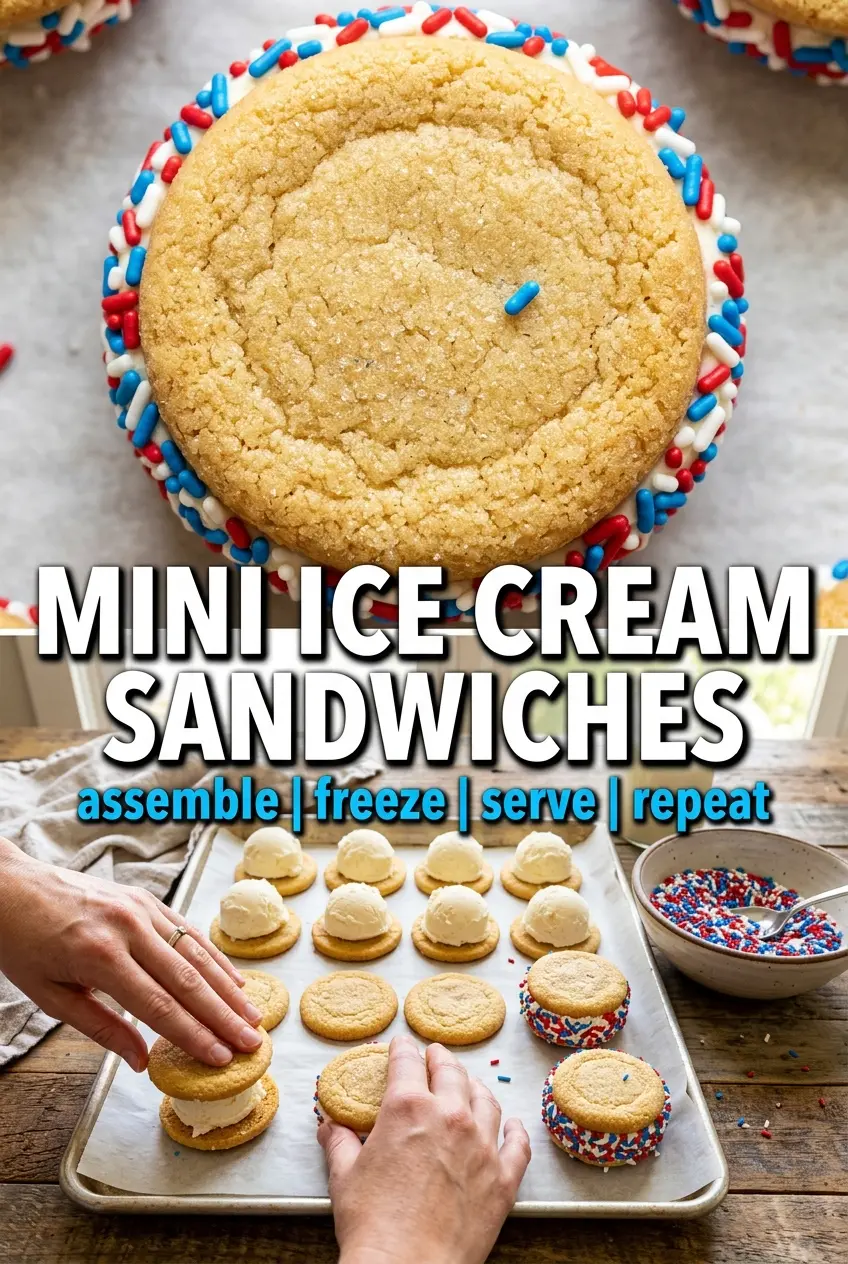
These Patriotic Mini Ice Cream Sandwiches hit that sweet spot between festive and genuinely good: soft cake-mix cookies, cold vanilla ice cream, and a sprinkle border that stays crisp-looking instead of melting into a mess. The mini size makes them easier to serve, easier to freeze, and a lot less clumsy to eat than full-size ice cream sandwiches, which matters when you’re handing dessert around outdoors.
The cookies bake up tender and just set in the center, which is exactly what you want here. If they’re baked too long, they turn dry and crack when you press in the ice cream. A short chill before assembling helps them hold their shape, and rolling the exposed ice cream edge in sprinkles gives you that clean red-and-blue finish without needing any frosting or extra decoration.
Below you’ll find the timing trick that keeps the sandwiches from sliding apart, plus a few simple swaps if you want to change the cookie base or make them ahead for a crowd.
The cookies stayed soft after freezing, and the ice cream didn’t squish out the sides when I pressed them together. The sprinkle edges looked perfect after a couple hours in the freezer.
Like these patriotic mini ice cream sandwiches? Save them to Pinterest for the next red, white, and blue dessert table.
The Part That Keeps the Sandwiches from Sliding Apart
The biggest mistake with ice cream sandwiches is assembling them from cookies that are still warm or ice cream that’s too soft. Warm cookies melt the filling before the sandwich has a chance to set, and ice cream that’s soup-thick will ooze out the sides the second you press it down. The fix is simple: cool the cookies completely, then give them a short freezer rest before you start assembling.
That extra chill firms the cookies just enough to handle the pressure of sandwiching without cracking. It also buys you a little more time to work, which matters when you’re rolling the edges in sprinkles and trying to keep the ice cream layer neat. Work with a few sandwiches at a time, then get them back into the freezer right away.
What Each Ingredient Is Actually Doing in This Ice Cream

- Base ingredient (cream, milk, or custard) — This provides the foundation and richness. Quality matters.
- Sweetener (sugar, honey, or condensed milk) — This sweetens and prevents ice crystals. The ratio is critical.
- Flavor element (vanilla, fruit, chocolate, or other) — This defines the ice cream personality. Use quality ingredients.
- Egg yolks (if making custard base) — These create richness and silky texture. Optional but elevates ice cream.
- Churning (if using ice cream maker) — This incorporates air and prevents ice crystals. Critical for smooth texture.
- Freezing temperature and time — Proper freezing prevents rock-hard texture. Store at 0°F or below.
- Mix-ins (chocolate, cookies, fruit, or swirls) — These add texture and prevent one-dimensional flavor. Add near end of churning.
- Serving temperature (slightly soft, not rock hard) — This provides creamy mouthfeel. Remove from freezer 5 minutes before serving.
What the Cake Mix Is Doing Here
The cake mix does more than save time. It gives these cookies a soft, almost brownie-like bite that stays tender after freezing, which is exactly what a homemade ice cream sandwich needs. Red velvet cake mix brings the color built into the cookie itself, but chocolate works just as well if that’s what you have.
- Cake mix — This is the structure and the flavor base. A standard box keeps the cookies consistent and soft, and red velvet gives you the strongest patriotic look. Chocolate cake mix is the easiest substitute if you want a darker cookie with the same texture.
- Eggs and oil — These turn the dry mix into a dough that bakes up pliable instead of cakey. Don’t swap in melted butter here unless you want a firmer cookie; oil keeps the edges soft after freezing.
- Vanilla ice cream — Use a good vanilla with enough body to hold a scoop shape. Let it soften just until it’s scoopable, not melted, or the sandwiches will be messy and the filling won’t freeze into a clean center.
- Red and blue sprinkles — These are for the visual finish, but they also add a little crunch around the edge. Jimmies work better than tiny nonpareils because they cling to the ice cream edge without rolling everywhere.
Building the Cookies, Filling, and Freeze Time
Mixing the Dough Until It Holds Together
Stir the cake mix, eggs, and oil until the dough comes together into a thick, sticky mass with no dry pockets left at the bottom of the bowl. It should look like scoopable cookie dough, not batter. If it seems crumbly, keep mixing for another few turns before adding anything else; most of the time, it just needs a minute to hydrate.
Baking for Soft Centers, Not Dry Edges
Scoop tablespoon-sized portions onto parchment and flatten them into thin circles so they bake evenly. Pull them when the tops look set and the edges have barely firmed, usually around 8 to 10 minutes. If the cookies get too dark, they’ll split when you press in the ice cream and the sandwiches won’t stay neat.
Assembling While the Ice Cream Is Still Workable
Let the cookies cool completely, then freeze them for 30 minutes so they’re sturdy. Work with slightly softened ice cream, not freshly scooped hard ice cream and not melted ice cream. Press the top cookie down gently until the ice cream reaches the edges, then roll those edges in sprinkles before wrapping each sandwich in plastic wrap.
Freezing Until the Centers Lock In
Give the assembled sandwiches at least 2 hours in the freezer before serving. That time matters because it firms the ice cream enough to slice cleanly if you need to, and it helps the cookies and filling bond into one neat sandwich. If you serve them too soon, the ice cream layer slides and the sprinkle edge sheds off.
Ways to Change the Cookie Base Without Losing the Shape
Chocolate cookie version
Use chocolate cake mix instead of red velvet for a deeper cocoa flavor and a darker sandwich that still stays soft after freezing. The texture stays the same, but the final look is less patriotic unless you lean hard on the red and blue sprinkles.
Dairy-free ice cream sandwich
Swap in a dairy-free vanilla frozen dessert that scoops cleanly from the freezer. The only thing that changes is the melt point, so work a little faster when assembling because many non-dairy versions soften sooner than regular ice cream.
Gluten-free shortcut
Use a gluten-free cake mix that’s designed to bake into cookies, not a mix that needs extra structure from a pan cake. The cookies may spread a touch less, so flatten them before baking and watch the oven closely for the first batch.
Storage and Reheating
- Refrigerator: Don’t store these in the fridge; the ice cream turns soft fast and the cookies lose their clean shape.
- Freezer: Wrap each sandwich individually in plastic wrap and freeze for up to 2 weeks for the best texture. After that, the cookies can pick up freezer flavor.
- Reheating: No reheating needed. Set them out for 3 to 5 minutes before serving so the cookies soften slightly, but don’t leave them long enough for the ice cream to slump.
Questions I Get Asked About This Recipe
Patriotic Mini Ice Cream Sandwiches
Ingredients
Equipment
Method
- Preheat oven to 350°F and line baking sheets with parchment paper.
- Mix cake mix, eggs, and oil together until a thick dough forms.
- Scoop tablespoon-sized balls onto prepared baking sheets, flatten to about 1/4-inch thick circles, and bake for 8–10 minutes until set—do not overbake.
- Let cookies cool completely on a wire rack, then freeze for 30 minutes.
- Working quickly, place a scoop of slightly softened vanilla ice cream on the flat side of one cookie and press another cookie on top to sandwich.
- Roll the exposed ice cream edge in red and blue sprinkles until the border is fully coated, then wrap each sandwich in plastic wrap.
- Freeze for at least 2 hours until solid before serving.