Orzo salad lands on the table looking light, but it eats like something that was actually thought through. The tiny pasta catches the lemon vinaigrette in every curve, the cucumbers stay crisp, and the tomatoes bring just enough juice to keep each bite lively without turning watery. It’s the kind of side dish that disappears fast because it tastes fresh, not heavy.
The key is balance. Rinsing the orzo after cooking stops the carryover heat and keeps the pasta from clumping, which matters here because you want each grain-shaped piece to stay distinct. A generous amount of lemon zest gives the dressing backbone, while the garlic stays sharp enough to notice but not so strong that it takes over the herbs.
Below, I’ve included the small details that make this salad hold up after chilling, plus a few swaps if you need to work with what’s in the fridge.
The lemon dressing coated every piece and the orzo stayed separate after chilling. I added the feta right before serving and it was gone in minutes.
Pin this lemony orzo salad for the next time you need a chilled side with crisp cucumber, fresh herbs, and a bright vinaigrette.
The Trick to Keeping Orzo Salad Light Instead of Gummy
Orzo has one job here: stay tender and separate. If it goes straight from the pot into the dressing while it’s still steaming hot, it keeps softening and can turn dense by the time you serve it. Rinsing under cold water stops that process and removes the surface starch that makes the pasta cling in a heavy way.
The other thing that matters is seasoning the dressing a little more boldly than you think you need. Cold pasta softens flavors, and the lemon, garlic, and salt need enough strength to taste clean after an hour in the fridge. That’s also why the herbs go in with the vegetables instead of at the end alone; they get evenly distributed and every bite tastes finished.
What Each Ingredient Is Actually Doing in This Bowl
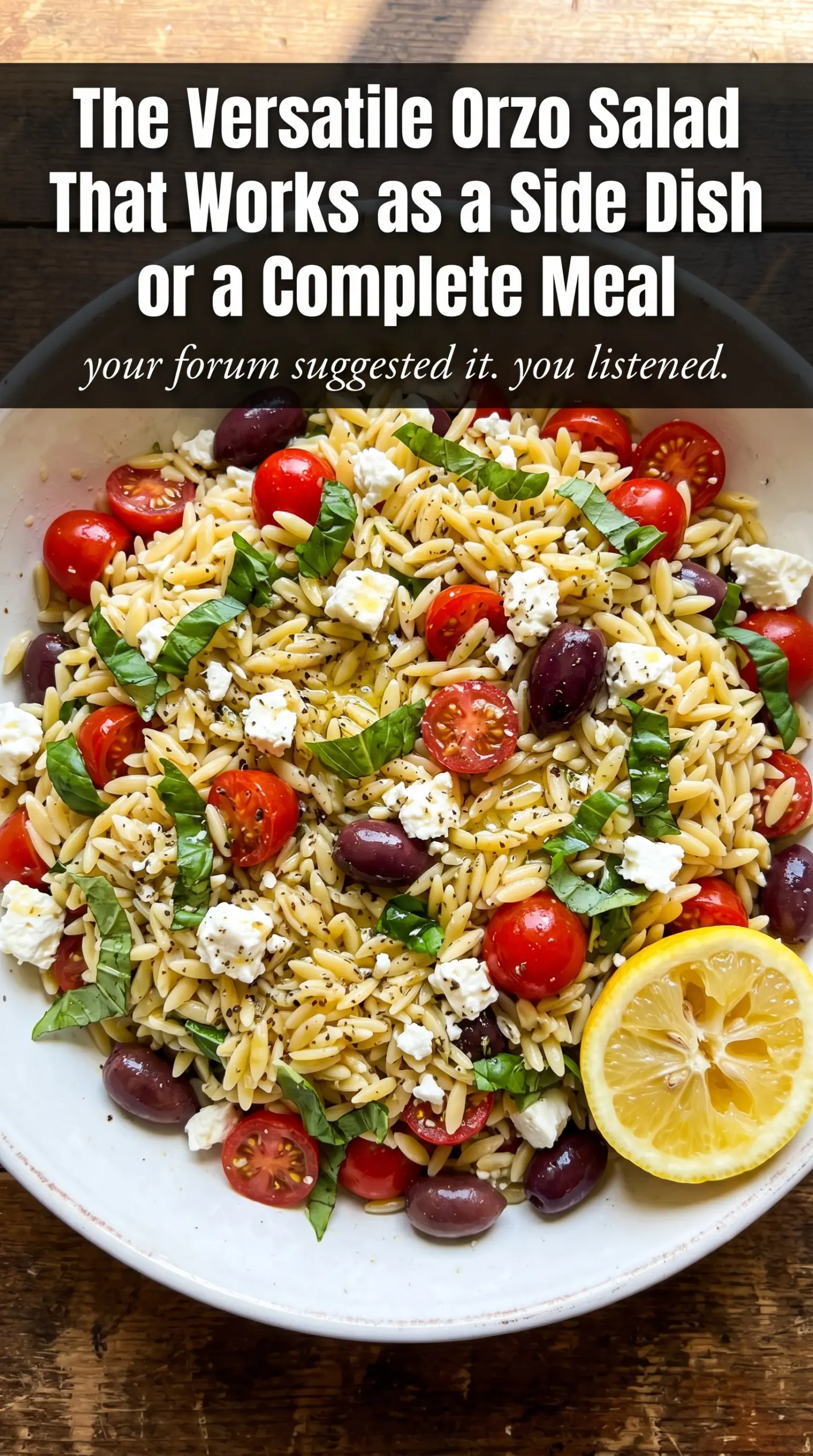
- Orzo pasta — This gives the salad its soft, chewy base and a shape that catches dressing better than long pasta. Small pasta matters here because it mixes evenly with the vegetables and doesn’t need cutting at the table.
- Olive oil — Use a good one if you can taste the difference, because it’s the body of the dressing. A bitter or flat oil will show up immediately in a salad this simple.
- Lemon juice and zest — The juice brings acidity, but the zest is what makes the salad taste bright instead of merely sour. Don’t skip the zest; it’s the part that keeps the dressing from tasting thin.
- Cherry tomatoes — These add sweetness and enough juice to soften the edges of the dressing. Halve them so they release a little flavor without collapsing into the pasta.
- Cucumber — This is the crisp contrast. Dice it small so it stays present in every bite instead of falling to the bottom of the bowl.
- Red onion — A little goes a long way. Finely dice it so it gives sharpness without dominating the herbs and lemon.
- Parsley and mint — Parsley gives the salad its green, clean backbone, and mint makes the whole dish taste colder and fresher. If you only have parsley, the salad still works, but it loses that lifted finish.
- Feta — Optional, but worth adding if you want salt and creaminess. Crumble it on at the end so it stays distinct instead of melting into the dressing.
How to Mix Orzo Salad So the Dressing Actually Clings
Cooking the Pasta to the Right Point
Cook the orzo until just tender, not mushy. It should still have a little bite because it softens again as it chills. Drain it well, then rinse it under cold water until it’s no longer steaming; if you skip that rinse, the residual heat keeps cooking the pasta and can make the salad gluey.
Making the Lemon Vinaigrette
Whisk the olive oil, lemon juice, zest, garlic, salt, and pepper until the dressing looks slightly thickened and a little cloudy. That means the oil and acid have come together enough to coat the pasta. If the garlic tastes harsh, let the dressing sit for a few minutes before combining it with the orzo; the sharp edges calm down fast.
Bringing the Salad Together
Combine the cooled orzo with the tomatoes, cucumber, red onion, parsley, and mint in a large bowl so you’ve got room to toss without crushing the vegetables. Pour the dressing over and mix until every piece looks lightly glossy. The salad should seem a touch over-dressed at first, because the pasta will absorb some of it during chilling.
Chilling and Finishing
Refrigerate the salad for at least an hour so the flavors settle and the orzo firms up a bit. Give it a stir before serving, then add feta if you’re using it. If it looks dry after chilling, add a small splash of olive oil or lemon juice and toss again instead of overloading it at the start.
How to Adapt This for Different Tables
Make It Dairy-Free
Leave off the feta and the salad still tastes complete because the lemon, herbs, and olive oil carry the flavor. If you want a little extra richness without dairy, add a handful of olives or a few chopped avocado cubes right before serving.
Turn It Into a Heartier Main
Add chickpeas, grilled chicken, or shrimp and you’ve got a fuller meal without changing the dressing. Chickpeas work best if you want a vegetarian option because they soak up the lemon and still keep their shape after chilling.
Swap the Herbs Based on What’s in the Fridge
If you don’t have mint, use dill for a different kind of freshness or double the parsley for a more classic pasta-salad feel. Basil also works, but it pushes the salad in a sweeter direction, so keep the lemon a little brighter to balance it.
Storage and Reheating
- Refrigerator: Store covered for up to 3 days. The herbs soften a bit, but the flavor holds up well.
- Freezer: I don’t recommend freezing this salad. The cucumber and tomatoes lose their texture and turn watery after thawing.
- Reheating: Serve it cold or let it sit at room temperature for 15 to 20 minutes. If it seems dry after chilling, stir in a little olive oil and a squeeze of lemon instead of trying to warm it.
Answers to the Questions Worth Asking
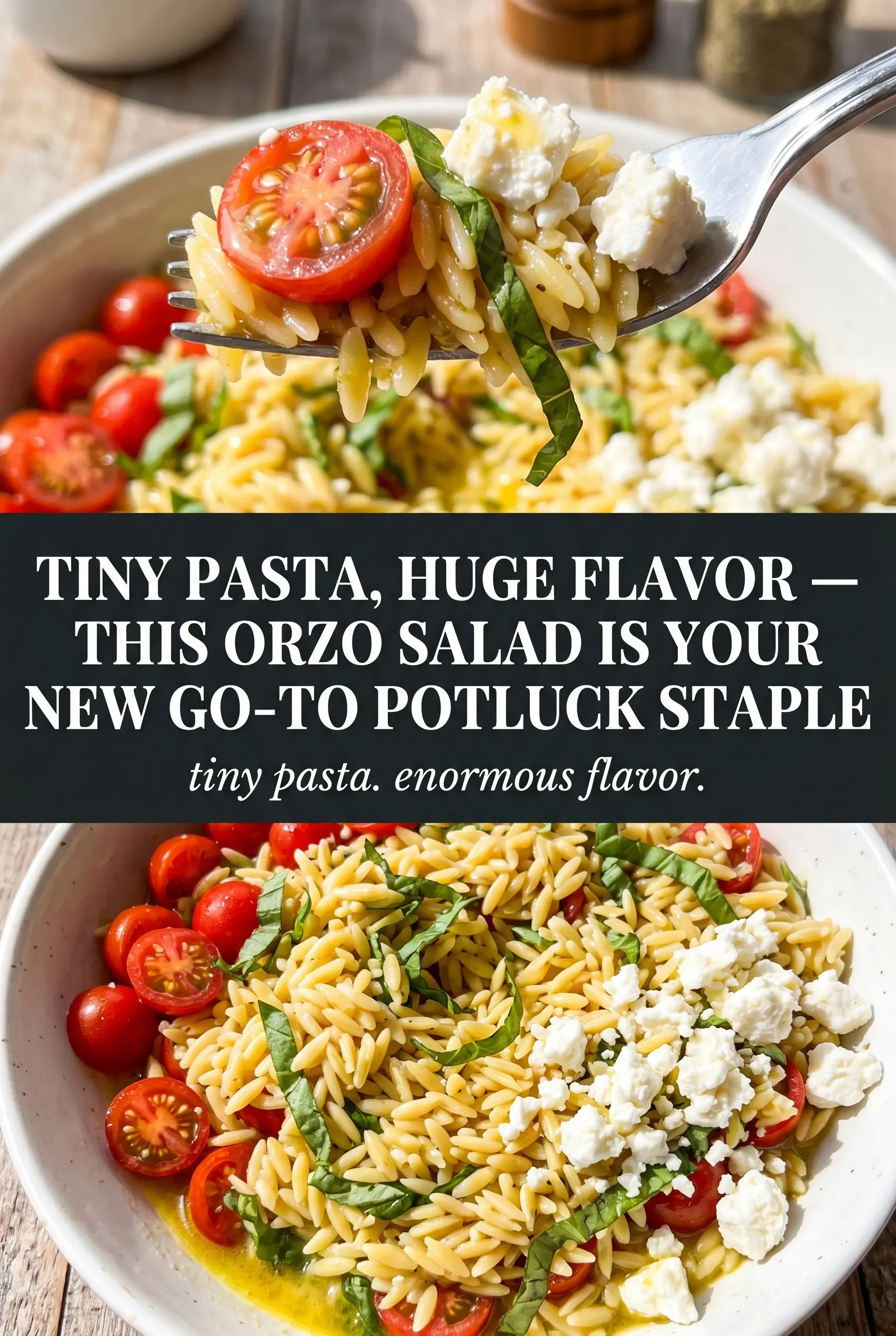
Orzo Salad
Ingredients
Method
- Cook the orzo according to package directions, then drain and rinse with cold water to stop cooking. This keeps the pasta tender without turning mushy.
- Whisk olive oil, lemon juice, lemon zest, garlic, salt, and pepper until the dressing looks evenly combined. The mixture should smell bright and garlicky.
- Combine orzo, cherry tomatoes, cucumber, red onion, parsley, and mint in a large bowl. Toss gently so the herbs are evenly distributed.
- Pour the lemon vinaigrette over the salad and toss to combine until everything is lightly coated. Scrape the bowl edges to get all the dressing mixed in.
- Refrigerate for at least 1 hour to let the flavors meld and the salad become fully chilled. Keep it covered so the herbs stay fresh-looking.
- Top with crumbled feta if desired and serve chilled. Add feta right before serving for the best texture.