Orange Amaretto Cranberry Sauce turns a plain holiday side into something glossy, bright, and a little unexpected. The cranberries cook down into a spoonable sauce that still keeps some whole berries for texture, while orange juice and zest keep the sweetness lively instead of heavy. The amaretto goes in at the end, so you get that warm almond note without cooking off the aroma.
What makes this version work is balance. Cranberries need enough sugar to round out their sharpness, but they also need acid and a little bitterness from the zest so the sauce doesn’t taste flat. Adding the amaretto after the pot comes off the heat keeps the flavor clean and noticeable. Toasted sliced almonds on top finish it with a little crunch right when the sauce is otherwise silky.
Below, you’ll find the small timing details that keep the sauce from turning watery, plus a few smart swaps if you’re cooking for different tastes or need to plan ahead.
The sauce thickened up beautifully and the orange zest made it taste fresh instead of just sweet. I served it chilled the next day and the amaretto came through even better.
Save this Orange Amaretto Cranberry Sauce for the meal that needs a bright, boozy cranberry side with toasted almond crunch.
The Part That Keeps Cranberry Sauce from Tasting Flat
Cranberry sauce can go bland fast if it’s just boiled fruit and sugar. The fix here is layering the sweetness with orange juice and finishing with zest and amaretto after the heat is off. That gives you a sauce that tastes round, not cooked-out, and keeps the almond note from disappearing into the pot.
The other thing people miss is texture. Cranberries don’t need a long simmer; they need enough time to burst and thicken into a spoonable sauce before they turn jammy. Once most of the berries have popped and the liquid looks glossy and slightly looser than you want, it’s time to pull it off the burner. It will tighten as it cools.
What Each Ingredient Is Doing in the Bowl
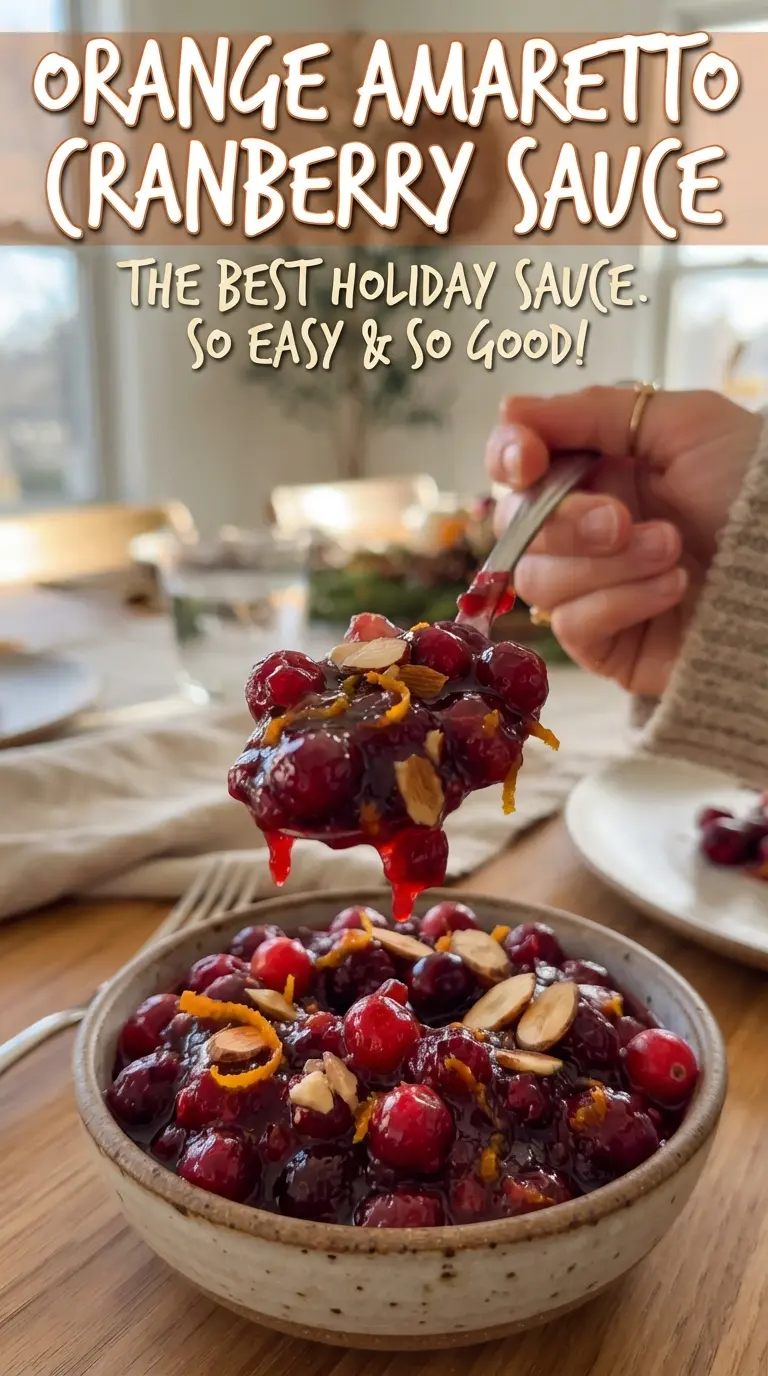
- Fresh cranberries — These bring the tart backbone and the natural pectin that helps the sauce set. Frozen cranberries work too; use them straight from frozen and add a minute or two to the simmer.
- Orange juice — This softens the sharp cranberry edge and gives the sauce a brighter finish than water alone ever will. Fresh-squeezed tastes best, but the carton version is fine here because it’s being cooked down.
- Amaretto — Add it off the heat so the almond aroma stays noticeable. If you cook it hard, the fragrance fades and you lose the whole point of using it.
- Orange zest — The zest is not decoration here; it’s the part that makes the orange taste vivid instead of sugary. Use a fine grater and stop at the orange layer so you don’t drag in bitter pith.
- Sliced almonds — Toast them first so they bring crunch and a nutty smell. Add them at the end so they stay crisp instead of softening in the sauce.
Cooking the Berries Until the Sauce Sets
Starting the Syrup
Bring the sugar, orange juice, water, and salt to a full boil before the cranberries go in. That first boil dissolves the sugar completely, which keeps the finished sauce smooth instead of grainy. If the sugar hasn’t dissolved before the berries start breaking down, the texture can turn sandy.
Letting the Cranberries Burst
Once the cranberries go in, keep the pot at a steady simmer and stir now and then. You’ll hear the berries popping, then you’ll see the mixture thicken and darken into a glossy red. Don’t walk away at the end of the cook time; overcooked cranberry sauce turns thick and sticky instead of supple.
Finishing with Amaretto and Zest
Take the pan off the heat before adding the amaretto and orange zest. The amaretto’s aroma is fragile, and high heat burns off what makes it special. Stir gently, then let the sauce cool in the pan for a few minutes before transferring it to a bowl, because it loosens slightly while hot and sets as it chills.
How to Adapt It Without Losing the Bright, Almondy Finish
Dairy-Free and Naturally Gluten-Free
This recipe is already both dairy-free and gluten-free as written, which makes it easy to serve to a mixed crowd. Just check the amaretto bottle if you’re cooking for someone with a strict gluten concern, since not every liqueur is labeled the same way.
Non-Alcoholic Version
Swap the amaretto for 1 to 2 teaspoons of almond extract, then start small and taste. Extract is much stronger than liqueur, so too much will make the sauce taste sharp instead of warm and rounded.
Less Sweet, More Tart
Cut the sugar back by 2 to 3 tablespoons if you like a sharper cranberry sauce. The sauce will still set, but it will taste more like a side for savory dishes than a dessert-style condiment.
Storage and Reheating
- Refrigerator: Keep covered for up to 1 week. It thickens as it chills, so don’t judge the final texture while it’s still warm.
- Freezer: It freezes well for up to 2 months. Pack it in a freezer-safe container with a little headspace, then thaw overnight in the fridge.
- Reheating: Serve it cold or bring it to room temperature. If you want it warm, heat it gently on low just until loosened; a hard boil can make it loose again and mute the fresh orange flavor.
Answers to the Questions Worth Asking
Orange Amaretto Cranberry Sauce
Ingredients
Equipment
Method
- Bring sugar, orange juice, water, and salt to a boil in a saucepan over medium-high heat, stirring until sugar dissolves and the mixture looks clear and glossy at the surface.
- Add fresh cranberries and return to a boil, then reduce to a gentle simmer and cook for 10-12 minutes until berries burst and the sauce thickens enough to coat the back of a spoon.
- Remove the saucepan from heat, then stir in amaretto and orange zest until fully incorporated and fragrant, with the sauce turning uniformly colored.
- Cool the sauce to room temperature, then chill before serving so it becomes thicker and holds its shape when spooned.
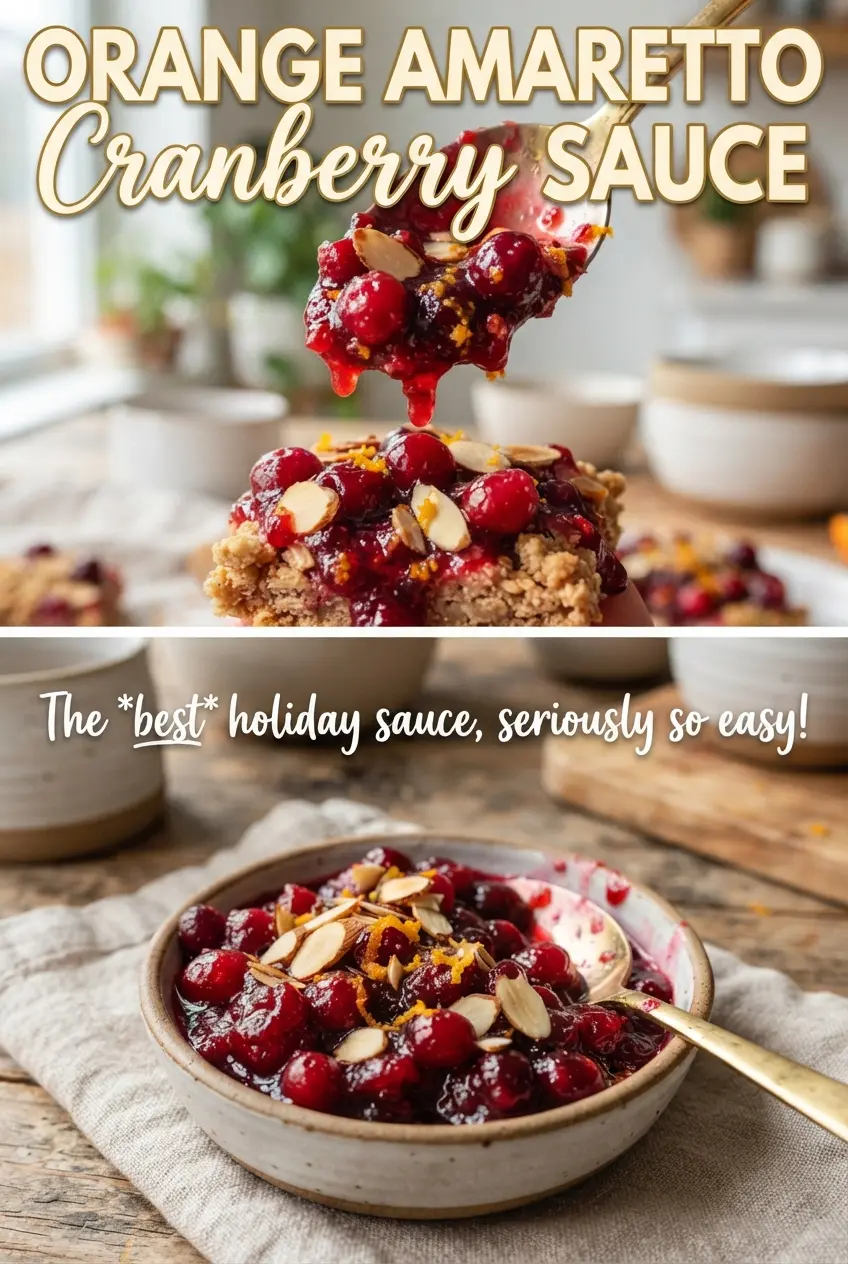
- Top the chilled cranberry sauce with toasted sliced almonds just before serving for a fresh crunch and visible nut topping.