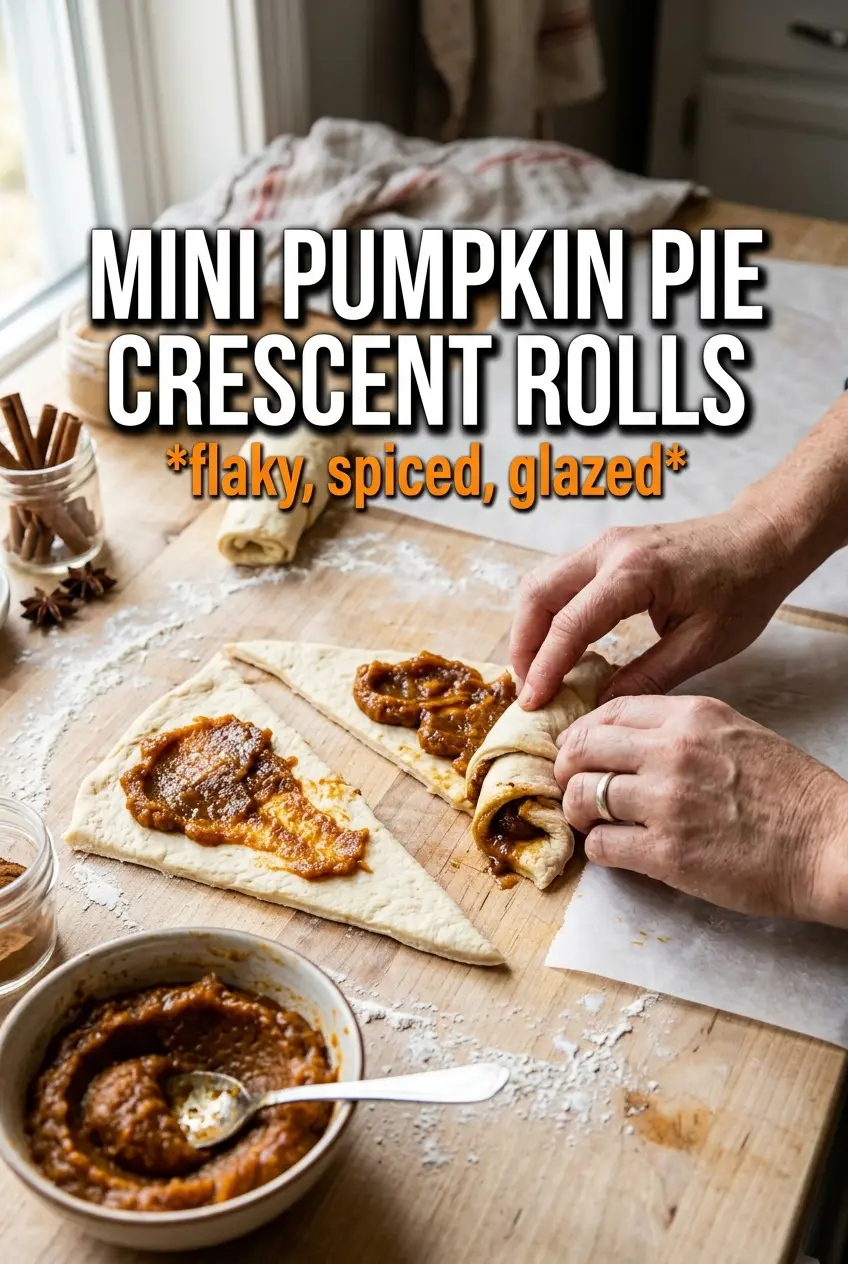
Warm, flaky crescent rolls with a pumpkin cream cheese center disappear fast because they hit that sweet spot between breakfast pastry and dessert. The outside bakes up crisp and golden, while the filling stays soft, spiced, and just rich enough to taste like pumpkin pie without turning heavy. A drizzle of cinnamon glaze over the top finishes the whole pan with the kind of sticky sweetness that makes these hard to leave alone.
What makes this version work is restraint. The filling is smooth and thick, so it doesn’t leak all over the baking sheet, and the pumpkin puree is balanced with cream cheese and powdered sugar instead of loading in too much moisture. Keeping the filling cold enough to handle, then using only a teaspoon in each roll, helps the crescents puff around it instead of splitting open in the oven.
Below, you’ll find the small details that keep the dough from unrolling, the glaze from sliding off, and the filling from turning runny. These little rolls are easy, but a few smart moves make them look and taste bakery-worthy.
The filling stayed put and the bottoms browned beautifully. I used exactly a teaspoon in each one, and the glaze soaked in just enough without making them soggy.
Save these mini pumpkin pie crescent rolls for a flaky breakfast pastry with pumpkin cream cheese filling and cinnamon glaze.
The Tiny Filling That Stops These Rolls From Bursting Open
Crescent dough is forgiving, but it has one weak spot: too much filling. If you mound the pumpkin mixture high, the dough can’t seal around it and the seams split before the centers set. A teaspoon at the wide end looks stingy, but that small amount gives the rolls room to puff and brown without leaking.
The other thing that matters is the texture of the filling itself. It should be smooth and thick enough to hold a shape on the spoon. If it feels loose, chill it for a few minutes before filling the dough. That short rest makes the rolls easier to shape and gives you cleaner spirals in the oven.
What Each Ingredient Is Actually Doing In This Filling
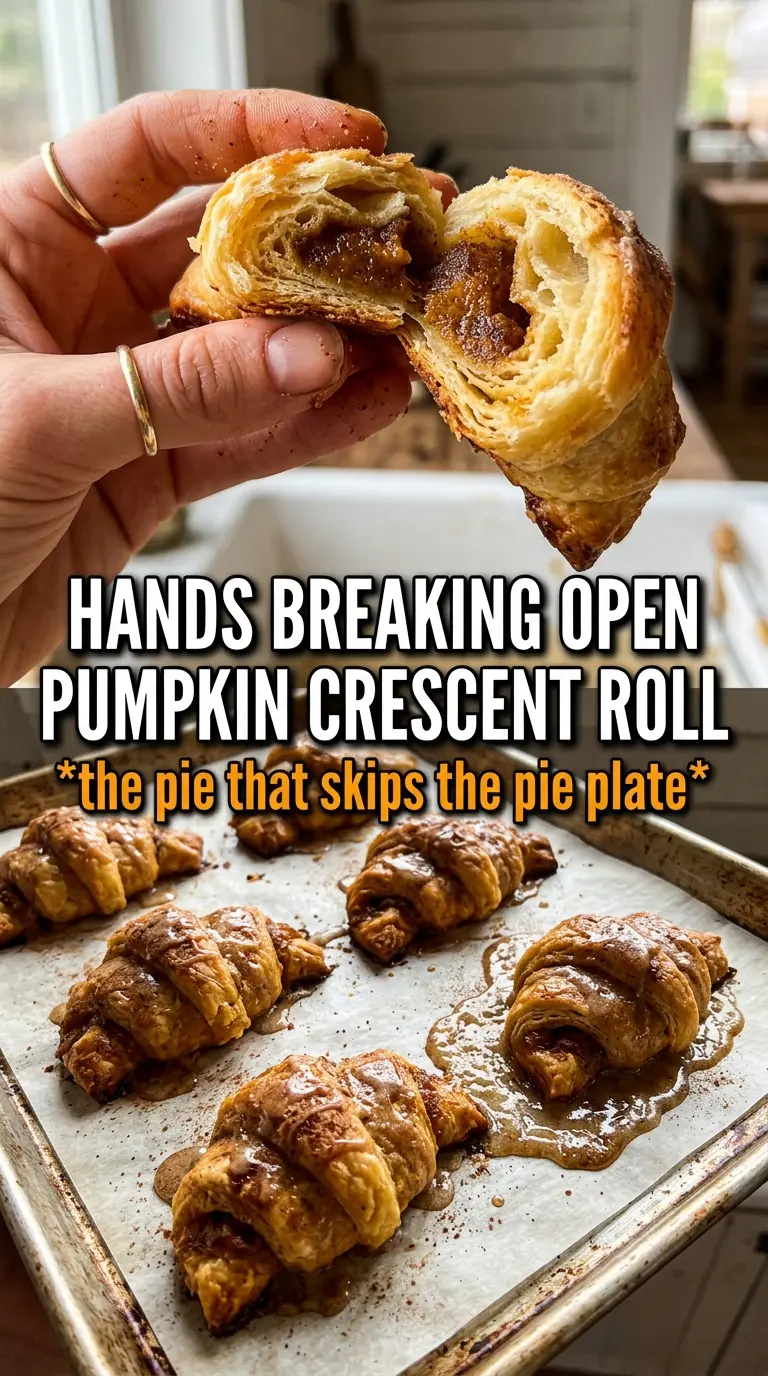
- Crescent roll dough — This is the shortcut that gives you flaky layers with no extra work. Refrigerated dough handles the pumpkin filling better than puff pastry here because it bakes into soft, tender spirals instead of shattering.
- Cream cheese — This gives the filling body and that tangy, pie-like richness. Full-fat cream cheese works best because reduced-fat versions can turn looser as they bake.
- Pumpkin puree — Use plain pumpkin puree, not pumpkin pie filling. Pie filling already has sugar and spices mixed in, which throws off the balance and can make the filling too wet.
- Powdered sugar — It sweetens the filling without making it grainy. Granulated sugar won’t dissolve as smoothly, so the center can taste sandy instead of creamy.
- Pumpkin pie spice and cinnamon — These build the warm spice flavor that makes the rolls taste like pumpkin pie instead of plain sweet pastry. If you don’t have pumpkin pie spice, use extra cinnamon plus a pinch of nutmeg and ginger.
- Butter and cinnamon sugar — Brushing the dough before baking gives the tops a crackly finish and helps the sugar cling. Skip this layer and the rolls still work, but they won’t have the same bakery-style finish.
Rolling, Baking, and Glazing Without Losing the Filling
Mix the filling until it looks like soft frosting
Beat the cream cheese until it’s completely smooth before adding the pumpkin and spices. If the cream cheese is lumpy at this stage, those lumps stay visible after baking and the filling won’t spread evenly inside the dough. The finished mixture should be thick, pale orange, and easy to spoon without running.
Fill from the wide end and keep the seam tucked under
Lay each crescent triangle flat and place the filling near the wide end, then roll gently toward the point. Don’t press so hard that the filling squeezes out the sides. Once rolled, set each piece seam-side down on the baking sheet so the weight of the roll helps it stay closed while it bakes.
Watch for deep golden edges before pulling the pan
These are done when the tops are golden and the bottoms are just starting to color. If the rolls stay pale, the centers can turn doughy instead of flaky. Pull them from the oven as soon as they’re set and lightly browned, then glaze them while they’re still warm so the drizzle melts slightly into the crust.
Three Ways to Adjust These Rolls Without Losing the Good Part
Make them dairy-free
Use a dairy-free cream cheese and plant-based butter. The filling will still be creamy, but it may soften a little faster, so chill it briefly before filling the dough. The flavor stays close, though the tang will be a touch milder.
Skip the glaze for a less sweet breakfast
The cinnamon sugar on top gives enough sweetness for a lot of people, especially if you’re serving these warm with coffee. Leaving off the glaze keeps the rolls neater and lets the pumpkin filling taste more like a spiced breakfast pastry than dessert.
Add chopped pecans for a little crunch
A small pinch of finely chopped pecans in the filling adds texture without making the rolls harder to seal. Keep the pieces tiny so they don’t puncture the dough or push filling out as the spirals bake.
Storage and Reheating
- Refrigerator: Store leftovers in an airtight container for up to 3 days. The glaze softens the tops a bit, but the rolls still taste great.
- Freezer: Freeze baked rolls without glaze for up to 1 month. Wrap them well, then thaw in the fridge before reheating so the filling doesn’t weep.
- Reheating: Warm in a 300F oven for 6 to 8 minutes or in the air fryer for a few minutes until the pastry crisps again. The mistake to avoid is microwaving too long, which makes the dough rubbery and the filling loose.