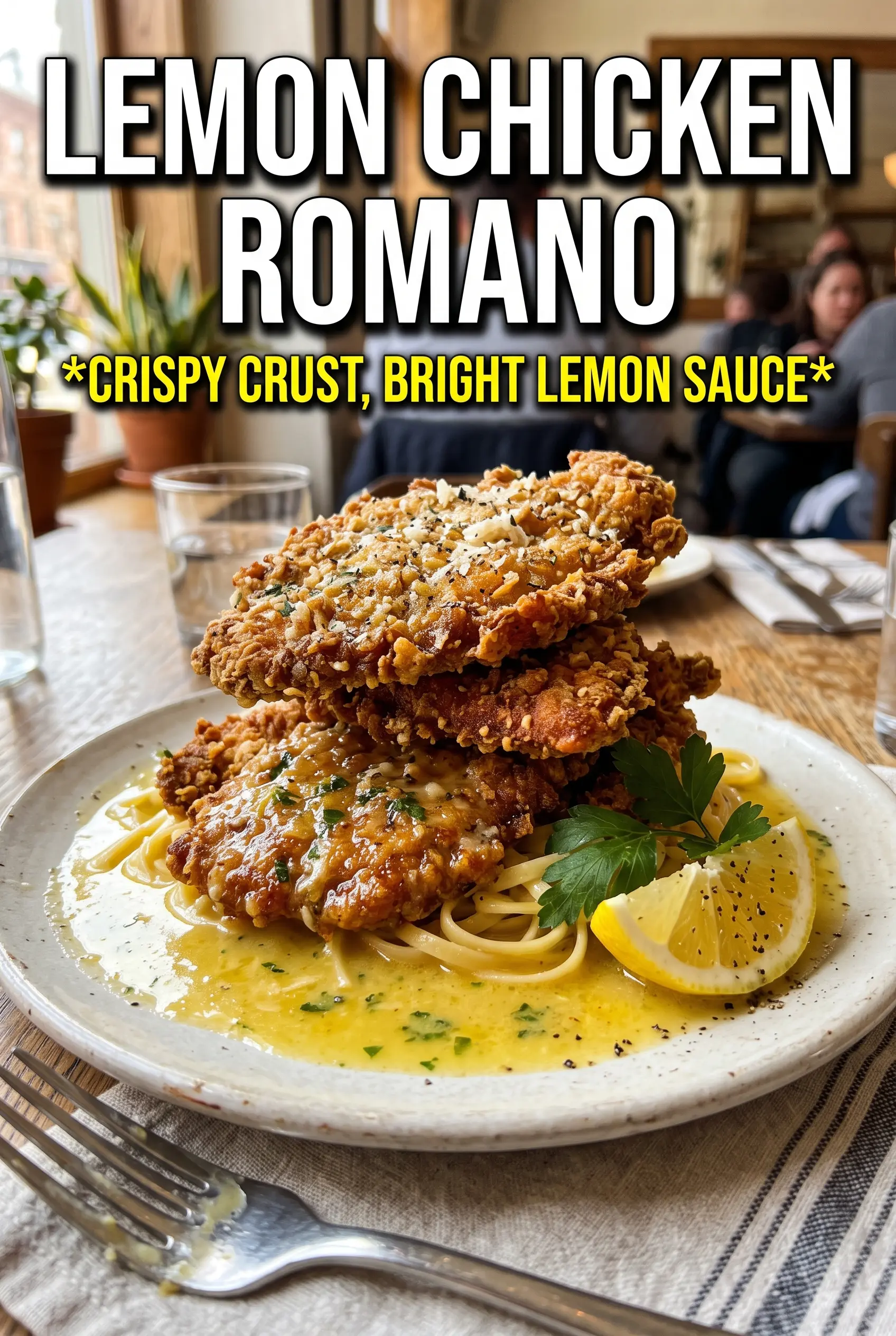
Thin chicken cutlets with a crisp Romano crust and a bright lemon butter pan sauce are the kind of dinner that disappears fast, because every bite gives you crunch first, then that salty-cheesy hit, then the sharp pop of lemon and capers. The chicken stays tender because it cooks in thin cutlets, not thick breasts, and the coating gets extra texture from panko mixed right into the Pecorino Romano.
What makes this version work is the balance in the pan. The cutlets fry in olive oil and a little butter until the crust is deeply golden, then the sauce is built in the same skillet so it picks up all those browned bits. Finishing the sauce with cold butter off the heat keeps it glossy instead of greasy, and the lemon juice stays bright instead of harsh.
Below you’ll find the one breading detail that keeps the crust attached, plus the small sauce move that keeps the whole dish from tasting flat. Once you’ve made it this way, it earns a place in the weeknight rotation fast.
The Romano crust stayed on beautifully, and the lemon-caper sauce was just the right amount of bright without drowning out the chicken. I had the cutlets on the table in under 40 minutes and my husband asked if I could add it to the regular dinner rotation.
Save Lemon Chicken Romano for the night you want a shattering Romano crust and a bright lemon-caper pan sauce in one skillet.
The Crust Falls Apart When the Pan Is Too Hot
The biggest mistake with Lemon Chicken Romano is rushing the heat. Pecorino Romano browns fast, and panko goes from crisp to scorched before the chicken has a chance to cook through if the skillet is screaming hot. Medium-high is the sweet spot here: hot enough to give you a deep golden crust, gentle enough that the cheese in the coating melts into the breadcrumbs instead of burning off the pan.
The other thing that matters is pressure. Once the cutlet hits the flour, egg, and Romano-panko mixture, press the coating on firmly so it clings. If you shake off too much egg before breading or leave the coating loose, you get bald patches that fry up unevenly. Thin cutlets also help the crust stay put because they cook fast and don’t sit in the pan long enough to steam the coating loose.
- Keep the cutlets even in thickness so they finish at the same time.
- Use finely grated Romano, not a coarse shred, so the coating behaves like a true crust.
- Let the breaded chicken rest for a few minutes before frying if you have time; the coating hydrates and grips better.
What the Romano, Panko, and Lemon Are Each Doing Here

- Pecorino Romano — This is the backbone of the crust. It brings salt, sharpness, and a dry texture that browns into a brittle coating. Parmesan works in a pinch, but the flavor is milder and you’ll lose some of that punchy Romano edge.
- Panko breadcrumbs — Panko keeps the crust light and crisp instead of dense. Regular breadcrumbs can work, but the texture is tighter and less shattery. If you use them, expect a less airy crust.
- Chicken breasts — Halving them into thin cutlets is what makes this dinner fast and prevents dry meat. If the cutlets are still thick in spots, pound them lightly so they cook evenly.
- Dry white wine — It lifts the browned bits from the pan and adds a little acidity before the lemon goes in. If you don’t cook with wine, use chicken broth plus a teaspoon of extra lemon juice, but the sauce will taste a little less layered.
- Capers — They add a salty briny burst that keeps the sauce from tasting flat. Drain them well, but don’t rinse away all the brine if you like a little more punch.
From Breaded Cutlets to Lemon Butter Finish
Set Up a Clean Breading Line
Arrange the flour, beaten eggs, and Romano-panko mixture in that order, and keep one hand for dry ingredients and one for wet if you want to avoid a clumpy breading station. Season the chicken before dredging so the flavor starts at the meat, not just the crust. The coating should look evenly covered but not bulky; if it piles on in thick patches, it tends to fall off in the pan.
Fry Until the Crust Is Deep Gold
Work in a single layer and leave space around each cutlet so the pan doesn’t trap steam. You want a steady sizzle the whole time; if the oil is silent, the heat is too low, and if the crust darkens too fast, pull the pan back a little. Flip when the bottom is a deep golden brown and the chicken releases easily from the skillet.
Build the Sauce in the Same Pan
Don’t wipe out the skillet. Those browned bits are the best part of the sauce. Cook the garlic just until fragrant, then add the wine and scrape the pan well so all the flavor comes up into the liquid. Simmer the lemon juice and capers long enough to round off the sharpness, then take the pan off the heat before swirling in the cold butter so the sauce turns glossy instead of broken.
Finish and Serve Right Away
Spoon the sauce over the cutlets as soon as the butter melts in. The crust is at its best in the first few minutes, before the sauce softens it. A handful of parsley on top gives the dish a fresh finish and keeps the lemon butter from feeling too heavy.
How to Adapt Lemon Chicken Romano Without Losing the Point
Gluten-Free Breading
Swap the all-purpose flour for a gluten-free flour blend and use gluten-free panko. The crust still gets crisp, but it may brown a little faster, so keep the heat at medium-high rather than pushing it hotter.
Lighter Dairy-Free Version
You can skip the butter in the sauce and finish with a good olive oil instead, but the sauce will be less velvety and more lemon-forward. This version still works, especially if you want a brighter, sharper finish.
No-Wine Pan Sauce
Use low-sodium chicken broth in place of the wine and add an extra teaspoon of lemon juice. You’ll still get a good pan sauce, but it won’t have quite the same depth as a wine-deglazed skillet.
Storage and Reheating
- Refrigerator: Store leftovers in an airtight container for up to 3 days. The crust softens in the sauce, but the flavor holds up well.
- Freezer: The breaded chicken freezes better before saucing. Freeze cooked cutlets in a single layer, then reheat and make a fresh batch of sauce for the best texture.
- Reheating: Warm the chicken in a 375°F oven until hot, then spoon the sauce over it. The microwave makes the crust soggy fast, which is the easiest way to lose the best part of this dish.
Questions I Get Asked About This Recipe
Lemon Chicken Romano
Ingredients
Equipment
Method
- Season the chicken cutlets with salt and pepper, then set up three stations with flour, beaten egg, and a mixture of Pecorino Romano cheese with panko breadcrumbs.
- Dredge each cutlet in flour, dip into the beaten egg, and press firmly into the Romano coating so it adheres.
- Heat olive oil with 2 tablespoons of butter in a cast iron skillet over medium-high heat until hot, then pan-fry the cutlets for 3-4 minutes per side until deeply golden and crisp.
- Remove the cutlets to a plate while you make the lemon-caper sauce.
- In the same skillet, cook the minced garlic for 30 seconds over medium-high heat until fragrant.
- Deglaze with dry white wine, then add fresh lemon juice and drained capers and simmer for 3 minutes to concentrate the flavors.
- Swirl in the remaining 2 tablespoons of cold butter until the sauce is glossy and smooth.
- Plate the chicken Romano cutlets and pour the lemon-caper butter sauce over each, then garnish with fresh parsley.