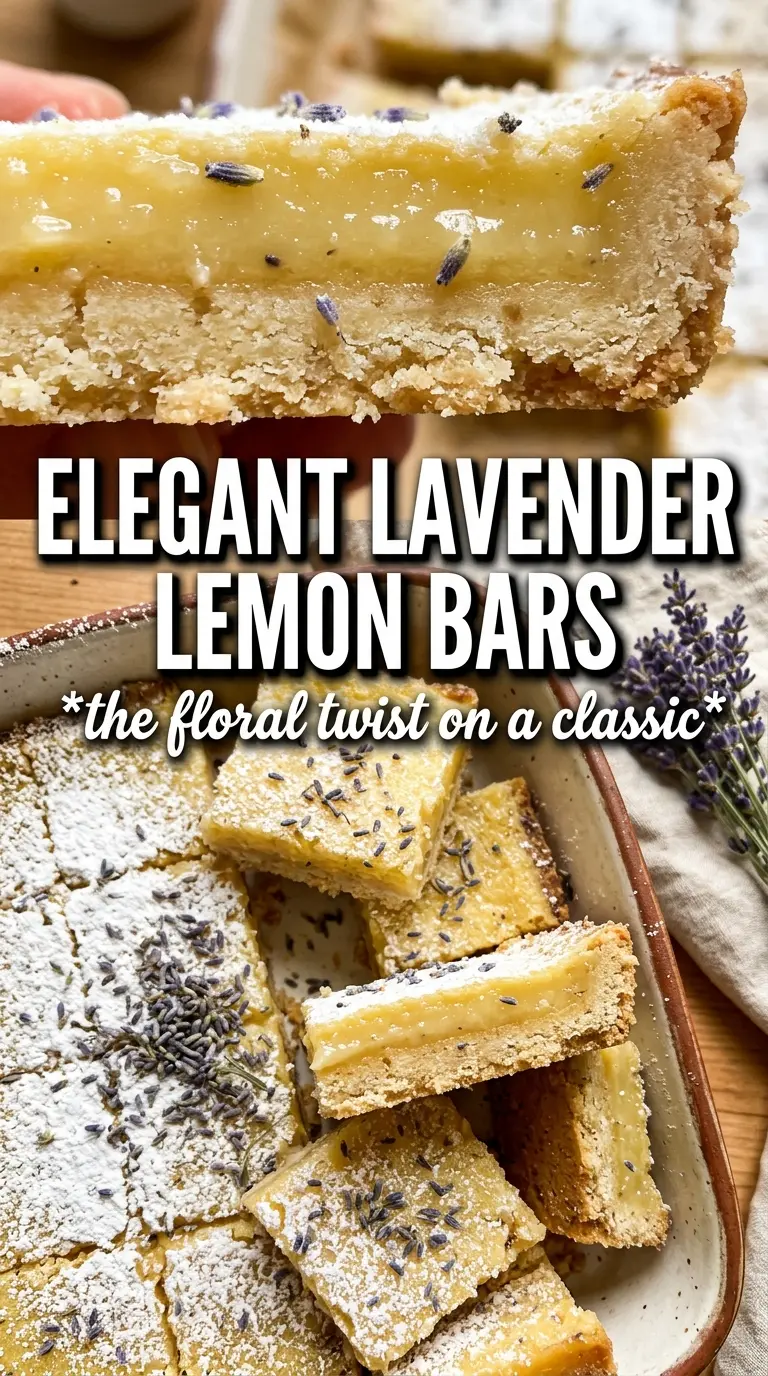
Pale yellow lemon bars with a lavender shortbread crust have a way of tasting polished without acting fussy. The crust stays tender and sandy under a bright, silky filling, and the little bit of culinary lavender gives the whole pan a quiet floral note that doesn’t take over. When they’re chilled and cut cleanly, they look bakery-level with almost no extra effort.
What makes this version work is balance. The shortbread crust is rich enough to stand up to the lemon layer, but not so sweet that it blunts the filling. Ground lavender goes into the crust instead of the curd, which keeps the floral flavor subtle and prevents that perfumey edge you can get when lavender steeps too long in liquid. The lemon layer is thickened with a small amount of flour and set just until the center stops wobbling, which keeps it smooth instead of rubbery.
Below, I’ve included the little details that matter most: how to keep the crust from crumbling when you press it in, why the bars need a full chill before cutting, and the easiest way to get a neat finish with powdered sugar and zest on top.
The filling set up beautifully and the lavender in the crust was just enough to notice without tasting perfumey. I chilled them overnight and they sliced into perfect squares the next day.
Like this recipe? Save these lavender shortbread lemon bars for the next time you want a bright citrus dessert with a delicate floral crust.
The Part That Keeps Lavender from Taking Over
Lavender can go from elegant to soap-like fast, and that’s the main reason so many floral desserts miss the mark. The fix is simple: use culinary lavender sparingly and grind it finely before it hits the dough. That distributes the flavor through the crust instead of leaving little concentrated pockets that taste harsh.
The other thing that matters here is the balance between fat and acid. The buttery shortbread softens the sharp edge of the lemon filling, while the lemon keeps the lavender from tasting flat. If the crust is underbaked, it can go soggy under the curd; if it’s overbaked, the bars lose the tender bite that makes them special.
What Each Ingredient Is Actually Doing in This Recipe
- Primary ingredient (the star) — Quality matters most. Choose the best you can find.
- Cooking medium (oil, butter, or broth) — This carries flavors and prevents dryness.
- Seasonings (salt, pepper, spices, herbs) — Layer flavors so nothing overpowers. Build depth gradually.
- Aromatics (garlic, onion, herbs) — Cook with fat to bloom flavors. Become the foundation.
- Supporting ingredients — Complement the main ingredient without overpowering it.
- Sauce or liquid (if applicable) — Brings flavors together. Balance richness with acid.
- Acid (lemon, vinegar, wine, or other) — Brightens and prevents flat-tasting results.
- Final finish (garnish, glaze, or sauce) — Prevents one-dimensional taste and adds visual appeal.
What Each Ingredient Is Doing in These Bars
- All-purpose flour — This gives the crust structure and helps the lemon filling set. The flour in the filling is there for body, not fluff, so don’t swap it out for cornstarch unless you’re changing the method.
- Powdered sugar — In the crust, it keeps the texture soft and fine rather than crisp and sandy. Granulated sugar will work in a pinch, but the crust won’t have the same melt-in-your-mouth finish.
- Culinary lavender — This is the ingredient that makes the bars memorable, but only if it’s finely ground and used lightly. Regular ornamental lavender can taste bitter, so stick with culinary-grade buds.
- Cold butter — Cold butter is what gives the crust its shortbread texture. If it starts softening before it goes into the oven, the crust can spread and lose its clean edge.
- Eggs and egg yolks — The whole eggs set the filling, and the extra yolks add richness so the curd tastes lush instead of stiff. Don’t cut them down if you want that smooth, sliceable center.
- Fresh lemon juice and zest — Bottled juice won’t give the same brightness, and the zest carries the fragrant lemon oil that makes the bars taste alive. This is the place to use fresh fruit.
Building the Crust and Filling Without Losing the Clean Cut
Pressing the Shortbread Base
Pulse the crust ingredients just until the mixture looks like damp sand and starts to clump when squeezed. If you let the food processor run too long, the butter warms up and the crust can turn greasy instead of tender. Press it into the pan firmly and evenly, especially into the corners, or the filling will bake unevenly and make ragged edges when you slice the bars later. A light golden color on the edges is enough; this crust gets a second bake with the filling, so it doesn’t need deep color now.
Whisking the Lemon Layer Smooth
Combine the eggs, yolks, sugar, lemon juice, zest, and flour until the mixture looks completely smooth and glossy. Whisk out any streaks of flour before it goes over the warm crust, because little lumps don’t disappear in the oven. Pour slowly so you don’t disturb the crust too much. The filling should look thin in the bowl; it tightens up as it bakes and chills.
Knowing When the Bars Are Set
Bake just until the center loses its jiggle and the top looks matte rather than wet. If the middle still sloshes when you nudge the pan, give it a few more minutes; if you wait for it to look firm all over, the eggs can overcook and the texture turns bouncy instead of creamy. Let the bars cool completely before chilling, or condensation can form under the surface and blur that clean top.
Finishing for Sharp Squares
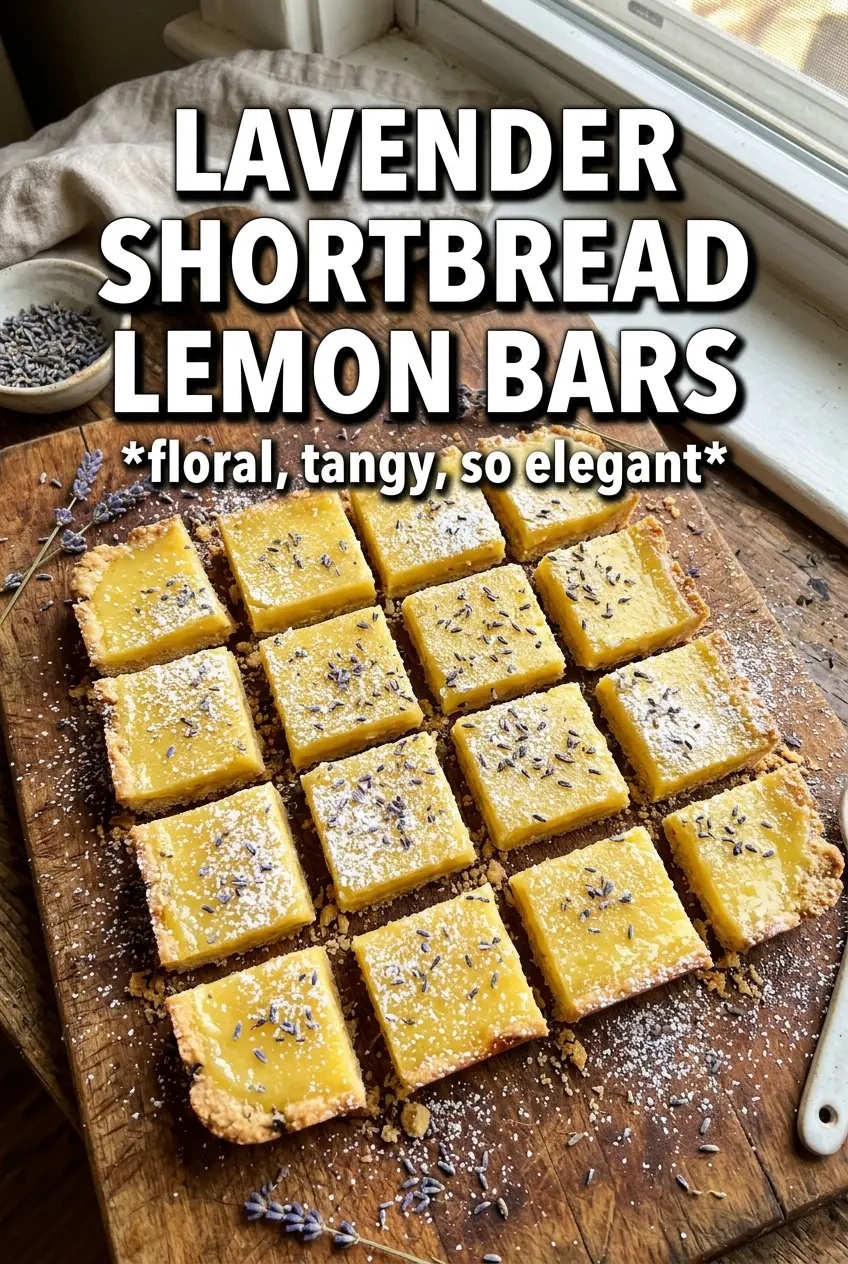
Chill the pan for at least two hours, and longer if you want especially neat cuts. Dust with powdered sugar right before serving so it stays snowy instead of dissolving into the surface. Add the dried lavender buds and lemon zest curls at the end for the best look and the freshest aroma. A hot knife wiped clean between cuts gives the sharpest squares.
How to Adapt These Bars for Different Kitchens and Different Cravings
Gluten-Free Version
Swap the all-purpose flour in both the crust and filling for a 1:1 gluten-free baking blend that includes xanthan gum. The crust may be a touch more delicate, so press it in firmly and let the bars chill fully before cutting. You’ll still get the same bright lemon flavor and floral finish.
Stronger Lemon, Less Floral
If you want the lavender to stay in the background, reduce it slightly and add an extra teaspoon of lemon zest to the filling. The bars will taste brighter and more citrus-forward, with the floral note landing at the finish instead of the front.
Dairy-Free Crust
Use a solid plant-based butter stick that’s designed for baking, not a tub spread. The texture won’t be quite as rich as classic butter shortbread, but the bars will still slice cleanly and hold the lavender flavor well.
Storage and Reheating
- Refrigerator: Store covered for up to 5 days. The crust softens slightly by day two, but the bars still hold their shape well.
- Freezer: These freeze well. Wrap the cut bars individually, then store in a freezer-safe container for up to 2 months; thaw in the refrigerator so the filling doesn’t weep.
- Reheating: Don’t reheat these. They’re meant to be served chilled or at cool room temperature, and warming them can loosen the filling and melt the powdered sugar topping.
Questions I Get Asked About This Recipe
Lavender Shortbread Lemon Bars
Ingredients
Equipment
Method
- Preheat the oven to 350°F and line a 9x13 pan with parchment paper for easy lifting. Make sure the parchment overhangs so the bars release cleanly after cooling.
- Pulse the all-purpose flour, powdered sugar, salt, dried culinary lavender, and cold butter in a food processor until the mixture just comes together. The texture should look like fine crumbs that hold together when pressed.
- Press the crust mixture firmly and evenly into the prepared pan. Bake for 18-20 minutes until lightly golden, with the edges set and fragrant.
- Whisk the large eggs, egg yolks, granulated sugar, fresh lemon juice, lemon zest, and all-purpose flour until smooth. Keep whisking until no flour streaks remain and the mixture looks glossy.
- Pour the lemon curd over the warm crust in an even layer. The filling should spread to the corners without disturbing the crust.
- Bake at 350°F for 18-22 minutes until the filling is just set with no jiggle in the center. Look for a pale yellow surface that still appears smooth and not browned.
- Cool completely before chilling. Letting the bars cool fully prevents weeping and helps the curd set evenly.
- Refrigerate for at least 2 hours until firm. The bars should slice cleanly and hold their shape when lifted.
- Dust generously with powdered sugar, then scatter dried lavender buds over the top. Finish with lemon zest curls so each bar shows visible curls along the surface.
- Cut into 16 bars using a sharp knife. Wipe the blade between cuts for the cleanest edges.