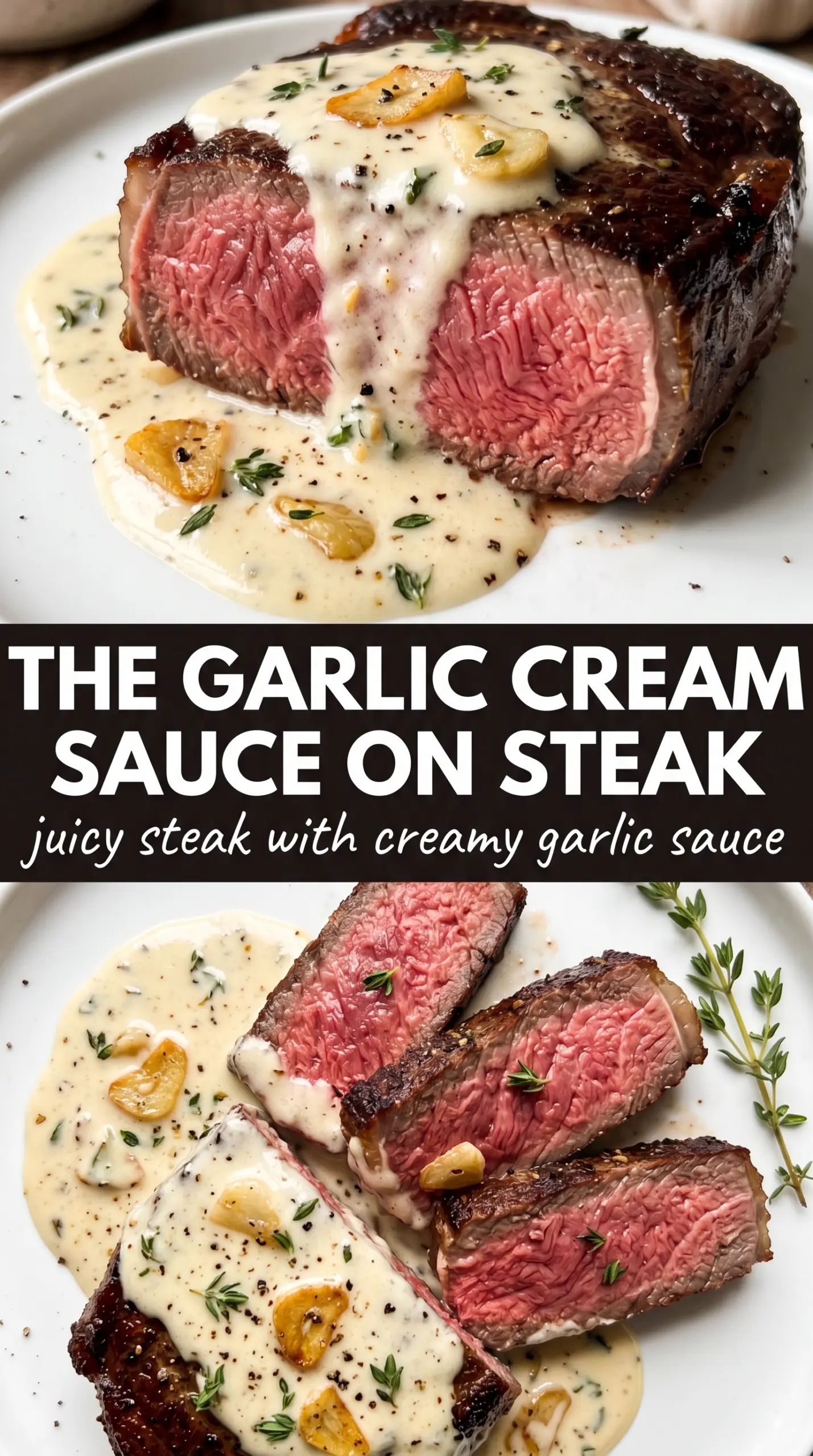
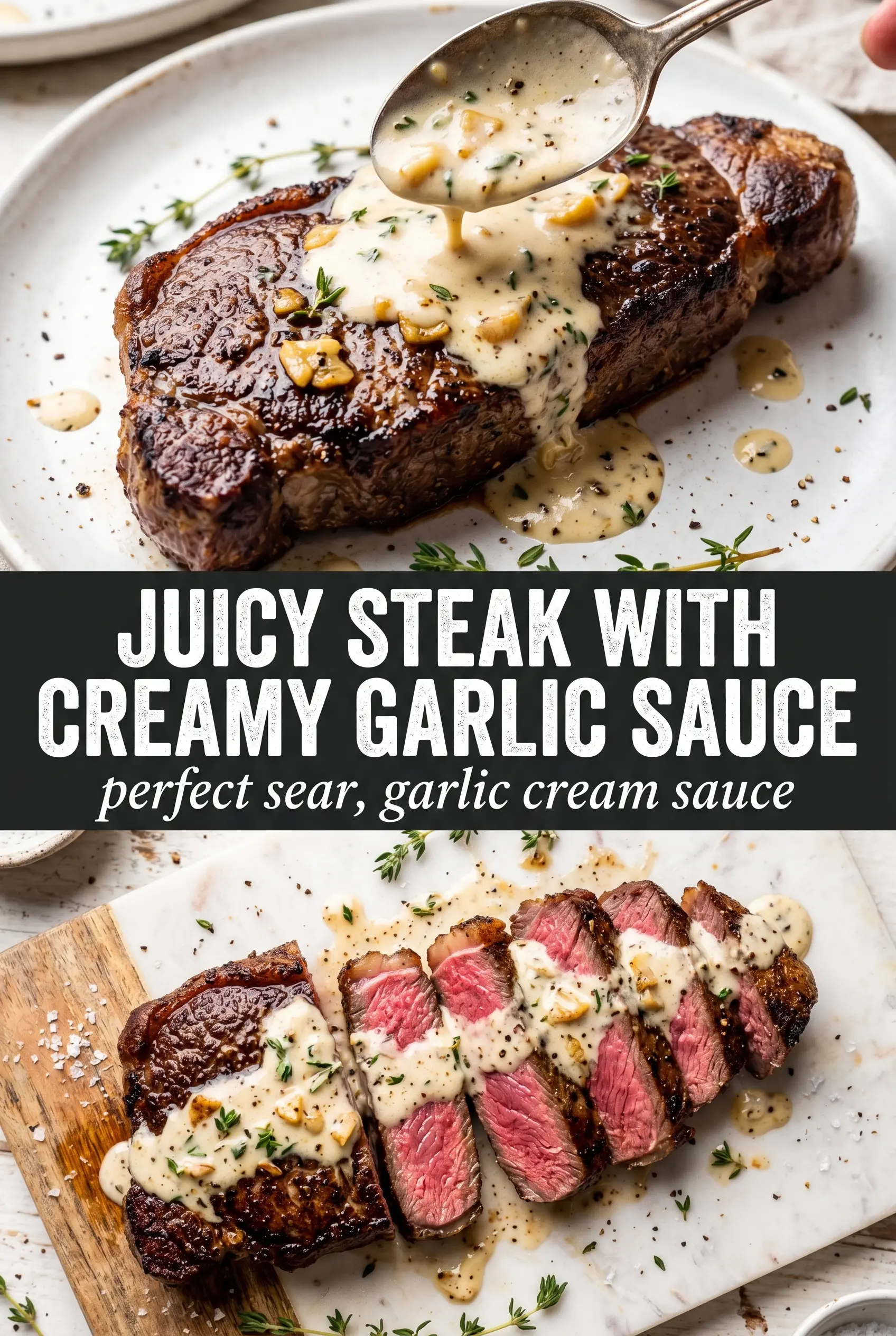
Juicy steak with creamy garlic sauce hits all the marks that matter: a deep brown crust, a rosy center, and a pan sauce that clings to every slice instead of sliding off the plate. The steak gets that restaurant-style sear from a very hot cast iron pan, then the same skillet turns into a creamy garlic sauce with browned bits left right where they belong. Nothing gets wasted, and nothing tastes flat.
The trick is patience in two places. First, the steaks need to sit out long enough for the chill to come off so the crust can form before the inside overcooks. Second, the sauce starts with broth to lift the fond from the pan before the cream goes in, which keeps the flavor concentrated instead of heavy. A quick simmer with parmesan and thyme gives it body without turning it gluey.
Below, I’m walking through the sear, the sauce, and the small details that keep the steak juicy. There’s also a note on substitutions and a few answers for the moments that usually trip people up, like getting the pan hot enough and knowing when the sauce is actually ready.
The crust came out deep and even, and the garlic sauce thickened just enough to coat the steak without feeling heavy. My husband kept dipping the potatoes into the pan after dinner.
Pin this ribeye with creamy garlic sauce for the nights when you want a cast iron steak with a glossy pan sauce and almost no cleanup.
The Sear That Gives You a Crust Without Overcooking the Center
The biggest mistake with steak and cream sauce is treating them like one timed event. They’re two different jobs. The steak needs fierce heat to build a crust fast, while the sauce needs gentler heat so the cream stays smooth and the parmesan melts without turning grainy. If your pan isn’t smoking hot before the steak goes in, you’ll get gray meat and a weak crust instead of that crisp brown edge.
Ribeye gives you a little more forgiveness because the marbling keeps it juicy, but NY strip works just as well when you season it properly and leave it alone in the pan. Don’t move the steaks around while they sear. That’s how you tear the surface before it has a chance to brown. Once they release cleanly, they’re ready to flip.
- Cast iron skillet — This holds heat better than a thin pan, which is why you get a real sear instead of a soft, steamed surface.
- Heavy cream — This gives the sauce body and a smooth finish. Half-and-half won’t reduce as cleanly, so the sauce stays thinner.
- Parmesan — Freshly grated parmesan melts in smoothly and helps thicken the sauce. Pre-shredded cheese can leave the sauce a little gritty.
- Beef broth — It loosens the browned bits from the pan and keeps the sauce anchored in the flavor of the steak instead of tasting like plain cream.
What Each Ingredient Is Actually Doing in This Recipe
- Primary ingredient (the star) — Quality matters most. Choose the best you can find.
- Cooking medium (oil, butter, or broth) — This carries flavors and prevents dryness.
- Seasonings (salt, pepper, spices, herbs) — Layer flavors so nothing overpowers. Build depth gradually.
- Aromatics (garlic, onion, herbs) — Cook with fat to bloom flavors. Become the foundation.
- Supporting ingredients — Complement the main ingredient without overpowering it.
- Sauce or liquid (if applicable) — Brings flavors together. Balance richness with acid.
- Acid (lemon, vinegar, wine, or other) — Brightens and prevents flat-tasting results.
- Final finish (garnish, glaze, or sauce) — Prevents one-dimensional taste and adds visual appeal.
Building the Garlic Sauce in the Same Pan You Seared the Steak In
Start with the same skillet, not a clean one. Those browned bits at the bottom are the backbone of the sauce. The broth goes in first so it can dissolve the fond before the cream comes in, and that order matters. If you pour cream into a pan that’s still scorching hot and full of dry browned bits, the sauce can seize or taste flat instead of round and savory.
Keep the garlic on the stove just long enough to smell fragrant, not long enough to brown deeply. Garlic turns bitter fast in hot butter, and bitter garlic will dominate the whole dish. After the cream goes in, the sauce should bubble gently and coat the back of a spoon after a few minutes. If it’s boiling hard, lower the heat before you add the parmesan.
Seasoning the Steaks for a Better Crust
Season both sides generously with salt and coarse black pepper, then let the steaks sit at room temperature for about 30 minutes. Cold steak spends too long heating through in the pan, which means the outside can overcook before the center catches up. A dry, seasoned surface also browns better than one that’s still wet from the fridge.
Hard Sear, Quick Flip
Heat the cast iron until it’s smoking before the oil goes in, then lay the steaks down and let them sit. You should hear a loud, steady sizzle. For medium-rare, 3 to 4 minutes per side is the target for a 1-inch steak, but the real cue is the crust: deep brown, not pale tan. Add the butter in the last minute and tilt the pan so you can spoon it over the top; that basting gives you flavor without forcing you to overcook the meat.
Rest, Then Slice Against the Grain
Once the steaks come off the heat, rest them for 5 minutes under loose foil. If you cut them too soon, the juices run onto the board instead of staying in the meat. Slice across the grain and spoon the sauce over the top right before serving so the edges stay glossy and the center stays pink.
How to Adapt This for Different Steaks and Different Needs
Swap ribeye for NY strip when you want a leaner bite
NY strip gives you a firmer texture and less richness than ribeye, but it still sears beautifully. Since it has a little less fat, don’t walk away during the last minute of basting — that butter matters more here.
Make it dairy-free without losing the pan sauce idea
Use a dairy-free butter and an unsweetened plant cream that can simmer, then skip the parmesan or replace it with a dairy-free hard cheese alternative. The sauce won’t have the same richness, but it will still pick up the garlic and beefy pan flavor if you keep the heat low.
Lower-carb serving with the same finish
The steak and sauce are already naturally low in carbs, so this one is easy to serve over sautéed spinach, cauliflower mash, or roasted mushrooms. The sauce works especially well with vegetables that can catch a little of the garlic cream in their creases.
Storage and Reheating
- Refrigerator: Store leftovers in an airtight container for up to 3 days. The sauce will thicken in the fridge, and the steak will lose a little of its just-seared texture.
- Freezer: I don’t recommend freezing the finished steak and cream sauce together. Cream sauces can separate after thawing, and the steak tends to dry out.
- Reheating: Warm the steak gently in a covered skillet over low heat, then loosen the sauce with a splash of broth or cream as it heats. High heat is the fastest way to turn a good steak gray and a smooth sauce broken.
Questions I Get Asked About This Recipe
Juicy Steak with Creamy Garlic Sauce
Ingredients
Equipment
Method
- Generously season the ribeye or NY strip steaks with salt and coarse black pepper on all sides, then let them rest at room temperature for 30 minutes.
- Pat the steaks dry with a paper towel right before searing to help the crust form evenly.
- Heat a cast iron skillet over high heat until smoking, then add the vegetable oil and sear the steaks for 3–4 minutes per side for medium-rare.
- In the last minute of searing, add 2 tablespoons of the butter and baste constantly so the steaks develop a deeply golden-brown crust.
- Remove the steaks, tent with foil, and rest for 5 minutes.
- In the same pan over medium heat, melt the remaining butter, add the minced garlic, and cook for 1 minute.
- Add the beef broth and reduce by half, then stir in the heavy cream, parmesan, and fresh thyme.
- Simmer the sauce until it coats the back of a spoon, then season with salt and pepper to taste.
- Slice the steaks and serve immediately with the creamy garlic sauce spooned generously over the top.