Italian pasta salad earns its place on the table because it stays bright, sturdy, and full of texture even after it has had time to chill. The rotini catches the dressing in every twist, the salami brings a salty bite, and the mozzarella stays creamy instead of disappearing into the bowl. It’s the kind of side dish that does its job at a cookout, then gets scooped up again before the main course is even finished.
The trick is building flavor in layers. Dressing the pasta first gives it a chance to absorb seasoning while it’s still warm enough to take on more flavor, and the rest of the ingredients add contrast instead of turning the bowl soft and soggy. Rinsing the pasta matters here because you want it cool and separated, not sticky and clumped together.
Below you’ll find the simple timing that keeps the salad crisp, plus a few smart swaps if you want to make it vegetarian or adjust it for what’s already in your fridge.
The pasta stayed springy after chilling, and the dressing soaked into every twist without making it soggy. I added a little extra Parmesan right before serving and it tasted like something from a great deli.
Love the salty salami, creamy mozzarella, and crunchy peppers in this Italian pasta salad? Save it to Pinterest for the next potluck, picnic, or make-ahead side dish.
The Trick to Keeping Italian Pasta Salad Bright Instead of Heavy
The difference between a pasta salad that tastes lively and one that tastes dull usually comes down to timing. Warm pasta absorbs dressing better than cold pasta, so tossing it with the Italian dressing right after draining gives the salad a head start on flavor. That first coating also keeps the noodles from tasting plain once they chill.
The other thing that matters is cut size. Cubed salami and mozzarella, diced peppers, and halved tomatoes all need to be small enough to eat in one bite, but not so tiny that they disappear. If the pieces are too small, the salad turns muddy fast. If the pasta is overcooked, it softens even more during chilling, so stop cooking it at true al dente.
- Rotini — The twists trap dressing and little bits of seasoning better than smooth pasta. Penne works in a pinch, but it doesn’t hold onto the sauce quite the same way.
- Italian dressing — Bottled dressing keeps this fast and consistent. A thicker, oil-based dressing clings better than a thin vinaigrette, and if yours tastes sharp, a little extra Parmesan at the end smooths it out.
- Mozzarella — Use a firm block of mozzarella and cube it yourself. Fresh mozzarella can leak too much moisture and make the bowl watery after a few hours.
- Red onion — A small dice goes a long way. If raw onion is too strong for your crowd, soak it in cold water for 10 minutes and drain well before adding it.
What Each Ingredient Is Actually Doing in Bright Italian Salad
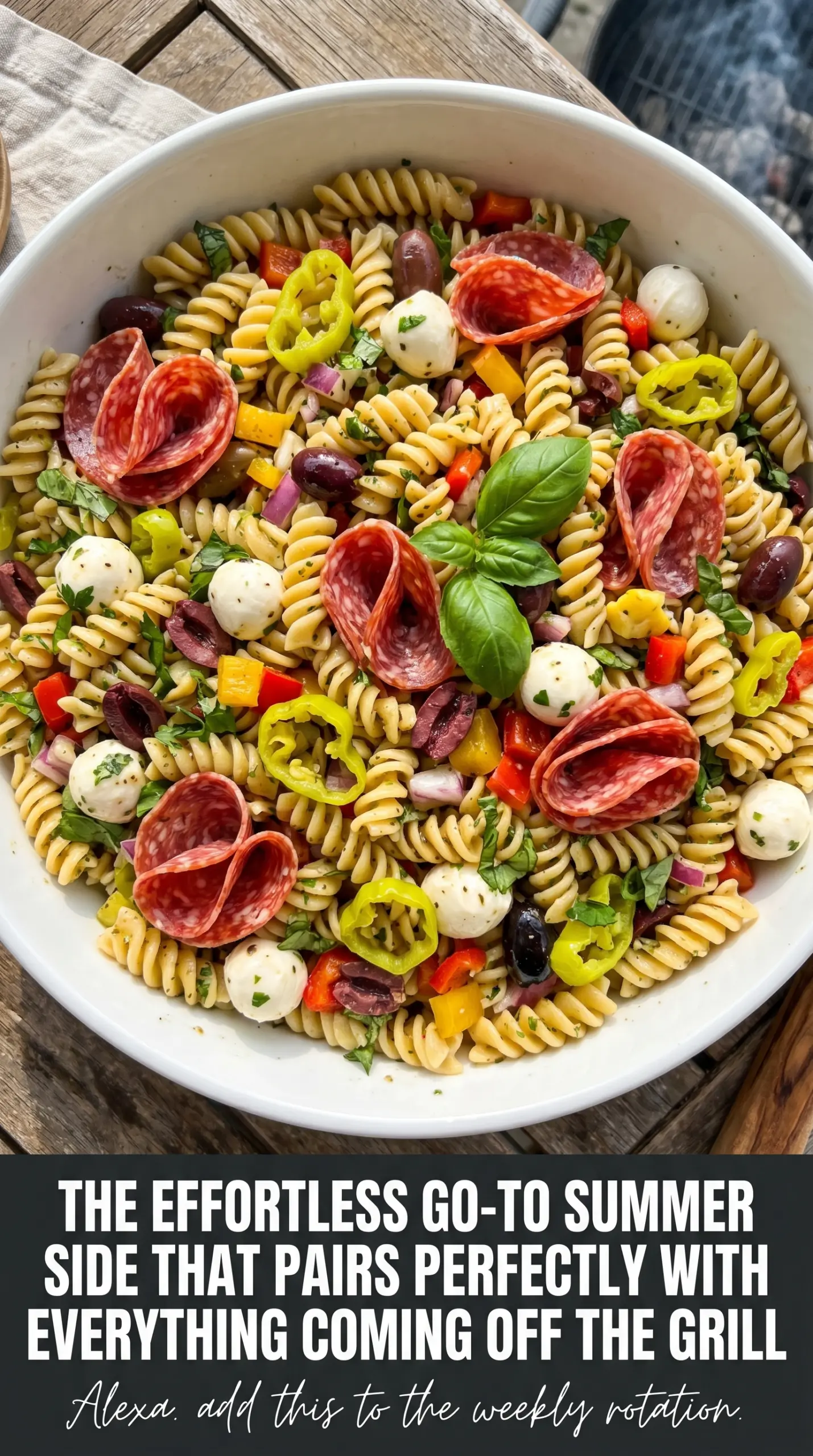
- Good quality olive oil (the base of the dressing) — Quality oil is essential to Italian salads. It carries the Mediterranean flavors and keeps the salad light.
- Vinegar or lemon juice (the acid component) — The acid balances the oil and brightens all the flavors. It also preserves the fresh vegetables and keeps them from browning.
- Fresh Italian herbs (basil, parsley, oregano) — Herbs add authenticity and brightness. Fresh basil especially should be added at the last moment.
- Garlic and red onion (raw, minced small) — Raw aromatics add sharpness and complexity. They become mellow as they sit in the acid.
- Fresh vegetables with bright flavors (tomato, bell pepper, cucumber) — These should be fresh and crisp. They add color and prevent the salad from tasting heavy.
- No mayo or minimal creamy components — Heavy dressing makes the salad feel heavy. Keep it light and oil-based for authenticity.
- Optional: fresh mozzarella or feta (not pre-shredded) — Fresh cheese stays distinct and doesn’t melt. It adds richness without heaviness.
- Toss right before serving — Don’t let it sit with dressing. The final toss right before eating keeps everything bright and fresh.
Building the Bowl So Every Bite Tastes Balanced
Cooking the Pasta to Stay Springy
Boil the rotini until it is just al dente, then drain it and rinse it under cold water until the steam is gone. You want the pasta cool, separate, and still a little firm in the center because it will soften more as it chills in dressing. If it’s cooked too long at this stage, it turns soft and the salad loses its structure by the next day.
Coating the Pasta First
Transfer the cooled pasta to a large bowl and toss it with the Italian dressing before anything else goes in. This lets the noodles absorb seasoning instead of leaving all the flavor to sit on the vegetables and cheese. The pasta should look lightly glossy, not swimming in dressing, so start with the full bottle and add a little more only after the salad has chilled if it looks dry.
Adding the Mix-Ins in the Right Order
Stir in the salami, mozzarella, tomatoes, olives, peppers, and red onion once the pasta is evenly coated. The goal is even distribution without crushing the tomatoes or smearing the cheese. Fold gently from the bottom of the bowl so the heavier ingredients don’t sink and the seasoning stays balanced throughout.
Chilling and Finishing
Refrigerate the salad for at least 2 hours, stirring once or twice as it chills so the dressing reaches every piece. Right before serving, taste it again and add more dressing if the pasta has soaked up the first round. That last check matters because cold pasta always dulls the seasoning a little, and this salad should taste bright all the way through.
Three Smart Ways to Adapt Italian Pasta Salad Without Losing What Makes It Good
Make It Vegetarian Without Making It Bland
Leave out the salami and add extra olives, roasted red peppers, or marinated artichokes for more punch. The salad still works because the dressing and Parmesan carry plenty of seasoning, but you’ll want one bold, briny ingredient to replace the salty depth the salami brings.
Use a Gluten-Free Pasta That Holds Up
Swap in a sturdy gluten-free rotini and cook it just until done, then rinse it immediately. Gluten-free pasta can go from firm to fragile fast, so undercooking by even a minute or two is the safest move. Toss it with dressing while it’s still a little warm to help it stay from falling apart later.
Turn It Into More of an Antipasto Salad
Add chopped pepperoni, pepperoncini, or cubes of provolone for a stronger deli-style finish. This version leans saltier and bolder, which works well if you’re serving it alongside grilled meats. If you go this route, hold back a little dressing at first so the extra briny ingredients don’t make the whole bowl taste heavy.
Storage and Reheating
- Refrigerator: Keeps well for 3 to 4 days in a covered container. The pasta absorbs dressing as it sits, so expect it to look a little drier on day two.
- Freezer: Don’t freeze this salad. The pasta turns mushy and the vegetables lose their crisp texture once thawed.
- Reheating: This is best served cold or at cool room temperature. If it has been in the fridge, stir in a splash of dressing 15 to 20 minutes before serving rather than trying to warm it up.
Questions I Get Asked About This Recipe
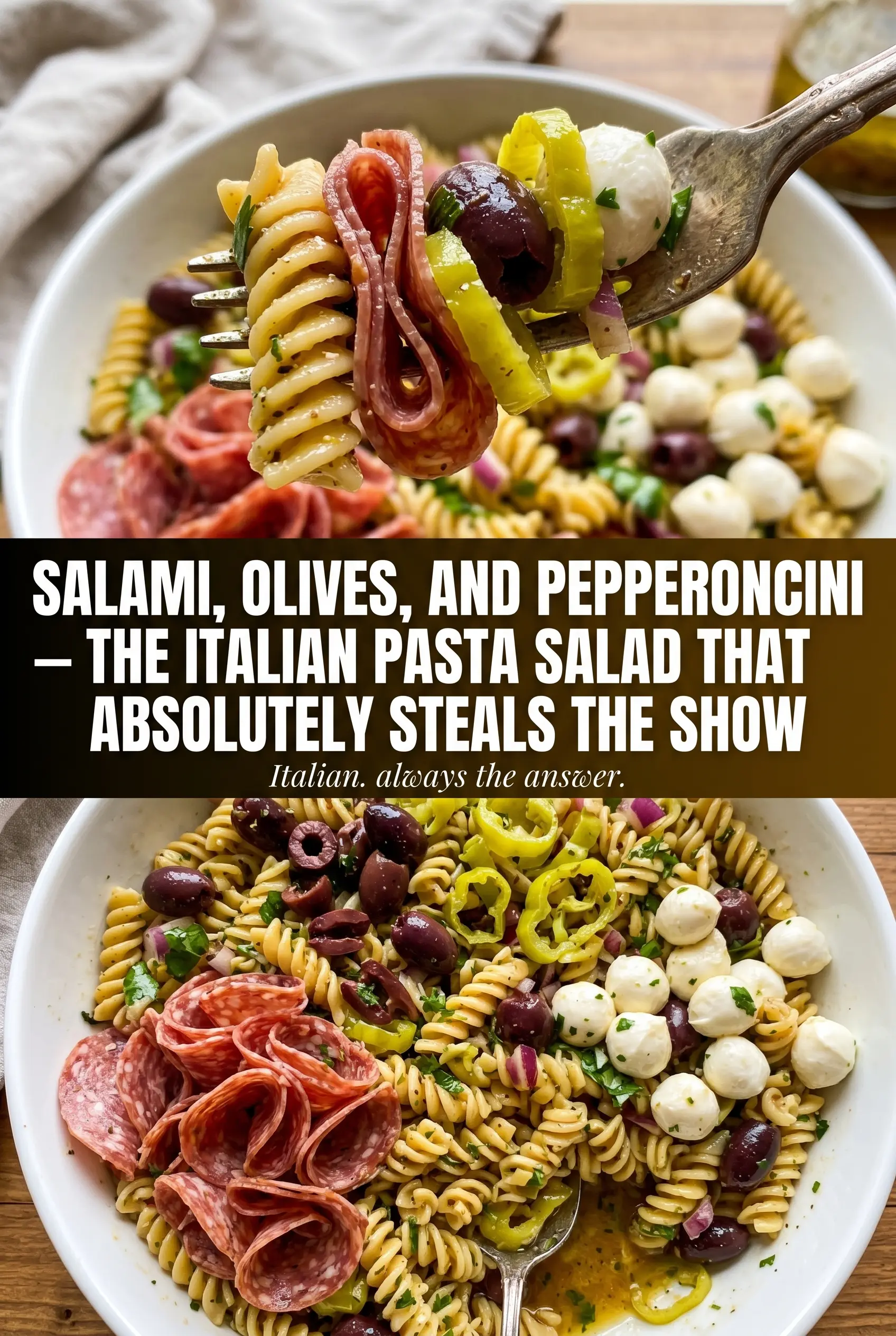
Italian Pasta Salad
Ingredients
Equipment
Method
- Cook rotini pasta according to package directions, until tender. Drain and rinse under cold water to cool quickly and stop further cooking.
- In a large bowl, combine the pasta with Italian dressing and toss to coat evenly. Make sure every piece looks glossy with dressing.
- Add salami, mozzarella cheese, cherry tomatoes, black olives, green bell pepper, red bell pepper, and red onion. Fold gently so the vegetables stay bright and intact.
- Sprinkle Parmesan cheese and Italian seasoning over the top. Toss again until the cheese and herbs are distributed throughout.
- Refrigerate the pasta salad for at least 2 hours, tossing occasionally to keep everything coated. Cover for best results and let the flavors meld cold.
- Before serving, check the texture and add more Italian dressing if needed. Toss just until combined so the salad isn’t dry.