These iced pumpkin cookies bake up soft, pillowy, and cakey with the kind of tender crumb that stays moist for days. The maple cream cheese icing settles over the tops in a thick, smooth layer, and the cinnamon on top gives each cookie a warm finish that makes the whole tray disappear fast.
What makes this version work is the balance of moisture and structure. Pumpkin brings softness, but it also adds water, so the flour and leaveners have to do enough work to keep the cookies from turning greasy or flat. The batter is thick enough to scoop cleanly, and the cookies bake just until set so they stay light instead of drying out in the oven.
Below, I’ve included the detail that matters most for these cookies: how to keep the icing fluffy instead of runny, and why cooling the cookies completely is non-negotiable if you want that thick bakery-style finish.
The cookies stayed soft for days and the icing set up thick without sliding off, even after I stacked them in a container. The maple flavor in the frosting was the part everyone kept talking about.
Save these iced pumpkin cookies for when you want a soft, cakey cookie with thick maple cream cheese icing and a little cinnamon on top.
The Secret to Keeping Pumpkin Cookies Thick Instead of Puffy and Dry
Pumpkin cookies can go wrong in two directions: too much flour and they bake up dry, too little and they spread into sad little domes that never set properly. The texture you want is a soft, cake-like cookie that holds its shape without feeling dense. That happens when the butter and sugar are beaten until light, the pumpkin is mixed in gently, and the dry ingredients are folded just until the flour disappears.
The other important piece is bake time. These should come out when the tops look set and the edges have just firmed up, even if the centers still feel a little tender. They finish on the pan as they cool, and if you wait until they look fully baked in the oven, you’ll lose that plush texture that makes iced pumpkin cookies worth making.
What the Pumpkin, Maple, and Cream Cheese Each Bring to the Tray

- Pumpkin puree — Use plain canned pumpkin, not pumpkin pie filling. Pie filling has sugar and spices already mixed in, which throws off both the flavor and the texture. If your puree looks especially wet, give it a quick stir before measuring so you’re not adding extra liquid by accident.
- Cream cheese — This is what gives the icing its tang and body. Softened cream cheese blends smoothly; cold cream cheese leaves little lumps that won’t fully disappear. Full-fat works best here because low-fat versions can turn loose and watery once the maple syrup goes in.
- Maple syrup — It brings a round sweetness that plain frosting can’t match. Use real maple syrup if you can, because pancake syrup tastes flat and overly sweet. The amount is small, but it changes the whole icing from basic to memorable.
- Butter — Butter in the cookies helps them spread just enough and keeps the crumb tender. In the icing, it softens the cream cheese edge and helps the frosting hold a smoother finish. Let it come to room temperature before beating so you don’t end up with little butter flecks.
- Milk — Add it only if the icing feels too thick to spread. A teaspoon or two is enough most of the time. Too much milk will make the icing slide off the cookies instead of sitting in a thick layer.
How to Mix, Scoop, and Ice These Cookies Without Losing the Texture
Building the Pumpkin Batter
Beat the butter and sugar until the mixture looks fluffy and a little lighter in color. That step helps the cookies bake up tender instead of heavy. Add the pumpkin, egg, and vanilla next, then stop mixing as soon as everything looks combined. Once the dry ingredients go in, fold gently; overmixing here tightens the batter and can make the cookies more bready than cakey.
Portioning for Even Baking
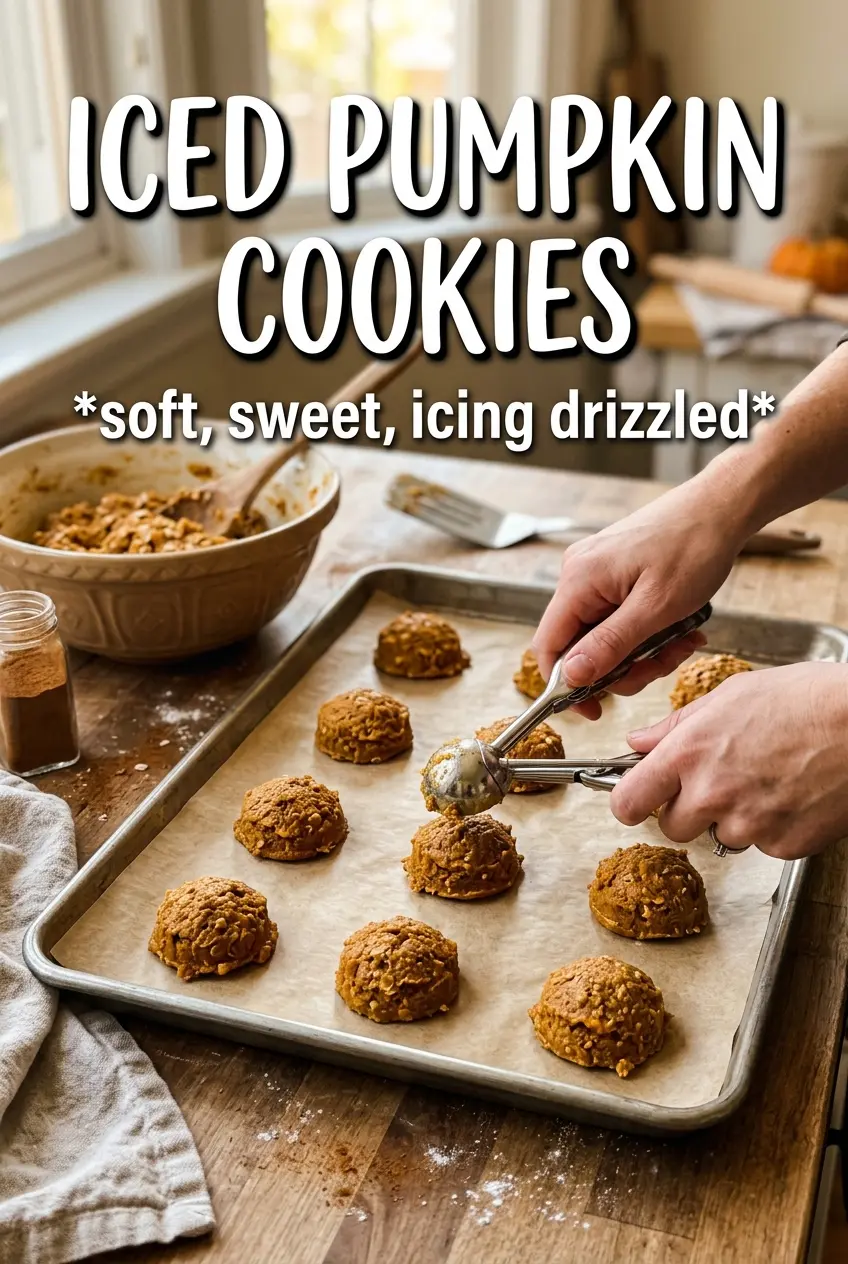
Drop the dough in 2-tablespoon rounds onto lined baking sheets, keeping a little space between each one so the heat can circulate evenly. These cookies don’t need to be rolled perfectly smooth; a rough scoop is fine because they bake into soft mounds. If the dough seems sticky, chill it for 10 to 15 minutes, but don’t add extra flour unless it’s truly unworkable. Extra flour is the fastest way to dry them out.
Knowing When They’re Done
Bake just until the tops are set and the centers no longer look wet, usually 10 to 12 minutes. The cookies should still feel soft if you touch the top lightly, and that’s exactly what you want. Pulling them at that stage keeps the crumb moist and pillowy. If the bottoms are turning deeply brown, the oven is running hot and the cookies are already past their best texture.
Spreading the Icing at the Right Time
Let the cookies cool completely before you frost them. If they’re even a little warm, the icing will loosen and soak in instead of sitting high on top. Beat the cream cheese, butter, powdered sugar, maple syrup, vanilla, cinnamon, and just enough milk to make a spreadable frosting. You want it thick enough to mound slightly on the cookie and smooth enough to sweep across the surface with a butter knife or small offset spatula.
Gluten-Free Version
Use a good 1:1 gluten-free baking flour that includes xanthan gum. The cookies will still be soft and cakey, but they may spread a touch less than the original. Don’t swap in almond flour alone; it won’t give you the same structure or that familiar cookie texture.
Dairy-Free Icing
Use dairy-free cream cheese and a plant-based butter that firms up when chilled. The flavor stays close, but the frosting may be a little softer, so keep the milk to a minimum. Beat it well and chill it for a few minutes if it seems loose before spreading.
Extra Maple, Less Cinnamon
If you want the icing to lean more maple-forward, add another teaspoon of maple syrup and cut back the cinnamon a little. The frosting will taste softer and sweeter, but it can loosen quickly, so add the extra syrup only if the icing is already thick. This version works especially well when you want the pumpkin cookie to stay mellow and the topping to do the talking.
Storage and Reheating
- Refrigerator: Store in an airtight container for up to 5 days. The cookies stay soft, but the icing firms up in the fridge.
- Freezer: Freeze the unfrosted cookies for up to 2 months. Thaw at room temperature, then frost after they’re fully defrosted for the best texture.
- Reheating: These don’t need reheating, but if you want the cookies slightly softer, let them sit at room temperature for 15 to 20 minutes. Don’t microwave frosted cookies; the icing will melt and slide.
Questions I Get Asked About This Recipe
Iced Pumpkin Cookies
Ingredients
Equipment
Method
- Preheat the oven to 350°F and line baking sheets with parchment or silicone mats (keep the oven at temperature before baking).
- Beat the butter and sugar until smooth, then mix in the pumpkin, egg, and vanilla until the batter looks cohesive.
- Fold in the dry ingredients (flour, baking soda, baking powder, pumpkin pie spice, cinnamon, and salt) until no dry streaks remain.
- Drop 2-tablespoon rounds onto the lined baking sheets, spacing them apart.
- Bake for 10-12 minutes, until the cookies are set around the edges but still look soft in the centers (use a visual cue of slightly puffed tops).
- Cool the cookies completely on the baking sheets or a rack before icing so the frosting won’t melt.
- Beat the cream cheese and softened unsalted butter until smooth and lump-free.
- Beat in powdered sugar, maple syrup, vanilla, and cinnamon until thick and spreadable.
- Add milk 1 tablespoon at a time until the icing flows in a thick layer, then add orange food coloring if using for a deeper orange tint.
- Spread a generous layer of icing over each cooled cookie, using a smooth top as the visual cue.
- Decorate with cinnamon and sprinkles while the icing is fresh so they adhere.