Caramelized pumpkin wedges, jammy red onion, and a slick of hot honey make this the kind of side dish people keep reaching for before the main course even hits the table. The pumpkin turns soft at the center with bronzed edges, the onions collapse into sweet, savory ribbons, and the feta wakes everything up with sharp saltiness. Toasted walnuts finish it with just enough crunch to keep each bite interesting.
What makes this version work is the balance. The pumpkin and onion roast together at high heat, which gives you real browning instead of soft, steamed vegetables, and the honey goes in two stages so it clings without burning. Smoked paprika adds a warm, almost ember-like note, while cumin keeps the dish from tasting flat or one-dimensional. You get sweetness, heat, salt, and texture in one pan.
Below, I’ll walk through the small details that keep the pumpkin tender instead of watery, plus a few smart swaps if you need to work with what’s in the kitchen.
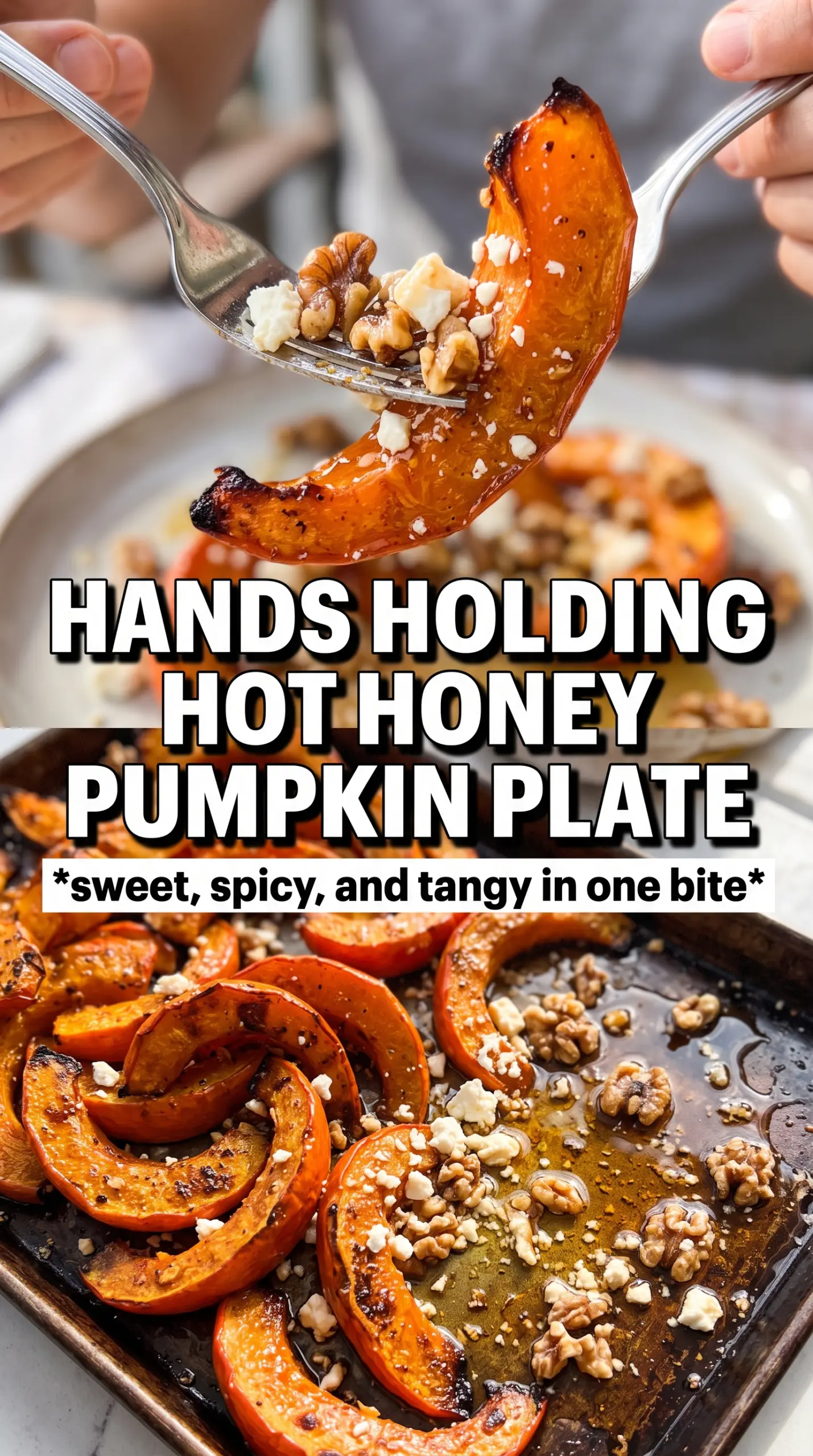
The pumpkin got those caramelized edges I was hoping for, and the hot honey plus feta was such a good combination. I toasted the walnuts at the end and they stayed crunchy all the way through dinner.
Like the sweet heat and salty crunch in this hot honey pumpkin? Save it for the nights when you want a side dish that eats like the best thing on the table.
The Difference Between Caramelized Squash and Soft, Sweaty Squash
The biggest mistake with roasted pumpkin or squash is crowding the pan. When wedges sit too close together, they steam before they brown, and you end up with pale, soft pieces instead of crisp-edged ones. A hot oven and plenty of space on the baking sheet give the sugars room to caramelize, which is where the flavor comes from.
Halving the honey matters too. Honey is what gives the vegetables that lacquered finish, but if all of it goes on at the beginning, the sugars can darken too quickly before the pumpkin has time to turn tender. Holding some back for the end gives you shine and a fresh burst of heat right before serving.
- Pumpkin or butternut squash — Both work, but butternut is the easier, more predictable choice because it cuts into even wedges and roasts at a steady pace. If using pumpkin, choose one with dense flesh rather than a watery pie pumpkin.
- Red onion — This is more than a background note. The onion softens into sweet ribbons and picks up the paprika and honey in a way yellow onion won’t quite match.
- Hot honey — Store-bought is fine here, but if you’re using regular honey plus chili flakes, add the flakes with the oil so they bloom a little in the heat. That gives you a rounder spice than sprinkling them on at the end.
- Feta and walnuts — Use real feta, not the pre-crumbled dry kind if you can help it. The softer blocks crumble more cleanly and taste brinier; the walnuts should be toasted until fragrant so they stay crunchy against the soft squash.
What Each Ingredient Is Actually Doing in This Recipe
- Primary ingredient (the star) — Quality matters most. Choose the best you can find.
- Cooking medium (oil, butter, or broth) — This carries flavors and prevents dryness.
- Seasonings (salt, pepper, spices, herbs) — Layer flavors so nothing overpowers. Build depth gradually.
- Aromatics (garlic, onion, herbs) — Cook with fat to bloom flavors. Become the foundation.
- Supporting ingredients — Complement the main ingredient without overpowering it.
- Sauce or liquid (if applicable) — Brings flavors together. Balance richness with acid.
- Acid (lemon, vinegar, wine, or other) — Brightens and prevents flat-tasting results.
- Final finish (garnish, glaze, or sauce) — Prevents one-dimensional taste and adds visual appeal.
The Roast, the Drizzle, and the Final Contrast
Coating the Pan Before It Hits the Oven
Toss the pumpkin and onion thoroughly so every surface is lightly coated, then spread everything in a single layer on the baking sheet. The oil carries the spices, and the honey helps the vegetables brown, but the pan still needs room or the edges will soften instead of char. Look for bare spots between pieces; that open space is what gives you caramelization.
Roasting Until the Edges Catch
Roast at 425F until the pumpkin is tender enough to pierce with a fork and the cut sides show deep golden color. Flip once halfway through so both sides get contact with the hot pan, but don’t fuss with them too often or you’ll lose the crust as it forms. If the onion starts to darken faster than the pumpkin, it’s fine; those browned edges add sweetness.
Finishing So the Toppings Stay Distinct
Add the feta, walnuts, and remaining hot honey after the vegetables come out of the oven. That keeps the cheese from melting into the pan and the nuts from turning soft. Fresh herbs go on last so they stay bright, and the final drizzle of honey should look glossy, not pooled.
Make It Dairy-Free Without Losing the Salt
Skip the feta and finish with a little extra salt plus a handful of chopped olives or toasted pumpkin seeds. You lose the creamy tang, but you keep the salty contrast that makes the sweet squash taste complete.
Turn Up the Heat
Use a little extra chili flake in the honey, or add a pinch of cayenne to the spice mix. That pushes the dish toward a sharper sweet-heat profile, but keep it balanced so the squash still tastes roasted, not just spicy.
Make It Nut-Free
Leave out the walnuts and use toasted sunflower seeds or pepitas instead. You still get crunch, and the seeds catch the honey nicely without the risk of clashing with the feta.
Swap the Squash Based on What’s in the Pantry
Delicata works well and doesn’t even need peeling, while kabocha gives a deeper, sweeter finish. Just cut the pieces into similar sizes so they roast evenly; dense squash needs more time, while thinner slices can overcook fast.
Storage and Reheating
- Refrigerator: Store leftovers in an airtight container for up to 3 days. The squash will soften a little, but the flavor stays good.
- Freezer: Freezing isn’t ideal here. The squash and onion lose their texture after thawing, and the feta turns crumbly in a dull way.
- Reheating: Warm it on a sheet pan in a 400F oven until hot. The oven brings back some of the edge that the microwave wipes out, and it keeps the walnuts from going limp.
Questions I Get Asked About This Recipe
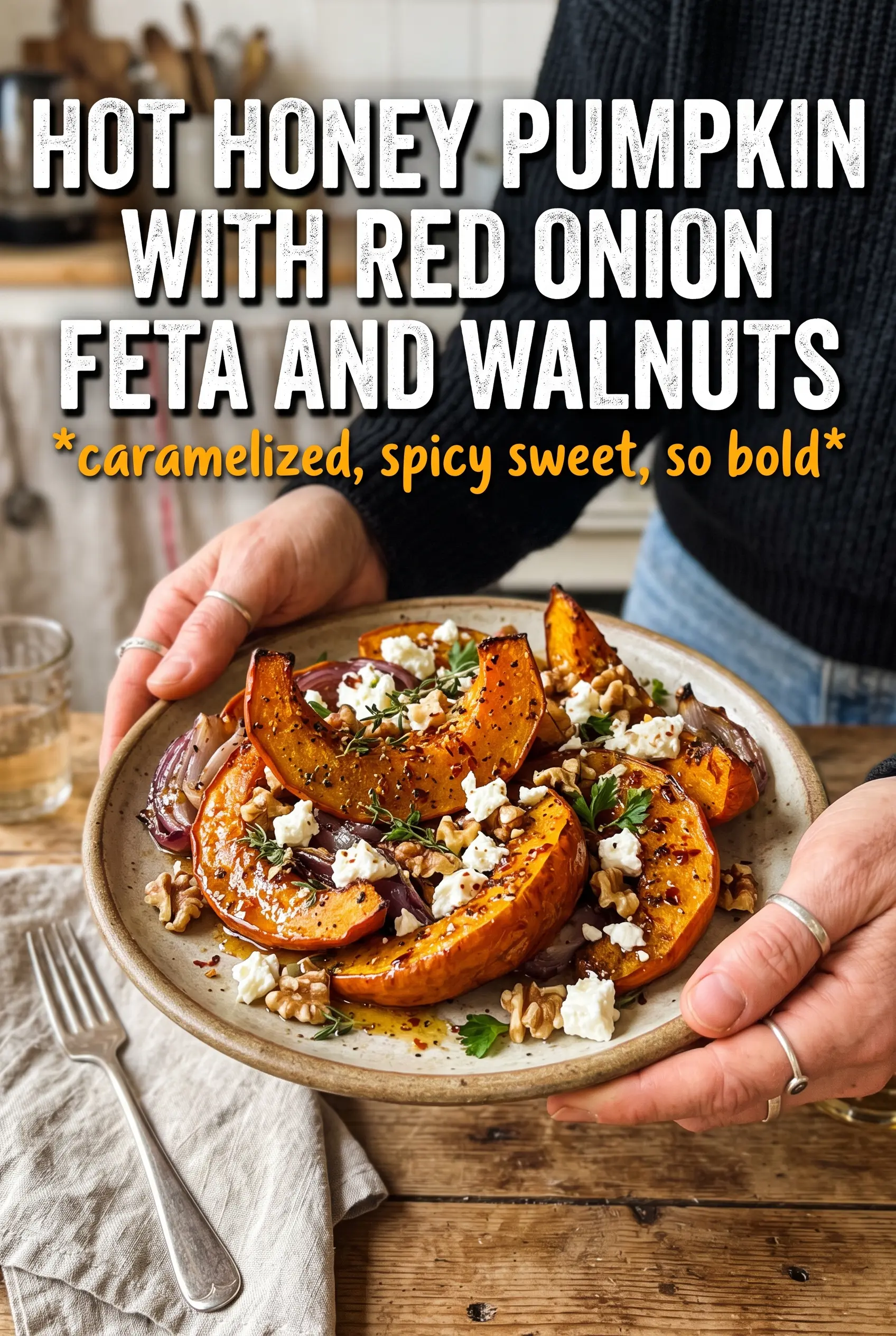
Hot Honey Pumpkin With Red Onion Feta And Walnuts
Ingredients
Equipment
Method
- Preheat oven to 425F and line a large baking sheet with parchment if desired, so the wedges roast without sticking.
- Toss pumpkin and red onion wedges with olive oil, half the hot honey, smoked paprika, cumin, salt, and pepper until evenly coated.
- Spread in a single layer and roast 30-35 minutes, flipping halfway, until caramelized and tender (watch the edges for deep browning).
- Arrange roasted pumpkin and red onion on a platter and scatter feta and toasted walnuts over the top.
- Drizzle the remaining hot honey over everything so it glistens.
- Finish with fresh herbs for a bright, fresh aroma before serving.