Honey butter roasted carrots come out glossy, tender in the middle, and caramelized at the edges, with just enough sweetness to make them feel special without turning them into dessert. The butter and honey cling to each carrot as they roast, so every bite gets that sweet-savory coating instead of a glaze that slides off the pan.
What makes this version work is the two-stage glazing. Half the honey butter goes on before roasting, which helps the carrots brown and soften, and the rest gets brushed on at the end for a fresh, shiny finish. A little garlic keeps the glaze from tasting flat, and thyme plus flaky salt give the whole dish a clean, savory edge.
Below, I’ve included the small details that matter most, from how to keep the carrots from steaming on the pan to the easiest way to adapt this for different diets or different carrots.
The carrots roasted up with those caramelized edges and the honey butter never burned. The second brush of glaze at the end made them taste fresh and shiny, and even the picky eaters went back for more.
Save these honey butter roasted carrots for the side dish that turns simple carrots into glossy, caramelized gold.
The Trick to Caramelized Carrots Instead of Soft, Watery Ones
Roasted carrots can go wrong in one of two ways: they steam, or they dry out before the centers turn tender. The fix is space and heat. A hot oven and a single layer on the pan give the carrots enough direct contact to brown, while the honey butter helps the surface caramelize instead of just glossing over the vegetables.
The other thing that matters is the glaze timing. If every bit of honey butter goes on at the beginning, the sugars can darken before the carrots are fully tender. Splitting the glaze keeps the carrots from burning at the edges and gives you a fresher, more balanced finish once they come out of the oven.
What the Honey Butter, Olive Oil, and Thyme Are Each Doing
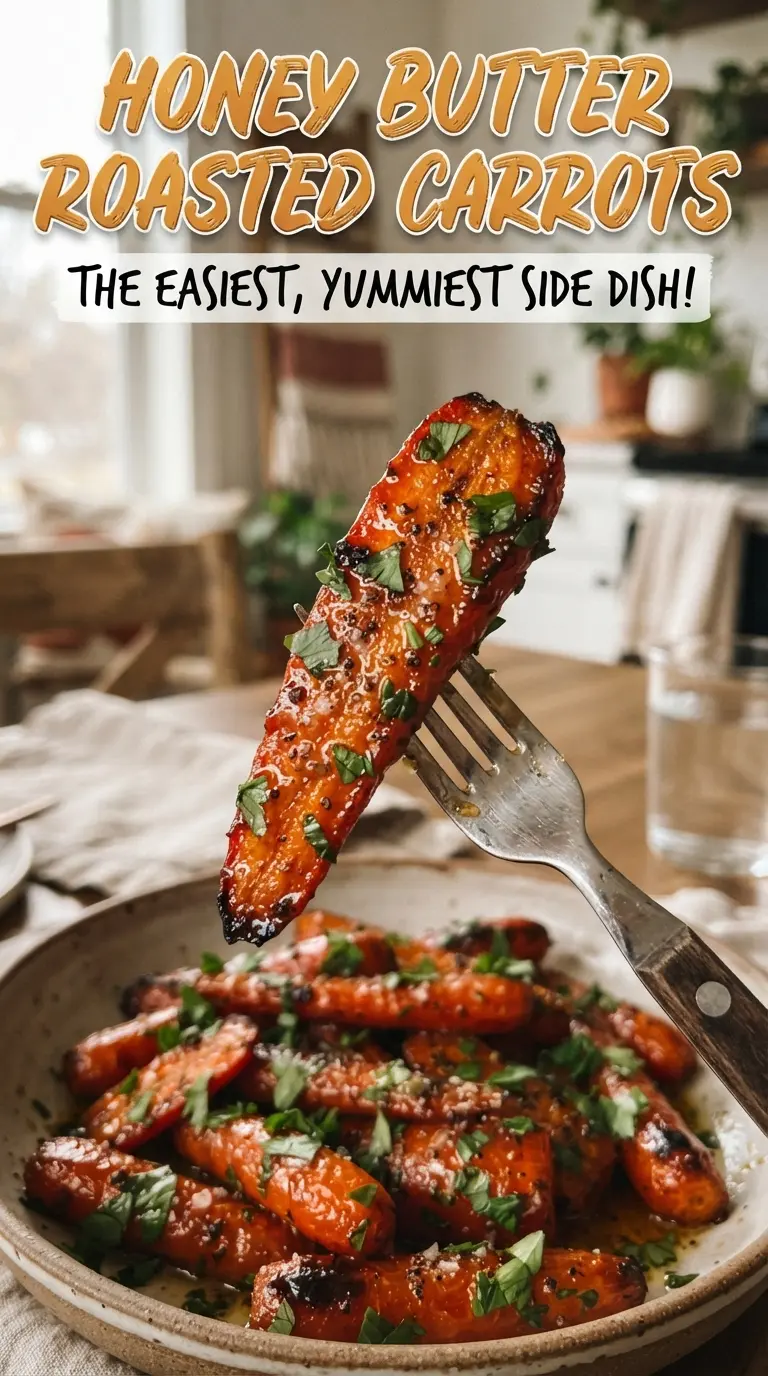
- Carrots — Rainbow carrots look beautiful, but regular orange carrots work just as well. Slice any thick ones lengthwise so everything roasts at the same pace; otherwise the thin ends turn mushy before the thicker pieces are done.
- Butter — This gives the glaze body and that rich, rounded finish honey alone can’t provide. Melted butter mixes smoothly with the honey and garlic, and if you need a dairy-free version, vegan butter works better here than plain oil because it keeps more of that coated, silky texture.
- Honey — Use a honey you like the taste of, because it’s not just sweetness here, it’s a real part of the final flavor. If your honey is thick or crystallized, warm it just enough to stir easily so it blends evenly with the butter.
- Olive oil — A little oil keeps the butter from feeling heavy and helps the carrots roast with a better sheen. Don’t skip it unless you have to; the combination of fat sources gives the glaze a smoother, more even coat.
- Fresh thyme — Add it at the end so it stays fragrant instead of tasting dusty or bitter. Dried thyme can work in a pinch, but use less and expect a flatter finish.
How to Roast the Carrots So the Glaze Stays Glossy
Mixing the Glaze
Whisk the melted butter, honey, olive oil, garlic, salt, and pepper until the mixture looks smooth and glossy. If the butter starts to firm up when it hits the cooler ingredients, warm it just enough to loosen again. The glaze should cling to the carrots, not puddle in the bowl.
Coating and Spreading
Toss the carrots with half the glaze until every surface looks lightly coated, then spread them out in a single layer on the parchment-lined pan. Crowding the pan traps steam, and steam is the enemy of browning. If the carrots overlap, they’ll soften, but they won’t caramelize.
Roasting Until Tender
Roast at 400°F until the carrots are tender enough to pierce with a fork and the edges have darkened into sticky, browned spots, about 25 to 30 minutes depending on thickness. If the carrots are small and slender, start checking early. You want them tender with a little structure left, not limp.
Finishing With the Second Glaze
Brush on the remaining honey butter as soon as the carrots come out of the oven, then finish with thyme and flaky salt. That last layer makes the carrots taste brighter and keeps the glaze looking shiny on the platter. If the salt goes on too early, some of it melts away in the oven, so save the flaky salt for the end.
How to Adapt These Carrots for Different Tables
Dairy-Free Version
Swap the butter for a good vegan butter and keep the rest the same. You’ll still get a glossy glaze and caramelized edges, but the finish will taste a little lighter and less rich than the original.
Maple Instead of Honey
Use pure maple syrup in the same amount if that’s what you have. The carrots will still caramelize, but the glaze will taste a little deeper and more woodsy, with less floral sweetness.
Using Baby Carrots
Baby carrots work, but they roast more evenly and brown a little less dramatically than whole carrots. Cut them less if at all, and start checking a few minutes early so they don’t go from tender to soft.
Make-Ahead Storage
Refrigerator: Store leftovers in an airtight container for up to 4 days. Freezer: I don’t recommend freezing these; the carrots lose their roasted texture and turn soft after thawing. Reheating: Warm in a 350°F oven until heated through, then brush with a little extra honey butter or a tiny drizzle of honey before serving so the glaze tastes fresh again. The microwave works in a pinch, but it softens the carrots and dulls the caramelized edges.
Answers to the Questions Worth Asking
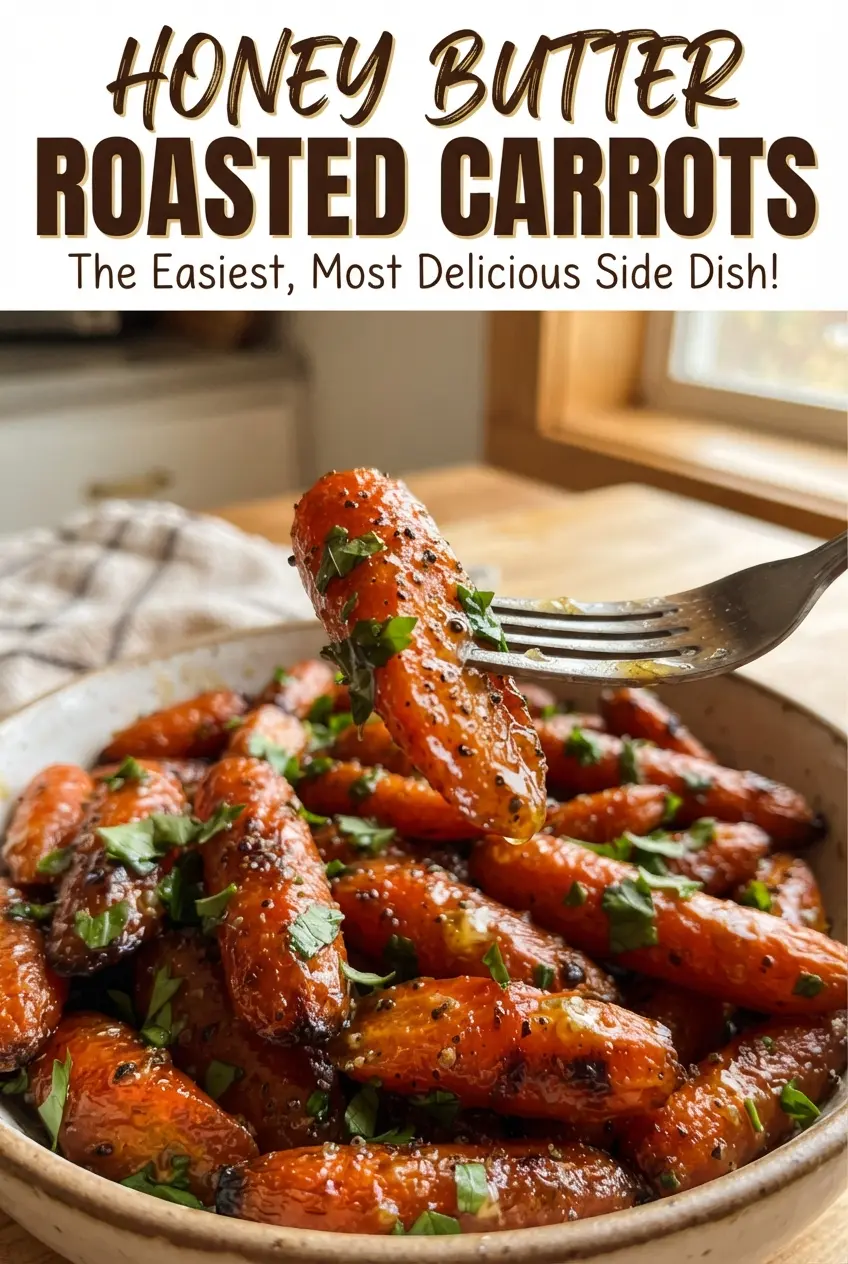
Honey Butter Roasted Carrots
Ingredients
Equipment
Method
- Preheat oven to 400F. Line a sheet pan with parchment for easy cleanup.
- Whisk melted butter, honey, olive oil, garlic, salt, and black pepper until glossy and smooth.
- Toss peeled carrots in half the honey butter to coat all sides.
- Spread carrots in a single layer on the lined sheet pan so they roast and caramelize instead of steam.
- Roast for 25-30 minutes at 400F, until tender and caramelized at the edges, with a visible golden glaze.
- Brush the carrots with the remaining honey butter as soon as they come out of the oven so it melts into the hot surface.
- Finish with thyme and flaky sea salt for bright, savory contrast.