Sticky, charred Grilled Huli Huli Chicken lands on the plate with that sweet-savory glaze that clings to the skin and caramelizes at the edges. The best bites are smoky from the grill, glossy from the marinade, and just a little tangy from pineapple and soy, which is exactly why this dish earns a permanent spot in the rotation.
What makes this version work is the balance in the marinade and the way it’s handled on the grill. Brown sugar and ketchup help the surface brown fast, while pineapple juice and ginger keep the flavor bright instead of heavy. Reserving part of the marinade for basting gives you that sticky finish without brushing raw marinade back onto cooked chicken. Frequent turning matters here too; Huli means flip, and that steady movement keeps the glaze from scorching before the chicken cooks through.
Below you’ll find the one grilling habit that keeps the glaze intact, plus a few swaps and storage notes that make this recipe easier to fit into a real weeknight or weekend cookout.
The marinade caramelized beautifully and didn’t burn, even with all that brown sugar. I flipped it often like you said, and the thighs came off the grill juicy with those sticky edges everyone fought over.
Save this Grilled Huli Huli Chicken for the smoky, sticky glaze that turns every flip into caramelized island BBQ.
The Marinade Needs Time, but the Grill Needs Attention
The biggest mistake with Huli Huli chicken is treating it like a set-it-and-forget-it barbecue recipe. The marinade brings sugar, acid, salt, and aromatics together, but the grill is where the character shows up. If the heat runs too high, the sugar goes from glossy to bitter before the thighs have a chance to cook through. Medium heat and frequent turning keep the glaze moving, so it caramelizes in layers instead of burning on contact.
Chicken thighs are the safest cut here because they stay juicy through repeated flipping and basting. Legs work too, though they usually need a few extra minutes and a little more patience near the bone. The reserved marinade is what gives you that lacquered finish, but it needs to stay separate from the raw chicken marinade. That’s the difference between a sticky, polished glaze and a sauce you never want to touch again.
What Each Ingredient Is Actually Doing in This Dish
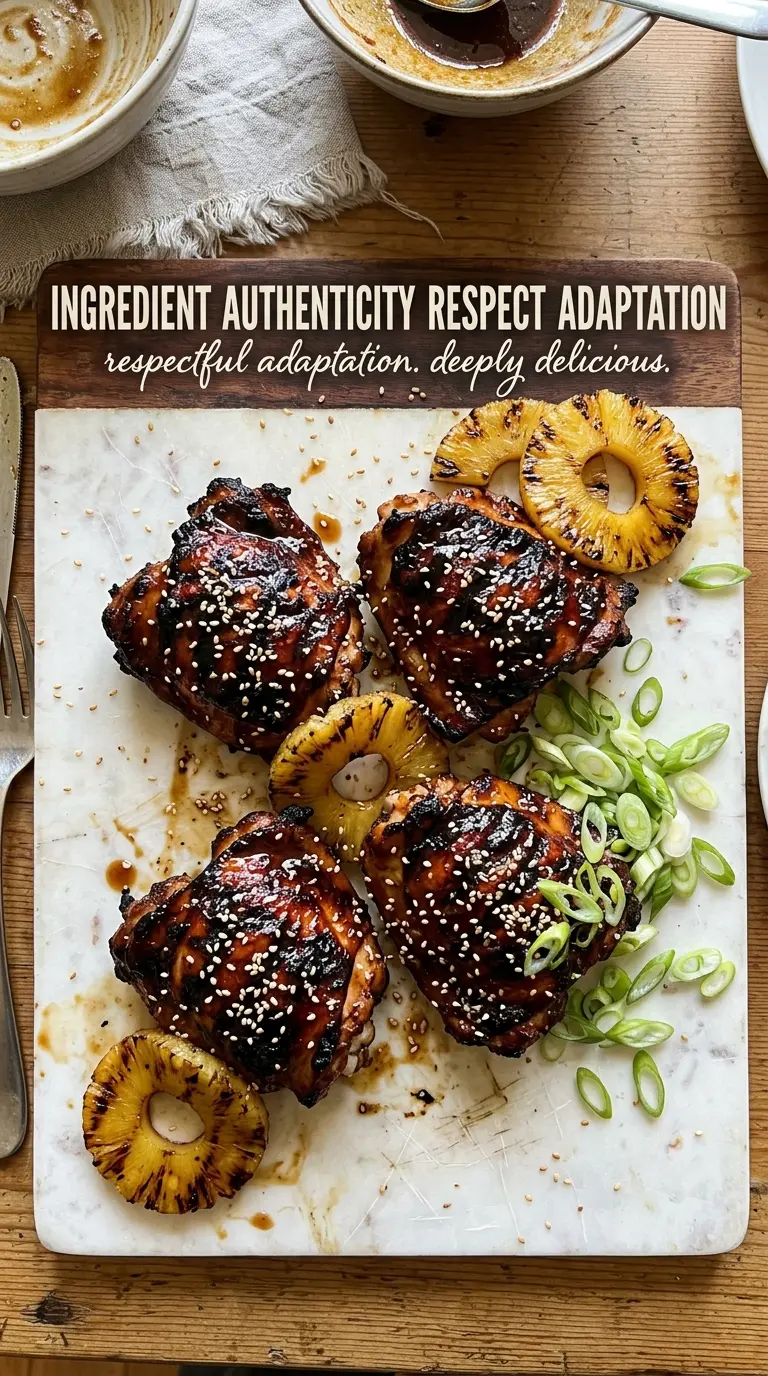
- Chicken thighs or legs — Thighs give you the juiciest result and handle the grill best because the higher fat content protects them from drying out. Legs work well if that’s what you have, but they need a little more time and a quick check around the bone. Breast meat is the one swap I’d avoid here unless you’re very careful, because the repeated basting and longer grill time can dry it out.
- Soy sauce — This is the backbone of the marinade. It seasons the meat all the way through and adds the savory depth that keeps the sugar from tasting flat. Use a regular soy sauce unless you need low-sodium; very dark soy can overpower the pineapple and ginger.
- Brown sugar and ketchup — These two are what make the glaze sticky and burnished. Brown sugar caramelizes on the grill, while ketchup brings body and a little tang so the sauce clings instead of running off. Light or dark brown sugar both work, but skip the urge to reduce it much further or you’ll lose that classic lacquered finish.
- Pineapple juice — This keeps the marinade bright and gives the chicken that unmistakable tropical edge. Fresh pineapple juice works, but canned is fine as long as it isn’t heavily sweetened. Don’t swap in plain water; you’d lose the acidity and sweetness that help the marinade brown properly.
- Ginger and garlic — These are not background players. Ginger cuts through the sweetness, and garlic gives the glaze its savory snap. Fresh is worth using here because dried ginger or jarred garlic won’t give the same lively finish.
- Sherry or chicken broth — Sherry adds a little roundness and depth, while broth keeps the marinade balanced if you want to stay away from alcohol. Either one gives the sauce more body than pineapple juice alone. If you use broth, choose one with decent flavor since it’s part of what seasons the meat.
- Sesame oil — A small amount goes a long way. It adds a nutty finish that reads as grill-friendly and helps the marinade taste complete. Don’t overdo it; too much will pull the whole dish away from the clean sweet-savory balance.
Turning, Basting, and Stopping at the Right Moment
Build the Marinade First
Whisk the soy sauce, brown sugar, ketchup, pineapple juice, sherry, ginger, garlic, and sesame oil until the sugar starts to dissolve and the mixture looks smooth, not grainy. At this point it should smell sharp, sweet, and a little punchy from the ginger. If the sugar still looks sandy in the bowl, give it another minute of whisking before the chicken goes in so the flavor distributes evenly.
Marinate Without Overdoing It
Coat the chicken and let it sit for 2 to 8 hours. Two hours gives you clear flavor on the surface; longer gives the meat more seasoning without turning it mushy. Don’t push it much past 8 hours, especially if your pineapple juice is acidic and your pieces are on the smaller side, because the texture can start to soften too much.
Grill with Frequent Turns
Place the chicken over medium heat and turn it often instead of waiting for one long side to finish. The glaze should darken gradually and cling in shiny layers, not blacken in patches. Brush on the reserved marinade as you go, but only use the portion you set aside before the chicken went in. If the grill flares, move the chicken to a cooler spot for a minute rather than losing the coating to flame.
Cook to Juicy, Not Dry
Keep grilling until the thickest part reaches 165°F, which usually takes 25 to 30 minutes depending on the size of the pieces. The chicken is done when the juices run clear and the skin has a sticky, bronzed look with some char at the edges. Pull it off the grill and let it rest a few minutes so the juices settle before serving.
Three Ways to Make This Grill Recipe Fit Your Table
Dairy-Free and Naturally Gluten-Free
This recipe is already dairy-free, and it can be gluten-free too if you use tamari or a certified gluten-free soy sauce. That swap keeps the same salty backbone without changing the sticky finish. Check your ketchup as well, since a few brands add thickeners or vinegar blends that can contain gluten.
Use Chicken Breasts If That’s What You Have
Chicken breasts will work, but they need a gentler hand and a shorter cook time. Pound them to an even thickness so the thickest part doesn’t lag behind the thinner ends, then start checking early for doneness. You’ll lose a little richness compared with thighs, but the glaze still carries the dish.
Make It Smokier Without a Smoker
Add a small handful of soaked wood chips if your grill setup allows it, or finish the chicken over a hotter section for the last couple of minutes to deepen the char. That extra smoke plays well with the pineapple and ginger. Don’t overdo it or the sweet glaze gets buried under the smoke instead of lifted by it.
Storage and Reheating
- Refrigerator: Store leftovers in an airtight container for up to 4 days. The glaze will thicken in the fridge and the skin won’t stay crisp, but the flavor holds up well.
- Freezer: Freeze cooked chicken for up to 2 months. Wrap it tightly or store it in freezer bags with as much air pressed out as possible so the sauce doesn’t pick up freezer burn.
- Reheating: Reheat covered in a 325°F oven until warmed through, or use a skillet over low heat with a splash of water to loosen the glaze. High heat will dry out the chicken and turn the sugar in the sauce sticky in the wrong way.
The Things That Trip People Up With This Dish

Grilled Huli Huli Chicken
Ingredients
Equipment
Method
- Whisk together soy sauce, brown sugar, ketchup, pineapple juice, sherry or chicken broth, grated fresh ginger, minced garlic, and sesame oil until smooth. The mixture should look glossy and evenly combined.
- Reserve 1/2 cup marinade for basting. Set it aside so you can brush it on during grilling.
- Marinate the chicken thighs or legs in the remaining marinade for 2-8 hours. Cover and chill so the flavor penetrates evenly.
- Preheat your grill over medium heat. Aim for steady heat so the glaze caramelizes without burning.
- Grill the marinated chicken, turning (huli) frequently and basting with the reserved marinade as you cook. Brush a thin, even layer each time you flip so it turns sticky and charred.
- Continue grilling for 25-30 minutes, until the internal temperature reaches 165°F and the chicken is caramelized. The surface should be dark-golden, glossy, and slightly tacky.