Golden, lemony chicken with crisp skin and a pan full of jammy tomatoes is the kind of dinner that disappears fast. The feta softens over the hot chicken and vegetables without melting into nothing, so every bite gets that salty tang against the roasted lemon and oregano. It tastes bright and savory at the same time, with just enough richness from the chicken skin to keep it from feeling sharp.
The trick here is to let the marinade do its work without drowning the chicken. Olive oil helps carry the lemon, garlic, and oregano into the meat, while the high oven heat gives the skin a deep color before the tomatoes burst and turn into their own quick sauce. I also like using bone-in, skin-on thighs because they stay juicy and give you a better roast than boneless pieces that dry out before the vegetables are done.
Below, I’ve included the one step that keeps the chicken skin crisp, plus a few swaps that still keep the dish tasting distinctly Greek.
The chicken stayed juicy, the lemon slices caramelized around the edges, and the feta softened just enough to cling to everything without turning salty or greasy.
Save this Greek chicken with lemon and feta for the night you want roasted chicken, caramelized lemons, and a pan sauce built almost entirely in one dish.
The Part That Keeps the Chicken Skin Crisp Instead of Soggy
The biggest mistake with a dish like this is overcrowding the pan or piling the feta on too early. The chicken needs direct contact with hot air so the skin renders and turns crisp before the tomatoes start releasing their juices. If the pieces are jammed too tightly, they steam in their own moisture and you lose that golden finish.
Marinating helps with flavor, but it won’t rescue wet skin. Pat the chicken dry after marinating if there’s a lot of liquid clinging to it, then place it skin-side up and leave the skin exposed. The tomatoes and olives can sit around the chicken and still cook beautifully without covering the top.
- Bone-in, skin-on chicken thighs — These stay juicy at high heat and give you enough fat for the skin to brown properly. Boneless thighs work in a pinch, but they cook faster and won’t give you the same crispy result.
- Lemon juice and zest — The juice brings brightness, while the zest carries the lemon aroma that survives roasting. Using both gives you a fuller lemon flavor than juice alone.
- Feta — Add it after roasting, not before. It softens from the heat and clings to the chicken and vegetables instead of drying out or turning sandy in the oven.
- Kalamata olives — They bring a briny, savory punch that keeps the dish from tasting flat. If you need to substitute, use another firm olive rather than a soft, mild one.
What Each Ingredient Is Actually Doing in This Recipe

- Primary ingredient (the star) — Quality matters most. Choose the best you can find.
- Cooking medium (oil, butter, or broth) — This carries flavors and prevents dryness.
- Seasonings (salt, pepper, spices, herbs) — Layer flavors so nothing overpowers. Build depth gradually.
- Aromatics (garlic, onion, herbs) — Cook with fat to bloom flavors. Become the foundation.
- Supporting ingredients — Complement the main ingredient without overpowering it.
- Sauce or liquid (if applicable) — Brings flavors together. Balance richness with acid.
- Acid (lemon, vinegar, wine, or other) — Brightens and prevents flat-tasting results.
- Final finish (garnish, glaze, or sauce) — Prevents one-dimensional taste and adds visual appeal.
Building the Pan So Everything Roasts at the Same Pace
Mixing the Marinade
Whisk the olive oil, lemon juice, zest, garlic, oregano, smoked paprika, salt, and pepper until it looks emulsified and a little cloudy. That tells you the oil and acid are mixed enough to coat the chicken evenly. The garlic should be finely minced so it doesn’t burn in the oven, and the oregano needs time in the marinade to bloom.
Letting the Chicken Sit
Give the chicken at least 30 minutes in the marinade. That is enough time for flavor to get under the skin without softening it too much. If you leave it much longer, the lemon can start to make the surface texture a little tight and chalky, especially on thinner pieces.
Roasting for Color and Juiciness
Arrange the chicken skin-side up and roast until the skin turns deep golden and the juices run clear, about 25 to 28 minutes. The cherry tomatoes should burst and slump around the edges, and the lemon slices should look caramelized rather than pale. If the top is browning too fast before the chicken reaches 165°F, move the pan to a lower rack for the last few minutes.
Finishing with Feta and Herbs
The feta goes on the moment the pan comes out of the oven. The heat softens it just enough so it nestles into the chicken and tomatoes without disappearing. Finish with fresh oregano while the dish is still hot so the herb releases its scent right over the top.
How to Adapt This Greek Chicken Without Losing the Point
Use chicken breasts for a leaner version
Chicken breasts work, but they need more attention because they dry out faster than thighs. Bake them until the thickest part reaches 165°F, then pull them right away and let the residual heat finish the job. You’ll get a lighter texture, though you lose some of the rich pan juices that thighs bring.
Make it dairy-free
Skip the feta and finish with extra oregano, a drizzle of olive oil, and a handful of chopped parsley if you want more freshness. You’ll lose the salty creaminess, so add a few more olives or a pinch more salt to keep the dish balanced.
Swap the vegetables for what’s on hand
Zucchini, red onion wedges, or bell peppers can stand in for the tomatoes if that’s what you have. Keep the pieces fairly large so they roast instead of collapsing into mush. You’ll still get the same bright, Mediterranean-style pan, just with a different mix of sweetness and bite.
Storage and Reheating
- Refrigerator: Store leftovers in a covered container for up to 4 days. The chicken stays moist, but the skin will soften.
- Freezer: Freeze the chicken and pan juices without the feta for up to 2 months. Feta gets crumbly after freezing, so add fresh cheese after reheating.
- Reheating: Warm in a 350°F oven, covered loosely with foil, until heated through. The oven keeps the chicken from drying out; the microwave tends to make the skin rubbery and the tomatoes watery.
Answers to the Questions Worth Asking
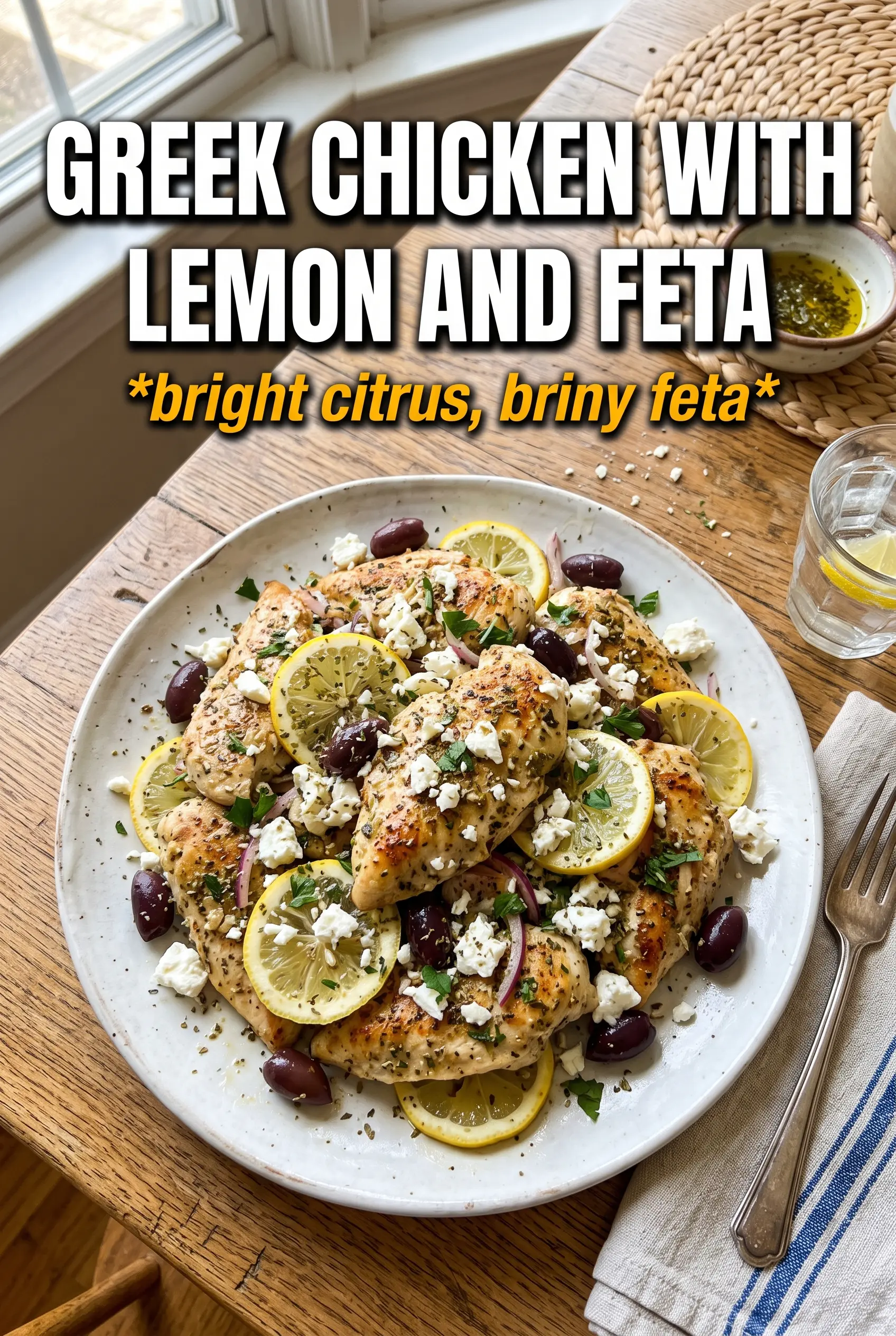
Greek Chicken with Lemon and Feta
Ingredients
Equipment
Method
- Whisk olive oil, fresh lemon juice, lemon zest, minced garlic, dried oregano, smoked paprika, and salt and pepper until smooth.
- Coat the chicken thighs evenly in the marinade, then refrigerate for at least 30 minutes.
- Preheat the oven to 425°F and arrange the marinated chicken skin-side up in a large baking dish.
- Scatter cherry tomatoes, Kalamata olives, and thin lemon slices around the chicken for even roasting.
- Roast for 25-28 minutes until the chicken skin is golden and the internal temperature reaches 165°F.
- Remove from the oven and immediately crumble feta over the hot chicken and vegetables so it softens from the heat.
- Garnish with fresh oregano and serve with warm pita or orzo.