Golden-seared Greek chicken tenders bring a bright, lemony crust and juicy center that makes them hard to stop eating. The marinade pulls double duty here: it seasons the chicken all the way through while the lemon zest, oregano, garlic, and smoked paprika build a crisp, savory coating in the pan. Served over cool tzatziki, the contrast is exactly what makes this dish feel fresh without being fussy.
The trick is keeping the marinade short and the heat steady. Twenty minutes is enough for the citrus and herbs to do their work without turning the chicken stringy, and a hot skillet gives you that deep brown edge before the tenders overcook. I also like using both lemon juice and zest because the juice brings tang while the zest carries the aroma that reads as distinctly Greek.
Below, I’ve included the little details that keep the chicken tender, plus a few swaps if you need to work with what’s in the fridge. Once you see how quickly these cook, they’ll slide right into your regular dinner rotation.
The chicken got that golden crust in minutes, and the tzatziki underneath kept every bite cool and juicy. I’d never thought to use cumin with oregano like this, but it gave the marinade a deeper flavor without tasting heavy.
Save these Greek chicken tenders for a fast lemon-oregano dinner with tzatziki and all the bright Mediterranean toppings.
The Secret to Keeping Lemon-Marinated Chicken Tenders Juicy
Acid is the thing people get wrong most often with chicken tender marinades. Lemon juice gives this dish its brightness, but it also starts tightening the meat if it sits too long, which is why a short marinating window works better here than an all-day soak. Twenty minutes is enough to season the surface and perfume the chicken without making it dry or mealy.
The second piece is heat. A medium-high skillet gives the marinade enough contact to brown quickly, and that browning is where the flavor deepens. If the pan is too cool, the chicken steams in its own juices and the herbs stay pale and flat instead of forming that fragrant crust.
- Short marination matters — This is a quick lemon-herb marinade, not a cure. Letting it sit too long can dull the texture of the chicken.
- Zest carries the Greek flavor — Lemon juice adds tang, but the zest is what makes the aroma pop. Don’t skip it if you want the chicken to taste bright instead of just sour.
- Patience at the pan gives you color — If the chicken sticks for the first 30 seconds, leave it alone. It usually releases once the surface browns.
- Use a thermometer if you have one — Chicken tenders cook fast, and pulling them at 165°F keeps them juicy.
What Each Ingredient Is Doing in These Greek Chicken Tenders

- Chicken tenders — These cook evenly and fast, which matters when you’re using a short marinade and high heat. If you only have chicken breasts, slice them into even strips so they finish at the same time.
- Olive oil — It helps the herbs coat the chicken and encourages browning in the pan. Use a good extra-virgin oil if you can, since it’s part of the final flavor.
- Lemon juice and zest — Both are important, but they do different jobs. Juice gives the sharp tang; zest gives the aromatic Greek lemon character that holds up through cooking.
- Garlic, oregano, smoked paprika, and cumin — Oregano is the backbone, paprika adds color and a little warmth, and cumin gives the marinade a deeper savory note. If you’re out of smoked paprika, regular paprika works, but the flavor will be a touch flatter.
- Tzatziki, feta, olives, cucumber, and dill — These toppings turn the chicken into a full plate. The cool yogurt, salty feta, and briny olives balance the lemon and keep each bite lively.
Getting the Sear Before the Chicken Has Time to Dry Out
Mix the marinade first
Whisk the olive oil, lemon juice, zest, garlic, oregano, smoked paprika, cumin, salt, and pepper together before the chicken goes in. That helps the spices disperse evenly instead of clumping in one spot. Coat the tenders thoroughly, then let them sit for 20 minutes while you heat the pan. If they marinate much longer, the citrus starts working against you and the texture gets less tender, not more.
Use a hot pan, not a crowded one
Set a large skillet or grill pan over medium-high heat and add a thin drizzle of olive oil. When the oil shimmers, lay in the chicken in a single layer with space between each piece. Crowding traps steam and keeps the surface from browning, so cook in batches if your pan is small. You’re listening for a steady sizzle, not a furious sputter.
Cook to color, then check the center
Let the tenders cook for 3 to 4 minutes per side until they pick up a deep golden crust and the middle reaches 165°F. If one side is browning too quickly, lower the heat a notch rather than moving the chicken around. The best sign of doneness is a firm but springy feel when you press the thickest piece. Take them off the heat as soon as they’re done so they stay juicy.
Build the platter while the chicken rests
Spread tzatziki over the serving platter first, then arrange the chicken on top. Scatter feta, Kalamata olives, cucumber, and dill around the tenders so every scoop gets a little contrast. Warm pita on the side and add lemon wedges at the end; the fresh squeeze wakes everything up right before serving.
How to Adapt These Greek Chicken Tenders for Different Nights
Dairy-Free Plate
Skip the feta and use a dairy-free tzatziki or a plain cucumber-dill salad over the top. You still get the cool contrast with the hot chicken, but the platter will taste lighter and a little less salty.
Gluten-Free Dinner
The chicken itself is naturally gluten-free, so the only thing to watch is the serving side. Use gluten-free pita or serve it over rice, and keep an eye on store-bought tzatziki if you’re using one, since a few brands add thickeners or flavorings you may want to avoid.
Chicken Breast Swap
If you don’t have tenders, slice boneless chicken breasts into even strips before marinating. They’ll still brown nicely, but they can dry out faster, so start checking them a minute early and pull them the moment they hit temperature.
Make-Ahead Prep
You can whisk the marinade and prep the toppings a day ahead, then marinate the chicken just before cooking. That keeps the lemon bright and the chicken texture clean. The finished tenders reheat well if you keep the tzatziki separate.
Storage and Reheating
- Refrigerator: Store cooked chicken in an airtight container for up to 4 days. The crust softens a little, but the flavor holds up well.
- Freezer: The chicken freezes well for up to 2 months if you wrap it tightly and freeze it without the tzatziki or fresh toppings.
- Reheating: Warm it gently in a skillet over medium-low heat with a splash of water or cover it in the oven at 300°F. High heat dries out tenders fast, so skip the microwave if you want to keep the texture intact.
Answers to the Questions Worth Asking
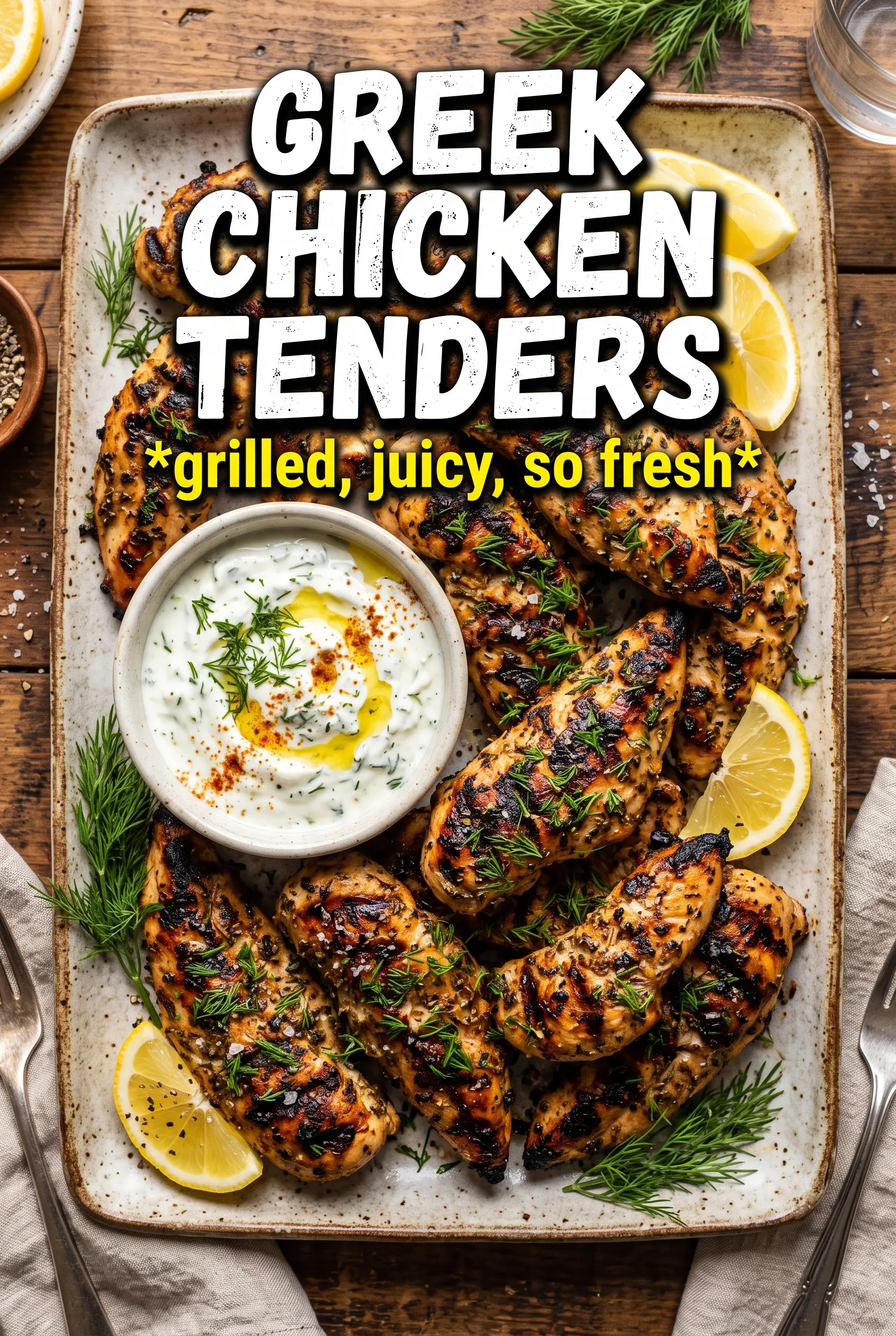
Greek Chicken Tenders
Ingredients
Equipment
Method
- Whisk together olive oil, lemon juice, lemon zest, garlic, dried oregano, smoked paprika, cumin, salt, and pepper until well combined, then toss chicken tenders in the marinade. Rest the bowl for 20 minutes to let the flavors soak in.
- Heat a large skillet or grill pan over medium-high heat and add a drizzle of olive oil. Place chicken tenders in the pan and cook 3-4 minutes per side until deeply golden and flip once when the first side forms a browned crust.
- Check doneness by measuring the thickest tender: cook until internal temperature reaches 165°F. Transfer to a plate and let the crust set for 1-2 minutes before assembling.
- Spread tzatziki on a serving platter to create a creamy base. Arrange chicken tenders over the top so the golden crust stays visible.
- Scatter crumbled feta, Kalamata olives, cucumber slices, and fresh dill around the chicken. Finish with lemon wedges and serve with warm pita.