Crispy potato cubes and deeply seared steak bites hit the pan at the right moment here, and that’s what makes this skillet dinner worth repeating. The potatoes pick up a golden crust before they ever meet the butter, so they stay sturdy instead of turning soft and greasy. The steak cooks fast enough to stay tender, then gets glossed with garlic, rosemary, and thyme just long enough to smell rich without burning.
The trick is separating the jobs. The potatoes need space and high heat to brown properly, and the steak needs a dry surface plus a hot skillet so it can sear instead of steam. Once the butter goes in, the heat comes down because garlic burns fast and bitter herbs don’t need much time to release their aroma. That small adjustment is what keeps the whole pan tasting balanced.
Below, I’ve included the timing that keeps both parts on track, the ingredient swaps that still hold up, and the reheating note that keeps leftovers from going limp.
The potatoes came out crisp on the outside and fluffy inside, and the steak stayed tender because I didn’t crowd the pan. The garlic butter coated everything without turning greasy, and my husband went back for seconds before I even sat down.
Save these garlic steak bites and potatoes for the nights when you want a crisp skillet dinner with browned edges and garlicky butter in every bite.
The Step That Keeps the Potatoes Crispy Instead of Soft
Parboiling the potatoes first gives you the best of both worlds: a fluffy center and a browned outside. If you skip that short boil, the outside can darken before the middle gets tender, especially with 1-inch pieces. Drain them well before they hit the skillet, because extra water is the fastest way to steam away the crust you’re trying to build.
The other piece people miss is heat. A cast iron skillet holds enough heat to keep the potatoes moving from pale to golden without sticking, but only if the pan is hot before the potatoes go in. Give them room, let them sit long enough to form a crust, then turn them. If you fuss with them too early, they tear instead of release cleanly.
What Each Ingredient Is Actually Doing in This Skillet
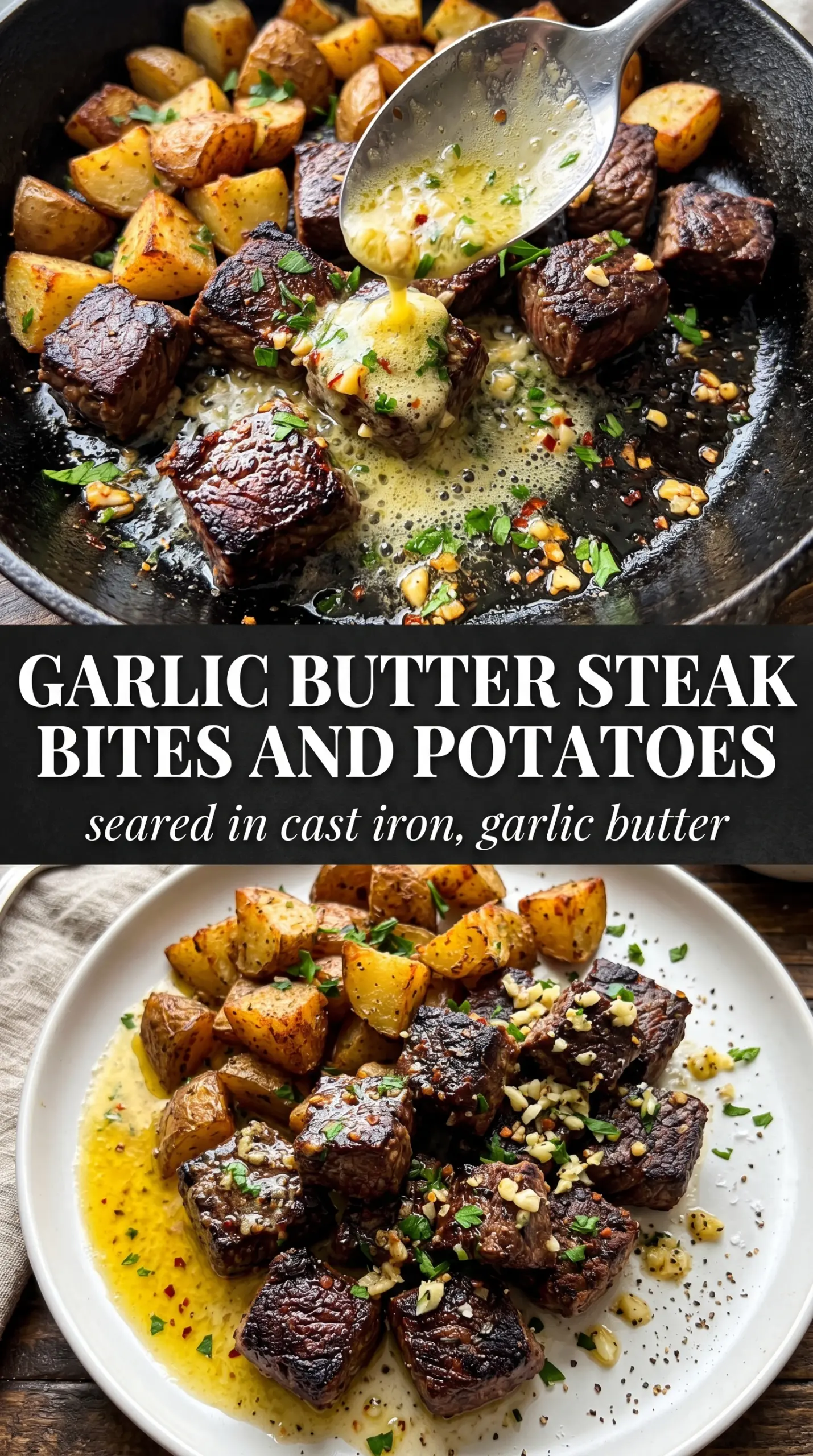
- Sirloin steak — Sirloin gives you a good balance of tenderness and beefy flavor without the cost of a premium cut. Cut it into even cubes so it sears at the same pace. If you want a richer bite, ribeye works too, but it’s more forgiving only if you keep the cooking fast and the pan hot.
- Baby potatoes — These hold their shape well after parboiling and crisp beautifully once they hit the skillet. Halved pieces give you enough flat surface for browning. Russets can work in a pinch, but they’re more likely to fall apart unless you handle them gently.
- Butter and oil — The oil handles the high heat for searing, and the butter brings the sauce together at the end. Don’t swap all the oil for butter at the start; butter burns long before the potatoes are done. A neutral oil with a high smoke point keeps the skillet moving without bitter notes.
- Garlic, rosemary, and thyme — These go in after the sear because their job is to perfume the pan, not fry for minutes at a time. Fresh herbs matter here; dried herbs won’t release the same bright aroma in such a short finish. Garlic should be minced fine so it softens fast, but not so fine that it scorches in seconds.
How to Build the Garlic Butter Without Burning the Pan
Parboiling and Drying the Potatoes
Boil the halved potatoes until they’re just barely fork-tender, then drain them immediately. They should still hold their shape and feel a little firm in the center. Letting them go too far makes them break apart in the skillet, and leaving moisture on the surface keeps them from browning. A quick steam-off in the colander helps more than people think.
Getting the Potatoes Browned First
Heat the oil until it shimmers, then add the potatoes cut-side down where possible. Leave them alone until the underside turns deep gold and releases from the pan with little resistance. Season after they start browning so the salt doesn’t pull out moisture too early. Crowding is the enemy here; too many potatoes and you get soft edges instead of crisp ones.
Searing the Steak in Batches
Season the steak generously, then sear it in batches so the skillet stays hot. You want a dark crust on the outside and a pink, juicy center, which usually means about 2 minutes per side for 1-inch cubes in a very hot pan. If the meat steams or turns gray, the pan is overloaded or not hot enough. Pull each batch as soon as it browns; it will finish in the garlic butter.
Finishing With Garlic and Herbs
Lower the heat before the butter goes in, then add the garlic, rosemary, and thyme. Stir and baste for about a minute, just until the garlic smells fragrant and the butter takes on the herbs. If the garlic starts turning brown, the heat is too high and the whole pan will taste sharp. Return the potatoes, toss everything together, and stop as soon as the sauce coats the steak and potatoes.
How to Change the Pan Without Losing What Makes It Good
Make It Dairy-Free
Use all oil for the finishing step or swap in a plant-based butter that browns well. You’ll lose a little of the round, rich finish that real butter gives, but the garlic and herbs still carry the dish. Keep the heat low at the end so the substitute doesn’t split or scorch.
Use a Different Potato
Yukon Golds give a creamier middle and still crisp well, while red potatoes stay a little firmer and hold their shape nicely. Russets will brown fast, but they’re more fragile after parboiling, so handle them gently and don’t overboil. The cut size matters more than the variety; keep the pieces even so they finish together.
Swap the Steak Cut
Ribeye gives a richer result, while strip steak stays beefy and a little firmer. Avoid very lean cuts that dry out before the crust forms. If you use a tougher cut, slice it smaller and keep the sear very fast so it doesn’t toughen.
Storage and Reheating
- Refrigerator: Store leftovers in an airtight container for up to 3 days. The potatoes soften a little, but the flavor holds well.
- Freezer: This dish freezes, but the potatoes lose some of their texture. If you do freeze it, cool it completely first and thaw it overnight in the fridge.
- Reheating: Reheat in a skillet over medium heat with a small splash of oil or a dab of butter until hot. The microwave works in a pinch, but it softens the potatoes and dulls the sear.
Answers to the Questions Worth Asking
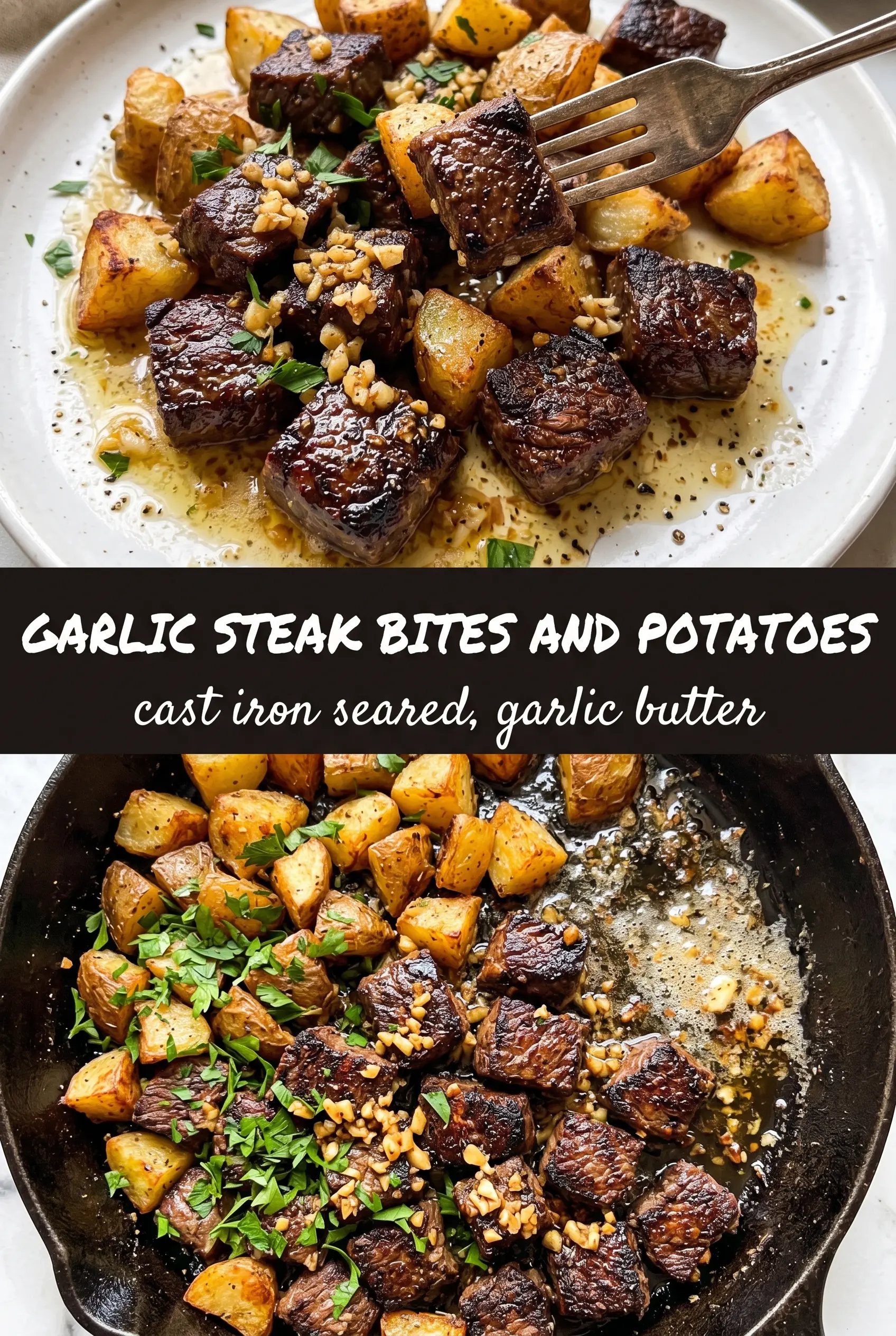
Garlic Steak Bites and Potatoes
Ingredients
Equipment
Method
- Boil the halved baby potatoes in salted water for 8 minutes until just barely fork-tender, then drain.
- Heat 2 tablespoons of the vegetable oil in a large cast iron skillet over high heat, add potatoes, and sear until golden and crispy on each side.
- Season the potatoes with salt and cracked black pepper and remove them from the skillet.
- Season the sirloin steak cubes generously with salt and cracked black pepper, then add the remaining vegetable oil to the skillet and sear the steak bites in batches for 2 minutes per side until deeply browned.
- Reduce heat to medium, add butter, garlic, rosemary, and thyme, and cook for 1 minute while basting the steak bites with the butter.
- Return the crispy potatoes to the skillet and toss everything together until coated in the garlic herb butter.
- Garnish with fresh parsley and serve immediately.