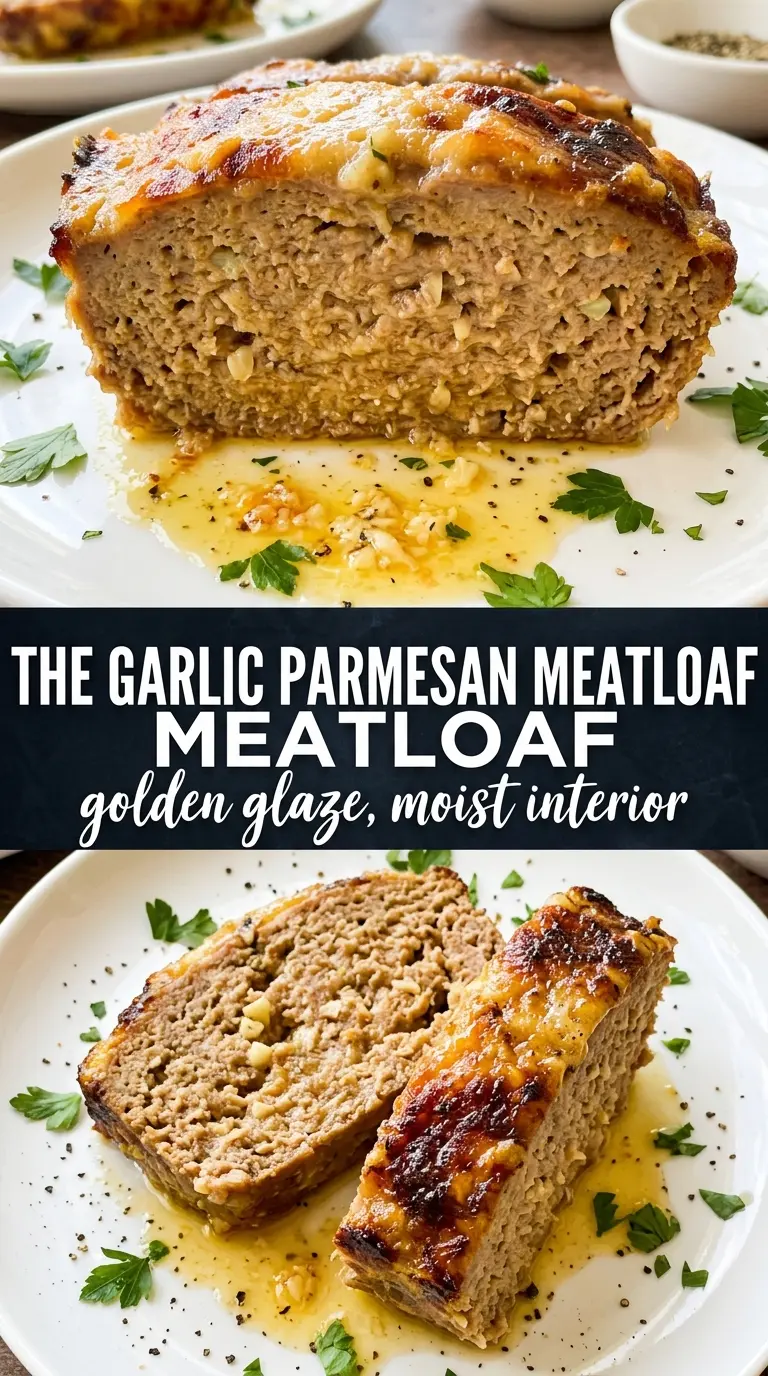
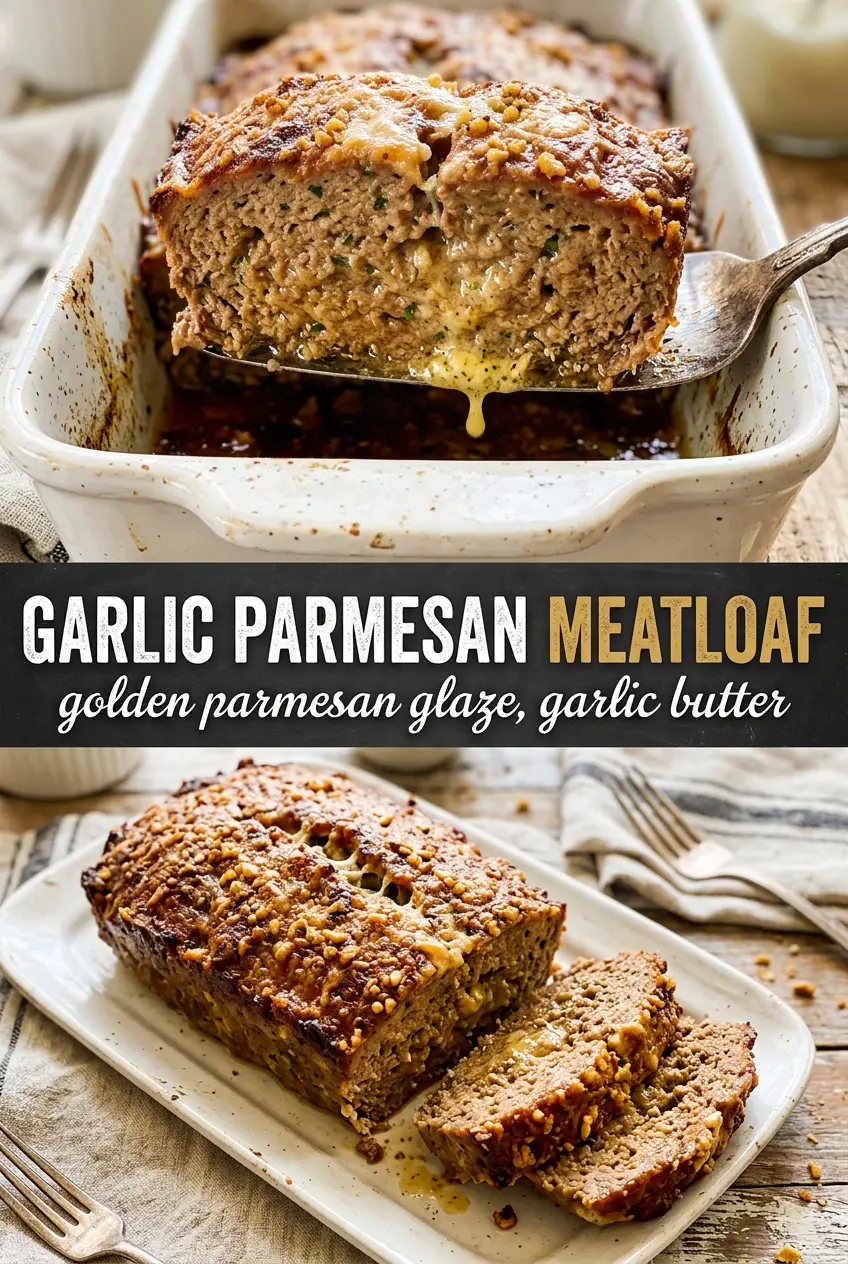
Garlic Parmesan Meatloaf lands with a crisp, savory top and a juicy middle that slices clean instead of crumbling apart. The parmesan does more than add flavor here; it helps build that golden crust and gives the loaf a little structure without turning it dense. The garlic works in two places, inside the meat and brushed on top, so every bite tastes seasoned all the way through, not just at the surface.
The trick is keeping the mix gentle. Overworking ground beef is what gives meatloaf that tight, bouncy texture people complain about, and this version stays tender because the breadcrumbs and milk soften the meat before it goes into the oven. I also like baking it on a sheet pan or parchment-lined loaf pan instead of packing it too tightly into a heavy pan, since that helps the edges brown instead of steaming.
Below, I’ve included the exact point where the loaf should be shaped, how to know when the parmesan topping is ready, and a few smart swaps if you need to adjust the recipe for what’s in your kitchen.
The parmesan crust browned up beautifully and the center stayed juicy all the way through. I usually worry about meatloaf drying out, but this one sliced perfectly after the rest time and the garlic flavor was spot on.
Save this Garlic Parmesan Meatloaf for nights when you want a juicy center, a crackled parmesan crust, and dinner that feels homemade without a lot of fuss.
Why This Loaf Stays Tender Instead of Dense
The biggest mistake with meatloaf is treating it like a meatball mixture that needs to be kneaded until smooth. It doesn’t. Once the beef gets packed too tightly, the proteins seize up in the oven and the loaf turns firm and dry. Here, the milk and breadcrumbs soften the texture, while the eggs hold everything together just enough to slice neatly after resting.
The other reason this loaf works is the topping. Parmesan on top melts, then dries into a salty crust that protects the meat beneath it. If you’ve ever had meatloaf with a pale, soft top, that usually means the surface stayed too wet or the oven wasn’t hot enough to set it early. A 375°F oven gives you enough heat to brown the outside before the center overcooks.
- Mix just until combined — stop as soon as you no longer see streaks of egg or dry breadcrumbs.
- Use 80/20 ground beef — leaner beef can work, but you lose juiciness and the loaf is more likely to feel crumbly.
- Shape it loosely — a packed loaf traps steam and softens the crust instead of browning it.
- Rest before slicing — those 10 minutes let the juices settle so the slices hold together.
The Ingredients That Build the Crust and Keep the Center Juicy
- Ground beef, 80/20 — this fat level keeps the meatloaf moist without making it greasy. If you use something leaner, add a tablespoon of olive oil or expect a firmer slice.
- Parmesan — fresh grated parmesan gives the best melt and the best crust. Pre-grated works in a pinch, but it won’t cling or brown quite as well.
- Italian breadcrumbs and milk — this is the panade that keeps the loaf tender. The milk hydrates the crumbs before they go into the oven, which protects the beef from tightening up.
- Garlic, inside and on top — dividing the garlic between the meat mixture and the butter topping keeps the flavor layered instead of flat. If you want a milder loaf, use 4 cloves inside and keep the topping as written.
- Onion — finely diced onion melts into the loaf as it bakes. Large pieces stay sharp and can make the slices fall apart.
- Butter topping — brushing the loaf with garlic butter helps the parmesan stick and deepens the browning. Skip it and you’ll still have a good meatloaf, but you lose the crackly top that makes this version stand out.
Building the Loaf So the Top Browns and the Center Stays Moist
Mix the Meat Without Packing It Tight
Put the beef, half the parmesan, breadcrumbs, milk, eggs, half the garlic, onion, seasoning, garlic powder, salt, and pepper in a large bowl and mix only until the ingredients look evenly distributed. The mixture should look cohesive but still a little loose. If you keep stirring after that point, the meat starts to bind too firmly and the loaf bakes up springy instead of tender.
Shape for Browning, Not Steaming
Form the mixture into a loaf on parchment or in a loaf pan with some space around the edges. A sheet pan gives you more browned surface area, while a loaf pan gives you a taller, more classic slice. Either way, don’t press it down hard; a gentle shape helps the heat move through the center without drying the outside.
Finish With Garlic Butter and Parmesan
Mix the melted butter with the remaining garlic and brush it over the top of the loaf, then pat the rest of the parmesan over the surface. This layer should look thick and sandy, not wet. If the topping slides around, the loaf is too warm or the butter pool is too heavy; brush it on in a thin layer so the cheese has something to grab.
Cook to Temperature, Then Let It Rest
Bake until the top is deeply golden and the center reaches 160°F. Don’t go by color alone, because parmesan can brown before the meat is finished. Let the loaf rest for 10 minutes before slicing; if you cut too soon, the juices run out and the slices won’t hold their shape.
How to Adapt This Meatloaf for Different Kitchens and Schedules
Gluten-Free Meatloaf
Swap the Italian breadcrumbs for certified gluten-free breadcrumbs or crushed gluten-free crackers. The texture stays close to the original as long as the crumbs still absorb the milk and bind the mixture. Don’t skip the milk; that’s what keeps the gluten-free version from feeling dry.
Dairy-Free Version
Use an unsweetened plain non-dairy milk and swap the butter topping for olive oil or a plant-based butter. The loaf will still brown, but the parmesan crust won’t be quite as crisp unless you use a dairy-free hard cheese that melts well. The flavor stays savory, just a little less rich.
Make It Ahead for a Busy Night
Shape the loaf and store it covered in the refrigerator for up to 24 hours before baking. Add the garlic butter and parmesan topping right before it goes into the oven so the crust doesn’t turn soggy in the fridge. Cold meatloaf mixtures usually need a few extra minutes in the oven.
Use Turkey Instead of Beef
Ground turkey works, but it needs help to stay moist. Keep the milk and parmesan, and consider adding a tablespoon of olive oil to the mixture. Turkey meatloaf tastes a little cleaner and lighter, but it won’t have the same beefy richness or the same deep browning.
Storage and Reheating
- Refrigerator: Store sliced or whole in an airtight container for up to 4 days. The crust softens a bit, but the flavor holds well.
- Freezer: Freeze cooled slices tightly wrapped for up to 3 months. Freeze in portions so you can thaw only what you need.
- Reheating: Warm covered in a 325°F oven with a splash of broth or water in the pan. Microwaving works for a quick lunch, but it softens the crust and can make the edges rubbery if you overdo it.
Questions I Get Asked About This Recipe
Garlic Parmesan Meatloaf
Ingredients
Equipment
Method
- Preheat the oven to 375°F and line a loaf pan or sheet pan with parchment. Keep it ready so the meat mixture can be shaped right after mixing.
- In a large bowl, mix ground beef, 1/2 cup parmesan, Italian breadcrumbs, whole milk, eggs, 3 minced garlic cloves, diced onion, Italian seasoning, garlic powder, salt, and black pepper just until combined. Stop mixing once you no longer see dry crumbs so the loaf stays tender.
- Shape the mixture into a loaf on the lined pan and smooth the top. Pack it gently and aim for an even thickness for a consistent bake.
- Mix melted butter with the remaining minced garlic and brush it over the loaf. Use a light, even coat so the crust browns uniformly.
- Pat the remaining parmesan over the entire surface of the loaf. The topping should look evenly scattered to encourage a crackly golden finish.
- Bake at 375°F for 55–65 minutes until the internal temperature reaches 160°F and the top is deeply golden. Look for a browned, crisp surface and juices that run clear when pierced near the center.
- Let the meatloaf rest for 10 minutes before slicing. This sets the juices so each slice stays juicy instead of crumbling.
- Garnish with fresh parsley right before serving. Add it to the platter for a fresh green finish.