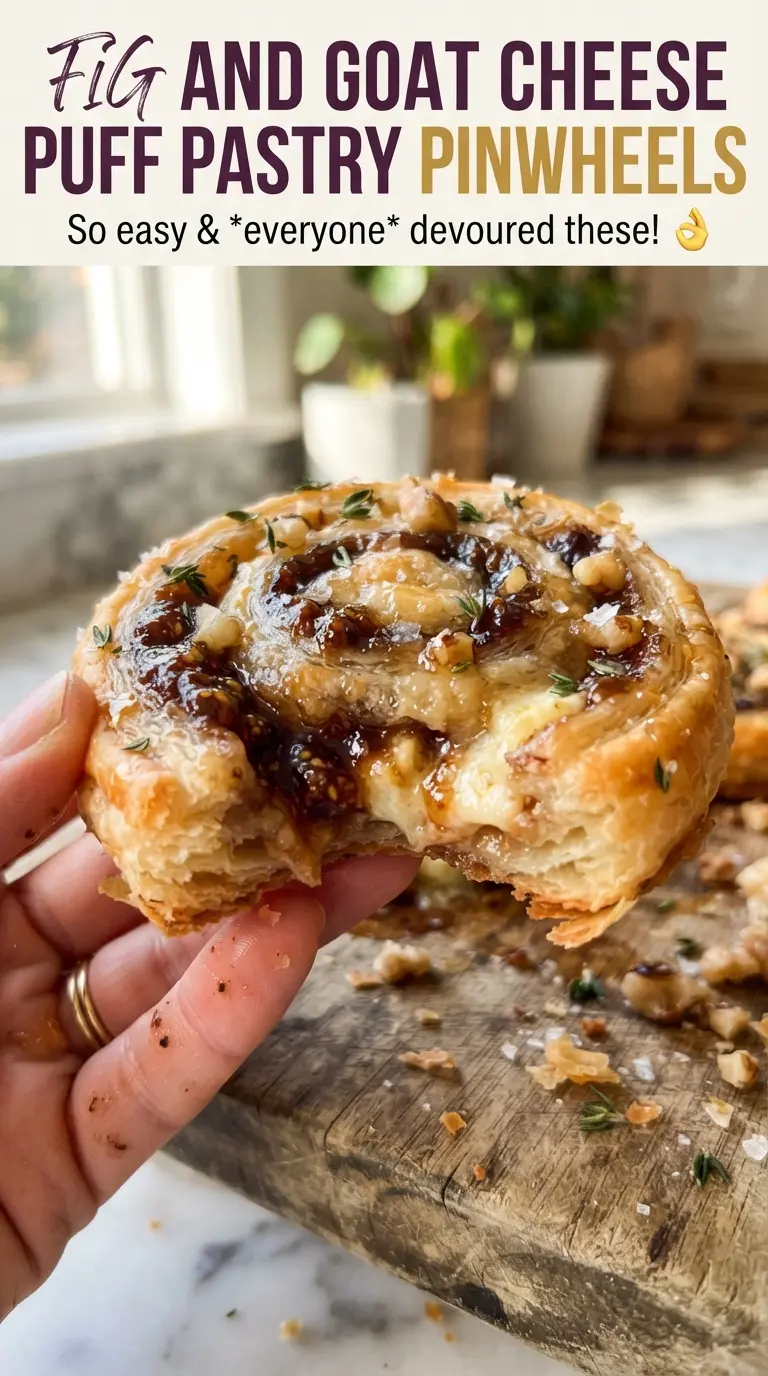
Fig and goat cheese puff pastry pinwheels bake up with crisp, flaky layers, a sweet jammy center, and those little salty pockets of cheese that make people reach for a second one before they’ve finished the first. The edges turn deeply golden while the middle stays tender, and the walnuts add just enough crunch to keep each bite from feeling too soft.
The trick is keeping the puff pastry cold after you roll it up. That short chill firms the log so the slices hold their spiral shape in the oven instead of flattening into messy ovals. Spreading the fig jam all the way to the edges also matters, because it helps the filling stay evenly distributed from the first bite to the last.
Below you’ll find the small details that make these pinwheels behave: how thick to slice them, when to add the honey, and what to swap if you want a different nut or a slightly sharper cheese.
The spirals held their shape perfectly after the chill, and the honey on top made the fig and goat cheese taste even richer without getting sticky.
These fig and goat cheese puff pastry pinwheels are the kind of appetizer that disappears fast because the filling stays creamy, the pastry bakes up crisp, and every spiral looks polished on the plate.
The Chill Is What Keeps the Spirals Clean
Most pinwheel recipes fall apart because the pastry gets too warm before it hits the oven. Once puff pastry softens, the layers smear instead of lifting, and the filling starts to leak from the cut edges. That short 15-minute chill after rolling is what gives you sharp rounds that stand up on the tray and bake into neat spirals.
Cutting with a sharp knife also matters more than people think. A dull blade compresses the log and drags the filling out of the sides. Slice straight down, wipe the blade if it gets sticky, and space the rounds apart so the heat can reach every edge evenly.
- Puff pastry — Buy the all-butter version if you can. It bakes with deeper flavor and better lift than a thinner, lower-fat pastry. Keep it cold right up until you’re ready to roll.
- Fig jam — This is the sweet backbone of the filling. A thick jam works best because it stays put; runny preserves tend to escape and burn on the pan. If yours is very stiff, stir it briefly so it spreads without tearing the dough.
- Goat cheese — Crumbly chèvre gives the sharp tang that balances the fig’s sweetness. Feta can stand in if that’s what you have, but it’ll read saltier and less creamy.
- Walnuts — They add structure and a little bitterness, which keeps the pinwheels from tasting one-note. Chop them finely so the log rolls tightly and slices cleanly.
- Thyme — Fresh thyme works here because it echoes the earthy sweetness of the fig without taking over. Dried thyme can be used in a pinch, but use half as much and crush it between your fingers before adding it.
- Egg wash — This gives the pinwheels their glossy, burnished finish. Skip it and the pastries still bake, but they’ll look pale and a little dry.
What Each Ingredient Is Actually Doing in This Recipe
- Primary ingredient (the star) — Quality matters most. Choose the best you can find.
- Cooking medium (oil, butter, or broth) — This carries flavors and prevents dryness.
- Seasonings (salt, pepper, spices, herbs) — Layer flavors so nothing overpowers. Build depth gradually.
- Aromatics (garlic, onion, herbs) — Cook with fat to bloom flavors. Become the foundation.
- Supporting ingredients — Complement the main ingredient without overpowering it.
- Sauce or liquid (if applicable) — Brings flavors together. Balance richness with acid.
- Acid (lemon, vinegar, wine, or other) — Brightens and prevents flat-tasting results.
- Final finish (garnish, glaze, or sauce) — Prevents one-dimensional taste and adds visual appeal.
Rolling, Slicing, and Baking Without Losing the Swirl
Building the Log
Roll the puff pastry into a rough 10×12-inch rectangle so the filling spreads evenly and the final spirals look balanced. Spread the fig jam all the way to the edges in a thin layer; thick clumps are what make the log bulge and split. Sprinkle the goat cheese, walnuts, and thyme over the jam, then roll from the long side with steady pressure so the cylinder stays tight without squeezing the filling out.
Chilling for Clean Cuts
Once the log is rolled, wrap it loosely or set it seam-side down and chill it until it feels firm to the touch. This is the difference between tidy rounds and squashed pinwheels. If the log is soft when you slice it, the spiral will smear and the filling will slump out before it ever reaches the oven.
Baking to a Deep Golden Edge
Arrange the slices cut-side up on parchment so the layers have room to expand. Brush lightly with egg wash, then bake until the pastry is puffed, crisp, and deeply golden at the edges. Pull them when the tops look set and the bottoms are browned; pale bottoms mean the pastry hasn’t crisped through yet, and that’s what makes them go limp as they cool.
Finishing with Honey
Drizzle the honey after baking, not before. Honey in the oven can darken too fast and bury the fig flavor under burnt sweetness. A light drizzle on warm pinwheels gives you shine, a little stickiness, and a finish that makes the goat cheese taste brighter.
Three Ways to Adjust the Filling Without Losing the Balance
Swap the walnuts for pecans
Pecans bring a softer, sweeter crunch and lean a little more buttery than walnuts. Use them finely chopped so the slices still roll tightly. The result is slightly richer and less earthy, which works well if your fig jam is on the sweeter side.
Make them gluten-free with gluten-free puff pastry
Use a gluten-free puff pastry that comes thawed and rollable, then handle it gently because it can crack faster than standard pastry. Chill it well before slicing so the rounds don’t collapse. The flavor stays the same, but the texture is usually a little more delicate and less dramatically flaky.
Use feta for a sharper, saltier bite
Feta stands in nicely if you want more savory contrast and less creaminess. Crumble it finely so it doesn’t tear the pastry, and use a light hand with the salt elsewhere since feta brings plenty on its own. The finished pinwheels taste punchier and a little less mellow than the goat cheese version.
Storage and Reheating
- Refrigerator: Store leftovers in an airtight container for up to 3 days. The pastry softens a bit in the fridge, but the flavor holds well.
- Freezer: Freeze the unbaked, sliced pinwheels on a tray, then transfer them to a freezer bag once solid. Bake from frozen, adding a few extra minutes and watching for deep golden edges.
- Reheating: Warm leftovers in a 350F oven or air fryer until crisp again, not in the microwave. Microwave heat turns puff pastry leathery and kills the flaky layers.
Questions I Get Asked About This Recipe
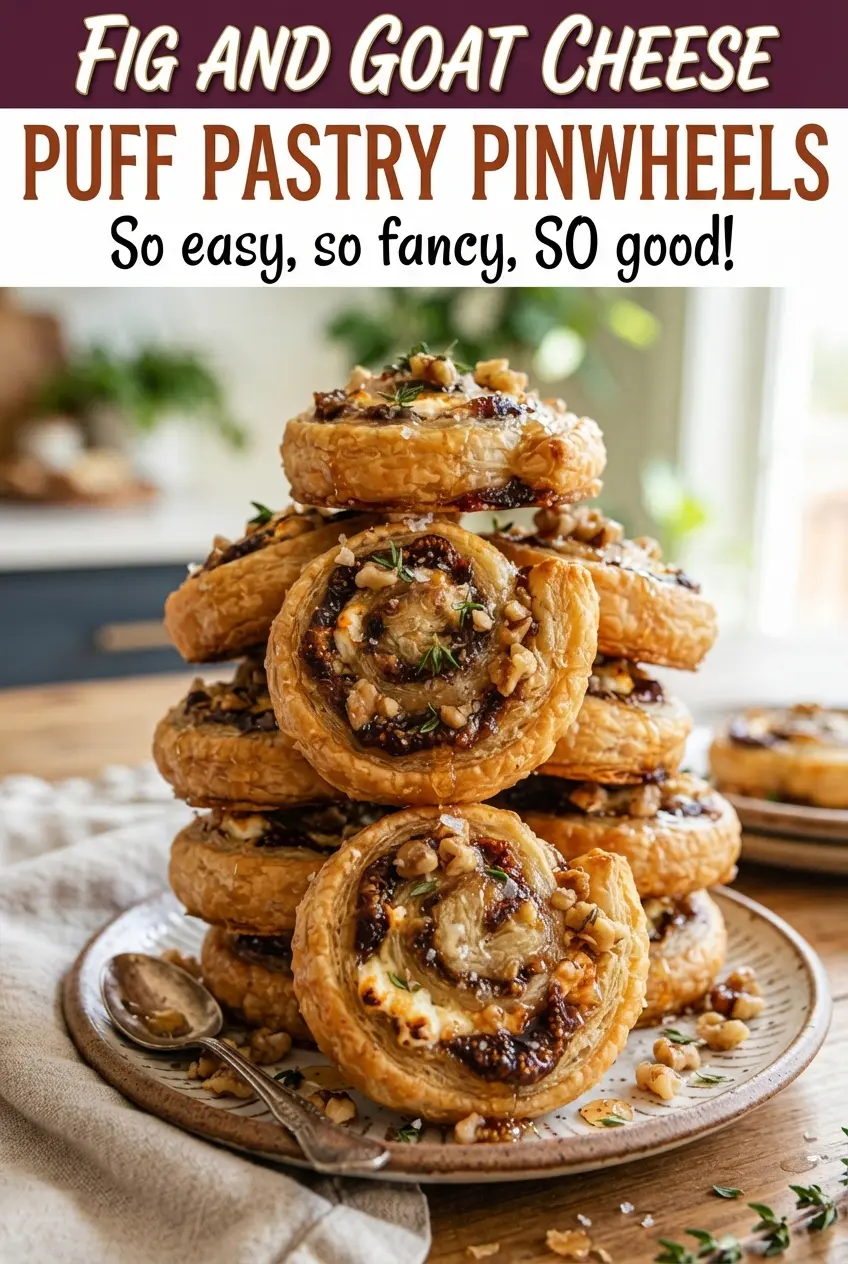
Fig and Goat Cheese Puff Pastry Pinwheels
Ingredients
Equipment
Method
- Preheat the oven to 400F and line a baking sheet with parchment for easy release.
- Roll the puff pastry into a 10x12-inch rectangle, then spread fig jam evenly to the edges.
- Sprinkle goat cheese, walnuts, and thyme leaves over the jam so the filling is evenly distributed.
- Roll up tightly from the long side to form a log, keeping the layers compact.
- Chill the rolled pastry for 15 minutes for clean slicing and a neater spiral.
- Slice into 20 rounds and arrange them on the baking sheet with cut sides up.
- Brush the tops with egg wash (beaten egg mixed with water) so they bake up glossy.
- Bake for 16-18 minutes at 400F until puffed and golden, with visible layers in the spiral.
- Drizzle with honey and serve warm for a sweet finish.