Pasta salad gets a lot better when it eats like a full antipasto platter instead of a bowl of plain noodles with a few scattered toppings. This version brings the chewy rotini, salty salami and pepperoni, creamy cheeses, briny olives, and sharp pepperoncini together in one cold dish that holds its own on a buffet table. The mix stays bold even after chilling, which is exactly what you want in a make-ahead side that gets better as it sits.
The key is balancing texture and seasoning. Rotini holds the dressing in all its curves, while the salami, provolone, and mozzarella give you enough richness to keep every bite interesting. Marinated artichokes and pepperoncini add acidity that cuts through the cheese and meat, and a little Parmesan in the dressing helps the whole bowl taste seasoned from the inside out instead of just coated on top.
Below, I’m walking through the small choices that keep this salad from turning heavy or watery, plus a few swaps that still keep the antipasto vibe intact. If you’ve ever had pasta salad that tasted flat after an hour in the fridge, this one fixes that problem.
The pasta held onto the dressing after chilling, and the pepperoncini plus artichokes kept every bite bright instead of heavy. I served it at a cookout and the bowl was scraped clean before the burgers were done.
Save this antipasto pasta salad for potlucks, cookouts, and make-ahead lunches when you want a cold pasta dish packed with salami, cheese, olives, and pepperoncini.
The Trick to Keeping Antipasto Pasta Salad Bright, Not Heavy
The biggest mistake in antipasto pasta salad is letting the dressing get swallowed by warm pasta and then wondering why the bowl tastes flat after chilling. Rinsing the rotini under cold water stops the cooking fast and keeps the noodles from soaking up every drop before the salad has a chance to rest. That cold rinse also helps the cheese stay firm instead of softening into the dressing.
This salad works because the salty meats and cheeses are balanced by acid and crunch. Marinated artichokes, pepperoncini, and olives keep the flavor lively, while cherry tomatoes add juiciness without turning the whole bowl soupy. If your pasta salad usually tastes dull on day one and dry on day two, the fix is layering in enough dressing and enough briny ingredients from the start.
- Rotini — The spirals catch dressing and little bits of seasoning better than straight pasta. Penne works in a pinch, but it won’t cling quite the same way.
- Marinated artichoke hearts — These bring built-in tang and oil, which adds depth you won’t get from plain canned artichokes. Drain them, but don’t rinse them.
- Pepperoncini and olives — These are doing the acid-and-salt work that keeps the salad from tasting like a meat-and-cheese bowl. Slice them so every forkful gets some briny bite.
- Italian dressing — Bottled dressing is fine here because it coats evenly and saves time. If you use homemade, make it punchy; a mild dressing disappears once the pasta chills.
Building the Bowl So Every Bite Tastes Like Antipasto
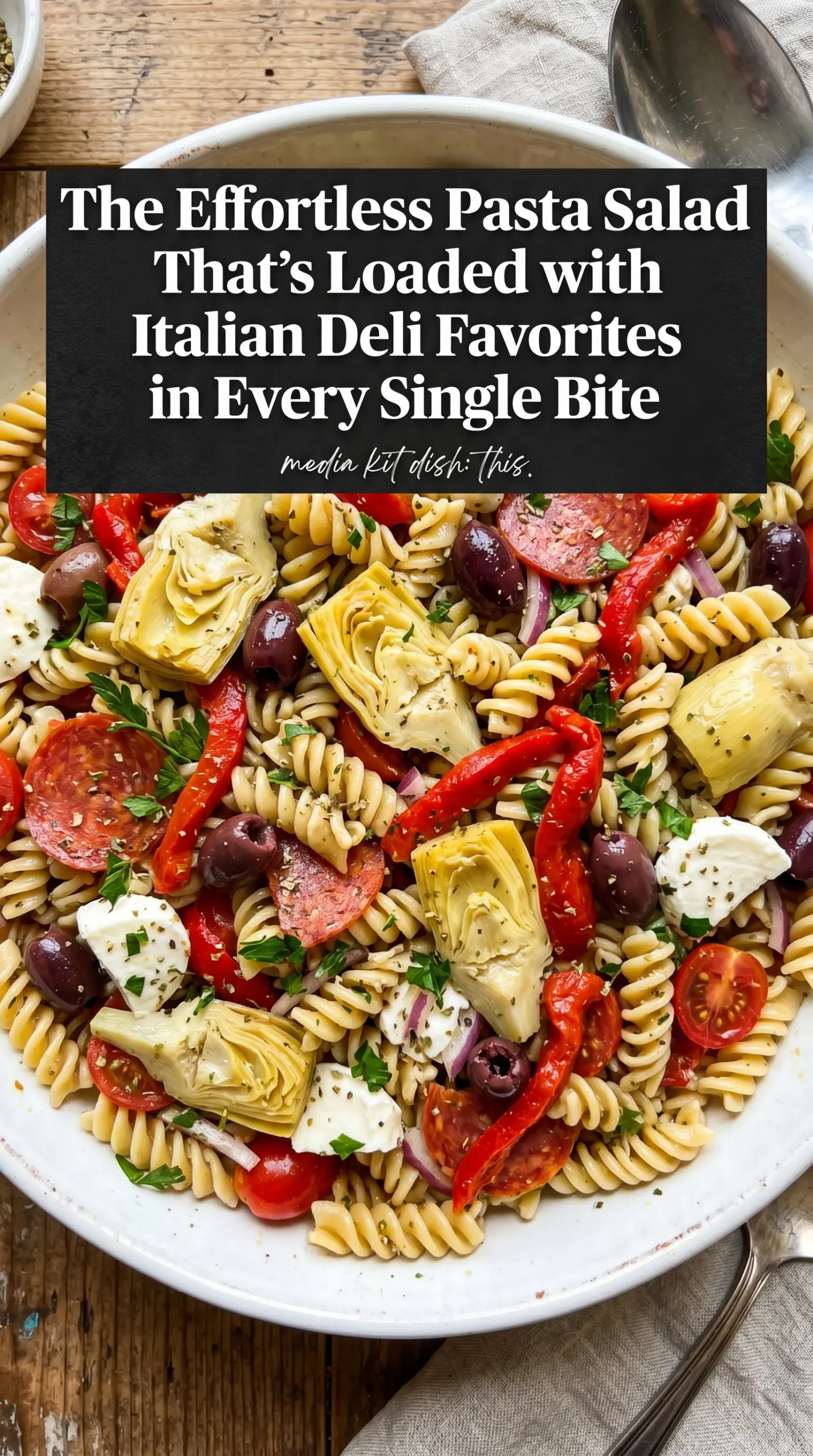
Salami, pepperoni, and provolone — Cubing the salami and provolone keeps the salad from feeling chopped to pieces. Quartering the pepperoni gives you enough surface area for flavor without making the bites greasy.
Fresh mozzarella balls — These add a softer, creamier bite than the provolone, which makes the salad feel layered instead of one-note. If you use a larger mozzarella, cut it into small pieces and dry it well first so extra moisture doesn’t thin the dressing.
Parmesan — A small amount makes a bigger difference than people expect. It seasons the dressing and helps the whole bowl taste more complete after chilling.
Cherry tomatoes — Halve them so the juices mingle with the dressing instead of squirting out in random bursts. If your tomatoes are especially juicy, add them right before chilling rather than letting them sit too long in the bowl.
The Chill Time That Makes This Pasta Salad Worth Serving
Cooking the Pasta Past al Dente
Boil the rotini until it’s just tender, then drain it and rinse immediately with cold water. You want the noodles fully cooked, not firm in the center, because chilled pasta tightens up as it sits. If you pull it too early, the salad turns chewy instead of pleasantly springy.
Mixing the Meat, Cheese, and Briny Pieces
Combine the pasta with the salami, pepperoni, provolone, mozzarella, tomatoes, artichokes, roasted peppers, olives, and pepperoncini in a large bowl. Stir gently enough that the mozzarella doesn’t smear and the tomatoes don’t collapse. A wide bowl helps here because crowded ingredients get mashed instead of tossed.
Coating Everything Without Drowning It
Add the Italian dressing, Parmesan, and Italian seasoning, then toss until every piece looks lightly glossy. The salad should look dressed, not soupy. If it seems dry after chilling, that usually means the pasta absorbed the dressing during the first rest, so stir in a little more right before serving.
Letting the Flavors Settle
Refrigerate the salad for at least 2 hours. That’s the point where the salt from the meats, the acid from the pepperoncini, and the herbs in the dressing start reading as one flavor instead of a bunch of separate ingredients. Don’t skip the final toss before serving; the dressing settles to the bottom as it chills.
Three Ways to Adjust This Antipasto Pasta Salad Without Losing the Point
Make it gluten-free with sturdy pasta
Use a gluten-free rotini that holds its shape after cooling. Some brands soften fast, so cook it just until tender and rinse it well to stop the starch from clumping. The rest of the ingredients work the same, and the salad still gives you that deli-style antipasto feel.
Dairy-free version with more briny flavor
Skip the provolone, mozzarella, and Parmesan, then lean harder into olives, pepperoncini, artichokes, and roasted peppers. You lose the creamy contrast from the cheese, so cut the dressing with a little extra oil and vinegar if it tastes sharp after chilling. It turns lighter, but it still tastes like antipasto.
Vegetarian antipasto pasta salad
Replace the salami and pepperoni with extra roasted red peppers, artichokes, and more mozzarella or cubes of marinated provolone. Add a handful of chopped pepperoncini or sun-dried tomatoes if you want more punch. You’ll still get the bold, salty-sour balance that makes the original work.
Storage and Reheating
- Refrigerator: Store covered for up to 4 days. The pasta will absorb more dressing as it sits, so expect the salad to look a little drier by day two.
- Freezer: Don’t freeze this one. The pasta turns mushy and the fresh mozzarella changes texture in a bad way.
- Reheating: This salad is meant to be served cold. If it has been chilling a while, let it sit at room temperature for 10 to 15 minutes, then toss with a splash of Italian dressing before serving instead of warming it.
Questions I Get Asked About This Recipe
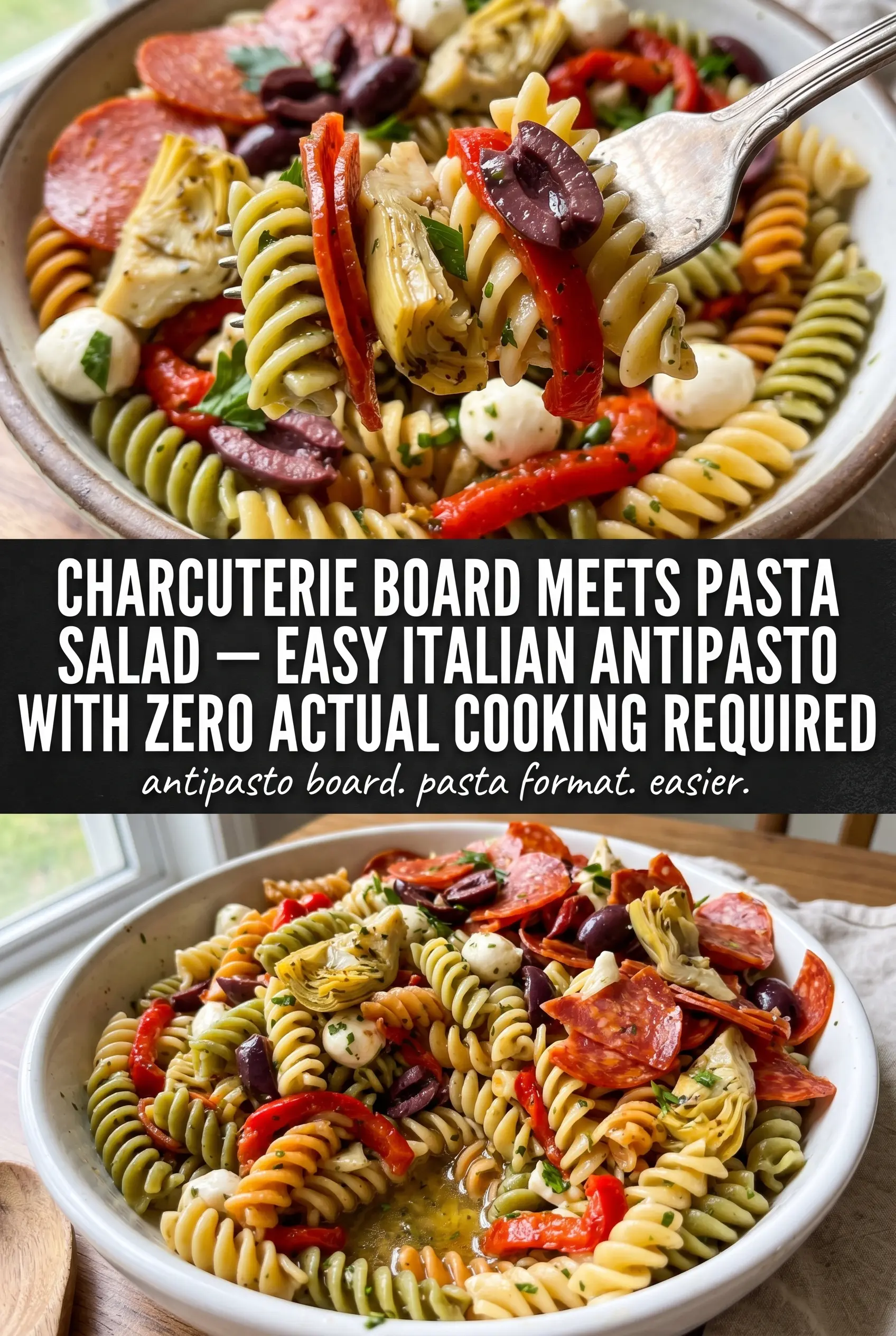
Easy Italian Antipasto Pasta Salad
Ingredients
Method
- Cook the rotini pasta according to package directions until al dente, then drain in a colander. Rinse under cold water to stop cooking and cool the pasta quickly.
- In a large bowl, combine the pasta with the salami, pepperoni, provolone, mozzarella balls, cherry tomatoes, artichoke hearts, roasted red peppers, Kalamata olives, and pepperoncini.
- Pour in the Italian dressing and sprinkle over the Parmesan cheese and Italian seasoning. Toss until everything is evenly coated with no dry pasta visible.
- Refrigerate the salad for 2 hours to allow flavors to meld. Cover to prevent drying and let the pasta firm up as it chills.
- Before serving, toss again and check the moisture level. Add more Italian dressing if needed so the pasta looks glossy and the mix holds together.