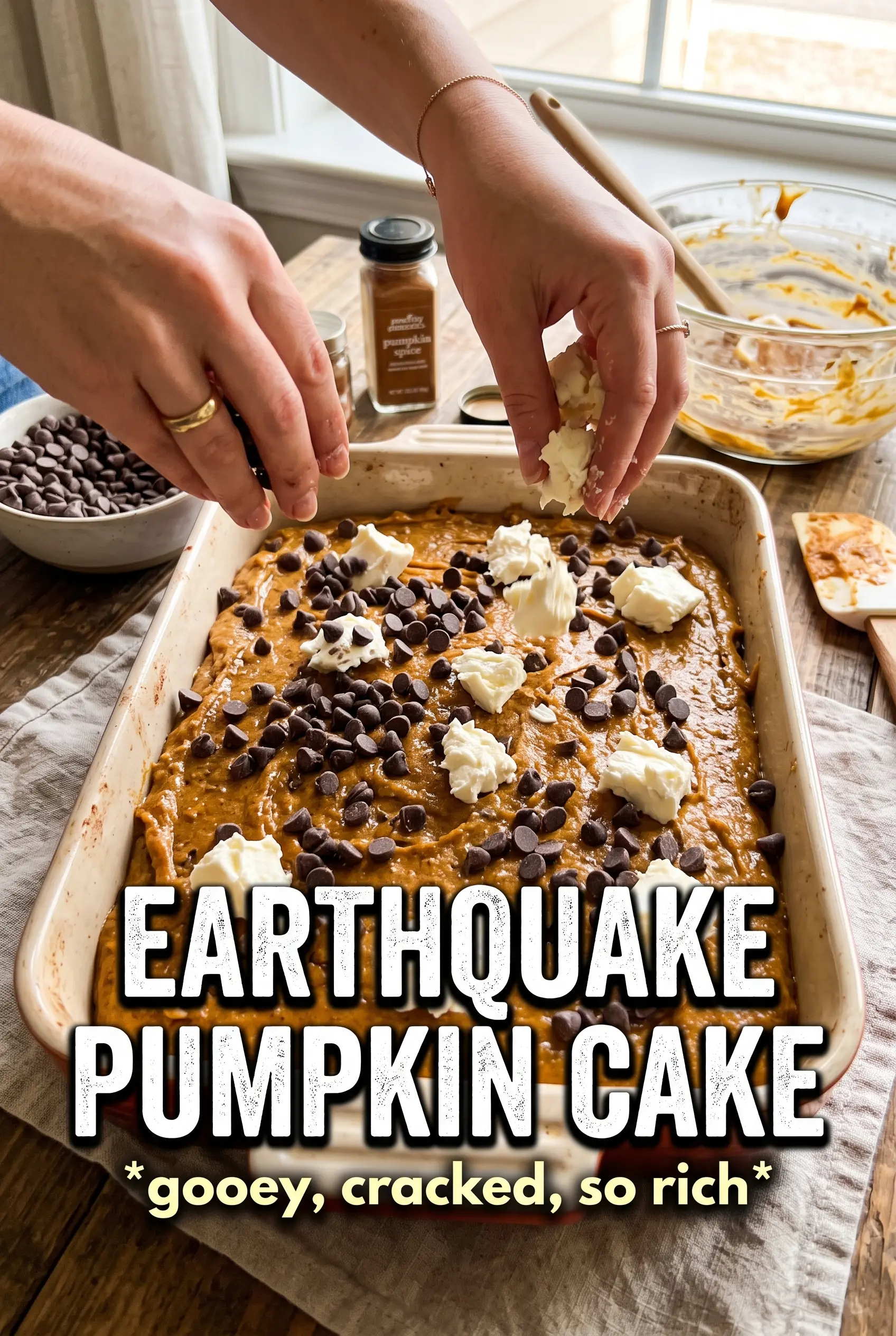
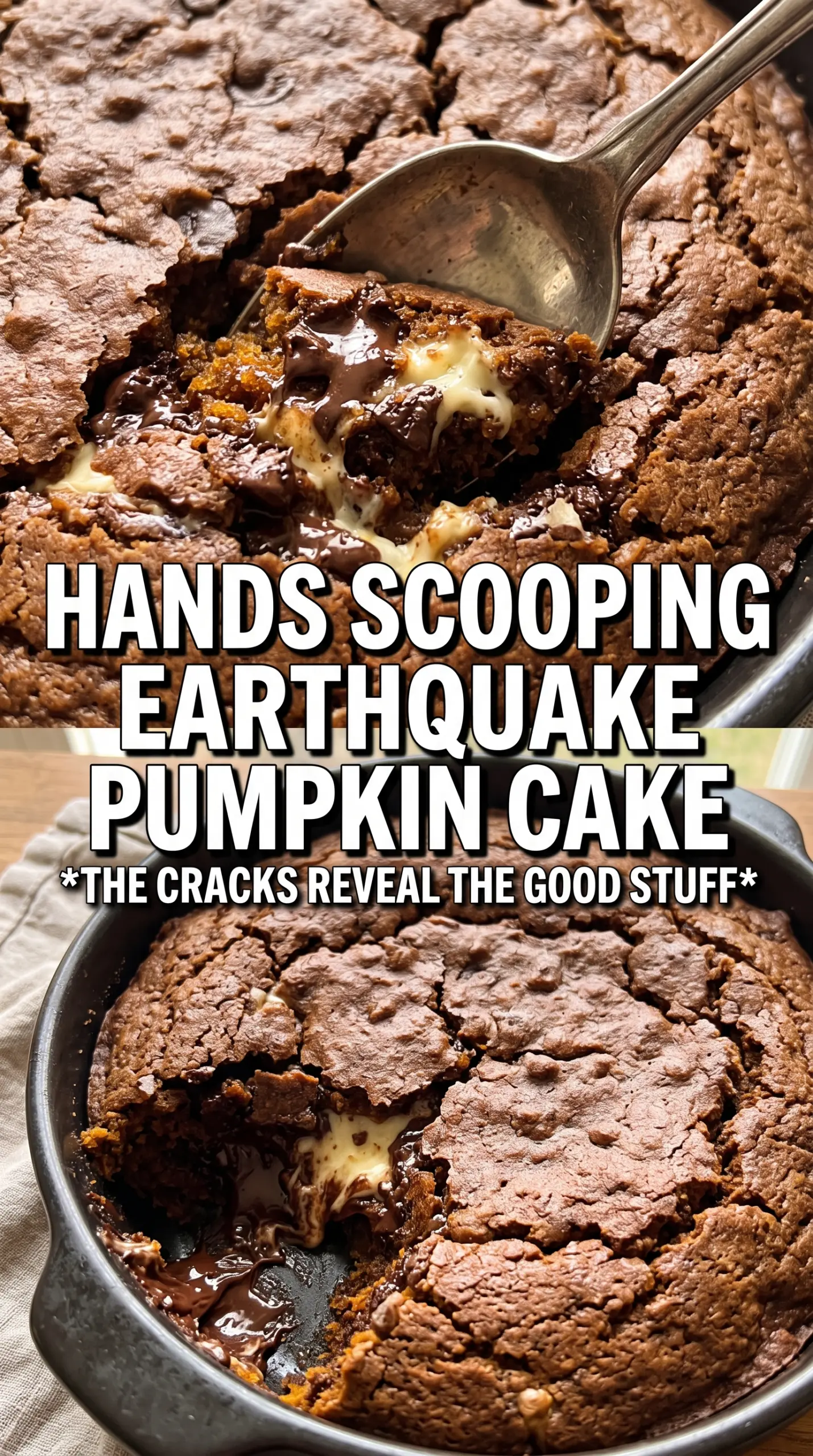
Earthquake Pumpkin Cake bakes up with the kind of cracked, swirled top that makes people stop mid-slice and ask what happened in the oven. Then they taste it: soft pumpkin cake underneath, tangy cream cheese pockets in the cracks, and caramel threaded through the whole thing. It lands somewhere between a dump cake and a poke cake, but with a much better texture and a more dramatic finish.
The trick is in the layering. The pumpkin batter starts thick enough to hold the cream cheese blobs on top for a minute, then the filling sinks and settles as it bakes, which is what creates that signature earthquake look. Yellow cake mix keeps the base tender without extra fuss, and pumpkin puree adds moisture without making the crumb heavy. A little pumpkin pie spice goes a long way here because the cream cheese and caramel already bring plenty of richness.
Below, I’ve included the one detail that matters most if you want those deep cracks and visible swirls, plus a few smart swaps for when you want to change the flavor without losing the whole point of the cake.
The cream cheese sank into those cracks just like it should, and the caramel stayed in little ribbons instead of disappearing into the batter. I chilled it overnight and the slices held together beautifully.
Like this earthquake pumpkin cake? Save it for the next time you want a crackled cream cheese topping and a caramel swirl without extra work.
The Secret to Getting the Cream Cheese to Sink Instead of Spread
The biggest mistake with earthquake-style cakes is mixing the cream cheese layer too much into the batter. You want distinct blobs on top, not a marbled batter from edge to edge. As the cake bakes, the cream cheese softens, sinks in places, and creates those dramatic fissures that make the dessert look much harder than it is.
Temperature matters here too. Softened cream cheese beats smooth; cold cream cheese leaves little lumps that never melt evenly. The cake batter itself should be thick enough to support the toppings for a few minutes in the oven, which is why the boxed mix plus pumpkin puree works so well. The batter holds the toppings long enough for the cracks to form instead of letting everything disappear into the pan.
- Do not stir the cream cheese layer into the batter — large spoonfuls give you the best crackled surface and the clearest pockets of filling.
- Use softened cream cheese — it blends smooth with the eggs, powdered sugar, and vanilla, so it bakes into creamy ribbons instead of dense little lumps.
- Expect the top to look uneven — that messy surface is the point, and the crackling is what signals the cake is setting properly.
- Cool it all the way before slicing — the filling firms up as it cools, and cutting too early smears the swirls.
What Each Layer Is Doing in This Pumpkin Cake
- Yellow cake mix — This gives you a dependable base with enough structure to carry the cream cheese topping. A scratch cake can work, but the mix keeps the crumb light and steady so the toppings sink in the right way.
- Pumpkin puree — Use plain pumpkin puree, not pumpkin pie filling. The puree adds moisture and a mellow pumpkin flavor without extra sugar or spice fighting the cream cheese layer.
- Pumpkin pie spice — This is what makes the cake taste like fall without tasting muddy or overworked. If yours is old, the cake can taste flat, so use a fresh jar if you can.
- Cream cheese — Full-fat cream cheese gives the filling its tang and body. Lower-fat versions can work in a pinch, but they loosen more in the oven and don’t set up with the same rich texture.
- Caramel sauce — A store-bought sauce is fine here because it bakes into the cake and doesn’t need to stay perfectly glossy. Thick caramel gives cleaner ribbons than a thin ice cream topping.
Building the Layers So the Swirl Shows Up
Mix the Pumpkin Batter First
Beat the cake mix, pumpkin puree, eggs, oil, water, and pumpkin pie spice until the batter is smooth and evenly colored. It should look thick and spreadable, not pourable like pancake batter. Spread it into a greased 9×13 pan and push it into the corners so the cream cheese has an even base to sink through. If the batter is lumpy, those dry pockets can hide under the topping and bake up oddly dense.
Drop the Cream Cheese, Don’t Swirl It
Beat the cream cheese, eggs, powdered sugar, and vanilla until the mixture is smooth, then drop big spoonfuls over the pumpkin batter. Leave gaps between the spoonfuls and resist the urge to drag a knife through them. The distinct piles are what create the earthquake effect as they melt and settle. If you spread the filling too evenly, you lose the crackled top and end up with a more ordinary layered cake.
Finish With Caramel and Bake Until Set
Drizzle the caramel over the cream cheese blobs so it lands in the spaces between them and across the tops. Bake until the edges are set, the center no longer looks wet, and the top has cracked into deep golden fissures. The cake will jiggle a little in the middle when it comes out, and that’s fine; it finishes setting as it cools. If you bake it until the center is completely still in the oven, the cream cheese layer can turn a little dry.
Three Useful Ways to Bend This Cake Without Breaking It
Make It Gluten-Free with a GF Yellow Cake Mix
A good gluten-free yellow cake mix works well here because the pumpkin and cream cheese layers keep the crumb moist. Bake it the same way, but check the center a few minutes early since some GF mixes brown faster around the edges. The texture will be a touch more delicate, but the crackled top still comes through.
Swap the Caramel for Chocolate Sauce
Chocolate sauce turns this into a deeper, less sweet version with a flavor that leans closer to pumpkin cheesecake. Use the same amount and drizzle it in the same pattern. It won’t taste as buttery as caramel, but the contrast with the tangy cream cheese is excellent.
Use Dairy-Free Cream Cheese for a Dairy-Free Version
A sturdy dairy-free cream cheese substitute can stand in for the filling if it bakes well in sweet recipes. The flavor will be a little less rich and the texture a bit softer, so chill the cake before slicing for cleaner squares. Check that your caramel sauce is dairy-free too, since many versions include cream or butter.
Storage and Reheating
- Refrigerator: Store covered for up to 5 days. The cream cheese layer firms up in the fridge, which actually makes the slices cleaner.
- Freezer: Freeze individual slices tightly wrapped for up to 2 months. Thaw in the refrigerator overnight for the best texture; the topping can get a little softer after freezing, but it still holds up well.
- Reheating: Warm a slice in the microwave for 10 to 15 seconds if you want it just slightly softened. Don’t overheat it, or the cream cheese layer will turn loose and the caramel can separate.