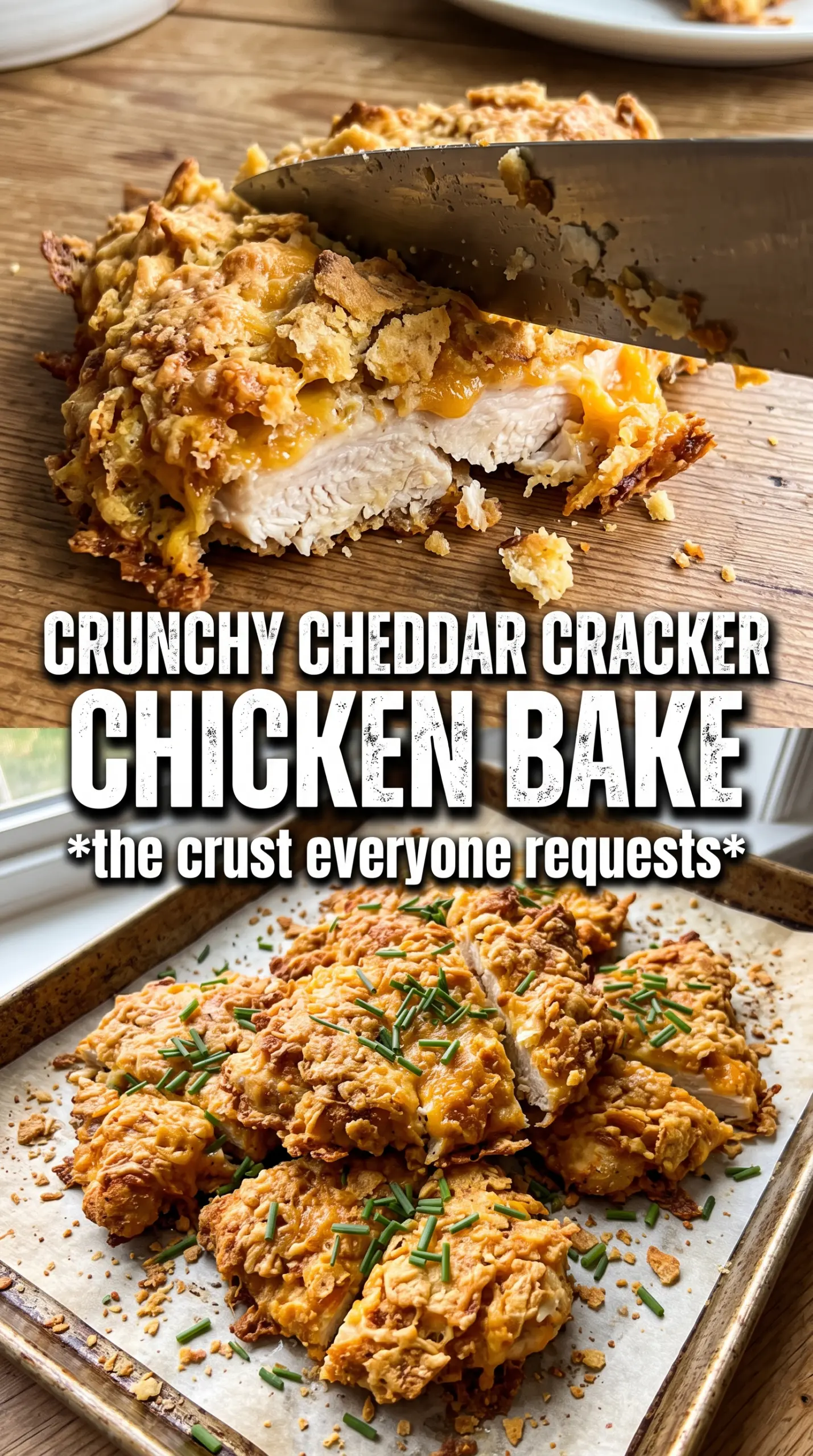
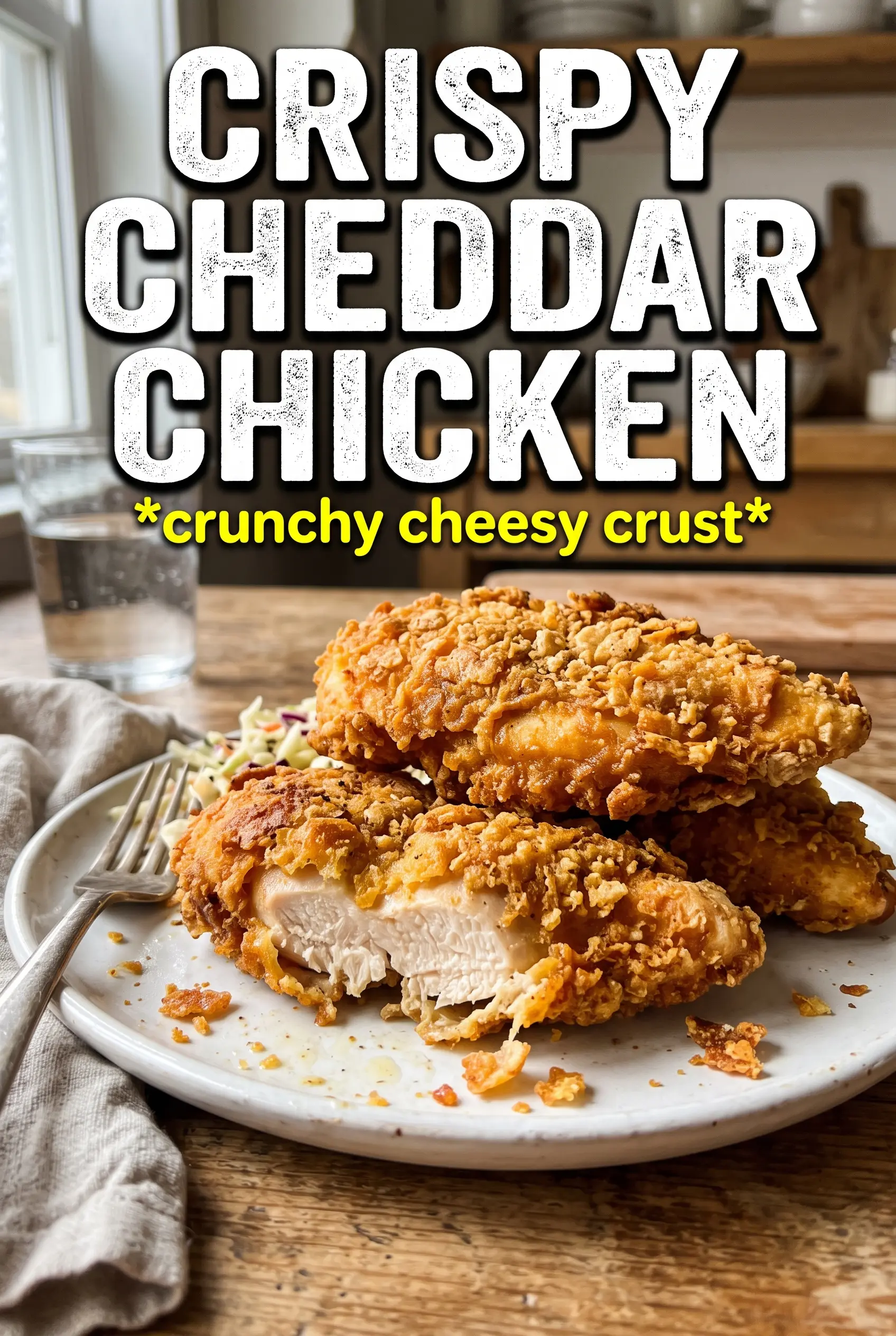
Golden, shattery cheddar crust and juicy chicken are a hard combination to beat, and this Crispy Cheddar Chicken earns its place because the coating bakes up with real crunch instead of turning soft and pasty. The sharp cheddar melts into the cracker crumbs, then browns into salty little shards that crackle when you cut into the chicken. It’s the kind of dinner that looks like it took more effort than it did.
The trick is in the layering. Sour cream helps the coating cling and keeps the chicken from drying out, while the cracker and cheddar mixture needs to be pressed on firmly so it sticks before the oven ever gets involved. I also like baking it in a hot enough oven to brown the crust without overcooking the chicken underneath. That balance is what keeps the inside tender while the outside turns deeply crisp.
Below, I’m walking through the parts that matter most: how to keep the crust from sliding off, why finely shredded cheese works best here, and what to do if you want to make this with what’s already in your kitchen.
The cheddar crust browned beautifully and stayed crisp even after I spooned the sauce around it. I was worried the crackers would get soggy, but pressing the coating on tightly made all the difference. My husband asked if I could put this in the regular rotation.
Crispy Cheddar Chicken has that golden cracker-and-cheddar crust people always ask about when they want a baked chicken dinner with real crunch.
The Coating Fails When the Chicken Is Too Wet
The biggest mistake with this kind of baked chicken is rushing the coating step. If the sour cream layer is thin or uneven, the cracker crumbs won’t have enough grip, and the crust can slide off in patches once the chicken starts releasing steam. A thick, even coat gives the cheddar and crumbs something to hold onto, and that’s what keeps the crust attached through the full bake.
Finely shredded cheddar matters here because it melts into the crumbs instead of staying in clumps. Large shreds leave gaps, which means less of that crisp, browned surface you’re after. The other thing that helps is pressing the topping on firmly with your hands. That little bit of pressure makes a big difference once the heat starts working on the cheese.
- Chicken breasts — Aim for breasts that are similar in size so they finish at the same time. If one side is much thicker, pound it lightly so the thicker end doesn’t stay undercooked while the rest dries out.
- Sharp cheddar — Sharp cheddar gives the crust its punch and browns better than mild cheddar. Pre-shredded cheese works in a pinch, but it won’t melt quite as smoothly because of the anti-caking coating.
- Ritz crackers — These bring the buttery crunch and help the crust bake up with a tender, crisp bite. Saltines can work if that’s what you have, but the coating will taste leaner and less rich.
- Sour cream — This is the glue. It also adds moisture so the chicken stays tender under the crust, and plain Greek yogurt can stand in if you want a tangier, slightly lighter version.
- Smoked paprika — It doesn’t make the dish smoky in a big way; it nudges the crust toward a deeper, warmer flavor and helps the cheddar taste even toastier.
What Each Ingredient Is Actually Doing in This Recipe
- Primary ingredient (the star) — Quality matters most. Choose the best you can find.
- Cooking medium (oil, butter, or broth) — This carries flavors and prevents dryness.
- Seasonings (salt, pepper, spices, herbs) — Layer flavors so nothing overpowers. Build depth gradually.
- Aromatics (garlic, onion, herbs) — Cook with fat to bloom flavors. Become the foundation.
- Supporting ingredients — Complement the main ingredient without overpowering it.
- Sauce or liquid (if applicable) — Brings flavors together. Balance richness with acid.
- Acid (lemon, vinegar, wine, or other) — Brightens and prevents flat-tasting results.
- Final finish (garnish, glaze, or sauce) — Prevents one-dimensional taste and adds visual appeal.
Press, Bake, and Let the Cheese Brown Properly
Building the Sour Cream Base
Whisk the sour cream with the garlic powder, onion powder, salt, and pepper until the mixture looks smooth and seasoned all the way through. Coat each chicken breast completely, including the sides, because bare spots tend to bake up dry and don’t give the crust a chance to hold. If the coating seems too thin, it won’t look like much at first, but it should cling in an even layer rather than drip off.
Making the Crust Stick
Mix the cheddar, cracker crumbs, and smoked paprika in a separate bowl, then press that mixture onto the chicken with your hands. Don’t just sprinkle it over the top; the goal is a packed layer that stays put while the cheese melts. If the crumbs look loose, press again. The chicken should look fully covered, with no large wet patches showing through.
Baking Until the Edges Turn Deeply Golden
Slide the dish into a 375°F oven and bake until the crust is golden and the chicken hits 165°F in the thickest part. If the top browns too fast, the oven may be running hot, so tent it loosely for the last few minutes rather than lowering the heat too early. What you want is a crust that looks deeply caramelized around the edges and crisp enough that a fork taps against it with a little crunch.
Warming the Sauce Without Breaking It
Whisk the cream of chicken soup with the sour cream in a small saucepan and warm it gently, just until smooth and hot. Keep the heat low. High heat can make the sauce separate or go grainy, especially once the dairy is in the pan. Spoon it around the chicken instead of over the top if you want to keep that crust at its crispiest.
Use Parmesan for a sharper crust
Swap up to half the cheddar for finely grated Parmesan if you want a saltier, more savory crust. The texture gets a little drier and crisper, and the flavor turns more intense, so it’s a good move when you want the topping to taste less mild and more browned.
Make it gluten-free with crushed gluten-free crackers
Use your favorite gluten-free buttery cracker in place of the Ritz crackers. The crust will still crisp up, but the flavor may be a touch less rich depending on the cracker you choose, so taste the crumb mixture before coating and season it if needed.
Use Greek yogurt for a tangier coating
Plain Greek yogurt works in place of sour cream if that’s what you have. It gives the same cling, but the flavor is a little brighter and the coating can brown a touch faster, so watch the oven near the end.
Storage and Reheating
- Refrigerator: Store leftovers for up to 3 days. The crust softens in the fridge, but the chicken stays flavorful.
- Freezer: You can freeze it, but the coating won’t stay as crisp after thawing. Wrap portions well and freeze for up to 2 months if you don’t mind a softer crust.
- Reheating: Reheat in a 350°F oven or air fryer until hot through. The microwave will steam the crust and wipe out the crunch, which is the whole point of this dish.
Answers to the Questions Worth Asking
Crispy Cheddar Chicken
Ingredients
Equipment
Method
- Preheat oven to 375°F and grease a 9x13 baking dish so the crust won’t stick. Keep the dish ready near your work area.
- Whisk together sour cream, garlic powder, onion powder, salt, and pepper until smooth. Coat each chicken breast completely so every surface is lightly covered.
- Combine sharp cheddar, crushed Ritz crackers, and smoked paprika in a bowl. Press the mixture firmly over the sour cream-coated chicken on all sides so it adheres.
- Place coated chicken in the greased baking dish. Bake at 375°F for 28-32 minutes until the crust is golden and the internal temperature reaches 165°F.
- Whisk cream of chicken soup with sour cream until smooth. Warm it in a small saucepan and drizzle around the chicken after baking.
- Garnish with fresh parsley right before serving. Finish with a quick drizzle of sauce from the pan so it shows clearly at the base.