Golden chicken tucked into a tangy cream sauce has a way of disappearing fast, and this skillet version earns that reaction every time. The sauce is rich without feeling heavy, thanks to pepperoncini brine cutting through the cream and parmesan, while the whole peppers add little bursts of sharp, briny heat in every bite. It’s the kind of dinner that looks like you fussed, even though it comes together in one pan.
What makes this work is the layering. The chicken gets a hard sear first, which gives you those browned bits that turn into the base of the sauce. Then the garlic, broth, and pepperoncini brine lift everything off the pan before the cream goes in, so the sauce tastes built, not poured from a jar. Parmesan finishes it with body and salt, but only if it melts in over a gentle simmer instead of a boil.
Below, I’ll show you how to keep the sauce smooth, how much pepperoncini brine is enough, and which side dishes soak up every drop without fighting the tang.
The sauce stayed silky and the pepperoncini brine gave it a bright kick without turning it sour. I followed the simmer time exactly and the chicken finished tender instead of dry.
Save this creamy pepperoncini chicken skillet for the nights when you want a tangy, one-pan dinner with a glossy sauce that clings to every bite.
The Sear That Gives the Sauce Its Backbone
The biggest mistake with skillet chicken like this is rushing straight to the sauce before the pan has built any flavor. If the chicken doesn’t get a deep golden crust, the finished sauce tastes flat, no matter how much parmesan you add. That crust is where the savory backbone comes from, and it only happens when the skillet is hot enough and the chicken is left alone long enough to brown.
Pat the chicken dry, season it well, and let the first side sear without moving it. If it sticks, it isn’t ready yet; once it releases cleanly, the crust is set. Pull the chicken out before it’s fully cooked through, because it finishes in the sauce and stays juicier that way.
What the Pepperoncini Brine Is Doing Here
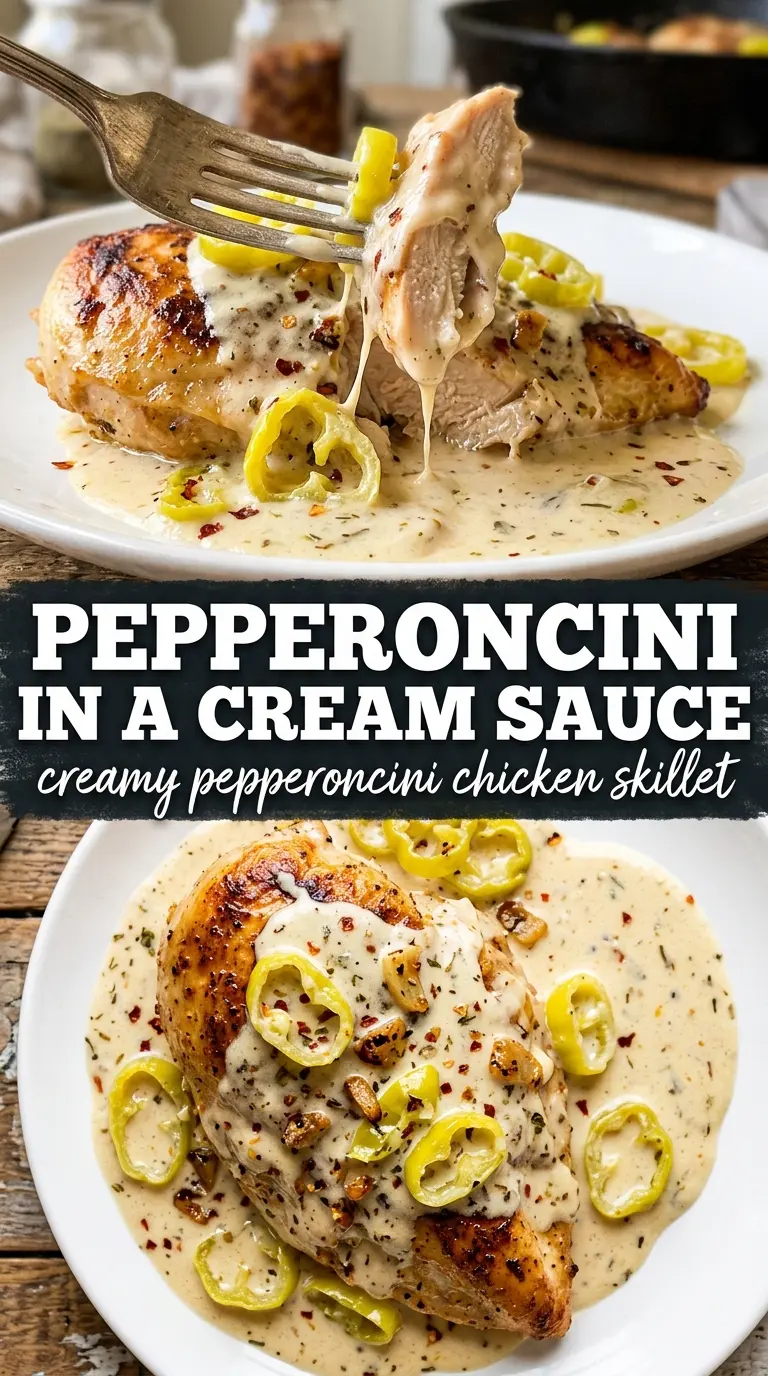
- Pepperoncini peppers — These bring the tangy, slightly spicy bite that makes the sauce taste bright instead of heavy. Whole peppers work best because they soften just enough in the sauce without dissolving into it.
- Pepperoncini brine — This is the ingredient that wakes up the cream. A couple tablespoons is enough to sharpen the sauce; too much and it starts tasting harsh, so measure it instead of pouring by instinct.
- Heavy cream — You need the fat here for a smooth sauce that won’t split when the parmesan goes in. Half-and-half can work in a pinch, but the sauce will be thinner and less stable.
- Parmesan — Freshly grated parmesan melts more evenly and gives you a silkier finish. Pre-grated cheese often has anti-caking agents that can leave the sauce a little grainy.
- Chicken broth — This loosens the browned bits in the pan and keeps the cream from feeling too heavy. Use low-sodium broth if your parmesan and brine are both salty.
Building the Sauce Without Breaking It
Brown the Chicken First
Heat the olive oil until it shimmers, then lay the chicken in and leave it alone for 5 to 6 minutes per side. You’re looking for a deep golden crust, not pale steamed chicken; if the pan is crowded, cook in batches so the meat can actually sear. Remove the chicken once it’s browned on both sides, even if the center still looks a little underdone.
Use the Garlic as a Bridge, Not a Shortcut
When the butter goes into the pan, it should foam around the garlic for about a minute and smell fragrant, not bitter. If the garlic browns hard, the whole sauce picks up a harsh edge, and there’s no fixing that later. The broth and brine should go in next so they can dissolve the browned bits before the cream arrives.
Let the Cream Simmer, Then Finish with Cheese
Pour in the cream, Italian seasoning, and pepperoncini, then bring the pan to a gentle simmer. You want small bubbles around the edges, not a rolling boil; high heat is how cream gets oily and separated. Stir in the parmesan off the hottest part of the burner, then return the chicken and let everything thicken together until the sauce coats the back of a spoon.
How to Adapt This Skillet When You Need a Different Finish
Make It Lighter Without Losing the Tang
Swap half the cream for evaporated milk and keep the heat low. The sauce won’t be quite as plush, but it still stays smooth if you keep it at a gentle simmer and don’t let it boil after the cheese goes in.
Dairy-Free Version
Use a full-fat unsweetened coconut cream in place of heavy cream and skip the parmesan, then add an extra pinch of salt at the end. The sauce will be a little different in flavor, but the pepperoncini still carry the dish and keep it bright.
Gluten-Free and Low-Carb Serving Ideas
The skillet itself is naturally gluten-free, so the only change is what you serve with it. Spoon it over cauliflower mash or zucchini noodles for a lower-carb plate, or keep it classic with rice if you want the sauce to soak into something starchy.
How to Use Chicken Thighs Instead
Boneless skinless thighs work well and stay extra juicy, but they need a few more minutes in the pan because they’re thicker and richer. Expect a slightly deeper flavor and a softer bite, which plays nicely with the briny sauce.
Storage and Reheating
- Refrigerator: Store in an airtight container for up to 3 days. The sauce thickens as it chills, so expect it to look more set the next day.
- Freezer: It freezes, but the cream sauce can separate a bit when thawed. If you want to freeze it, cool it completely and pack it in a freezer-safe container for up to 2 months.
- Reheating: Warm it slowly in a covered skillet over low heat with a splash of broth or cream. The common mistake is cranking the heat, which makes the sauce oily and can dry out the chicken before the center is hot.
Questions I Get Asked About This Recipe

Creamy Pepperoncini Chicken Skillet
Ingredients
Equipment
Method
- Season chicken breasts with salt and black pepper to taste. Heat olive oil in a large cast iron skillet over medium-high heat and sear for 5–6 minutes per side until golden, then remove and set aside.
- Melt butter in the same pan. Add the minced garlic and cook for 1 minute, stirring, until fragrant.
- Add chicken broth and 2 tablespoons pepperoncini brine, then stir to deglaze the browned bits from the pan. Scrape the bottom to keep the sauce flavorful.
- Pour in heavy cream, add Italian seasoning, and add the whole pepperoncini peppers. Bring to a simmer over medium heat so the sauce looks slightly thicker and the peppers are suspended.
- Stir in parmesan cheese until melted and glossy. The sauce should look smooth with a thickening texture.
- Nestle the chicken back into the sauce. Cook for 5 more minutes, turning once if needed, until the chicken is cooked through and the sauce thickens enough to coat the surface.
- Garnish with fresh parsley for garnish. Serve warm over mashed potatoes, rice, or pasta.