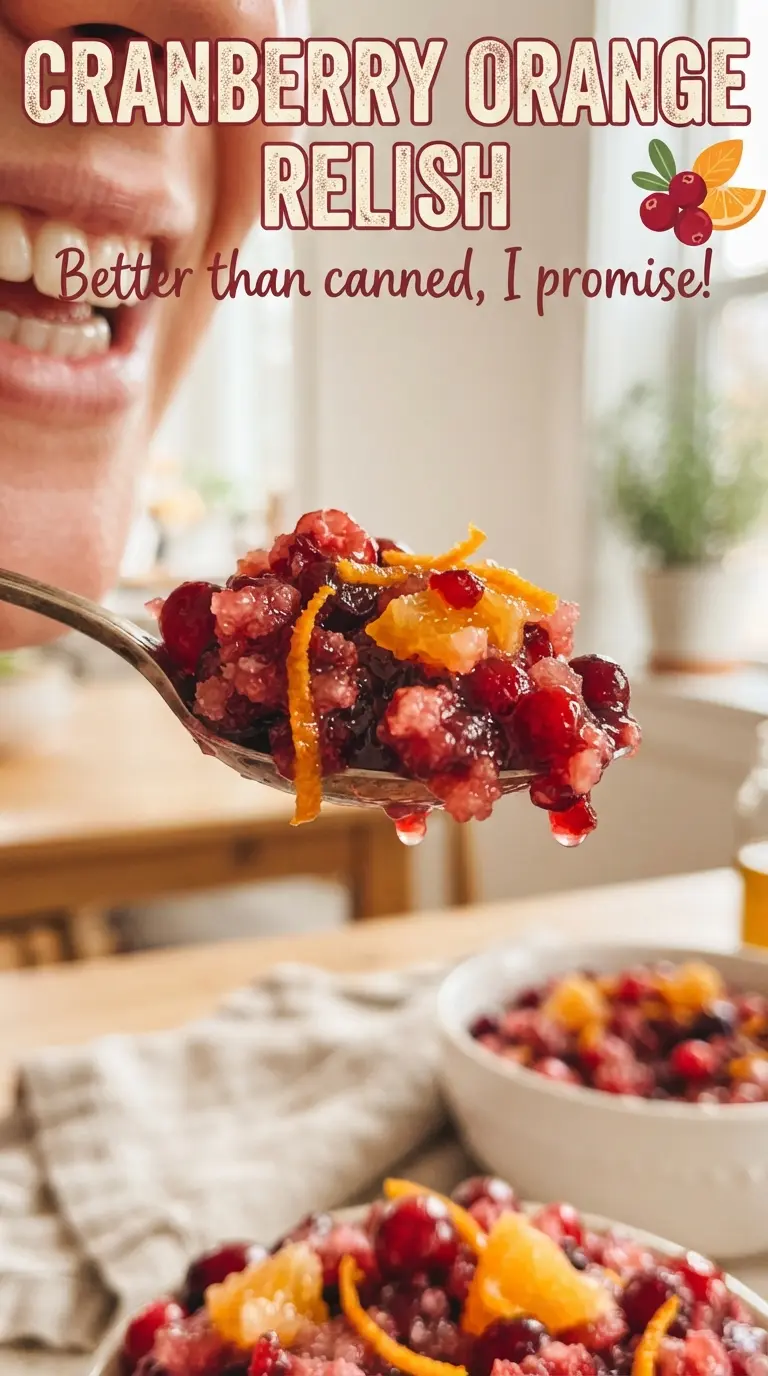
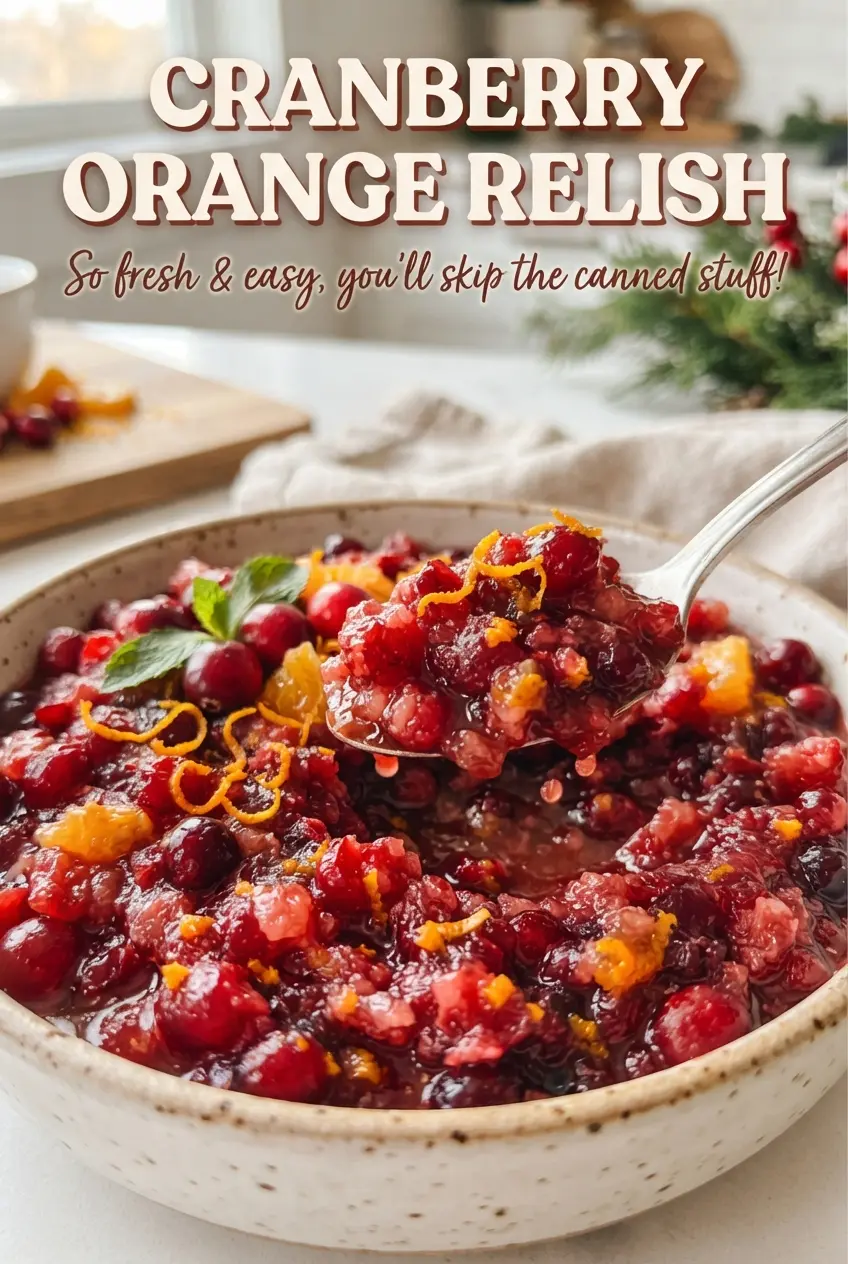
Cranberry orange relish is the kind of side that wakes up the whole plate. It’s bright, sharp, sweet, and just chunky enough to keep each bite interesting, with cranberries that still have some texture instead of turning into a smooth puree. Served cold, it cuts through rich holiday food, but it’s just as good tucked next to roast chicken, turkey sandwiches, or spooned over cream cheese with crackers.
The trick is keeping the orange skin in the mix. That’s where the perfume and a little bitterness live, and it’s what makes this taste fresh instead of flat. A food processor does the heavy lifting here, but you want short pulses, not a long run, because the goal is a finely chopped relish with visible bits of cranberry and orange, not cranberry soup. The sugar and salt need time in the bowl to pull the juices together and soften the edges.
Below, I’ll show you the one processing mistake that changes the texture, plus a few smart swaps if you want to use orange juice instead of liqueur or make it ahead for a crowded table.
I pulsed it just until everything was chopped and let it chill overnight. The sugar softened the cranberries beautifully, and the orange zest flavor came through without tasting bitter.
Love the bright cranberry-orange bite? Save this relish for the meals where you want something fresh, tangy, and make-ahead friendly.
The Texture Trick That Keeps Cranberry Relish Bright, Not Mushy
The difference between good cranberry relish and the kind people leave untouched on the plate comes down to texture. If you overprocess the fruit, the cranberries release too much juice too fast and the mixture turns pasty after chilling. Short pulses give you tiny pieces that soften in the sugar without losing their definition, which is what makes the finished relish spoonable instead of jammy.
That overnight rest matters more than people think. The sugar draws out liquid from the cranberries and orange, and the mixture loosens up before it tightens slightly again in the fridge. If it tastes a little sharp right after mixing, don’t panic. It mellows as it sits, and the flavor gets cleaner by the next day.
- Fresh cranberries — Use firm, glossy berries. Frozen cranberries can work in a pinch, but thaw them first and drain well so extra water doesn’t thin the relish.
- Navel orange — The peel is part of the flavor here. Seed it well, but keep the whole orange intact otherwise; the zest and pith give the relish its bitter-sweet edge.
- Sugar — This isn’t just for sweetness. It balances the cranberry tartness and helps the fruit soften during the chill time. Reducing it too much will leave the relish aggressively sharp.
- Orange liqueur or orange juice — Liqueur adds a deeper citrus note and a little roundness, but plain orange juice still works. If using juice, the relish will taste a touch fresher and lighter.
What Each Ingredient Is Actually Doing in This Recipe
- Primary ingredient (the star) — Quality matters most. Choose the best you can find.
- Cooking medium (oil, butter, or broth) — This carries flavors and prevents dryness.
- Seasonings (salt, pepper, spices, herbs) — Layer flavors so nothing overpowers. Build depth gradually.
- Aromatics (garlic, onion, herbs) — Cook with fat to bloom flavors. Become the foundation.
- Supporting ingredients — Complement the main ingredient without overpowering it.
- Sauce or liquid (if applicable) — Brings flavors together. Balance richness with acid.
- Acid (lemon, vinegar, wine, or other) — Brightens and prevents flat-tasting results.
- Final finish (garnish, glaze, or sauce) — Prevents one-dimensional taste and adds visual appeal.
Building the Relish So the Cranberries Stay Chopped, Not Pureed
Pulsing the Fruit in Batches
Start with the cranberries and orange chunks in the food processor and pulse in short bursts. Stop often and check the texture with a spoon; you want a fine chop with visible pieces, not a wet paste clinging to the sides of the bowl. If you keep the motor running, the orange breaks down first and the cranberries follow into puree before you notice what happened.
Letting the Sugar Draw Out the Juices
Once the fruit is in the bowl, stir in the sugar, orange liqueur or juice, and salt until everything looks evenly coated. The mixture will seem dry at first, then turn glossy as it sits. That gloss means the sugar is pulling the juices from the fruit, and it’s the step that gives the relish its loose, spoonable texture after chilling.
Chilling Until the Flavor Calms Down
Cover the bowl and chill it at least four hours, though overnight is better. Right after mixing, the relish tastes punchier and more acidic than it will later. After a long chill, the orange rounds everything out and the cranberries lose that raw edge without going soft.
Finishing With a Clean Stir and Fresh Mint
Stir the relish well before serving because the liquid settles at the bottom as it chills. Taste it once at the end; if it seems a little too tart, another spoonful of sugar can smooth it out. Add the mint right before serving so it stays bright and doesn’t wilt into the fruit.
How to Adapt Cranberry Orange Relish for Different Tables
Orange Juice Instead of Orange Liqueur
Use the same amount of orange juice in place of the liqueur. You’ll lose a little depth, but the relish stays bright and fresh, and it’s still plenty flavorful once the fruit has had time to chill.
Lower-Sugar Cranberry Relish
Drop the sugar to 1/2 cup if you like a sharper, more tart relish. The texture will still hold, but the finished flavor will lean brighter and less candied, which works well next to rich roasted meats.
Make It Alcohol-Free and Fully Kid-Friendly
Use orange juice and skip the liqueur completely. The relish will taste a little cleaner and more straightforward, which is a good trade if you want a version everyone at the table can scoop onto their plate without thinking twice.
Storage and Reheating
- Refrigerator: Store covered for up to 5 days. The flavor gets smoother after the first day, and the texture stays crisp-tender rather than soft.
- Freezer: It freezes well for about 1 month, though the texture softens a little after thawing. Thaw in the refrigerator and stir before serving.
- Reheating: No reheating needed; serve it cold or cool. The common mistake is warming it, which dulls the fresh citrus and turns the relish loose.
Questions I Get Asked About This Recipe
Cranberry Orange Relish
Ingredients
Equipment
Method
- Pulse the cranberries and orange chunks in a food processor until finely chopped but not pureed, scraping down as needed for even texture.
- Transfer to a bowl and stir in the sugar, orange liqueur or orange juice, and the salt until the sugar looks evenly moistened.
- Cover and chill for at least 4 hours or overnight in the refrigerator to let the flavors meld.
- Stir well before serving so the relish loosens and the orange flecks distribute throughout.
- Garnish with fresh mint right before serving for a fresh color contrast.